
BuddhistCatholicContemplativeEvangelicalGeneral ChristianHinduJewishLatter-day SaintMuslimNew VisionsProgressive Christian
Beliefs
- Buddhist
- Catholic
- Contemplative
- Evangelical
- General Christian
- Hindu
- Jewish
- Latter-day Saint
- More Voices
- Muslim
- New Visions
- Pagan
- Progressive Christian
Topics
- Religion News
- Food and Religion
- Sports and Religion
- Religious Art
- Religious Music and Entertainment
- Religious Events
- History and Religion
- Style and Religion
- Politics and Religion
- Women in Religion
- Recreation Outdoors and Religion
- Business Finance and Religion
- Careers Workplace and Religion
- Education and Religion
- Family Parenting and Religion
- Health Fitness and Religion
- Home and Religion
- Relationships and Religion
- Technology and Religion
- Travel and Religion
Columnists
- Buddhist Columnists
- Business Finance and Religion Columnists
- Careers Workplace and Religion Columnists
- Catholic Columnists
- Contemplative Columnists
- Education and Religion Columnists
- Evangelists Columnists
- Family Parenting and Religion Columnists
- General Christian Columnists
- Health Fitness and Religion Columnists
- Hindu Columnists
- History and Religion Columnists
- Home and Religion Columnists
- Jewish Columnists
- More Voices Columnists
- Latter Day Columnists
- Muslim Columnists
- New Visions Columnists
- Nonreligious Columnists
- Pagan Columnists
- Politics and Religion Columnists
- Progressive Columnists
- Recreation Outdoors and Religion Columnists
- Relationships and Religion Columnists
- Religion News Columnists
- Religious Art Columnists
- Religious Events Columnists
- Religious Music and Entertainment Columnists
- Sports and Religion Columnists
- Style and Religion Columnists
- Technology and Religion Columnists
- Travel and Religion Columnists
- Women in Religion Columnists
Resource Library
- 2026 Calendar
- Library of World Religions
- The 100 Most Holy Places on Earth
- Patheos Answers
- Podcasts
- Videos
- Faith Leaders Database
- Anglican Episcopalian
- Bahai
- Baptist
- Buddhism
- Christianity
- Confucianism
- Eastern Orthodoxy
- Hinduism
- Holiness and Pentecostal
- ISKCON
- Islam
- Judaism
- Lutheran
- Methodist
- The Church of Jesus Christ of Latter-day Saints
- New Age
- Paganism
- Presbytarian and Reformed
- Protestantism
- Religion Behind the Scenes
- Roman Catholic
- Scientology
- Shia Islam
- Sikhism
- Sufism
- Sunni Islam
- Taoism
- Zen
- See all religions
Research Tools
 Ad-Free & Subscriber Log-In Subscription Support
Ad-Free & Subscriber Log-In Subscription Support
Follow Patheos 

- Trending:
- Forgiveness
- |
- Marriage
- |
- Consciousness
- |
- Death Penalty
- |
- Election
- |
- Halloween
 Slow Church
- Home
- Progressive Christian
- Why I Don’t Go To Church
Why I Don’t Go To Church
Last updated on: February 26, 2014 at 3:02 pm by Christopher Smith
Why I Don’t Go To Church 2014-02-26T15:02:51-05:00 Christopher Smith
Patheos Explore the world's faith through different perspectives on religion and spirituality! Patheos has the views of the prevalent religions and spiritualities of the world.
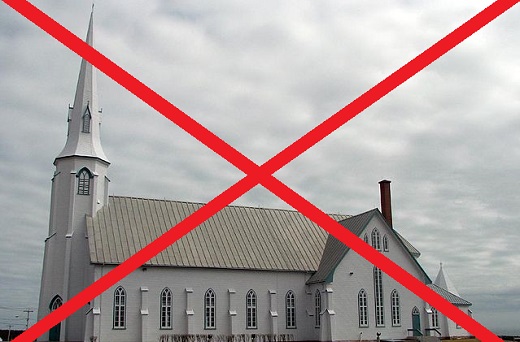
There has been a lot of buzz online in recent days about the value of church attendance.
Initiated by a pair of posts by Donald Miller, ( The initial post… and the followup.), who bravely confessed that he rarely goes to church, Miller’s posts were followed up by this piece on Christianity Today’s PARSE blog, which dug a little deeper but had more of the feel of an expose, and didn’t get to the heart of what seems (to me anyway) to be the crucial issues about church.
I appreciate Donald’s honesty — and Brian McLaren’s as well, in response to the PARSE piece — and I have no interest arguing for or against the positions that they described. Rather, I want to tell my own story reflect on what we mean when we talk of church attendance or “going to church.”
I grew up going to church, and continued to do so in college. In fact, it was almost a necessity. I went to Taylor University, which has no church on campus, and being located in the middle of Indiana cornfields, it was not easy for a person like me (who didn’t have a car) to participate in a church on any deeper level than going to Sunday services. So, I would catch a ride with whomever I could and got to whatever church service they were headed to.
But, after college, I had a crisis of faith. I could no longer go to church. I was done being a consumer of religious goods and services. I needed something more; specifically, I needed to belong to a church community, needed to share life with a particular community of sisters and brothers. So, almost 18 years ago, I — once and for all — stopped going to church.
Now of course, those of who have read this blog for awhile, know that I by no means have given up on church, and am deeply committed to the Englewood Christian Church community, where I am a member. But this distinction between “going to church” and “belonging to (or being a part of) a church” betrays the stories that drive us and give shape to our lives.
Specifically, “going to church” (as the phrase is commonly used) turns church into a consumer experience. I could go (or not go) to church. Either way, the driving force is not the church community, but ME. So in addition to reflecting a consumer approach to church, the language of “going to church” reflects the individualism of our times.
Additionally, when we talk of “going to church” what we are typically doing is conflating church with a church service. There’s nothing wrong with going to church services, but when we speak as if that is our sole or primary experience of church, we are greatly reducing our imaginations about what church is or could be. On the flip-side, we load up the church service with massive expectations of what can or should be accomplished there, in such a relatively small fraction of our weekly lives. Part of the Slow Church vision is rooted in the conviction that God is reconciling ALL things, and that our churches are called into that all-encompassing mission. When we overemphasize the weekly church service, we are in grave danger of losing sight of the reality that God has called us church communities in the work of reconciliation.
If we look carefully at the biblical story, we will see that one of God’s primary activities in the world is gathering a people. This work began the Israelite people, the descendents of Abraham, and continued as Jesus gathered a little community of 12 disciples (a number that reflected the 12 tribes of Israel). Through the work of these disciples after Pentecost, the people of God was expanded and no longer defined by Jewish ethnicity, and Greeks were welcome into God’s people now as well as Jews. Throughout, God is at work gathering a people whose shared life will bear witness to God’s love for humanity and God’s ongoing work of reconciliation. Our local churches to which we commit ourselves can then be understood a manifestations of the Body of Christ in a particular place. We are called to BELONG to a people, not merely to go to church services.
John and I describe the nature of the church in the SLOW CHURCH book:
The people of God are at the heart of God’s mission for reconciling creation. In the Western world where individualism reigns supreme, there is unfamiliarity, awkwardness and even slowness in our calling to live as a community of God’s people. We are so accustomed to living and acting as autonomous individuals that the idea of being God’s people in the world can be tough to wrap our heads around. Being God’s people is messy at best. We are broken human beings with fears, prejudices, addictions, and habits that are harmful to ourselves and others. It can seem more practical and convenient (and even considerate!) to keep to ourselves and minimize the risk that we’ll get entangled in the lives of others. And yet, as much as we are formed by Western individualism, and though we have allowed that individualism to shape the way we read Scripture, our calling in Christ is to community, to a life shared with others in a local gathering that is an expression of Christ’s body in our particular place. The people of God become a sort of demonstration plot for what God intends for all humanity and all creation.
This is why I stopped going to church, and have instead have immersed myself in BEING a part of a church community. If church is little more than a church service, then I agree with Donald Miller, I would much rather be out in the woods experiencing God in the wonder of creation! But I think our call to belong to God’s people goes much deeper than that: much deeper, much messier, much more joyful and full of wonder. Slow Church is about recovering this sort wholistic community in our local churches. May we get a taste of this abundant life, and see that God is indeed good!
Image via Wikimedia Commons…
Previous Post

February 19, 2014
Steven Furtick and the 'Disneyfication' of Baptism
Next Post

February 26, 2014 Slow Church: Embodying Justice, Peace and Love [Video]
Browse Our Archives
Select a Category Abundance Advent Books Community Conferences Conversations Ecology Economics Emergent Eucharist Family Food Gratitude Happenings Health history Hospitality Justice Lent Meditations Neighborhoods News Peace Place Poetry Politics Sabbath Scripture Stories Technology The Table Theology Uncategorized What is Slow Church? Youth
Select a Month January 2017 December 2016 November 2016 March 2016 June 2015 March 2015 February 2015 December 2014 November 2014 October 2014 September 2014 August 2014 July 2014 June 2014 May 2014 April 2014 March 2014 February 2014 January 2014 December 2013 November 2013 October 2013 September 2013 August 2013 July 2013 June 2013 May 2013 April 2013 March 2013 February 2013 January 2013 December 2012 November 2012 October 2012 September 2012 August 2012 July 2012 June 2012 May 2012 April 2012 March 2012 February 2012 January 2012 December 2011 November 2011 October 2011 September 2011
Follow Us!
TAKE THE
Religious Wisdom Quiz
Who were the first two sons of Adam and Eve?
Select your answer to see how you score.
Cain and Abel Jacob and Esau Seth and Enosh Isaac and Ishmael
Related posts from Slow Church


A Politics of Hope in the Trump Age


Scot McKnight - A Fellowship of Differents [Patheos...
TRENDING AT PATHEOS Progressive Christian

Why Christians Have a Sacred Duty to Vote:...
The Bible offers strong support for the sacred duty to vote. Here...

What Being a Modern-Day Apostle Means to Me
In my last column, I discussed the ins and outs of modern-day...

Did Ancient China Once Worship the God of...
Across human history, a common thread weaves through the origins of the...

Love Your Neighbor – Including Earth-Kin: Lev. 19,...
God’s command to love your neighbor means acting in an ethical and...

Lead a Church Study of “Jesus and Lao...
Guest writer Jack Thomas (The Irreverent Reverend) reflects on leading his church...

Principles for Understanding the Apostolic Ministry Today
Whenever people discover that my formal ministry title is "apostle," as in...
view all Progressive Christian blogs
Ad-Free & Subscriber Log-In Subscription Support
- About Us
- 2026 Calendar
- Videos
- Podcasts
- Library of World Religions
- Faith In Media Tracker
- Advertise With Us
- Write for Us
- Privacy Policy
- Terms of Service
- Do Not Sell My Data
- Contact Us
- Radiant Digital
- Manage Newsletter Subscriptions
- Unsubscribe From Notifications
- Sitemap
Copyright 2008-2026, Patheos. All rights reserved.
Subscription Support Ad-Free & Subscriber Log-In
Follow Patheos