
BuddhistCatholicContemplativeEvangelicalGeneral ChristianHinduJewishLatter-day SaintMuslimNew VisionsProgressive Christian
Beliefs
- Buddhist
- Catholic
- Contemplative
- Evangelical
- General Christian
- Hindu
- Jewish
- Latter-day Saint
- More Voices
- Muslim
- New Visions
- Pagan
- Progressive Christian
Topics
- Religion News
- Food and Religion
- Sports and Religion
- Religious Art
- Religious Music and Entertainment
- Religious Events
- History and Religion
- Style and Religion
- Politics and Religion
- Women in Religion
- Recreation Outdoors and Religion
- Business Finance and Religion
- Careers Workplace and Religion
- Education and Religion
- Family Parenting and Religion
- Health Fitness and Religion
- Home and Religion
- Relationships and Religion
- Technology and Religion
- Travel and Religion
Columnists
- Buddhist Columnists
- Business Finance and Religion Columnists
- Careers Workplace and Religion Columnists
- Catholic Columnists
- Contemplative Columnists
- Education and Religion Columnists
- Evangelists Columnists
- Family Parenting and Religion Columnists
- General Christian Columnists
- Health Fitness and Religion Columnists
- Hindu Columnists
- History and Religion Columnists
- Home and Religion Columnists
- Jewish Columnists
- More Voices Columnists
- Latter Day Columnists
- Muslim Columnists
- New Visions Columnists
- Nonreligious Columnists
- Pagan Columnists
- Politics and Religion Columnists
- Progressive Columnists
- Recreation Outdoors and Religion Columnists
- Relationships and Religion Columnists
- Religion News Columnists
- Religious Art Columnists
- Religious Events Columnists
- Religious Music and Entertainment Columnists
- Sports and Religion Columnists
- Style and Religion Columnists
- Technology and Religion Columnists
- Travel and Religion Columnists
- Women in Religion Columnists
Resource Library
- 2026 Calendar
- Library of World Religions
- The 100 Most Holy Places on Earth
- Patheos Answers
- Podcasts
- Videos
- Faith Leaders Database
- Anglican Episcopalian
- Bahai
- Baptist
- Buddhism
- Christianity
- Confucianism
- Eastern Orthodoxy
- Hinduism
- Holiness and Pentecostal
- ISKCON
- Islam
- Judaism
- Lutheran
- Methodist
- The Church of Jesus Christ of Latter-day Saints
- New Age
- Paganism
- Presbytarian and Reformed
- Protestantism
- Religion Behind the Scenes
- Roman Catholic
- Scientology
- Shia Islam
- Sikhism
- Sufism
- Sunni Islam
- Taoism
- Zen
- See all religions
Research Tools
 Ad-Free & Subscriber Log-In Subscription Support
Ad-Free & Subscriber Log-In Subscription Support
Follow Patheos 

- Trending:
- Forgiveness
- |
- Marriage
- |
- Consciousness
- |
- Death Penalty
- |
- Election
- |
- Halloween
 Slow Church
- Home
- Progressive Christian
- A Dark Side to Slow Church?
A Dark Side to Slow Church?
Last updated on: February 15, 2014 at 9:21 am by Christopher Smith
A Dark Side to Slow Church? 2014-02-15T09:21:34-05:00 Christopher Smith
Patheos Explore the world's faith through different perspectives on religion and spirituality! Patheos has the views of the prevalent religions and spiritualities of the world.
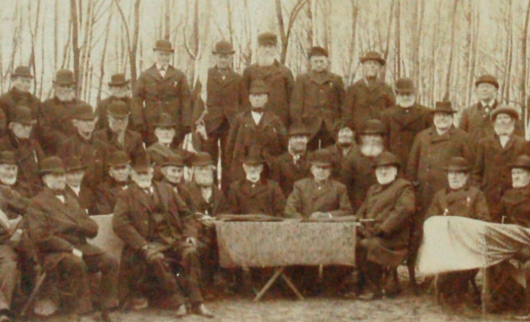
I have been reading a bunch of articles today on the legacy of John Howard Yoder (what his well-documented incidents of sexual harassment mean for how we interpret his theology). Lots of good important questions being asked, and many of them related to Slow Church. For those interested, I started here and was eventually led to this superb two-part article.
The most challenging question is: Does the slowness of Slow Church just serve to prop up existing power structures, such as patriarchy, whiteness and heterosexuality? Is this a dark side to Slow Church? Particularly, are the practices of conversation and discernment (central to Slow Church), little more than thinly-veiled efforts to kick the can, and not intentionally NOT address pressing concerns related to race, gender, sexuality, etc.?
After some reflection, my short answer to these questions is “No, I don’t think so.” But the story is, as usual, more complicated than this simple answer.
To examine these questions, however, I will begin with the question of identity. As Christians, our primary identity and allegiance is to follow Christ. All other facets of our identity (and I certainly recognize that there are indeed other facets) are secondary. Yes, these other facets do very much influence our understanding of what it means to follow Christ, but nevertheless following Christ is primary and race, gender, sexuality, nationality, etc are at most secondary factors. But what does it mean to follow Christ? The local church to which we belong is essential to our identity in Christ, as we are called to embody Christ together in a particular place. Our life together bears everyday witness – for better and for worse – of Christ to our neighbors.
If I read Willie Jennings’s work correctly, our Western inability to be a people in a place was a key factor in the formation of race as we know it today. I haven’t given it much thought, but I wonder if there is a similar connection between place and sexuality? (I’m sure that there are people out there writing about this… I’d love to know who they are and where to start with their work!) Staying in a place and finding our identity as part of Christ’s body there, will be our guide to knowing how to rightly and justly understand the vast diversity of human life – but especially the sorts of diversity that are inherent in the midst of our church community, and our neighborhood.
The local church, central to our understanding of Slow Church, is – I believe – where the primary discernments related to questions of gender, race, sexuality must be made (Are we going to ordain both women and men? Are we categorically denying any office or sacrament of the church to some group of people? Will we accept LBGTQ people as full members of our congregations; will we ordain or marry them?) We need to wrestle with these questions, deciding who we will be as a church community. Being in discernment on one or more of these questions is fine, but as a local church community, we have to live together day-by-day, so discernment can never be a permanent state of affairs, and efforts to silence people by appealing to discernment must be named as such. People may leave our congregations because of the decisions we make, and, if we handle that graciously, it is not necessarily a bad thing. We certainly should encourage commitment and stability within the local church community, but on the other hand, we cannot force anyone to stay.
As we make decisions about who we are as local congregations, we will have to work through the consequences of what those decisions mean for our relationships with our denomination or more informally with other churches. (And certainly these relationships will always haunt us as we make decisions about we will be.) We might face punitive measures, or be removed from our denomination, or force larger conversations, in which we might band with similarly-affiliated congregations.
It seems to me that there is a tendency to want to resolve these questions from the top down, that is, starting with denominational policy, and from there dictating the stance of all local congregations in that denomination. This seems to me, at least, to be its own kind of violence, and this is where my account gets complicated. Yes, it is probably true that discernment might well mean propping up existing – and often unjust – power structures at levels beyond the congregation (diocese, synod, district, region, denomination, etc.), but, as I described above, we are learning to imagine and embody new ways of being in our local congregations, and these new ways will – if we are attentive and persistent in our local identity – begin to shape the policy of larger church groups.
It is important to note that discerning our identity as local congregations, will ultimately impact the policy not only of our church institutions, but also of governmental and social institutions in which we are engaged. If our congregation decides to marry same-sex couples, for instance, (or if we choose not to do so) that will have sociopolitical ramifications for our neighborhoods and cities.
As Jesus’s parable of the log and the speck reminds us, it is very easy to see and denounce the violence of another, but much more difficult to see the violence inherent in our own theologies, policies and actions. A key facet of Slow Church is not only seeking that injustice be reconciled, but doing so in a way that is itself just and not inflicting further violence, and I believe that we learn reconciliation best when we do so in the context of real, embodied relationships of persons, not as abstract political issues (although they do have significance for real individuals and groups). Our politics must follow from who we are as communities that embody Christ, and not vice versa.
I’m mostly thinking out loud here… What do you think? Does this account give too much leeway to powers of whiteness, maleness, heterosexuality, etc?
Previous Post
February 4, 2014
Willie Jennings - New Keynote Speaker for the Slow Church Conference!
Next Post
February 19, 2014 Steven Furtick and the 'Disneyfication' of Baptism
Browse Our Archives
Select a Category Abundance Advent Books Community Conferences Conversations Ecology Economics Emergent Eucharist Family Food Gratitude Happenings Health history Hospitality Justice Lent Meditations Neighborhoods News Peace Place Poetry Politics Sabbath Scripture Stories Technology The Table Theology Uncategorized What is Slow Church? Youth
Select a Month January 2017 December 2016 November 2016 March 2016 June 2015 March 2015 February 2015 December 2014 November 2014 October 2014 September 2014 August 2014 July 2014 June 2014 May 2014 April 2014 March 2014 February 2014 January 2014 December 2013 November 2013 October 2013 September 2013 August 2013 July 2013 June 2013 May 2013 April 2013 March 2013 February 2013 January 2013 December 2012 November 2012 October 2012 September 2012 August 2012 July 2012 June 2012 May 2012 April 2012 March 2012 February 2012 January 2012 December 2011 November 2011 October 2011 September 2011
Follow Us!
TAKE THE
Religious Wisdom Quiz
What foreign power destroyed Jerusalem, ending the kingdom of Judah?
Select your answer to see how you score.
Babylon Persia Assyria Egypt
Related posts from Slow Church


The Hopeful Politics of "Everyday Attentive Reciprocity"

A Politics of Hope in the Trump Age
An Open Apology to Chris Rock.
TRENDING AT PATHEOS Progressive Christian

Why Christians Have a Sacred Duty to Vote:...
The Bible offers strong support for the sacred duty to vote. Here...

What Being a Modern-Day Apostle Means to Me
In my last column, I discussed the ins and outs of modern-day...

Did Ancient China Once Worship the God of...
Across human history, a common thread weaves through the origins of the...

Love Your Neighbor – Including Earth-Kin: Lev. 19,...
God’s command to love your neighbor means acting in an ethical and...

Lead a Church Study of “Jesus and Lao...
Guest writer Jack Thomas (The Irreverent Reverend) reflects on leading his church...

Principles for Understanding the Apostolic Ministry Today
Whenever people discover that my formal ministry title is "apostle," as in...
view all Progressive Christian blogs
Ad-Free & Subscriber Log-In Subscription Support
- About Us
- 2026 Calendar
- Videos
- Podcasts
- Library of World Religions
- Faith In Media Tracker
- Advertise With Us
- Write for Us
- Privacy Policy
- Terms of Service
- Do Not Sell My Data
- Contact Us
- Radiant Digital
- Manage Newsletter Subscriptions
- Unsubscribe From Notifications
- Sitemap
Copyright 2008-2026, Patheos. All rights reserved.
Subscription Support Ad-Free & Subscriber Log-In
Follow Patheos