
BuddhistCatholicContemplativeEvangelicalGeneral ChristianHinduJewishLatter-day SaintMuslimNew VisionsProgressive Christian
Beliefs
- Buddhist
- Catholic
- Contemplative
- Evangelical
- General Christian
- Hindu
- Jewish
- Latter-day Saint
- More Voices
- Muslim
- New Visions
- Pagan
- Progressive Christian
Topics
- Religion News
- Food and Religion
- Sports and Religion
- Religious Art
- Religious Music and Entertainment
- Religious Events
- History and Religion
- Style and Religion
- Politics and Religion
- Women in Religion
- Recreation Outdoors and Religion
- Business Finance and Religion
- Careers Workplace and Religion
- Education and Religion
- Family Parenting and Religion
- Health Fitness and Religion
- Home and Religion
- Relationships and Religion
- Technology and Religion
- Travel and Religion
Columnists
- Buddhist Columnists
- Business Finance and Religion Columnists
- Careers Workplace and Religion Columnists
- Catholic Columnists
- Contemplative Columnists
- Education and Religion Columnists
- Evangelists Columnists
- Family Parenting and Religion Columnists
- General Christian Columnists
- Health Fitness and Religion Columnists
- Hindu Columnists
- History and Religion Columnists
- Home and Religion Columnists
- Jewish Columnists
- More Voices Columnists
- Latter Day Columnists
- Muslim Columnists
- New Visions Columnists
- Nonreligious Columnists
- Pagan Columnists
- Politics and Religion Columnists
- Progressive Columnists
- Recreation Outdoors and Religion Columnists
- Relationships and Religion Columnists
- Religion News Columnists
- Religious Art Columnists
- Religious Events Columnists
- Religious Music and Entertainment Columnists
- Sports and Religion Columnists
- Style and Religion Columnists
- Technology and Religion Columnists
- Travel and Religion Columnists
- Women in Religion Columnists
Resource Library
- 2026 Calendar
- Library of World Religions
- The 100 Most Holy Places on Earth
- Patheos Answers
- Podcasts
- Videos
- Faith Leaders Database
- Anglican Episcopalian
- Bahai
- Baptist
- Buddhism
- Christianity
- Confucianism
- Eastern Orthodoxy
- Hinduism
- Holiness and Pentecostal
- ISKCON
- Islam
- Judaism
- Lutheran
- Methodist
- The Church of Jesus Christ of Latter-day Saints
- New Age
- Paganism
- Presbytarian and Reformed
- Protestantism
- Religion Behind the Scenes
- Roman Catholic
- Scientology
- Shia Islam
- Sikhism
- Sufism
- Sunni Islam
- Taoism
- Zen
- See all religions
Research Tools
 Ad-Free & Subscriber Log-In Subscription Support
Ad-Free & Subscriber Log-In Subscription Support
Follow Patheos 

- Trending:
- Forgiveness
- |
- Marriage
- |
- Consciousness
- |
- Death Penalty
- |
- Election
- |
- Halloween
 Slow Church
- Home
- Progressive Christian
- Further Conversation on Andy Crouch’s PLAYING GOD
Further Conversation on Andy Crouch’s PLAYING GOD
Last updated on: November 19, 2013 at 6:19 pm by Christopher Smith
Further Conversation on Andy Crouch’s PLAYING GOD 2013-11-19T18:19:53-05:00 Christopher Smith
Patheos Explore the world's faith through different perspectives on religion and spirituality! Patheos has the views of the prevalent religions and spiritualities of the world.
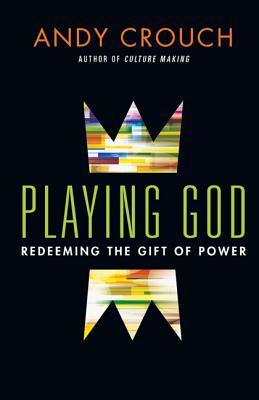 So David Fitch initiated a new conversation on his blog today about Andy Crouch’s new book PLAYING GOD…
Affirming much of what Andy offers in the book, David raises the following concern:
All this to say, Crouch’s book is good but Crouch’s book is dangerous. Some may read it and take it as a Christian user’s manual for power and then go out and use their power in a more benevolent way in their businesses or places of work and think they can redeem the world. It may lead us to think that once we get our understanding of power sorted out we can go out and better exercise it. It may lead us into the danger of thinking we can possess God’s good power. For myself, I think this is dangerous.
The Church
Ironically, there is only one place where power can originate like I have described above: the church. Here power (as charisma) is exercised always in faith and dependence upon the Lord who rules from the throne of the ascension (Eph 4:8-11). Here our gifts in Him are never exercised in hierarchy from a position of power over someone, but out of mutual submission, no one overstepping his bounds ( vs 7,11). Here is the model of power and authority Jesus is always trumpeting (Mark 10:41-45, Luke 22:25-27etc.) and Paul is ever displaying (1 Cor 12-14; Rom 12:3ff; Eph 4:7-16 etc). Here Jesus is Lord and we are participants in His power through the gifts? This then becomes the model for all to follow in the world.
Ironically, except for a few pages in (p. 270ff) Andy Crouch does not spend much time on the church. This is curious. Crouch is adamant about locating power in creation and this may be the problem (grounding his account in creation versus the church). To ground one’s view of power in creation offers up the temptation to think we can enter power as people in the world and use it for good outside of the redemptive processes God has released in the church through Jesus Christ. And so, again, we might walk away from Andy’s book believing I too can now exert power in the halls of worldly power and that power can be redeemed somehow by recognizing things like Andy talks about, idolatry, injustice. But I suggest this way of seeing power has gotten us evangelicals in big trouble before (read the Bush adminstration as evidence no. 1). Instead, we must ever submit to the power of God from within the practices of the church, within our gifts, in mutual submission, and only then bring this power of lamb humbly and subversively into the world. I suggest this is how God will bring down strongholds. This is the power, the power of God released in and through the incarnation by the Holy Spirit that shall take over the world.
I agree with David’s assessment here, but I want to add that it is important that we not confine ourselves to a narrow view of the church as solely a religious community, but rather see the (local) church community as a manifestation of the people of God in a particular place, who are seeking to bear witness to God’s reconciliation of ALL things. Thus, churches should be discerning communities that are engaged in things like food, housing, business, community planning, but do so in an intentional, different and cruciform way that bears witness (to the powers) of the reconciling work of God in Christ (Eph 3:9-10). What I appreciate about PLAYING GOD is that it points us in a more wholistic direction of the mission of God, and the work that we are called into as followers of Christ. But I absolutely agree that it’s missing the crucial piece of the church as the nexus where the Spirit of God guides us into this work in our particular places in such a way that BOTH our ends and our means bear witness to the reconciling wisdom of God in Christ.
David proceeds in the comments to make the distinction between God’s action that is preservatory and God’s action that is redemptive, emphasizing that the church’s role is to bear witness to and to seek the latter. This is a useful distinction, and one, incidentally, that I agree with. HOWEVER, this distinction can become detrimental if wielded improperly: i.e., it can become a barrier that keeps us from engaging in the redemptive work to which God is calling us. One key issue is partnerships that we make as congregations, and how we are to understand the nature of such partnerships? My contention is that we can (and should) enter limited partnerships with groups whose mission is something other than the Mission of God, if (and for as long as) we discern such partnerships to be promoting the shalom of our places. So, we might partner with the federal and/or state government (whose function in David’s terminology is preservative at best) to secure funding for an affordable housing project that is in the best interest of our neighbors. Or, we might partner with secular non-profits or other groups of neighbors to work on crucial environmental or economic issues that affect our place. There is an unhelpful reading of the distinction that David makes (and I don’t think he himself thinks this, but his distinction could be misread and has been misread by sectarian groups), that would bar churches from such partnerships, because we are allying with sorts of organizations and power that are, on the whole, not redemptive. My contention is that the church as a discerning community under the Lordship of Jesus, can and should enter such partnerships as we discern to be beneficial for the flourishing of our places. But we should always enter and engage in such partnerships, with a firm sense of our identity as the followers of Christ, and exit when we discern that are no longer capable of functioning distinctively as Christ’s body in that partnership.
It is in such partnerships/alliances that the manifold wisdom of God is made known in meaningful and substantial ways to the rulers and powers and authorities (Eph 3:10).
Previous Post

November 14, 2013
Alan Hirsch offers the first blurb for the Slow Church book!
Next Post

November 25, 2013 Wendell Berry Sabbath poem - "Will-lessly the leaves fall"
Browse Our Archives
Select a Category Abundance Advent Books Community Conferences Conversations Ecology Economics Emergent Eucharist Family Food Gratitude Happenings Health history Hospitality Justice Lent Meditations Neighborhoods News Peace Place Poetry Politics Sabbath Scripture Stories Technology The Table Theology Uncategorized What is Slow Church? Youth
Select a Month January 2017 December 2016 November 2016 March 2016 June 2015 March 2015 February 2015 December 2014 November 2014 October 2014 September 2014 August 2014 July 2014 June 2014 May 2014 April 2014 March 2014 February 2014 January 2014 December 2013 November 2013 October 2013 September 2013 August 2013 July 2013 June 2013 May 2013 April 2013 March 2013 February 2013 January 2013 December 2012 November 2012 October 2012 September 2012 August 2012 July 2012 June 2012 May 2012 April 2012 March 2012 February 2012 January 2012 December 2011 November 2011 October 2011 September 2011
Follow Us!
TAKE THE
Religious Wisdom Quiz
What does "Jordan" (as in Jordan River) mean?
Select your answer to see how you score.
To descend To anoint To heal To open
Related posts from Slow Church


The Hopeful Politics of "Everyday Attentive Reciprocity"

An Open Apology to Chris Rock.

Indiana's New RFRA Bill Hits Home on Indy's...
TRENDING AT PATHEOS Progressive Christian

Why Christians Have a Sacred Duty to Vote:...
The Bible offers strong support for the sacred duty to vote. Here...

What Being a Modern-Day Apostle Means to Me
In my last column, I discussed the ins and outs of modern-day...

Did Ancient China Once Worship the God of...
Across human history, a common thread weaves through the origins of the...

Love Your Neighbor – Including Earth-Kin: Lev. 19,...
God’s command to love your neighbor means acting in an ethical and...

Lead a Church Study of “Jesus and Lao...
Guest writer Jack Thomas (The Irreverent Reverend) reflects on leading his church...

Principles for Understanding the Apostolic Ministry Today
Whenever people discover that my formal ministry title is "apostle," as in...
view all Progressive Christian blogs
Ad-Free & Subscriber Log-In Subscription Support
- About Us
- 2026 Calendar
- Videos
- Podcasts
- Library of World Religions
- Faith In Media Tracker
- Advertise With Us
- Write for Us
- Privacy Policy
- Terms of Service
- Do Not Sell My Data
- Contact Us
- Radiant Digital
- Manage Newsletter Subscriptions
- Unsubscribe From Notifications
- Sitemap
Copyright 2008-2026, Patheos. All rights reserved.
Subscription Support Ad-Free & Subscriber Log-In
Follow Patheos