
BuddhistCatholicContemplativeEvangelicalGeneral ChristianHinduJewishLatter-day SaintMuslimNew VisionsProgressive Christian
Beliefs
- Buddhist
- Catholic
- Contemplative
- Evangelical
- General Christian
- Hindu
- Jewish
- Latter-day Saint
- More Voices
- Muslim
- New Visions
- Pagan
- Progressive Christian
Topics
- Religion News
- Food and Religion
- Sports and Religion
- Religious Art
- Religious Music and Entertainment
- Religious Events
- History and Religion
- Style and Religion
- Politics and Religion
- Women in Religion
- Recreation Outdoors and Religion
- Business Finance and Religion
- Careers Workplace and Religion
- Education and Religion
- Family Parenting and Religion
- Health Fitness and Religion
- Home and Religion
- Relationships and Religion
- Technology and Religion
- Travel and Religion
Columnists
- Buddhist Columnists
- Business Finance and Religion Columnists
- Careers Workplace and Religion Columnists
- Catholic Columnists
- Contemplative Columnists
- Education and Religion Columnists
- Evangelists Columnists
- Family Parenting and Religion Columnists
- General Christian Columnists
- Health Fitness and Religion Columnists
- Hindu Columnists
- History and Religion Columnists
- Home and Religion Columnists
- Jewish Columnists
- More Voices Columnists
- Latter Day Columnists
- Muslim Columnists
- New Visions Columnists
- Nonreligious Columnists
- Pagan Columnists
- Politics and Religion Columnists
- Progressive Columnists
- Recreation Outdoors and Religion Columnists
- Relationships and Religion Columnists
- Religion News Columnists
- Religious Art Columnists
- Religious Events Columnists
- Religious Music and Entertainment Columnists
- Sports and Religion Columnists
- Style and Religion Columnists
- Technology and Religion Columnists
- Travel and Religion Columnists
- Women in Religion Columnists
Resource Library
- 2026 Calendar
- Library of World Religions
- The 100 Most Holy Places on Earth
- Patheos Answers
- Podcasts
- Videos
- Faith Leaders Database
- Anglican Episcopalian
- Bahai
- Baptist
- Buddhism
- Christianity
- Confucianism
- Eastern Orthodoxy
- Hinduism
- Holiness and Pentecostal
- ISKCON
- Islam
- Judaism
- Lutheran
- Methodist
- The Church of Jesus Christ of Latter-day Saints
- New Age
- Paganism
- Presbytarian and Reformed
- Protestantism
- Religion Behind the Scenes
- Roman Catholic
- Scientology
- Shia Islam
- Sikhism
- Sufism
- Sunni Islam
- Taoism
- Zen
- See all religions
Research Tools
 Ad-Free & Subscriber Log-In Subscription Support
Ad-Free & Subscriber Log-In Subscription Support
Follow Patheos 

- Trending:
- Forgiveness
- |
- Marriage
- |
- Consciousness
- |
- Death Penalty
- |
- Election
- |
- Halloween
 Slow Church
- Home
- Progressive Christian
- Remembering Robert Rottet and Wilfred Owen
Remembering Robert Rottet and Wilfred Owen
Last updated on: November 4, 2013 at 5:50 pm by Christopher Smith
Remembering Robert Rottet and Wilfred Owen 2013-11-04T17:50:29-05:00 Christopher Smith
Patheos Explore the world's faith through different perspectives on religion and spirituality! Patheos has the views of the prevalent religions and spiritualities of the world.
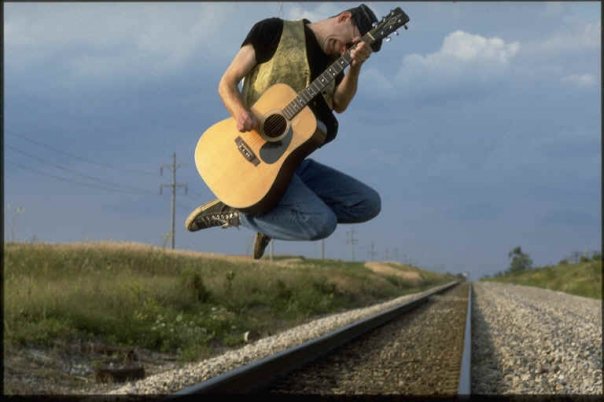
It was on this day in 1999, that my friend the poet/guitarist/songwriter Robert Rottet passed away. He died outside Ft. Bragg. NC, and there is a haze that surrounds the circumstances of his death. Officially, the Army ruled his death a suicide, but some that were close to him at that time suspect foul play. Regardless, his death was deeply intertwined with his military service.
I realized this morning that Nov. 4 also marks the death of another young poet, Wilfred Owen, who also met his untimely demise — in WWI — as a result of his military service.
Here is a video of Rob playing that I shared on Facebook this morning:
[ Tears of Fire ]
(You should be able to play the video, even if you don’t use Facebook).
The song, “Tears of Fire,” based on an article Rob read about children fighting wars in the Middle East, expresses a deep longing for a world in which children (at least) would not have to fight wars for the nation.
Here are two other songs that were recorded on the same night in 1994:
[ By the Rivers of Babylon ] and [ Red-headed Girl ]
Also, here is a biographical sketch of Robert that ran in Image Journal online in 2003:
The Complex Epiphanies of Robert Rottet
Robert Rottet was born in 1966, and lived most of his life in various places throughout the Midwest. Rottet’s musical and artistic interests began at an early age and continued throughout his life to be a central and consuming passion. Extremely gifted with the guitar, Rottet was involved both with bands and the creation of solo material while still in junior high. In the late 1980s and early 1990s, he worked with inner city youth in Camden, New Jersey. During these years, Rottet began to collect guitars and basic recording equipment. Using 4-tracks and DAT machines, Rottet recorded more than 30 albums of original material, using his own voice for backing vocals in addition to playing all the instruments. He attended college in Chicago and Indiana, and in 1996 completed a degree in English Literature. That same year he joined the U.S. Army, and was a chaplain in the 82nd Airborne at the time of his death: November 4, 1999 in Fayetteville, North Carolina. In the wake of his untimely passing, Rottet left a massive–and sadly under-appreciated–collection of music, poetry, art, and assorted writings. Both his music and lyrics are dense, and unlike the surface-skimming pop music of our day, continue to dig deeper with each listen; with time his words, as Joyce said of epiphanies, leap from the vestment of their appearances. Rottet drew musical inspiration from nearly every genre available, and from artists as diverse as Jimi Hendrix and They Might Be Giants; his lyrics found resources in the Bible, mythology, children’s fairytales, works like Conrad’s Heart of Darkness and Dante’s Inferno, the poetry of Langston Hughes, and anything and everything he ever read. Research Records, his own label founded in 1992, continues the process of transferring his albums to CD format. Two releases are planned for 2003: Country, Blues, Folk (an album of traditionals) and The Chicago E.P. (five songs). Costs for each release are covered by a grassroots network of friends and supporters, and the albums are distributed for free via Rottet’s official website. At this time, a multi-artist requiem for Rottet–Below What Once Were Wings–is in progress.
For further information visit Robert Rottet’s official website.

Wilfred Owen was perhaps the preeminent war poet of WWI, and left behind a gripping, if altogether too brief, body of work.
Here are two of his poems (via The Englewood Review of Books):
- Dulce and Decorum Est
- S.I.W. (Self-Inflected Wound), a reflection on suicide in the face of war, which is as relevant today as it was when Owen penned it almost 100 years ago.
Part of what we long for, as part of the vision of Slow Church, is a world in which the horrors of war and war-making, including the loss of brilliant young people like Robert Rottet and Wilfred Owen, gradually become unnecessary as all is subsumed in the peace of Christ.
Previous Post

October 30, 2013
From Frankenstein's Monster to The Body of Christ
Next Post

November 14, 2013 Alan Hirsch offers the first blurb for the Slow Church book!
Browse Our Archives
Select a Category Abundance Advent Books Community Conferences Conversations Ecology Economics Emergent Eucharist Family Food Gratitude Happenings Health history Hospitality Justice Lent Meditations Neighborhoods News Peace Place Poetry Politics Sabbath Scripture Stories Technology The Table Theology Uncategorized What is Slow Church? Youth
Select a Month January 2017 December 2016 November 2016 March 2016 June 2015 March 2015 February 2015 December 2014 November 2014 October 2014 September 2014 August 2014 July 2014 June 2014 May 2014 April 2014 March 2014 February 2014 January 2014 December 2013 November 2013 October 2013 September 2013 August 2013 July 2013 June 2013 May 2013 April 2013 March 2013 February 2013 January 2013 December 2012 November 2012 October 2012 September 2012 August 2012 July 2012 June 2012 May 2012 April 2012 March 2012 February 2012 January 2012 December 2011 November 2011 October 2011 September 2011
Follow Us!
TAKE THE
Religious Wisdom Quiz
Which Christian movement began with John Wesley in the 18th century?
Select your answer to see how you score.
Lutheranism Calvinism Presbyterianism Methodism
Related posts from Slow Church


The Hopeful Politics of "Everyday Attentive Reciprocity"
An Open Apology to Chris Rock.
Indiana's New RFRA Bill Hits Home on Indy's...
TRENDING AT PATHEOS Progressive Christian

Why Christians Have a Sacred Duty to Vote:...
The Bible offers strong support for the sacred duty to vote. Here...

What Being a Modern-Day Apostle Means to Me
In my last column, I discussed the ins and outs of modern-day...

Did Ancient China Once Worship the God of...
Across human history, a common thread weaves through the origins of the...

Love Your Neighbor – Including Earth-Kin: Lev. 19,...
God’s command to love your neighbor means acting in an ethical and...

Lead a Church Study of “Jesus and Lao...
Guest writer Jack Thomas (The Irreverent Reverend) reflects on leading his church...

Principles for Understanding the Apostolic Ministry Today
Whenever people discover that my formal ministry title is "apostle," as in...
view all Progressive Christian blogs
Ad-Free & Subscriber Log-In Subscription Support
- About Us
- 2026 Calendar
- Videos
- Podcasts
- Library of World Religions
- Faith In Media Tracker
- Advertise With Us
- Write for Us
- Privacy Policy
- Terms of Service
- Do Not Sell My Data
- Contact Us
- Radiant Digital
- Manage Newsletter Subscriptions
- Unsubscribe From Notifications
- Sitemap
Copyright 2008-2026, Patheos. All rights reserved.
Subscription Support Ad-Free & Subscriber Log-In
Follow Patheos