
BuddhistCatholicContemplativeEvangelicalGeneral ChristianHinduJewishLatter-day SaintMuslimNew VisionsProgressive Christian
Beliefs
- Buddhist
- Catholic
- Contemplative
- Evangelical
- General Christian
- Hindu
- Jewish
- Latter-day Saint
- More Voices
- Muslim
- New Visions
- Pagan
- Progressive Christian
Topics
- Religion News
- Food and Religion
- Sports and Religion
- Religious Art
- Religious Music and Entertainment
- Religious Events
- History and Religion
- Style and Religion
- Politics and Religion
- Women in Religion
- Recreation Outdoors and Religion
- Business Finance and Religion
- Careers Workplace and Religion
- Education and Religion
- Family Parenting and Religion
- Health Fitness and Religion
- Home and Religion
- Relationships and Religion
- Technology and Religion
- Travel and Religion
Columnists
- Buddhist Columnists
- Business Finance and Religion Columnists
- Careers Workplace and Religion Columnists
- Catholic Columnists
- Contemplative Columnists
- Education and Religion Columnists
- Evangelists Columnists
- Family Parenting and Religion Columnists
- General Christian Columnists
- Health Fitness and Religion Columnists
- Hindu Columnists
- History and Religion Columnists
- Home and Religion Columnists
- Jewish Columnists
- More Voices Columnists
- Latter Day Columnists
- Muslim Columnists
- New Visions Columnists
- Nonreligious Columnists
- Pagan Columnists
- Politics and Religion Columnists
- Progressive Columnists
- Recreation Outdoors and Religion Columnists
- Relationships and Religion Columnists
- Religion News Columnists
- Religious Art Columnists
- Religious Events Columnists
- Religious Music and Entertainment Columnists
- Sports and Religion Columnists
- Style and Religion Columnists
- Technology and Religion Columnists
- Travel and Religion Columnists
- Women in Religion Columnists
Resource Library
- 2026 Calendar
- Library of World Religions
- The 100 Most Holy Places on Earth
- Patheos Answers
- Podcasts
- Videos
- Faith Leaders Database
- Anglican Episcopalian
- Bahai
- Baptist
- Buddhism
- Christianity
- Confucianism
- Eastern Orthodoxy
- Hinduism
- Holiness and Pentecostal
- ISKCON
- Islam
- Judaism
- Lutheran
- Methodist
- The Church of Jesus Christ of Latter-day Saints
- New Age
- Paganism
- Presbytarian and Reformed
- Protestantism
- Religion Behind the Scenes
- Roman Catholic
- Scientology
- Shia Islam
- Sikhism
- Sufism
- Sunni Islam
- Taoism
- Zen
- See all religions
Research Tools
 Ad-Free & Subscriber Log-In Subscription Support
Ad-Free & Subscriber Log-In Subscription Support
Follow Patheos 

- Trending:
- Forgiveness
- |
- Marriage
- |
- Consciousness
- |
- Death Penalty
- |
- Election
- |
- Halloween
 Slow Church
- Home
- Progressive Christian
- Andy Crouch on Anabaptists and Power [Patheos Book Club]
Andy Crouch on Anabaptists and Power [Patheos Book Club]
Last updated on: October 29, 2013 at 9:56 am by Christopher Smith
Andy Crouch on Anabaptists and Power [Patheos Book Club] 2013-10-29T09:56:50-05:00 Christopher Smith
Patheos Explore the world's faith through different perspectives on religion and spirituality! Patheos has the views of the prevalent religions and spiritualities of the world.
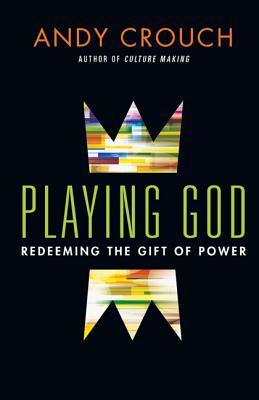
[ This post is part of the Patheos Book Club discussion of Playing God ]
I recently had the opportunity to interview Andy Crouch about his new book PLAYING GOD: REDEEMING THE GIFT OF POWER (IVP Books, Fall 2013). My interview appears in the current print issue of The Englewood Review of Books, but there was a sizable chunk of the interview that had to be trimmed to fit the allocated space, so I thought I would share a couple of questions related to the Anabaptist tradition here. Andy’s responses to these questions was not necessarily what I would have expected.
CS: Can you briefly summarize your understanding of what the nature of power is?
AC: So I think, where you want to start if you’re looking for a Biblical depiction of power is with creation and new creation. And in many ways, my deepest argument in this book is with people who think that the deepest form of power is violence. Violence is obviously a real form of power; it’s the power that was brought to bear on Jesus on the cross. The overall biblical witness, however, is that there’s a power deeper than violence and that’s the power of creation. And that power, too, is available to us and is part of what we have to steward. We don’t just have to limit our involvement in violence, but we have to ask, “How am I maximally involved in creating environments that flourish?”
CS: Yes, that definitely makes sense, and it seems to fit with the larger witness of church history that the power of resurrection transcends the power of death and violence.
AC: Yes, exactly. And, for example, the Anabaptist tradition is very important because its refusal to participate in state-sponsored instruments of force,violence and deadly brutality is a deeply consistent witness that there’s another power at work in the world. Thus, no one who wants to follow Jesus can NOT take the Anabaptist tradition seriously, but whatever we think about these kind of typical edge cases where the state claims the right to take a life, that’s where Anabaptist diverge from other Christians. It seems to me that becoming a disciple of Jesus is coming to believe that the power at work in creativity and love is so much more powerful than violence as to render whatever death the systems of the world can deal just not even worth fearing. We are freed therefore to a much greater risk of creativity and love than we’d be able to venture if we were still trapped in the fear of death.
CS: Absolutely, and it seems like the ideas of power that you’re describing here leave open the possibility of some sorts of collaboration with certain types of powers and authorities that at least some historical strains of Anabaptism would be adamantly opposed to.
AC: That’s a really good observation. I think that’s tied into my thinking and writing about culture: the more I thought about it, the less satisfied I was with the tendency of Christians, not just Anabaptists, by the way, but all kinds of Christians, to try to separate ourselves from culture and to create kind of parallel Christian versions of it. There’s a couple things that seem to happen here. One is that it seems like worldliness seeps in anyway. It seeps into the most radically separatist communities in its own way. I almost think it’s more honest to just realize that we have been placed in this world, and Jesus specifically prays that his disciples would not be taken out of this world in the so-called high priestly prayer in the upper room in John 17. And instead the more honest thing would be to realize that we are, for better and for worse, implicated in the structures of this world, but we are not here to just become assimilated to it, and you can be just as assimilated in a separatist—there’s a separatist version of assimilation which superficially you appear completely cut off from the structures of culture, but at a deeper level many of your deepest assumptions are actually shaped either by the world around you, or by a kind of a tit-for-tat, one-for-one reaction to the world around you. And I think the challenge of resisting assimilation goes much deeper than non-participation in certain structures and goes much more to why am I present in these places and what am I hoping for and what am I fearing as I participate in public life, in government, in business, in commerce, in the worldly arts. I think I’ve become persuaded that we need to be vigilant about worldliness, but in some ways you have to be more vigilant about it the more separatist you are.
Previous Post

October 24, 2013
Slow Church Planting? [Guest Post by Timothy Colegrove]
Next Post

October 30, 2013 From Frankenstein's Monster to The Body of Christ
Browse Our Archives
Select a Category Abundance Advent Books Community Conferences Conversations Ecology Economics Emergent Eucharist Family Food Gratitude Happenings Health history Hospitality Justice Lent Meditations Neighborhoods News Peace Place Poetry Politics Sabbath Scripture Stories Technology The Table Theology Uncategorized What is Slow Church? Youth
Select a Month January 2017 December 2016 November 2016 March 2016 June 2015 March 2015 February 2015 December 2014 November 2014 October 2014 September 2014 August 2014 July 2014 June 2014 May 2014 April 2014 March 2014 February 2014 January 2014 December 2013 November 2013 October 2013 September 2013 August 2013 July 2013 June 2013 May 2013 April 2013 March 2013 February 2013 January 2013 December 2012 November 2012 October 2012 September 2012 August 2012 July 2012 June 2012 May 2012 April 2012 March 2012 February 2012 January 2012 December 2011 November 2011 October 2011 September 2011
Follow Us!
TAKE THE
Religious Wisdom Quiz
What did Jesus say about judging people?
Select your answer to see how you score.
Judge yourself only Judge fairly Judge justly Judge not
Related posts from Slow Church


The Hopeful Politics of "Everyday Attentive Reciprocity"

An Open Apology to Chris Rock.

Indiana's New RFRA Bill Hits Home on Indy's...
TRENDING AT PATHEOS Progressive Christian

Why Christians Have a Sacred Duty to Vote:...
The Bible offers strong support for the sacred duty to vote. Here...

What Being a Modern-Day Apostle Means to Me
In my last column, I discussed the ins and outs of modern-day...

Did Ancient China Once Worship the God of...
Across human history, a common thread weaves through the origins of the...

Love Your Neighbor – Including Earth-Kin: Lev. 19,...
God’s command to love your neighbor means acting in an ethical and...

Lead a Church Study of “Jesus and Lao...
Guest writer Jack Thomas (The Irreverent Reverend) reflects on leading his church...

Principles for Understanding the Apostolic Ministry Today
Whenever people discover that my formal ministry title is "apostle," as in...
view all Progressive Christian blogs
Ad-Free & Subscriber Log-In Subscription Support
- About Us
- 2026 Calendar
- Videos
- Podcasts
- Library of World Religions
- Faith In Media Tracker
- Advertise With Us
- Write for Us
- Privacy Policy
- Terms of Service
- Do Not Sell My Data
- Contact Us
- Radiant Digital
- Manage Newsletter Subscriptions
- Unsubscribe From Notifications
- Sitemap
Copyright 2008-2026, Patheos. All rights reserved.
Subscription Support Ad-Free & Subscriber Log-In
Follow Patheos