
BuddhistCatholicContemplativeEvangelicalGeneral ChristianHinduJewishLatter-day SaintMuslimNew VisionsProgressive Christian
Beliefs
- Buddhist
- Catholic
- Contemplative
- Evangelical
- General Christian
- Hindu
- Jewish
- Latter-day Saint
- More Voices
- Muslim
- New Visions
- Pagan
- Progressive Christian
Topics
- Religion News
- Food and Religion
- Sports and Religion
- Religious Art
- Religious Music and Entertainment
- Religious Events
- History and Religion
- Style and Religion
- Politics and Religion
- Women in Religion
- Recreation Outdoors and Religion
- Business Finance and Religion
- Careers Workplace and Religion
- Education and Religion
- Family Parenting and Religion
- Health Fitness and Religion
- Home and Religion
- Relationships and Religion
- Technology and Religion
- Travel and Religion
Columnists
- Buddhist Columnists
- Business Finance and Religion Columnists
- Careers Workplace and Religion Columnists
- Catholic Columnists
- Contemplative Columnists
- Education and Religion Columnists
- Evangelists Columnists
- Family Parenting and Religion Columnists
- General Christian Columnists
- Health Fitness and Religion Columnists
- Hindu Columnists
- History and Religion Columnists
- Home and Religion Columnists
- Jewish Columnists
- More Voices Columnists
- Latter Day Columnists
- Muslim Columnists
- New Visions Columnists
- Nonreligious Columnists
- Pagan Columnists
- Politics and Religion Columnists
- Progressive Columnists
- Recreation Outdoors and Religion Columnists
- Relationships and Religion Columnists
- Religion News Columnists
- Religious Art Columnists
- Religious Events Columnists
- Religious Music and Entertainment Columnists
- Sports and Religion Columnists
- Style and Religion Columnists
- Technology and Religion Columnists
- Travel and Religion Columnists
- Women in Religion Columnists
Resource Library
- 2026 Calendar
- Library of World Religions
- The 100 Most Holy Places on Earth
- Patheos Answers
- Podcasts
- Videos
- Faith Leaders Database
- Anglican Episcopalian
- Bahai
- Baptist
- Buddhism
- Christianity
- Confucianism
- Eastern Orthodoxy
- Hinduism
- Holiness and Pentecostal
- ISKCON
- Islam
- Judaism
- Lutheran
- Methodist
- The Church of Jesus Christ of Latter-day Saints
- New Age
- Paganism
- Presbytarian and Reformed
- Protestantism
- Religion Behind the Scenes
- Roman Catholic
- Scientology
- Shia Islam
- Sikhism
- Sufism
- Sunni Islam
- Taoism
- Zen
- See all religions
Research Tools
 Ad-Free & Subscriber Log-In Subscription Support
Ad-Free & Subscriber Log-In Subscription Support
Follow Patheos 

- Trending:
- Forgiveness
- |
- Marriage
- |
- Consciousness
- |
- Death Penalty
- |
- Election
- |
- Halloween
 Slow Church
- Home
- Progressive Christian
- Is It Time for Post-Partisan Politics?
Is It Time for Post-Partisan Politics?
Last updated on: October 21, 2013 at 8:17 pm by Christopher Smith
Is It Time for Post-Partisan Politics? 2013-10-21T20:17:06-05:00 Christopher Smith
Patheos Explore the world's faith through different perspectives on religion and spirituality! Patheos has the views of the prevalent religions and spiritualities of the world.
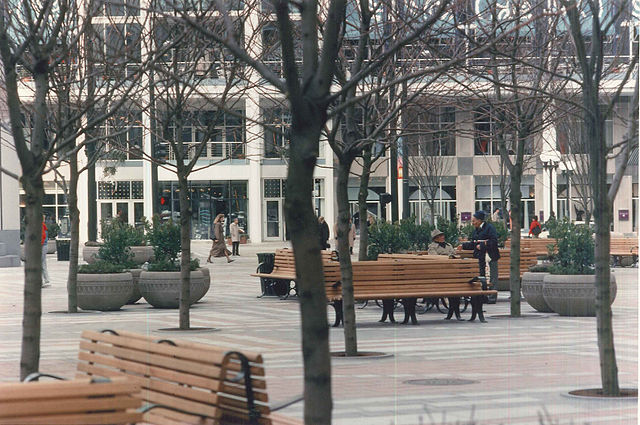
Is It Time for Post-Partisan Politics?
A new AP poll shows that Congress is at its lowest approval rating ever with only 5% of Americans approving of them. Over the last several years, Congress has shown again and again that they are utterly incapable of dealing with the deepest crises that are presently facing the American people. They repeatedly struggle merely to kick the economic can down the road, much less addressing the underlying economic issues that we are facing, and the U.S. continues to teeter on the brink of economic default. Both parties are pawns of lobbyists with deep pockets, and so next to nothing is done to address crucial issues that fly in the face of these funders’ interests: escalating gun violence; absurdly high costs of pharmaceuticals and other medical services (in contrast to the rest of the world); the intertwined ecological crises of climate change and oil dependency. Whatever Washington, or Wall Street (who perhaps is the main power pulling the reins in Washington) is doing, it has ceased to be “of the people, by the people and for the people,” and seemingly has become – as the Occupy movement has emphasized – regardless of at least 99% of the people (and regardless of the best interests of the land and our natural resources). But we are not helpless; we don’t have to stay in this state of affairs.
It’s time for us to declare that Congress has made themselves irrelevant. We are now in a place, and probably have been so for many years, in which our local communities can — with some imagination and significant effort — make progress on these crucial crises even when Congress cannot. Local communities can — and already have in some places — band together to resist corporate domination that cares only for the bottom line and not for people, land and natural resources. Local communities can ban or substantially restrict the sale of assault weapons and others that serve only for the taking of human life. Furthermore, as Robert Putnam emphasized in his classic book Bowling Alone, neighborhoods can work together to build familiarity and trust among neighbors, reducing crime and curbing the impulse to stockpile such weapons. Communities can band together to develop healthcare co-ops that have sufficient power to negotiate the lowest prices on medical services, perhaps even develop systems of mutual aid that make health insurance irrelevant. Communities can incentivize bicycle and public transit, as well as solar, geothermal and other alternative sources of energy, reducing reliance on brutally destructive fossil fuels. And above all, these sorts of political action can largely be initiated and sustained independently of the partisan impasse in Washington.
The stronger our local communities and local economies become, the less we need to rely on federal solutions that come down on high from Washington – or perhaps more accurately, the less time we need to waste waiting for Washington (or our state capitals) to inch along and not offer any solutions. I have been struck recently by how Wendell Berry (in his interview with Bill Moyers) and Bill McKibben (in his new memoir Oil and Honey) have both emphasized that the key to a sustainable future is strong and active local communities. Berry says:
I say to the young people, don’t get into this with the idea that you’re going to save it and solve all the problems even in your lifetime. The important thing to do is to learn all you can about where you are and if you’re going to work there it becomes even more important to learn everything you can about that place to make common cause with that place and then resigning yourself, becoming patient enough to work with it over a long time. And then what you do is increase the possibility that you will make a good example and what we’re looking for in this is good examples.
Yes, our local communities are in bad shape, battered by the individualism of Western culture and left with a landscape dominated by trans-global corporations that suck resources out of our communities. But perhaps now, we have finally tired of the foolish antics of Congress and will be motivated to imagine a new sorts of politics that begins in our local neighborhoods. I am convinced that faith communities are uniquely positioned to lead the way toward stronger communities. In my next few posts here, I will spell out why I think this is the case and outline a plan for how faith communities can nurture a new post-partisan politics that begins local and extends outward from there, as strong communities band together to work on issues that affect their places. I’m confident that new political systems will arise over time on the regional, state and federal levels.
Okay, so we need to cultivate stronger communities, but what do we do about state and federal politics in the meantime, as we wait for new systems to evolve? First, let’s not put too much energy or concern into them. Yes, we still need to be attentive to issues that affect our communities and vote and advocate accordingly, but we need to put substantially more energy (and if I was forced to quantify here, I would say at least three times as much energy) into developing new local politics and economies that are not only mindful but deeply respect all people in our communities and the land and natural resources of our place. And it is important that we vote and advocate primarily with our local communities in mind, and not merely our own private interests.
Our communities cannot afford to wait for Washington. We will not leave our future in the hands of politicians who prefer to serve corporate interests instead of their constituents. Now is the time for a post-partisan politics that begins as we work together with our neighbors for the flourishing our of place
Image Credit: Creative Commons License via Wikimedia Commons.
Previous Post

October 14, 2013
Cultivating Economic Peace in an Age of Instability
Next Post

October 23, 2013 Help Pick the Worst Christian Book Covers of 2013!
Browse Our Archives
Select a Category Abundance Advent Books Community Conferences Conversations Ecology Economics Emergent Eucharist Family Food Gratitude Happenings Health history Hospitality Justice Lent Meditations Neighborhoods News Peace Place Poetry Politics Sabbath Scripture Stories Technology The Table Theology Uncategorized What is Slow Church? Youth
Select a Month January 2017 December 2016 November 2016 March 2016 June 2015 March 2015 February 2015 December 2014 November 2014 October 2014 September 2014 August 2014 July 2014 June 2014 May 2014 April 2014 March 2014 February 2014 January 2014 December 2013 November 2013 October 2013 September 2013 August 2013 July 2013 June 2013 May 2013 April 2013 March 2013 February 2013 January 2013 December 2012 November 2012 October 2012 September 2012 August 2012 July 2012 June 2012 May 2012 April 2012 March 2012 February 2012 January 2012 December 2011 November 2011 October 2011 September 2011
Follow Us!
TAKE THE
Religious Wisdom Quiz
Which Christian group follows the teachings of John Calvin?
Select your answer to see how you score.
Orthodox Catholic Presbyterian Quaker
Related posts from Slow Church

The Hopeful Politics of "Everyday Attentive Reciprocity"

A Politics of Hope in the Trump Age
Indiana's New RFRA Bill Hits Home on Indy's...

Relationally-Based Community Development [Economics of Church and Seminary...
TRENDING AT PATHEOS Progressive Christian

Why Christians Have a Sacred Duty to Vote:...
The Bible offers strong support for the sacred duty to vote. Here...

What Being a Modern-Day Apostle Means to Me
In my last column, I discussed the ins and outs of modern-day...

Did Ancient China Once Worship the God of...
Across human history, a common thread weaves through the origins of the...

Love Your Neighbor – Including Earth-Kin: Lev. 19,...
God’s command to love your neighbor means acting in an ethical and...

Lead a Church Study of “Jesus and Lao...
Guest writer Jack Thomas (The Irreverent Reverend) reflects on leading his church...

Principles for Understanding the Apostolic Ministry Today
Whenever people discover that my formal ministry title is "apostle," as in...
view all Progressive Christian blogs
Ad-Free & Subscriber Log-In Subscription Support
- About Us
- 2026 Calendar
- Videos
- Podcasts
- Library of World Religions
- Faith In Media Tracker
- Advertise With Us
- Write for Us
- Privacy Policy
- Terms of Service
- Do Not Sell My Data
- Contact Us
- Radiant Digital
- Manage Newsletter Subscriptions
- Unsubscribe From Notifications
- Sitemap
Copyright 2008-2026, Patheos. All rights reserved.
Subscription Support Ad-Free & Subscriber Log-In
Follow Patheos