
BuddhistCatholicContemplativeEvangelicalGeneral ChristianHinduJewishLatter-day SaintMuslimNew VisionsProgressive Christian
Beliefs
- Buddhist
- Catholic
- Contemplative
- Evangelical
- General Christian
- Hindu
- Jewish
- Latter-day Saint
- More Voices
- Muslim
- New Visions
- Pagan
- Progressive Christian
Topics
- Religion News
- Food and Religion
- Sports and Religion
- Religious Art
- Religious Music and Entertainment
- Religious Events
- History and Religion
- Style and Religion
- Politics and Religion
- Women in Religion
- Recreation Outdoors and Religion
- Business Finance and Religion
- Careers Workplace and Religion
- Education and Religion
- Family Parenting and Religion
- Health Fitness and Religion
- Home and Religion
- Relationships and Religion
- Technology and Religion
- Travel and Religion
Columnists
- Buddhist Columnists
- Business Finance and Religion Columnists
- Careers Workplace and Religion Columnists
- Catholic Columnists
- Contemplative Columnists
- Education and Religion Columnists
- Evangelists Columnists
- Family Parenting and Religion Columnists
- General Christian Columnists
- Health Fitness and Religion Columnists
- Hindu Columnists
- History and Religion Columnists
- Home and Religion Columnists
- Jewish Columnists
- More Voices Columnists
- Latter Day Columnists
- Muslim Columnists
- New Visions Columnists
- Nonreligious Columnists
- Pagan Columnists
- Politics and Religion Columnists
- Progressive Columnists
- Recreation Outdoors and Religion Columnists
- Relationships and Religion Columnists
- Religion News Columnists
- Religious Art Columnists
- Religious Events Columnists
- Religious Music and Entertainment Columnists
- Sports and Religion Columnists
- Style and Religion Columnists
- Technology and Religion Columnists
- Travel and Religion Columnists
- Women in Religion Columnists
Resource Library
- 2026 Calendar
- Library of World Religions
- The 100 Most Holy Places on Earth
- Patheos Answers
- Podcasts
- Videos
- Faith Leaders Database
- Anglican Episcopalian
- Bahai
- Baptist
- Buddhism
- Christianity
- Confucianism
- Eastern Orthodoxy
- Hinduism
- Holiness and Pentecostal
- ISKCON
- Islam
- Judaism
- Lutheran
- Methodist
- The Church of Jesus Christ of Latter-day Saints
- New Age
- Paganism
- Presbytarian and Reformed
- Protestantism
- Religion Behind the Scenes
- Roman Catholic
- Scientology
- Shia Islam
- Sikhism
- Sufism
- Sunni Islam
- Taoism
- Zen
- See all religions
Research Tools
 Ad-Free & Subscriber Log-In Subscription Support
Follow Patheos 

- Trending:
- Advent
- |
- Forgiveness
- |
- Thanksgiving
- |
- Election
- |
- Seasonal Holidays
- |
- Marriage
 Slow Church
- Home
- Progressive Christian
- Barbarians At The Gate?
Barbarians At The Gate?
Last updated on: October 10, 2013 at 9:04 pm by Christopher Smith
Barbarians At The Gate? 2013-10-10T21:04:27-05:00 Christopher Smith
Patheos Explore the world's faith through different perspectives on religion and spirituality! Patheos has the views of the prevalent religions and spiritualities of the world.
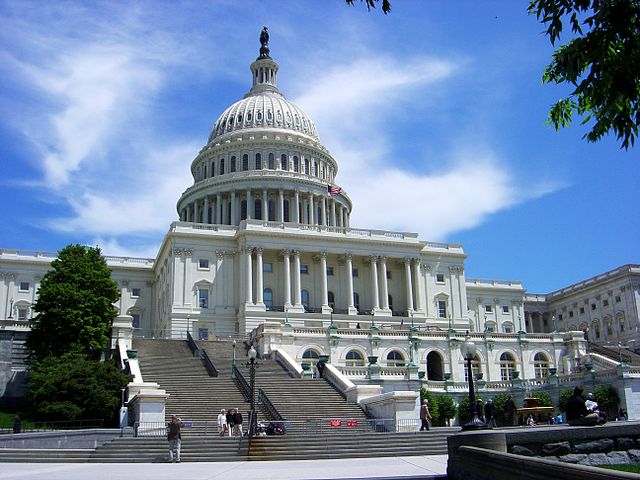
The recent government shutdown, frustrating as it is, should not really come as all that big of a surprise.
In Western culture – and particularly in the United States – we have been cultivating habits for many decades that are dissolving our capacity to talk civilly and live peaceably with our neighbors, and especially our neighbors who differ from us in prominent ways: politics, economic status, race, sexual identity, etc. This history has been chronicled over the last thirty years by important books such as Habits of the Heart by the late Robert Bellah and others, Bowling Alone by Robert Putnam and more recently by Bill Bishop in The Big Sort.
In a similar vein, I have recently finished reading Jane Jacobs’s last book Dark Age Ahead (2004), which enumerates the ways in which she believes that our culture is on a fast track toward self-destruction. In the book’s introduction, Jacobs emphasizes that they defining mark of a dark age is forgetfulness: “During a Dark Age, the mass amnesia of a survivors becomes permanent and profound. The previous way of life slides into an abyss of forgetfulness, almost as decisively as if it had not existed.” There are indeed many things we have lost, or are losing, as a result of the long-nascent fragmentation of individualism: the ability to live healthily and fruitfully in community with others, civil dialogue, etc. Jacobs presciently describes our times: “Cultural xenophobia is a frequent sequel to a society’s decline from cultural vigor. Someone has aptly called self-imposed isolation a fortress mentality. … A fortress or fundamentalist mentality not only shuts itself off from dynamic influences originating outside, but also, as a side effect, ceases influencing the outside world.” Jacobs identifies five “pillars” of North American culture (she was living in Toronto at the time the book was written), that are essential to our culture and in serious decay:
1) Community and Family
2) Higher Education
3) The Effective Practice of Science and Technology
4) Taxes and Governmental Powers in touch with needs and possibilities
5) Self-policing by the Learned Professions
While others might point to other serious issues like “racism, profligate environmental destruction, crime, voters’ distrust of politicians, and the enlarging gulf between rich and poor,” Jacobs suggests that these undoubtedly key fragmentations follow from her primary five above. Despite the ominous title of the book, Jacobs does recognize the possibility that we might with significant attention and energy, be able to avert a dark age.
I also have been haunted recently by Alasdair Macintyre’s famous words from the close of his classic book, After Virtue:
What matters at this stage [in history] is the construction of local forms of community within which civility and the intellectual and moral life can be sustained through the new dark ages which are already upon us. And if the tradition of the virtues was able to survive the horrors of the last dark ages, we are not entirely without grounds for hope. This time however the barbarians are not waiting beyond the frontiers; they have already been governing us for quite some time. And it is our lack of consciousness of this that constitutes part of our predicament. We are waiting not for a Godot, but for another — doubtless very different — St. Benedict.
Macintyre’s words about the barbarians who “have already been governing us for quite some time,” make me chuckle uncomfortably, not only at their timeliness in this government shutdown, but also with the realization that our barbaric leaders in Washington were elected by us, and reflect who we are. Building on Macintyre, I have previously argued that local churches can be communities that either guide the larger culture to avert a dark age, or to survive through one.
My intent in talking about the possibility of a coming dark age is not one of fear-mongering. Jacobs emphasizes the massive inertia of a culture such as that of North America, and I agree with her; many of the fragmentations that have brought us to our current position have been snowballing for decades or even centuries, and thus there’s no sense in getting all worked up about our fate as a culture. But as Wendell Berry has argued in his recently televised interview with Bill Moyers (this segment starts at 24:30), the way out of this mess – dark age or no dark age – is to start living a different way in our own local communities. At its very heart, Slow Church is about challenging and empowering church communities not only to reorient themselves to a different way of being that is attentive to our many fragmentations, but to be catalysts in our neighborhoods, energizing change toward the health and well-being of their communities.
I hope that this government shutdown and the ever-impending possibility of economic default serve to get our attention. Our North American culture is unraveling, but the sort of change we need is not the top-down sort of bandages that Washington can offer (though those might just enable us to limp along until better alternatives emerge), but what we need most is radical transformation (the sort that St. Paul points to in Romans 12, for instance) as individuals, families, churches, neighborhoods, and – to the extent that all of these are transformed – the broader systems that sustain a culture. Such radical transformation, of course, although it might quietly take root in a relatively short time, will take a long time to mature and bear fruit, and likely the length of time will be proportional to the scope of the change (churches or neighborhoods will take longer to change than individuals and states will take longer than neighborhoods, etc.).
We are, in essence, the barbarians at the gates of our North American culture, but the question remains: will we prefer to continue in the barbaric ways that have emerged over the course of the modern age, or will we be converted to a way of life that seeks not to conquer – other humans, land or the mysteries of life – but to live peaceably with all humanity, and especially those who are closest at hand in our faith communities and our neighborhoods?
Image Credit: Kevin McCoy (licensed via Creative Commons – Wikimedia Commons)
Previous Post
October 6, 2013
"Pray Without Ceasing..." [Awkward Christian Signs]
Next Post

October 12, 2013 Pope Francis in Conversation with Slow Food's Carlo Petrini
Browse Our Archives
Select a Category Abundance Advent Books Community Conferences Conversations Ecology Economics Emergent Eucharist Family Food Gratitude Happenings Health history Hospitality Justice Lent Meditations Neighborhoods News Peace Place Poetry Politics Sabbath Scripture Stories Technology The Table Theology Uncategorized What is Slow Church? Youth
Select a Month January 2017 December 2016 November 2016 March 2016 June 2015 March 2015 February 2015 December 2014 November 2014 October 2014 September 2014 August 2014 July 2014 June 2014 May 2014 April 2014 March 2014 February 2014 January 2014 December 2013 November 2013 October 2013 September 2013 August 2013 July 2013 June 2013 May 2013 April 2013 March 2013 February 2013 January 2013 December 2012 November 2012 October 2012 September 2012 August 2012 July 2012 June 2012 May 2012 April 2012 March 2012 February 2012 January 2012 December 2011 November 2011 October 2011 September 2011
Follow Us!
TAKE THE
Religious Wisdom Quiz
Who taught Apollos about the gospel of Jesus Christ.
Select your answer to see how you score.
Aquila and Priscilla Paul Barnabas Timothy
Related posts from Slow Church
A Politics of Hope in the Trump Age
Indiana's New RFRA Bill Hits Home on Indy's...
Ferguson and Our Broken Justice System

Chris Smith and Tim Soerens in Conversation [...
TRENDING AT PATHEOS Progressive Christian

Can a Chatbot Touch Your Soul?
Can a chatbot offer genuine spiritual counsel? One conversation brought me to...

Religion and Politics: How Should We Then Live?
Two cultural axioms get repeated in polite company. Don't mix religion and...

7 Things We Get Wrong About Giving Thanks
It's a time of year when many of us turn to the...

Uncaging Truth: Spirituality Beyond Institutions
The Lost Connection: Why True Spirituality, Not Religion, Is the Key to...

Christ the King? Maybe We've Misunderstood the Crown
What do we mean when we say that Jesus is King? What...

Counter “Christ Is King” Nationalism with Christ THE...
Christ the King Sunday is an ideal time to address the heresy...
view all Progressive Christian blogs
Ad-Free & Subscriber Log-In Subscription Support
- About Us
- 2026 Calendar
- Videos
- Podcasts
- Library of World Religions
- Faith In Media Tracker
- Advertise With Us
- Write for Us
- Privacy Policy
- Terms of Service
- Do Not Sell My Data
- Contact Us
- Radiant Digital
- Manage Newsletter Subscriptions
- Unsubscribe From Notifications
- Sitemap
Copyright 2008-2026, Patheos. All rights reserved.
Subscription Support Ad-Free & Subscriber Log-In
Follow Patheos