
BuddhistCatholicContemplativeEvangelicalGeneral ChristianHinduJewishLatter-day SaintMuslimNew VisionsProgressive Christian
Beliefs
- Buddhist
- Catholic
- Contemplative
- Evangelical
- General Christian
- Hindu
- Jewish
- Latter-day Saint
- More Voices
- Muslim
- New Visions
- Pagan
- Progressive Christian
Topics
- Religion News
- Food and Religion
- Sports and Religion
- Religious Art
- Religious Music and Entertainment
- Religious Events
- History and Religion
- Style and Religion
- Politics and Religion
- Women in Religion
- Recreation Outdoors and Religion
- Business Finance and Religion
- Careers Workplace and Religion
- Education and Religion
- Family Parenting and Religion
- Health Fitness and Religion
- Home and Religion
- Relationships and Religion
- Technology and Religion
- Travel and Religion
Columnists
- Buddhist Columnists
- Business Finance and Religion Columnists
- Careers Workplace and Religion Columnists
- Catholic Columnists
- Contemplative Columnists
- Education and Religion Columnists
- Evangelists Columnists
- Family Parenting and Religion Columnists
- General Christian Columnists
- Health Fitness and Religion Columnists
- Hindu Columnists
- History and Religion Columnists
- Home and Religion Columnists
- Jewish Columnists
- More Voices Columnists
- Latter Day Columnists
- Muslim Columnists
- New Visions Columnists
- Nonreligious Columnists
- Pagan Columnists
- Politics and Religion Columnists
- Progressive Columnists
- Recreation Outdoors and Religion Columnists
- Relationships and Religion Columnists
- Religion News Columnists
- Religious Art Columnists
- Religious Events Columnists
- Religious Music and Entertainment Columnists
- Sports and Religion Columnists
- Style and Religion Columnists
- Technology and Religion Columnists
- Travel and Religion Columnists
- Women in Religion Columnists
Resource Library
- 2026 Calendar
- Library of World Religions
- The 100 Most Holy Places on Earth
- Patheos Answers
- Podcasts
- Videos
- Faith Leaders Database
- Anglican Episcopalian
- Bahai
- Baptist
- Buddhism
- Christianity
- Confucianism
- Eastern Orthodoxy
- Hinduism
- Holiness and Pentecostal
- ISKCON
- Islam
- Judaism
- Lutheran
- Methodist
- The Church of Jesus Christ of Latter-day Saints
- New Age
- Paganism
- Presbytarian and Reformed
- Protestantism
- Religion Behind the Scenes
- Roman Catholic
- Scientology
- Shia Islam
- Sikhism
- Sufism
- Sunni Islam
- Taoism
- Zen
- See all religions
Research Tools
 Ad-Free & Subscriber Log-In Subscription Support
Ad-Free & Subscriber Log-In Subscription Support
Follow Patheos 

- Trending:
- Forgiveness
- |
- Marriage
- |
- Consciousness
- |
- Death Penalty
- |
- Election
- |
- Halloween
 Slow Church
- Home
- Progressive Christian
- The Table of Brotherhood: On Having Adversaries.
The Table of Brotherhood: On Having Adversaries.
Last updated on: August 28, 2013 at 1:51 pm by Christopher Smith
The Table of Brotherhood: On Having Adversaries. 2013-08-28T13:51:18-05:00 Christopher Smith
Patheos Explore the world's faith through different perspectives on religion and spirituality! Patheos has the views of the prevalent religions and spiritualities of the world.
“No man is my enemy
My own hands imprison me
Love rescue me” – U2
I was deeply disturbed by this Religion News Service article that got picked up by Christianity Today:
Top Three Adversaries of Christian Conservatives:
Communism, Islam … and the Emergent Church?
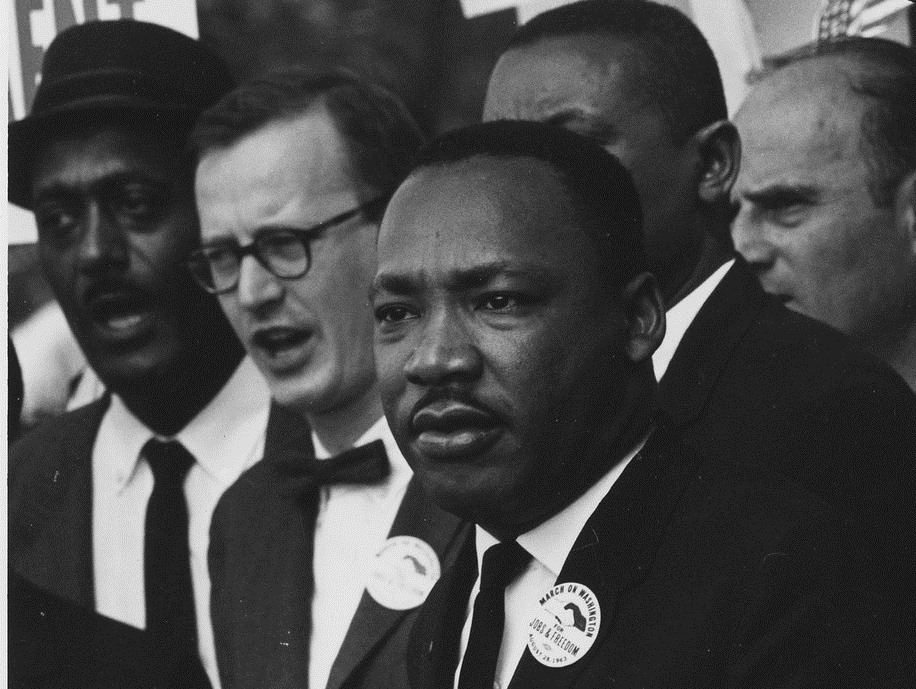
Why do we feel, as Christians, that we need to have enemies? And especially why are we identifying other Christians as enemies? And to think that I encountered this piece on the 50th anniversary of Martin Luther King’s “I Have a Dream” speech, and its words were echoing in my ear:
I have a dream that one day out in the red hills of Georgia the sons of former slaves and the sons of former slaveowners will be able to sit down together at the table of brotherhood.
Yes, race, economics, politics, religion, doctrine, we are still a long way away from the beloved community that Martin Luther King dreamed of, where we would be able to sit down together at “the table of brotherhood” (and I would add, sisterhood), as creatures all created in the image of God.
Indeed, it is the “table of brotherhood” that lies at the heart of Slow Church. The evangelicals are our friends, the emergents are our friends. Jesus gathered tax collectors and Zealots in his little community of disciples, and these groups were as bitterly opposed in the Israelite people of that day as the political Right and Left are today. Let’s gather at the table, eating and being together, knowing and being known as real people, not as faceless ideologies by which we can dismiss and demonize each other. We all will have opinions about what is wrong with the world and how it should be fixed, but we must start by celebrating our unity that has been won in the death, burial, resurrection and ascension of Jesus. Celebrate our unity first, and then learn to eat and to talk and to be together (in a culture that has all but lost the capacity for civil dialogue). Eating together, as John Howard Yoder has emphasized, is an economic act, and by so doing, we are already on the journey to imagining a new shared economy. Let us eat together, and be together and seek Christ together. (And let our economics and politics follow from there.) This is Slow Church.
A SIDEBAR ON IDENTITY:
It’s telling that the stated audience of this CT article is “Christian Conservatives,” the primary identity is Conservative and Christianity is the icing on the cake, so to speak. What we are interested in, and what I advocate above is a primary identity in Christ. Okay, maybe at times we will need clarifying descriptors — “Progressive Christians,” “Conservative Christians,” etc — but can we please recognize that we are first and foremost followers of Christ, that our identity is above all in Jesus? If we cannot do this, how do we expect to imagine the work of Christ in reconciling not only all Christians, but all humanity and all creation???
Previous Post

August 24, 2013
Scarcity: What do you think?
Next Post
September 12, 2013 Slow Church Book Cover!
Browse Our Archives
Select a Category Abundance Advent Books Community Conferences Conversations Ecology Economics Emergent Eucharist Family Food Gratitude Happenings Health history Hospitality Justice Lent Meditations Neighborhoods News Peace Place Poetry Politics Sabbath Scripture Stories Technology The Table Theology Uncategorized What is Slow Church? Youth
Select a Month January 2017 December 2016 November 2016 March 2016 June 2015 March 2015 February 2015 December 2014 November 2014 October 2014 September 2014 August 2014 July 2014 June 2014 May 2014 April 2014 March 2014 February 2014 January 2014 December 2013 November 2013 October 2013 September 2013 August 2013 July 2013 June 2013 May 2013 April 2013 March 2013 February 2013 January 2013 December 2012 November 2012 October 2012 September 2012 August 2012 July 2012 June 2012 May 2012 April 2012 March 2012 February 2012 January 2012 December 2011 November 2011 October 2011 September 2011
Follow Us!
TAKE THE
Religious Wisdom Quiz
What Christian tradition requires confession to a priest for forgiveness of sins?
Select your answer to see how you score.
Methodist Quaker Baptist Roman Catholic
Related posts from Slow Church

Scot McKnight - A Fellowship of Differents [Patheos...

Ragan Sutterfield - This is my Body [Patheos...
Options for the Coming Age: Benedict, Jeremiah, Both,...

Relationally-Based Community Development [Economics of Church and Seminary...
TRENDING AT PATHEOS Progressive Christian

Why Christians Have a Sacred Duty to Vote:...
The Bible offers strong support for the sacred duty to vote. Here...

What Being a Modern-Day Apostle Means to Me
In my last column, I discussed the ins and outs of modern-day...

Did Ancient China Once Worship the God of...
Across human history, a common thread weaves through the origins of the...

Love Your Neighbor – Including Earth-Kin: Lev. 19,...
God’s command to love your neighbor means acting in an ethical and...

Lead a Church Study of “Jesus and Lao...
Guest writer Jack Thomas (The Irreverent Reverend) reflects on leading his church...

Principles for Understanding the Apostolic Ministry Today
Whenever people discover that my formal ministry title is "apostle," as in...
view all Progressive Christian blogs
Ad-Free & Subscriber Log-In Subscription Support
- About Us
- 2026 Calendar
- Videos
- Podcasts
- Library of World Religions
- Faith In Media Tracker
- Advertise With Us
- Write for Us
- Privacy Policy
- Terms of Service
- Do Not Sell My Data
- Contact Us
- Radiant Digital
- Manage Newsletter Subscriptions
- Unsubscribe From Notifications
- Sitemap
Copyright 2008-2026, Patheos. All rights reserved.
Subscription Support Ad-Free & Subscriber Log-In
Follow Patheos