
BuddhistCatholicContemplativeEvangelicalGeneral ChristianHinduJewishLatter-day SaintMuslimNew VisionsProgressive Christian
Beliefs
- Buddhist
- Catholic
- Contemplative
- Evangelical
- General Christian
- Hindu
- Jewish
- Latter-day Saint
- More Voices
- Muslim
- New Visions
- Pagan
- Progressive Christian
Topics
- Religion News
- Food and Religion
- Sports and Religion
- Religious Art
- Religious Music and Entertainment
- Religious Events
- History and Religion
- Style and Religion
- Politics and Religion
- Women in Religion
- Recreation Outdoors and Religion
- Business Finance and Religion
- Careers Workplace and Religion
- Education and Religion
- Family Parenting and Religion
- Health Fitness and Religion
- Home and Religion
- Relationships and Religion
- Technology and Religion
- Travel and Religion
Columnists
- Buddhist Columnists
- Business Finance and Religion Columnists
- Careers Workplace and Religion Columnists
- Catholic Columnists
- Contemplative Columnists
- Education and Religion Columnists
- Evangelists Columnists
- Family Parenting and Religion Columnists
- General Christian Columnists
- Health Fitness and Religion Columnists
- Hindu Columnists
- History and Religion Columnists
- Home and Religion Columnists
- Jewish Columnists
- More Voices Columnists
- Latter Day Columnists
- Muslim Columnists
- New Visions Columnists
- Nonreligious Columnists
- Pagan Columnists
- Politics and Religion Columnists
- Progressive Columnists
- Recreation Outdoors and Religion Columnists
- Relationships and Religion Columnists
- Religion News Columnists
- Religious Art Columnists
- Religious Events Columnists
- Religious Music and Entertainment Columnists
- Sports and Religion Columnists
- Style and Religion Columnists
- Technology and Religion Columnists
- Travel and Religion Columnists
- Women in Religion Columnists
Resource Library
- 2026 Calendar
- Library of World Religions
- The 100 Most Holy Places on Earth
- Patheos Answers
- Podcasts
- Videos
- Faith Leaders Database
- Anglican Episcopalian
- Bahai
- Baptist
- Buddhism
- Christianity
- Confucianism
- Eastern Orthodoxy
- Hinduism
- Holiness and Pentecostal
- ISKCON
- Islam
- Judaism
- Lutheran
- Methodist
- The Church of Jesus Christ of Latter-day Saints
- New Age
- Paganism
- Presbytarian and Reformed
- Protestantism
- Religion Behind the Scenes
- Roman Catholic
- Scientology
- Shia Islam
- Sikhism
- Sufism
- Sunni Islam
- Taoism
- Zen
- See all religions
Research Tools
 Ad-Free & Subscriber Log-In Subscription Support
Ad-Free & Subscriber Log-In Subscription Support
Follow Patheos 

- Trending:
- Forgiveness
- |
- Marriage
- |
- Consciousness
- |
- Death Penalty
- |
- Election
- |
- Halloween
 Slow Church
- Home
- Progressive Christian
- Design Thinking and Neighborhood Renewal
Design Thinking and Neighborhood Renewal
Last updated on: June 17, 2014 at 12:04 pm by John Pattison
Design Thinking and Neighborhood Renewal 2014-06-17T12:04:18-05:00 John Pattison
Patheos Explore the world's faith through different perspectives on religion and spirituality! Patheos has the views of the prevalent religions and spiritualities of the world.
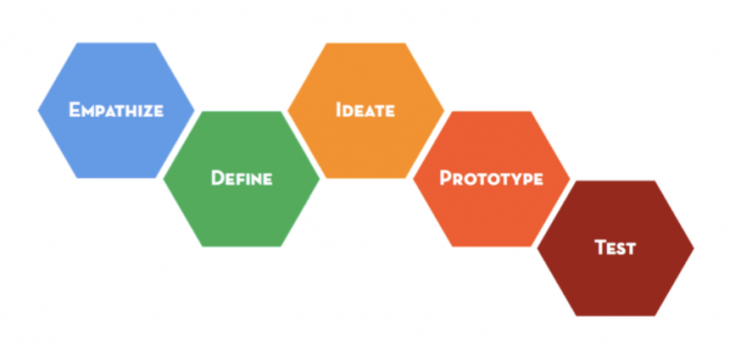
Lately I’ve been reading about “design thinking,” and I’m starting to see its potential as a tool for community renewal.
Design thinking is a structured approach many designers use to generate and develop ideas, products, and innovations. It’s most often associated with IDEO, the well-known design firm that created the first Apple mouse, and Stanford’s Institute of Design (a.k.a. “d.school”). But what began as a process to guide the development of new consumer products is now being applied, often by non-designers, to business (including Apple, Target, and Proctor & Gamble, as well as social entrepreneurs like the d.light company recently highlighted in “This Is Our City”), nonprofits, health care, government, and K-12 education. The visionary designer Bruce Mau is using design thinking to help a community group in Sudbury, Ontario, a city blighted by decades of nickel mining, to uncover hidden assets and reimagine itself for the 21st century.
The stages of design thinking are sometimes laid out like this: Empathize (or observe), Define (or interpret), Ideate (or brainstorm), Prototype (or experiment), and Test (then improve).
One of the reasons I’m attracted to this subject is that it seems to take seriously Einstein’s warning that we can’t solve our problems with the same thinking we used when we created them. The reason I think it might be relevant to our work in our neighborhoods is that it is empathic and human-centered, action-driven, multi-disciplinary, collaborative, and conversational. It takes physical space seriously. It also strikes me as a powerful complement to community strategies like asset-mapping and appreciative inquiry. Our friends at the Parish Collective talk about faith communities “weaving a fabric of care” in their neighborhoods. Here, too, is something I appreciate about design thinking: its emphasis on serendipitous connection-making. Warren Berger writes in Glimmer, his book on design thinking:
The best designers seem to have a natural eye for spotting patterns and discerning possible relationships between things that most of us view as being separate and unrelated. Once they see a possible relationship, they work to make the pieces fit.
When we gather as parish practitioners, I can see design thinking being a useful tool to collaboratively address the needs and opportunities of our particular places. It’s also a lot of fun.
This fall I want to do an experiment. I have a theory that design thinking is one way collaborators of all stripes can work together to address some of the persistent challenges faced by rural communities like the one I live in. To test my theory I want to invite a diverse group of friends to my house for pizza cart pizza, beer and soda, and a design thinking crash course. I’m hoping we can identify a need or opportunity in Silverton, and—far more quickly than is ideal—capture our observations and analysis, brainstorm ideas, and then prototype our proposed response.
Design thinking is controversial even among designers, not least because it focuses on a process rather than on innate creative intelligence, and because it is being “given away” by prominent designers to non-designers. But my hunch is that design thinking holds a lot of promise for Slow Church and the parish movement.
If you’re in the Silverton-Mt. Angel area and you’re interested in experimenting with me, let me know. And if you’re interested in reading more about design thinking, here are some resources I’ve found helpful so far:
Books:
- The Art of Innovation: Lessons in Creativity from IDEO, America’s Leading Design Firm, by Tom Kelley
- Change by Design: How Design Thinking Transforms Organizations and Inspires Innovation, by Tim Brown
- Glimmer: How Design Can Transform Your Life, and Maybe Even the World, by Warren Berger
- Make Space: How to Set the Stage for Community Collaboration, by Scott Doorley and Scott Witthoft
Around the Web:
Stanford d.school
Design Thinking for Educators
IDEO.com
IDEO.org
Tim Brown (CEO of IDEO)
Previous Post

August 5, 2013
Pope Francis issues a call for Slow Church!
Next Post

August 22, 2013 Slow and Local are Where We Must Begin.
Browse Our Archives
Select a Category Abundance Advent Books Community Conferences Conversations Ecology Economics Emergent Eucharist Family Food Gratitude Happenings Health history Hospitality Justice Lent Meditations Neighborhoods News Peace Place Poetry Politics Sabbath Scripture Stories Technology The Table Theology Uncategorized What is Slow Church? Youth
Select a Month January 2017 December 2016 November 2016 March 2016 June 2015 March 2015 February 2015 December 2014 November 2014 October 2014 September 2014 August 2014 July 2014 June 2014 May 2014 April 2014 March 2014 February 2014 January 2014 December 2013 November 2013 October 2013 September 2013 August 2013 July 2013 June 2013 May 2013 April 2013 March 2013 February 2013 January 2013 December 2012 November 2012 October 2012 September 2012 August 2012 July 2012 June 2012 May 2012 April 2012 March 2012 February 2012 January 2012 December 2011 November 2011 October 2011 September 2011
Follow Us!
TAKE THE
Religious Wisdom Quiz
Which Old Testament prophet was taken to heaven in a whirlwind?
Select your answer to see how you score.
Elijah Elisha Isaiah Jeremiah
Related posts from Slow Church

Scot McKnight - A Fellowship of Differents [Patheos...

Options for the Coming Age: Benedict, Jeremiah, Both,...

Relationally-Based Community Development [Economics of Church and Seminary...

A Community of Simple Living [Economics of Church...
TRENDING AT PATHEOS Progressive Christian

Why Christians Have a Sacred Duty to Vote:...
The Bible offers strong support for the sacred duty to vote. Here...

What Being a Modern-Day Apostle Means to Me
In my last column, I discussed the ins and outs of modern-day...

Did Ancient China Once Worship the God of...
Across human history, a common thread weaves through the origins of the...

Love Your Neighbor – Including Earth-Kin: Lev. 19,...
God’s command to love your neighbor means acting in an ethical and...

Lead a Church Study of “Jesus and Lao...
Guest writer Jack Thomas (The Irreverent Reverend) reflects on leading his church...

Principles for Understanding the Apostolic Ministry Today
Whenever people discover that my formal ministry title is "apostle," as in...
view all Progressive Christian blogs
Ad-Free & Subscriber Log-In Subscription Support
- About Us
- 2026 Calendar
- Videos
- Podcasts
- Library of World Religions
- Faith In Media Tracker
- Advertise With Us
- Write for Us
- Privacy Policy
- Terms of Service
- Do Not Sell My Data
- Contact Us
- Radiant Digital
- Manage Newsletter Subscriptions
- Unsubscribe From Notifications
- Sitemap
Copyright 2008-2026, Patheos. All rights reserved.
Subscription Support Ad-Free & Subscriber Log-In
Follow Patheos