
BuddhistCatholicContemplativeEvangelicalGeneral ChristianHinduJewishLatter-day SaintMuslimNew VisionsProgressive Christian
Beliefs
- Buddhist
- Catholic
- Contemplative
- Evangelical
- General Christian
- Hindu
- Jewish
- Latter-day Saint
- More Voices
- Muslim
- New Visions
- Pagan
- Progressive Christian
Topics
- Religion News
- Food and Religion
- Sports and Religion
- Religious Art
- Religious Music and Entertainment
- Religious Events
- History and Religion
- Style and Religion
- Politics and Religion
- Women in Religion
- Recreation Outdoors and Religion
- Business Finance and Religion
- Careers Workplace and Religion
- Education and Religion
- Family Parenting and Religion
- Health Fitness and Religion
- Home and Religion
- Relationships and Religion
- Technology and Religion
- Travel and Religion
Columnists
- Buddhist Columnists
- Business Finance and Religion Columnists
- Careers Workplace and Religion Columnists
- Catholic Columnists
- Contemplative Columnists
- Education and Religion Columnists
- Evangelists Columnists
- Family Parenting and Religion Columnists
- General Christian Columnists
- Health Fitness and Religion Columnists
- Hindu Columnists
- History and Religion Columnists
- Home and Religion Columnists
- Jewish Columnists
- More Voices Columnists
- Latter Day Columnists
- Muslim Columnists
- New Visions Columnists
- Nonreligious Columnists
- Pagan Columnists
- Politics and Religion Columnists
- Progressive Columnists
- Recreation Outdoors and Religion Columnists
- Relationships and Religion Columnists
- Religion News Columnists
- Religious Art Columnists
- Religious Events Columnists
- Religious Music and Entertainment Columnists
- Sports and Religion Columnists
- Style and Religion Columnists
- Technology and Religion Columnists
- Travel and Religion Columnists
- Women in Religion Columnists
Resource Library
- 2026 Calendar
- Library of World Religions
- The 100 Most Holy Places on Earth
- Patheos Answers
- Podcasts
- Videos
- Faith Leaders Database
- Anglican Episcopalian
- Bahai
- Baptist
- Buddhism
- Christianity
- Confucianism
- Eastern Orthodoxy
- Hinduism
- Holiness and Pentecostal
- ISKCON
- Islam
- Judaism
- Lutheran
- Methodist
- The Church of Jesus Christ of Latter-day Saints
- New Age
- Paganism
- Presbytarian and Reformed
- Protestantism
- Religion Behind the Scenes
- Roman Catholic
- Scientology
- Shia Islam
- Sikhism
- Sufism
- Sunni Islam
- Taoism
- Zen
- See all religions
Research Tools
 Ad-Free & Subscriber Log-In Subscription Support
Ad-Free & Subscriber Log-In Subscription Support
Follow Patheos 

- Trending:
- Forgiveness
- |
- Marriage
- |
- Consciousness
- |
- Death Penalty
- |
- Election
- |
- Halloween
 Slow Church
- Home
- Progressive Christian
- Be Strong in the Lord’s Power
Be Strong in the Lord’s Power
Last updated on: February 28, 2013 at 7:42 am by Christopher Smith
Be Strong in the Lord’s Power 2013-02-28T07:42:03-05:00 Christopher Smith
Patheos Explore the world's faith through different perspectives on religion and spirituality! Patheos has the views of the prevalent religions and spiritualities of the world.
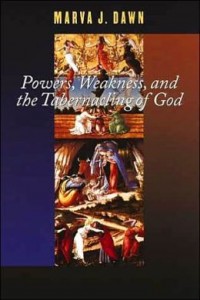 Continuing the series on “Slow Church and the Urgency of Justice” today. This is the sixth post. (Link goes to the initial post in the series).
Previous post: “God Tabernacling in Our Weakness”
Continuing the theme of our last post in this series (linked above), Marva Dawn in her important book Powers, Weakness and the Tabernacling of God, begins her exploration of the Ephesians 6 text by noting that because God tabernacles in our weakness, we can be strong in the Lord’s power. The we here is important, Dawn emphasizes, for it is the the whole Body of Christ — and not the individual Christian that puts on the armor of Christ. She says:
The battle is not only totally dependent on God, but it is also local as well as cosmic, a resistance of evil powers in daily life, particularly in the corporate life of our churches. Putting on the armor is not the work of individual Christians so much as that of the whole Body of the Church. The verb form endunamoo (in Eph 6:10) is a second person plural imperative, so it literally commands, “be empowered, all y’all” as my southern friends would say.
Dawn admits the struggles she has had with how we should understand the military imagery of the text, especially embedded in a militaristic Western culture as we are. Through the work of Tom Yoder Neufeld, Dawn came to see that God is the warrior — and not us — who does battle against the powers, and our focus should be on engagement via the practices named in in Ephesians 6:13-20 (truth, justice peace, liberation, exercise of the word and prayer), and as much on the armor imagery.
At the heart of her reading of this Ephesians 6 passage lie two key paradoxes, ones that I might add are essential to the Slow Church conversation as well:
The first [paradox] is that to counteract the principalities and powers requires a battle, but one that is essentially and entirely nonviolent because it is against the powers and never against the people who might be aligned with them. The second is that the battle requires our active engagement, but it is always God’s work through our weakness.
These paradoxes remind us that Jesus not only taught about the Kingdom of God, but also embodied the way toward the Kingdom of God for us. Although in our culture of instant gratification, we struggle to do the same, in Jesus we find a continuity between ends and means. Dawn cites the collective work of ethicists and peace activists that led to the book Just Peacemaking:
The Followers of the Lamb are those who do the deeds Jesus teaches, who do God’s will, keep God’s word, keep God’s commandments, hold faithful to the testimony of Jesus, do the teachings of Jesus, follow God’s teachings as given through Jesus, obey God’s commands.
Next time, we will dig further into this idea of seeking justice by following in the way of Jesus, a way in which, to use Dawn’s words “effectiveness does not matter.”
Previous Post

February 27, 2013
Blessed Are the Poor in Spirit
Next Post

March 4, 2013 The World is Not Ours to Save...Whew! [Patheos Book Club]
Browse Our Archives
Select a Category Abundance Advent Books Community Conferences Conversations Ecology Economics Emergent Eucharist Family Food Gratitude Happenings Health history Hospitality Justice Lent Meditations Neighborhoods News Peace Place Poetry Politics Sabbath Scripture Stories Technology The Table Theology Uncategorized What is Slow Church? Youth
Select a Month January 2017 December 2016 November 2016 March 2016 June 2015 March 2015 February 2015 December 2014 November 2014 October 2014 September 2014 August 2014 July 2014 June 2014 May 2014 April 2014 March 2014 February 2014 January 2014 December 2013 November 2013 October 2013 September 2013 August 2013 July 2013 June 2013 May 2013 April 2013 March 2013 February 2013 January 2013 December 2012 November 2012 October 2012 September 2012 August 2012 July 2012 June 2012 May 2012 April 2012 March 2012 February 2012 January 2012 December 2011 November 2011 October 2011 September 2011
Follow Us!
TAKE THE
Religious Wisdom Quiz
Which Christian movement began with John Wesley in the 18th century?
Select your answer to see how you score.
Lutheranism Calvinism Presbyterianism Methodism
Related posts from Slow Church

Scot McKnight - A Fellowship of Differents [Patheos...
Two Slow Church-related ebooks on sale now!
Dietrich Bonhoeffer on Slow Church...

Ferguson and Our Broken Justice System
TRENDING AT PATHEOS Progressive Christian

Why Christians Have a Sacred Duty to Vote:...
The Bible offers strong support for the sacred duty to vote. Here...

What Being a Modern-Day Apostle Means to Me
In my last column, I discussed the ins and outs of modern-day...

Did Ancient China Once Worship the God of...
Across human history, a common thread weaves through the origins of the...

Love Your Neighbor – Including Earth-Kin: Lev. 19,...
God’s command to love your neighbor means acting in an ethical and...

Lead a Church Study of “Jesus and Lao...
Guest writer Jack Thomas (The Irreverent Reverend) reflects on leading his church...

Principles for Understanding the Apostolic Ministry Today
Whenever people discover that my formal ministry title is "apostle," as in...
view all Progressive Christian blogs
Ad-Free & Subscriber Log-In Subscription Support
- About Us
- 2026 Calendar
- Videos
- Podcasts
- Library of World Religions
- Faith In Media Tracker
- Advertise With Us
- Write for Us
- Privacy Policy
- Terms of Service
- Do Not Sell My Data
- Contact Us
- Radiant Digital
- Manage Newsletter Subscriptions
- Unsubscribe From Notifications
- Sitemap
Copyright 2008-2026, Patheos. All rights reserved.
Subscription Support Ad-Free & Subscriber Log-In
Follow Patheos