
BuddhistCatholicContemplativeEvangelicalGeneral ChristianHinduJewishLatter-day SaintMuslimNew VisionsProgressive Christian
Beliefs
- Buddhist
- Catholic
- Contemplative
- Evangelical
- General Christian
- Hindu
- Jewish
- Latter-day Saint
- More Voices
- Muslim
- New Visions
- Pagan
- Progressive Christian
Topics
- Religion News
- Food and Religion
- Sports and Religion
- Religious Art
- Religious Music and Entertainment
- Religious Events
- History and Religion
- Style and Religion
- Politics and Religion
- Women in Religion
- Recreation Outdoors and Religion
- Business Finance and Religion
- Careers Workplace and Religion
- Education and Religion
- Family Parenting and Religion
- Health Fitness and Religion
- Home and Religion
- Relationships and Religion
- Technology and Religion
- Travel and Religion
Columnists
- Buddhist Columnists
- Business Finance and Religion Columnists
- Careers Workplace and Religion Columnists
- Catholic Columnists
- Contemplative Columnists
- Education and Religion Columnists
- Evangelists Columnists
- Family Parenting and Religion Columnists
- General Christian Columnists
- Health Fitness and Religion Columnists
- Hindu Columnists
- History and Religion Columnists
- Home and Religion Columnists
- Jewish Columnists
- More Voices Columnists
- Latter Day Columnists
- Muslim Columnists
- New Visions Columnists
- Nonreligious Columnists
- Pagan Columnists
- Politics and Religion Columnists
- Progressive Columnists
- Recreation Outdoors and Religion Columnists
- Relationships and Religion Columnists
- Religion News Columnists
- Religious Art Columnists
- Religious Events Columnists
- Religious Music and Entertainment Columnists
- Sports and Religion Columnists
- Style and Religion Columnists
- Technology and Religion Columnists
- Travel and Religion Columnists
- Women in Religion Columnists
Resource Library
- 2026 Calendar
- Library of World Religions
- The 100 Most Holy Places on Earth
- Patheos Answers
- Podcasts
- Videos
- Faith Leaders Database
- Anglican Episcopalian
- Bahai
- Baptist
- Buddhism
- Christianity
- Confucianism
- Eastern Orthodoxy
- Hinduism
- Holiness and Pentecostal
- ISKCON
- Islam
- Judaism
- Lutheran
- Methodist
- The Church of Jesus Christ of Latter-day Saints
- New Age
- Paganism
- Presbytarian and Reformed
- Protestantism
- Religion Behind the Scenes
- Roman Catholic
- Scientology
- Shia Islam
- Sikhism
- Sufism
- Sunni Islam
- Taoism
- Zen
- See all religions
Research Tools
 Ad-Free & Subscriber Log-In Subscription Support
Ad-Free & Subscriber Log-In Subscription Support
Follow Patheos 

- Trending:
- Forgiveness
- |
- Marriage
- |
- Consciousness
- |
- Death Penalty
- |
- Election
- |
- Halloween
 Slow Church
- Home
- Progressive Christian
- Engaged with our Neighbors’ Struggles Against Injustice
Engaged with our Neighbors’ Struggles Against Injustice
Last updated on: February 7, 2013 at 11:30 am by Christopher Smith
Engaged with our Neighbors’ Struggles Against Injustice 2013-02-07T11:30:06-05:00 Christopher Smith
Patheos Explore the world's faith through different perspectives on religion and spirituality! Patheos has the views of the prevalent religions and spiritualities of the world.
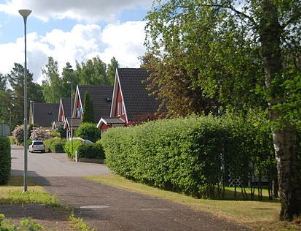 This is the fourth post in an ongoing series on “Slow Church and the Urgency of Justice“ (Link goes to the initial post in the series).
In yesterday’s post, I began an argument for beginning to seek justice by being committed to a local church community. Today, I want to continue that argument by exploring the role of place as we seek justice.
Our local church congregations are essential for us in seeking justice, because they are rooted in a particular place, although I must hasten to add that many churches have very shallow roots in the places where they exist. For churches that do have shallow roots, I highly recommend looking into the excellent work of the Parish Collective (I am planning to go to their annual Inhabit Conference in April). Many Christian scholars and writers have made a poignant case over the last decade for deepening our roots in our particular places (for starters, I’d recommend Jonathan Wilson-Hartgrove’s The Wisdom of Stability and Alan Roxburgh’s Missional: Seeking God in the Neighborhood — links go to my reviews), and I won’t reiterate their case here, but simply take their work as true for now and assume that place matters deeply to our local congregations.
What place means for our churches as far as seeking justice is that the next step in our maturity beyond seeking to live justly together within the church community is that we are attentive to and engaged with our neighbors’ struggles against injustice. Through being with our neighbors and listening to them and living compassionately with them (maybe at some point in this series, I will reflect on the superb book Compassion by Henri Nouwen, Donald McNeill and Douglass Morrison). The roots of the word compassion mean “suffering with,” and indeed that is our calling in the way of Jesus, to enter patiently into the suffering of our neighbors. In this way, we learn to engage injustice in the particular and the concrete rather than taking up a more abstract cause to which we have a more tenuous connection.
Although we seek to engage in the struggles of our neighbors, this engagement might take us far beyond the bounds of our neighborhood, as many of the powers that oppress our neighbors operate at the state, national and transnational levels. I am currently writing a piece for Christianity Today’s This is Our City website, on how the Christian Community Development Association (CCDA) has grown and matured over the last five to ten years. One of the facets of the story that I’m telling in this article is that early in its history CCDA was almost completely focused on doing community-building work in particular neighborhoods across North America. However, as they persisted in this good neighborhood work, they found certain common struggles that many of their neighborhoods faced for which they could collectively advocate as a national (and international) organization — including immigration reform and Native American issues. CCDA was not seeking causes to get engaged in, but in recent years have found themselves working on these broad national issues because of the real and particular injustices manifested in neighborhoods where their members live and work.
I should also emphasize here that all neighborhoods have injustices that plague them. Certainly, in some urban and rural places these injustices are clearly manifested, but in other places (including many suburban places) injustices are buried a bit deeper. Isolation and loneliness (and a built environment that often reinforces them) are injustices that plague many suburban places, for instance. Our call to seek justice includes knowing our neighbors and entering with them into the struggle against the injustices that plague them.
It seems that God’s plan for bringing justice and reconciliation to creation, as we have come to know this plan in the scriptural story, is centered first around a people who seek to embody justice in their own particular places. Then as we are seeking to embody justice locally, we come to see how our place is bound up in God’s interconnected creation with the health and flourishing of other places, and although our primary energies are invested locally, we begin to learn to address larger injustices alongside people in other places who are suffering under the force of these injustices. Just as Jesus was incarnated in a particular time and place, and focused his energy primarily on a small group of disciples, it seems that similarly we are called into an incarnational sort of witness that is centered on embodying Christ in a particular place in a way in which our neighbors can see and experience Jesus firsthand through us.
Next time: (Which will probably be next week) The problem of abstracts: why we must work first and foremost with particular injustices.
Image: Creative Commons licensed via Wikimedia Commons.
Previous Post

February 6, 2013
Learning how to live justly (and how to seek justice)
Next Post

February 11, 2013 The Gospel of the Coffee Bean
Browse Our Archives
Select a Category Abundance Advent Books Community Conferences Conversations Ecology Economics Emergent Eucharist Family Food Gratitude Happenings Health history Hospitality Justice Lent Meditations Neighborhoods News Peace Place Poetry Politics Sabbath Scripture Stories Technology The Table Theology Uncategorized What is Slow Church? Youth
Select a Month January 2017 December 2016 November 2016 March 2016 June 2015 March 2015 February 2015 December 2014 November 2014 October 2014 September 2014 August 2014 July 2014 June 2014 May 2014 April 2014 March 2014 February 2014 January 2014 December 2013 November 2013 October 2013 September 2013 August 2013 July 2013 June 2013 May 2013 April 2013 March 2013 February 2013 January 2013 December 2012 November 2012 October 2012 September 2012 August 2012 July 2012 June 2012 May 2012 April 2012 March 2012 February 2012 January 2012 December 2011 November 2011 October 2011 September 2011
Follow Us!
TAKE THE
Religious Wisdom Quiz
Which letter is addressed "to the twelve tribes in the Dispersion"?
Select your answer to see how you score.
2 John Jude Galatians James
Related posts from Slow Church

Indiana's New RFRA Bill Hits Home on Indy's...

Scot McKnight - A Fellowship of Differents [Patheos...

Ferguson and Our Broken Justice System

Justice that Leavens the World.
TRENDING AT PATHEOS Progressive Christian

Why Christians Have a Sacred Duty to Vote:...
The Bible offers strong support for the sacred duty to vote. Here...

What Being a Modern-Day Apostle Means to Me
In my last column, I discussed the ins and outs of modern-day...

Did Ancient China Once Worship the God of...
Across human history, a common thread weaves through the origins of the...

Love Your Neighbor – Including Earth-Kin: Lev. 19,...
God’s command to love your neighbor means acting in an ethical and...

Lead a Church Study of “Jesus and Lao...
Guest writer Jack Thomas (The Irreverent Reverend) reflects on leading his church...

Principles for Understanding the Apostolic Ministry Today
Whenever people discover that my formal ministry title is "apostle," as in...
view all Progressive Christian blogs
Ad-Free & Subscriber Log-In Subscription Support
- About Us
- 2026 Calendar
- Videos
- Podcasts
- Library of World Religions
- Faith In Media Tracker
- Advertise With Us
- Write for Us
- Privacy Policy
- Terms of Service
- Do Not Sell My Data
- Contact Us
- Radiant Digital
- Manage Newsletter Subscriptions
- Unsubscribe From Notifications
- Sitemap
Copyright 2008-2026, Patheos. All rights reserved.
Subscription Support Ad-Free & Subscriber Log-In
Follow Patheos