
BuddhistCatholicContemplativeEvangelicalGeneral ChristianHinduJewishLatter-day SaintMuslimNew VisionsProgressive Christian
Beliefs
- Buddhist
- Catholic
- Contemplative
- Evangelical
- General Christian
- Hindu
- Jewish
- Latter-day Saint
- More Voices
- Muslim
- New Visions
- Pagan
- Progressive Christian
Topics
- Religion News
- Food and Religion
- Sports and Religion
- Religious Art
- Religious Music and Entertainment
- Religious Events
- History and Religion
- Style and Religion
- Politics and Religion
- Women in Religion
- Recreation Outdoors and Religion
- Business Finance and Religion
- Careers Workplace and Religion
- Education and Religion
- Family Parenting and Religion
- Health Fitness and Religion
- Home and Religion
- Relationships and Religion
- Technology and Religion
- Travel and Religion
Columnists
- Buddhist Columnists
- Business Finance and Religion Columnists
- Careers Workplace and Religion Columnists
- Catholic Columnists
- Contemplative Columnists
- Education and Religion Columnists
- Evangelists Columnists
- Family Parenting and Religion Columnists
- General Christian Columnists
- Health Fitness and Religion Columnists
- Hindu Columnists
- History and Religion Columnists
- Home and Religion Columnists
- Jewish Columnists
- More Voices Columnists
- Latter Day Columnists
- Muslim Columnists
- New Visions Columnists
- Nonreligious Columnists
- Pagan Columnists
- Politics and Religion Columnists
- Progressive Columnists
- Recreation Outdoors and Religion Columnists
- Relationships and Religion Columnists
- Religion News Columnists
- Religious Art Columnists
- Religious Events Columnists
- Religious Music and Entertainment Columnists
- Sports and Religion Columnists
- Style and Religion Columnists
- Technology and Religion Columnists
- Travel and Religion Columnists
- Women in Religion Columnists
Resource Library
- 2026 Calendar
- Library of World Religions
- The 100 Most Holy Places on Earth
- Patheos Answers
- Podcasts
- Videos
- Faith Leaders Database
- Anglican Episcopalian
- Bahai
- Baptist
- Buddhism
- Christianity
- Confucianism
- Eastern Orthodoxy
- Hinduism
- Holiness and Pentecostal
- ISKCON
- Islam
- Judaism
- Lutheran
- Methodist
- The Church of Jesus Christ of Latter-day Saints
- New Age
- Paganism
- Presbytarian and Reformed
- Protestantism
- Religion Behind the Scenes
- Roman Catholic
- Scientology
- Shia Islam
- Sikhism
- Sufism
- Sunni Islam
- Taoism
- Zen
- See all religions
Research Tools
 Ad-Free & Subscriber Log-In Subscription Support
Ad-Free & Subscriber Log-In Subscription Support
Follow Patheos 

- Trending:
- Forgiveness
- |
- Marriage
- |
- Consciousness
- |
- Death Penalty
- |
- Election
- |
- Halloween
 Slow Church
- Home
- Progressive Christian
- Learning how to live justly (and how to seek justice)
Learning how to live justly (and how to seek justice)
Last updated on: February 6, 2013 at 11:55 am by Christopher Smith
Learning how to live justly (and how to seek justice) 2013-02-06T11:55:01-05:00 Christopher Smith
Patheos Explore the world's faith through different perspectives on religion and spirituality! Patheos has the views of the prevalent religions and spiritualities of the world.
 This is the third post in an ongoing series on “Slow Church and the Urgency of Justice“ (Link goes to the initial post in the series).
Yesterday, in unpacking Walter Brueggemann’s definition of justice, I emphasized his point that essential to the process of doing justice is being part of a covenanted community that is seeking to live justly together. Today, I want to dig a little bit deeper into why I believe that the local faith community is essential to the pursuit of justice. First, a reminder that the primary question that I am dealing with in this series is that of the urgency felt by those who suffer the pain of injustice, and how we make sense of that within this framework that John and I are calling Slow Church. Learning to live justly as part of a particular faith community doesn’t seem — on the surface of things at least — to be an expedient response to the pain of injustice. It is important that we are always sensitive to this sort of pain (as I believe God is), but the trickier question is how do we respond? Broadly speaking, our response should be shaped by the biblical wisdom of being a people who are “quick to listen, slow to speak and slow to become angry” (James 1:19).
One of the key themes of the Slow Church project is the call to repent of our tendency to separate ends from means. So often we hear and feel the pain that others are feeling and get seduced by the rhetoric of “by any means necessary,” and become inattentive to the sorts of injustices that we might be propagating as we seek to right the initial injustice. If our first commitment is to a church community and if we are seeking to embody Jesus (the just and righteous one) together, we are immersed into a tradition that teaches us HOW to respond to injustice. Of course, as a result of our human brokenness, there is no guarantee that we won’t propagate other injustices as we address a particular injustice, BUT it crucial that our aim is to not only seek justice, but to do so in a just manner. It is really easy for us to lose sight of Jesus, our example, whose means of addressing injustice was ultimately the cross, or in other words, that he preferred to suffer and die offering himself as an embodiment of justice rather than to return evil for evil (consider his disarming of Peter in the Garden of Gethsemane as he was being taken away to be judged and crucified).
A commitment to seek justice first as part of a faith community is also a reminder that we ourselves are bound up in injustice and need transformation. Let me be clear that I am NOT saying that we focus exclusively on building a just life together and forsake being engaged in the injustices of the larger world. Rather, it is by committing ourselves to seeking justice in our local faith community that we learn HOW to engage justly in the brokenness of the world.
NEXT TIME: I will continue this argument for seeking justice first as past of local church community, by exploring the significance of place and how that dovetails with the reconciling mission of God in the world.
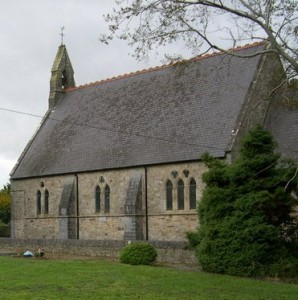
Image: Hector Davie, Creative Commons licensed through Wikimedia.
Previous Post

February 5, 2013
What is Justice?
Next Post

February 7, 2013 Engaged with our Neighbors' Struggles Against Injustice
Browse Our Archives
Select a Category Abundance Advent Books Community Conferences Conversations Ecology Economics Emergent Eucharist Family Food Gratitude Happenings Health history Hospitality Justice Lent Meditations Neighborhoods News Peace Place Poetry Politics Sabbath Scripture Stories Technology The Table Theology Uncategorized What is Slow Church? Youth
Select a Month January 2017 December 2016 November 2016 March 2016 June 2015 March 2015 February 2015 December 2014 November 2014 October 2014 September 2014 August 2014 July 2014 June 2014 May 2014 April 2014 March 2014 February 2014 January 2014 December 2013 November 2013 October 2013 September 2013 August 2013 July 2013 June 2013 May 2013 April 2013 March 2013 February 2013 January 2013 December 2012 November 2012 October 2012 September 2012 August 2012 July 2012 June 2012 May 2012 April 2012 March 2012 February 2012 January 2012 December 2011 November 2011 October 2011 September 2011
Follow Us!
TAKE THE
Religious Wisdom Quiz
What religious movement emphasizes unity among all Christians globally?
Select your answer to see how you score.
Ecumenism Monasticism Pietism Adventism
Related posts from Slow Church

Scot McKnight - A Fellowship of Differents [Patheos...

Ferguson and Our Broken Justice System

Justice that Leavens the World.
Options for the Coming Age: Benedict, Jeremiah, Both,...
TRENDING AT PATHEOS Progressive Christian

Why Christians Have a Sacred Duty to Vote:...
The Bible offers strong support for the sacred duty to vote. Here...

What Being a Modern-Day Apostle Means to Me
In my last column, I discussed the ins and outs of modern-day...

Did Ancient China Once Worship the God of...
Across human history, a common thread weaves through the origins of the...

Love Your Neighbor – Including Earth-Kin: Lev. 19,...
God’s command to love your neighbor means acting in an ethical and...

Lead a Church Study of “Jesus and Lao...
Guest writer Jack Thomas (The Irreverent Reverend) reflects on leading his church...

Principles for Understanding the Apostolic Ministry Today
Whenever people discover that my formal ministry title is "apostle," as in...
view all Progressive Christian blogs
Ad-Free & Subscriber Log-In Subscription Support
- About Us
- 2026 Calendar
- Videos
- Podcasts
- Library of World Religions
- Faith In Media Tracker
- Advertise With Us
- Write for Us
- Privacy Policy
- Terms of Service
- Do Not Sell My Data
- Contact Us
- Radiant Digital
- Manage Newsletter Subscriptions
- Unsubscribe From Notifications
- Sitemap
Copyright 2008-2026, Patheos. All rights reserved.
Subscription Support Ad-Free & Subscriber Log-In
Follow Patheos