
BuddhistCatholicContemplativeEvangelicalGeneral ChristianHinduJewishLatter-day SaintMuslimNew VisionsProgressive Christian
Beliefs
- Buddhist
- Catholic
- Contemplative
- Evangelical
- General Christian
- Hindu
- Jewish
- Latter-day Saint
- More Voices
- Muslim
- New Visions
- Pagan
- Progressive Christian
Topics
- Religion News
- Food and Religion
- Sports and Religion
- Religious Art
- Religious Music and Entertainment
- Religious Events
- History and Religion
- Style and Religion
- Politics and Religion
- Women in Religion
- Recreation Outdoors and Religion
- Business Finance and Religion
- Careers Workplace and Religion
- Education and Religion
- Family Parenting and Religion
- Health Fitness and Religion
- Home and Religion
- Relationships and Religion
- Technology and Religion
- Travel and Religion
Columnists
- Buddhist Columnists
- Business Finance and Religion Columnists
- Careers Workplace and Religion Columnists
- Catholic Columnists
- Contemplative Columnists
- Education and Religion Columnists
- Evangelists Columnists
- Family Parenting and Religion Columnists
- General Christian Columnists
- Health Fitness and Religion Columnists
- Hindu Columnists
- History and Religion Columnists
- Home and Religion Columnists
- Jewish Columnists
- More Voices Columnists
- Latter Day Columnists
- Muslim Columnists
- New Visions Columnists
- Nonreligious Columnists
- Pagan Columnists
- Politics and Religion Columnists
- Progressive Columnists
- Recreation Outdoors and Religion Columnists
- Relationships and Religion Columnists
- Religion News Columnists
- Religious Art Columnists
- Religious Events Columnists
- Religious Music and Entertainment Columnists
- Sports and Religion Columnists
- Style and Religion Columnists
- Technology and Religion Columnists
- Travel and Religion Columnists
- Women in Religion Columnists
Resource Library
- 2026 Calendar
- Library of World Religions
- The 100 Most Holy Places on Earth
- Patheos Answers
- Podcasts
- Videos
- Faith Leaders Database
- Anglican Episcopalian
- Bahai
- Baptist
- Buddhism
- Christianity
- Confucianism
- Eastern Orthodoxy
- Hinduism
- Holiness and Pentecostal
- ISKCON
- Islam
- Judaism
- Lutheran
- Methodist
- The Church of Jesus Christ of Latter-day Saints
- New Age
- Paganism
- Presbytarian and Reformed
- Protestantism
- Religion Behind the Scenes
- Roman Catholic
- Scientology
- Shia Islam
- Sikhism
- Sufism
- Sunni Islam
- Taoism
- Zen
- See all religions
Research Tools
 Ad-Free & Subscriber Log-In Subscription Support
Ad-Free & Subscriber Log-In Subscription Support
Follow Patheos 

- Trending:
- Forgiveness
- |
- Marriage
- |
- Consciousness
- |
- Death Penalty
- |
- Election
- |
- Halloween
 Slow Church
- Home
- Progressive Christian
- Nurturing and Strengthening Gratitude [Living Into Community #3]
Nurturing and Strengthening Gratitude [Living Into Community #3]
Last updated on: December 18, 2012 at 2:50 pm by Christopher Smith
Nurturing and Strengthening Gratitude [Living Into Community #3] 2012-12-18T14:50:09-05:00 Christopher Smith
Patheos Explore the world's faith through different perspectives on religion and spirituality! Patheos has the views of the prevalent religions and spiritualities of the world.
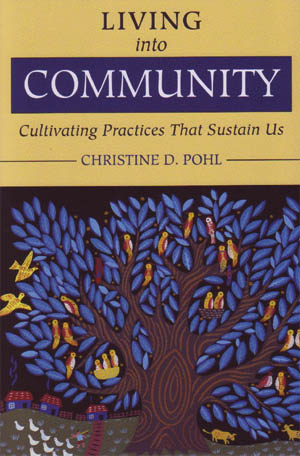 This is the third in an Advent series of eight posts that will wind their way through Christine Pohl’s new book Living into Community: Cultivating Practices that Sustain Us (Eerdmans 2012 Buy now: Amazon // Kindle ). This book was chosen as The Englewood Review’s Book of the Year for 2012, and as I hope will become abundantly clear over the Advent season, it fits very well with what John and I have been describing as Slow Church.
[ Read an Excerpt of LIVING INTO COMMUNITY ]
The Previous Post in the Series…
After a chapter on the complications that surround the practice of gratitude in our churches (which I overviewed around Thanksgiving time here on the blog…), Pohl explores the things that strengthen and weaken the practice of gratitude in our churches. In this Advent season of hope, I’d like to focus on the ways that she suggests that we can strengthen gratitude. She offers a number of suggestions of how we can begin to live more fully into gratitude.
On a personal level, she recommends starting each day with gratitude for the gift of another day. She quotes William Law: “Receive… every day as a resurrection from death, as a new enjoyment of life; meet every rising sun with such sentiments of God’s goodness .. let your joyful heart praise and magnify so good and glorious a creator.” She also reminds us that saying thanks before a meal should have significance for us. God has provided this food for us — through the bounty of creation and any number of fellow humans who have worked to bring it to our table — and we should celebrate this food with gratitude.
Pohl emphasizes the importance of making room for gratitude in our personal lives as well as those of our churches. We should have space in our life together where we can express our gratitude publicly for God’ provision and for the gifts that God provides us in the brothers and sisters of our congregations. Many churches presently have — or have historically had — a time for sharing testimonies, and such times are important for cultivating gratitude together. We should take the time to write notes of thanks (or to express our gratitude in person) for the love and care that we are shown. “Our communities suffocate,” she says, “when we fail to express how grateful we are for the goodness we find there — the ordinary expressions of fidelity and love that are so easy to take for granted.”
Finally, Pohl drives home the importance of celebration for gratitude. The L’Arche communites deeply value celebration as part of their life together and Pohl quotes L’Arche founder Jean Vanier: “[Celebration] makes present the goals of the community in symbolic form, and so brings hope and a new strength to take up again everyday life with more love. Celebration is a sign of the resurrection which gives us strength to carry the cross of each day.” (55). She also quotes a Latin American refugee who chided a North American church worker who was working feverishly among refugees: “You are not serious about our struggle. Only people who expect to go back to North America in a year work the way you do. You cannot be serious about the struggle unless you play and celebrate and do those things that make it possible to give a lifetime to it.” (emphasis added). That last sentence gives a wonderful glimpse into the nature of Slow Church — committing a lifetime and taking the work seriously enough to play and celebrate.
In this Advent season, let us not get lost in the madness of the holiday season, but rather let us make time to be grateful, and in the coming Christmas season, let us celebrate with all joy and gratitude the gifts that we have been given in Christ Jesus, including our brothers and sisters in our local congregations!
Previous Post

December 17, 2012
The Cross and the AK-47?
Next Post
December 19, 2012 Trusting in a Promise-Keeping God [Living Into Community #4]
Browse Our Archives
Select a Category Abundance Advent Books Community Conferences Conversations Ecology Economics Emergent Eucharist Family Food Gratitude Happenings Health history Hospitality Justice Lent Meditations Neighborhoods News Peace Place Poetry Politics Sabbath Scripture Stories Technology The Table Theology Uncategorized What is Slow Church? Youth
Select a Month January 2017 December 2016 November 2016 March 2016 June 2015 March 2015 February 2015 December 2014 November 2014 October 2014 September 2014 August 2014 July 2014 June 2014 May 2014 April 2014 March 2014 February 2014 January 2014 December 2013 November 2013 October 2013 September 2013 August 2013 July 2013 June 2013 May 2013 April 2013 March 2013 February 2013 January 2013 December 2012 November 2012 October 2012 September 2012 August 2012 July 2012 June 2012 May 2012 April 2012 March 2012 February 2012 January 2012 December 2011 November 2011 October 2011 September 2011
Follow Us!
TAKE THE
Religious Wisdom Quiz
What is the main literary style of Psalms and Proverbs?
Select your answer to see how you score.
Apocalypse Prophecy Poetry Historical narrative
Related posts from Slow Church

Deeper into Your Love and Compassion - A...

Three Ways We Can Foster Gratitude in Our...
Cultivating Gratitude in Our Communities

TRENDING AT PATHEOS Progressive Christian

Why Christians Have a Sacred Duty to Vote:...
The Bible offers strong support for the sacred duty to vote. Here...

What Being a Modern-Day Apostle Means to Me
In my last column, I discussed the ins and outs of modern-day...

Did Ancient China Once Worship the God of...
Across human history, a common thread weaves through the origins of the...

Love Your Neighbor – Including Earth-Kin: Lev. 19,...
God’s command to love your neighbor means acting in an ethical and...

Lead a Church Study of “Jesus and Lao...
Guest writer Jack Thomas (The Irreverent Reverend) reflects on leading his church...

Principles for Understanding the Apostolic Ministry Today
Whenever people discover that my formal ministry title is "apostle," as in...
view all Progressive Christian blogs
Ad-Free & Subscriber Log-In Subscription Support
- About Us
- 2026 Calendar
- Videos
- Podcasts
- Library of World Religions
- Faith In Media Tracker
- Advertise With Us
- Write for Us
- Privacy Policy
- Terms of Service
- Do Not Sell My Data
- Contact Us
- Radiant Digital
- Manage Newsletter Subscriptions
- Unsubscribe From Notifications
- Sitemap
Copyright 2008-2026, Patheos. All rights reserved.
Subscription Support Ad-Free & Subscriber Log-In
Follow Patheos