
BuddhistCatholicContemplativeEvangelicalGeneral ChristianHinduJewishLatter-day SaintMuslimNew VisionsProgressive Christian
Beliefs
- Buddhist
- Catholic
- Contemplative
- Evangelical
- General Christian
- Hindu
- Jewish
- Latter-day Saint
- More Voices
- Muslim
- New Visions
- Pagan
- Progressive Christian
Topics
- Religion News
- Food and Religion
- Sports and Religion
- Religious Art
- Religious Music and Entertainment
- Religious Events
- History and Religion
- Style and Religion
- Politics and Religion
- Women in Religion
- Recreation Outdoors and Religion
- Business Finance and Religion
- Careers Workplace and Religion
- Education and Religion
- Family Parenting and Religion
- Health Fitness and Religion
- Home and Religion
- Relationships and Religion
- Technology and Religion
- Travel and Religion
Columnists
- Buddhist Columnists
- Business Finance and Religion Columnists
- Careers Workplace and Religion Columnists
- Catholic Columnists
- Contemplative Columnists
- Education and Religion Columnists
- Evangelists Columnists
- Family Parenting and Religion Columnists
- General Christian Columnists
- Health Fitness and Religion Columnists
- Hindu Columnists
- History and Religion Columnists
- Home and Religion Columnists
- Jewish Columnists
- More Voices Columnists
- Latter Day Columnists
- Muslim Columnists
- New Visions Columnists
- Nonreligious Columnists
- Pagan Columnists
- Politics and Religion Columnists
- Progressive Columnists
- Recreation Outdoors and Religion Columnists
- Relationships and Religion Columnists
- Religion News Columnists
- Religious Art Columnists
- Religious Events Columnists
- Religious Music and Entertainment Columnists
- Sports and Religion Columnists
- Style and Religion Columnists
- Technology and Religion Columnists
- Travel and Religion Columnists
- Women in Religion Columnists
Resource Library
- 2026 Calendar
- Library of World Religions
- The 100 Most Holy Places on Earth
- Patheos Answers
- Podcasts
- Videos
- Faith Leaders Database
- Anglican Episcopalian
- Bahai
- Baptist
- Buddhism
- Christianity
- Confucianism
- Eastern Orthodoxy
- Hinduism
- Holiness and Pentecostal
- ISKCON
- Islam
- Judaism
- Lutheran
- Methodist
- The Church of Jesus Christ of Latter-day Saints
- New Age
- Paganism
- Presbytarian and Reformed
- Protestantism
- Religion Behind the Scenes
- Roman Catholic
- Scientology
- Shia Islam
- Sikhism
- Sufism
- Sunni Islam
- Taoism
- Zen
- See all religions
Research Tools
 Ad-Free & Subscriber Log-In Subscription Support
Ad-Free & Subscriber Log-In Subscription Support
Follow Patheos 

- Trending:
- Forgiveness
- |
- Marriage
- |
- Consciousness
- |
- Death Penalty
- |
- Election
- |
- Halloween
 Slow Church
- Home
- Progressive Christian
- The Taste of the Place
The Taste of the Place
Last updated on: April 29, 2012 at 8:04 pm by John Pattison
The Taste of the Place 2012-04-29T20:04:54-05:00 John Pattison
Patheos Explore the world's faith through different perspectives on religion and spirituality! Patheos has the views of the prevalent religions and spiritualities of the world.
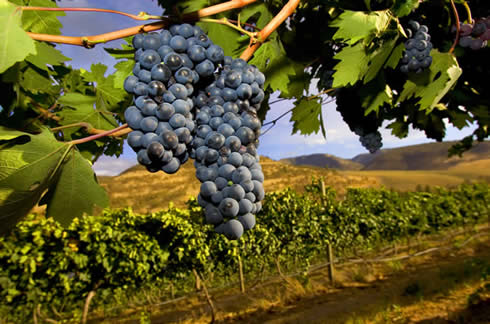
One of the keys to understanding Slow Church is captured in the seventeenth-century French phrase le goût de terroir, which can be translated “the taste of the place.”
Carlo Petrini, co-founder of the Slow Food movement, writes often about terroir as “the combination of natural factors (soil, water, slope, height above sea level, vegetation, microclimate) and human ones (tradition and practice and cultivation) that gives a unique character to each small agricultural locality and the food grown, raised, made, and cooked there.” Thus, a Pinot noir from Oregon’s Willamette Valley takes on the taste and texture of the grape, the soil, the barrel, and the late frost. Milk, it turns out, is also highly sensitive to terroir, according to a fascinating and slightly terrifying article on raw milk in the latest issue of The New Yorker.
In the same way that food and wine take on the taste of the place, Slow Church is rooted in the natural, human, and spiritual cultures of particular places. Slow Church is a distinctively local expression of the global body of Christ. “The Word became flesh and blood, and moved into the neighborhood” (John 1:14, The Message).
This is a concept we will be unpacking further in the Slow Church book and on this blog. We look forward to hearing your thoughts about and experiences with the terroir of your places. Today, on the second to last day of National Poetry Month, I’d like to add to our conversation a poem by Robert Morgan. The poem is called “Terroir” and it’s from Morgan’s 2011 collection of the same name. One reason I like this poem is that it hints at how complex our experience of our places can be. The pleasure of living fully into our places comes with the risk of pain. It reminds me of that famous passage from C.S. Lewis’s The Four Loves:
To love at all is to be vulnerable. Love anything and your heart will be wrung and possibly broken. If you want to make sure of keeping it intact you must give it to no one, not even an animal. Wrap it carefully round with hobbies and little luxuries; avoid all entanglements. Lock it up safe in the casket or coffin of your selfishness. But in that casket, safe, dark, motionless, airless, it will change. It will not be broken; it will become unbreakable, impenetrable, irredeemable.
To love a place is to be vulnerable.
Robert Morgan also mentions Gerard Manley Hopkins’s notion of “inscape,” which we will have to explore together as well. Here is that poem:
Terroir
The quality that seems unique,
as thriving from a special spot
of soil, air flow and light specific,
and also frost and winter sleep,
conditions of a particular year,
as every instance comes just once
with mix of mineral and grease,
what Hopkins chose to call inscape,
or individuation, sounds
so close to terror you’d confuse
the two, as if the finest and
the rarest blend would come with just
a hint of fear or pain, the sting
and shiver of revulsion with
the savor of the earth and sun,
of this once, not returning, sung
for this one ear, on this one tongue.
Image Credit: The Pines 1852 Vineyard & Winery, Columbia Valley, Oregon
Previous Post

April 28, 2012
The Moral Importance of the iPhone
Next Post
April 30, 2012 Technology, Community and Discernment.
Browse Our Archives
Select a Category Abundance Advent Books Community Conferences Conversations Ecology Economics Emergent Eucharist Family Food Gratitude Happenings Health history Hospitality Justice Lent Meditations Neighborhoods News Peace Place Poetry Politics Sabbath Scripture Stories Technology The Table Theology Uncategorized What is Slow Church? Youth
Select a Month January 2017 December 2016 November 2016 March 2016 June 2015 March 2015 February 2015 December 2014 November 2014 October 2014 September 2014 August 2014 July 2014 June 2014 May 2014 April 2014 March 2014 February 2014 January 2014 December 2013 November 2013 October 2013 September 2013 August 2013 July 2013 June 2013 May 2013 April 2013 March 2013 February 2013 January 2013 December 2012 November 2012 October 2012 September 2012 August 2012 July 2012 June 2012 May 2012 April 2012 March 2012 February 2012 January 2012 December 2011 November 2011 October 2011 September 2011
Follow Us!
TAKE THE
Religious Wisdom Quiz
Who said, "We must go through many hardships to enter the kingdom of God"?
Select your answer to see how you score.
Paul John Stephen Peter
Related posts from Slow Church
Indiana's New RFRA Bill Hits Home on Indy's...

Chris Smith and Tim Soerens in Conversation [...
Slow Church Stories #2: Munsey Memorial United Methodist...

Willie Jennings - Slow Church Conference - Lecture...
TRENDING AT PATHEOS Progressive Christian

Why Christians Have a Sacred Duty to Vote:...
The Bible offers strong support for the sacred duty to vote. Here...

What Being a Modern-Day Apostle Means to Me
In my last column, I discussed the ins and outs of modern-day...

Did Ancient China Once Worship the God of...
Across human history, a common thread weaves through the origins of the...

Love Your Neighbor – Including Earth-Kin: Lev. 19,...
God’s command to love your neighbor means acting in an ethical and...

Lead a Church Study of “Jesus and Lao...
Guest writer Jack Thomas (The Irreverent Reverend) reflects on leading his church...

Principles for Understanding the Apostolic Ministry Today
Whenever people discover that my formal ministry title is "apostle," as in...
view all Progressive Christian blogs
Ad-Free & Subscriber Log-In Subscription Support
- About Us
- 2026 Calendar
- Videos
- Podcasts
- Library of World Religions
- Faith In Media Tracker
- Advertise With Us
- Write for Us
- Privacy Policy
- Terms of Service
- Do Not Sell My Data
- Contact Us
- Radiant Digital
- Manage Newsletter Subscriptions
- Unsubscribe From Notifications
- Sitemap
Copyright 2008-2026, Patheos. All rights reserved.
Subscription Support Ad-Free & Subscriber Log-In
Follow Patheos