
BuddhistCatholicContemplativeEvangelicalGeneral ChristianHinduJewishLatter-day SaintMuslimNew VisionsProgressive Christian
Beliefs
- Buddhist
- Catholic
- Contemplative
- Evangelical
- General Christian
- Hindu
- Jewish
- Latter-day Saint
- More Voices
- Muslim
- New Visions
- Pagan
- Progressive Christian
Topics
- Religion News
- Food and Religion
- Sports and Religion
- Religious Art
- Religious Music and Entertainment
- Religious Events
- History and Religion
- Style and Religion
- Politics and Religion
- Women in Religion
- Recreation Outdoors and Religion
- Business Finance and Religion
- Careers Workplace and Religion
- Education and Religion
- Family Parenting and Religion
- Health Fitness and Religion
- Home and Religion
- Relationships and Religion
- Technology and Religion
- Travel and Religion
Columnists
- Buddhist Columnists
- Business Finance and Religion Columnists
- Careers Workplace and Religion Columnists
- Catholic Columnists
- Contemplative Columnists
- Education and Religion Columnists
- Evangelists Columnists
- Family Parenting and Religion Columnists
- General Christian Columnists
- Health Fitness and Religion Columnists
- Hindu Columnists
- History and Religion Columnists
- Home and Religion Columnists
- Jewish Columnists
- More Voices Columnists
- Latter Day Columnists
- Muslim Columnists
- New Visions Columnists
- Nonreligious Columnists
- Pagan Columnists
- Politics and Religion Columnists
- Progressive Columnists
- Recreation Outdoors and Religion Columnists
- Relationships and Religion Columnists
- Religion News Columnists
- Religious Art Columnists
- Religious Events Columnists
- Religious Music and Entertainment Columnists
- Sports and Religion Columnists
- Style and Religion Columnists
- Technology and Religion Columnists
- Travel and Religion Columnists
- Women in Religion Columnists
Resource Library
- 2026 Calendar
- Library of World Religions
- The 100 Most Holy Places on Earth
- Patheos Answers
- Podcasts
- Videos
- Faith Leaders Database
- Anglican Episcopalian
- Bahai
- Baptist
- Buddhism
- Christianity
- Confucianism
- Eastern Orthodoxy
- Hinduism
- Holiness and Pentecostal
- ISKCON
- Islam
- Judaism
- Lutheran
- Methodist
- The Church of Jesus Christ of Latter-day Saints
- New Age
- Paganism
- Presbytarian and Reformed
- Protestantism
- Religion Behind the Scenes
- Roman Catholic
- Scientology
- Shia Islam
- Sikhism
- Sufism
- Sunni Islam
- Taoism
- Zen
- See all religions
Research Tools
 Ad-Free & Subscriber Log-In Subscription Support
Ad-Free & Subscriber Log-In Subscription Support
Follow Patheos 

- Trending:
- Forgiveness
- |
- Marriage
- |
- Consciousness
- |
- Death Penalty
- |
- Election
- |
- Halloween
 Slow Church
- Home
- Progressive Christian
- Setting the Table [Guest post by Jen Michel]
Setting the Table [Guest post by Jen Michel]
Last updated on: March 3, 2012 at 2:52 pm by Christopher Smith
Setting the Table [Guest post by Jen Michel] 2012-03-03T14:52:39-05:00 Christopher Smith
Patheos Explore the world's faith through different perspectives on religion and spirituality! Patheos has the views of the prevalent religions and spiritualities of the world.
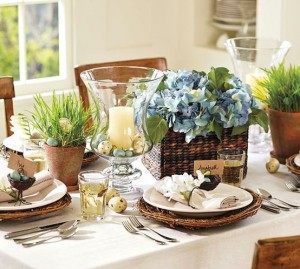 Jen Michel is a new friend from Toronto that I met on my writing retreat in February. She recently posted this piece on her blog, Finding My Pulse, and her reflections on the table were in line with our Slow Church image of “Dinner Table Conversation as a Way of Being Church,” so I asked if she would mind my re-posting it here.
Years ago, I read a great book by Danny Meyer called: Setting the Table: The Transforming Power of Hospitality in Business. At 27, Meyer opened what would become one of Manhattan’s best restaurants: Union Square Café. Since that time, he has experimented and innovated on his ideas of “enlightened hospitality,” where giving attention to the team you employ and the function of your space figures importantly in the purpose of gathering people communally around a table.
This kind of gathering for meals around a table is a sacred act in the Christian tradition. Jesus gave us a meal for remembering Him, and there is much to be learned from the theology of the meal. Most obviously, Jesus gathers His people corporately and meets them in their gatherings. The church needs that reminder desperately when culture sings the song of the individual, and books today are being published with titles like, Going Solo: The Extraordinary Rise and Surprising Appeal of Living Alone. David Brooks’ op-ed piece in the New York Times this week, “The Talent Society,” is a good read for seeing some of the rising trends of our individualism. Brooks makes it clear that we are a society that prefers aloneness: but the question as Christians that we have to ask is, Should we? If Jesus gave us a meal by which to remember Him, I think the answer is rather obvious.
A meal is also so unbelievably material and concrete, a sort of forced reckoning with a life that isn’t primarily esoteric and philosophical. I, for one, love to live shut up in my mind’s attic, tending to my abstractions, bothered when it’s time to actually get to the business of laundry and dishes. I struggle with feeling that it’s the mundane responsibilities of my life that are interruptions to the real business of living that I want to be doing. But I’m starting to see this perspective for what it really is: a rejection of the meal and of the way God wants to embed His truth and reality into the everyday, material realities of my life. I am a mom whose life is incredibly busy with dirty socks and dirty dishes and crumbs underneath my table. I can choose those as interruptions, or I can choose the theology of the meal, which means finding Jesus in every dusty, cluttered corner of life.
It actually imbues my kitchen work with holiness: I’m grateful for that because it is many, many hours of the week that I stand by the sink and stove, stirring and peeling and measuring. The work of setting the table for seven people, two and three times a day, is monumental: there’s no getting around it. But how will my life transform when I start seeing Jesus there and start giving the kind of sacred attention to our gatherings? When I let our meals become communion?
Enough of the philosophical: here are some practical things I’ve been trying to make our meals less rush, more communion.
First, time. Give them more time. In the mornings, I try to give ourselves thirty minutes for breakfast. At dinner, we try to allow for a little more time than this. Trust me when I say that there are days that we, too, rush around and don’t sit as long as I wish we would. But giving time to our meals allows for letting the table be our invitation, not just to swallow our food, but to nourish our souls. Please, sit down.
Second, bring Scripture, prayer, conversation back to the table. I’ve said this before here. Once you’ve done the hard work of gathering your family, take advantage of your efforts and use the time at the table to pull out your Bible. We also keep a journal close by: this year we’re working to count our good gifts from the Lord as a family. And after the writing retreat, I brought a book of poetry up from the basement to include to our table books, and we’ve been reading aloud from it. The children have actually insisted they do the reading aloud. So we read at our table, pray at our table, and generally, try to do a lot of talking. It’s good, nourishing face time. And like I said, it doesn’t happen every day in this way, but it’s always the goal.
Third, turn off your screens. I love that my friend, Wendy, has her teenagers (and her husband!) drop their phones in a basket by the front door when they come home. Turn off your tvs, put your phones away, and do the work of seeing each other. Is it any wonder than research shows how one common factor for keeping adolescent children out of trouble is sharing meals together as a family? I think as parents, we set the tone for how our children will interact with their media. When we let our conversations with our children constantly be interrupted by texts, checking status updates, reading email, we should not be surprised when they, armed with their own phones, will learn quickly to tune out our voices and mute the conversations going on around them, the very conversations that will be arguably more important than those we’re having today.
This is my body broken for you: eat this in remembrance of me.
This is my blood, poured out for you: drink this in remembrance of me.
Let’s set tables of communion for our families and communities and cities. It is a good and holy work. If you, like me, are a mother with young children who resist sitting quietly in their chairs and who often complain they don’t like the food set before them (two chronic sins around here!), don’t despair. You are right to do a bit of insisting on the sitting and the polite waiting and the powering off the technologies. You are teaching them the theology of the meal and the beauty of gathering.
Previous Post

March 1, 2012
"The Kingdom Will Prevail" A Slow Church-related Sermon on Mark 4:24-34

Browse Our Archives
Select a Category Abundance Advent Books Community Conferences Conversations Ecology Economics Emergent Eucharist Family Food Gratitude Happenings Health history Hospitality Justice Lent Meditations Neighborhoods News Peace Place Poetry Politics Sabbath Scripture Stories Technology The Table Theology Uncategorized What is Slow Church? Youth
Select a Month January 2017 December 2016 November 2016 March 2016 June 2015 March 2015 February 2015 December 2014 November 2014 October 2014 September 2014 August 2014 July 2014 June 2014 May 2014 April 2014 March 2014 February 2014 January 2014 December 2013 November 2013 October 2013 September 2013 August 2013 July 2013 June 2013 May 2013 April 2013 March 2013 February 2013 January 2013 December 2012 November 2012 October 2012 September 2012 August 2012 July 2012 June 2012 May 2012 April 2012 March 2012 February 2012 January 2012 December 2011 November 2011 October 2011 September 2011
Follow Us!
TAKE THE
Religious Wisdom Quiz
How many years between David's reign and the Babylonian exile?
Select your answer to see how you score.
400 years 500 years 300 years 450 years
Related posts from Slow Church

Deeper into Your Love and Compassion - A...

Ragan Sutterfield - This is my Body [Patheos...

Alexander Schmemann - Lent is a Time of...

Slow Church Playlist: Need Your Help...
TRENDING AT PATHEOS Progressive Christian

Why Christians Have a Sacred Duty to Vote:...
The Bible offers strong support for the sacred duty to vote. Here...

What Being a Modern-Day Apostle Means to Me
In my last column, I discussed the ins and outs of modern-day...

Did Ancient China Once Worship the God of...
Across human history, a common thread weaves through the origins of the...

Love Your Neighbor – Including Earth-Kin: Lev. 19,...
God’s command to love your neighbor means acting in an ethical and...

Lead a Church Study of “Jesus and Lao...
Guest writer Jack Thomas (The Irreverent Reverend) reflects on leading his church...

Principles for Understanding the Apostolic Ministry Today
Whenever people discover that my formal ministry title is "apostle," as in...
view all Progressive Christian blogs
Ad-Free & Subscriber Log-In Subscription Support
- About Us
- 2026 Calendar
- Videos
- Podcasts
- Library of World Religions
- Faith In Media Tracker
- Advertise With Us
- Write for Us
- Privacy Policy
- Terms of Service
- Do Not Sell My Data
- Contact Us
- Radiant Digital
- Manage Newsletter Subscriptions
- Unsubscribe From Notifications
- Sitemap
Copyright 2008-2026, Patheos. All rights reserved.
Subscription Support Ad-Free & Subscriber Log-In
Follow Patheos