
BuddhistCatholicContemplativeEvangelicalGeneral ChristianHinduJewishLatter-day SaintMuslimNew VisionsProgressive Christian
Beliefs
- Buddhist
- Catholic
- Contemplative
- Evangelical
- General Christian
- Hindu
- Jewish
- Latter-day Saint
- More Voices
- Muslim
- New Visions
- Pagan
- Progressive Christian
Topics
- Religion News
- Food and Religion
- Sports and Religion
- Religious Art
- Religious Music and Entertainment
- Religious Events
- History and Religion
- Style and Religion
- Politics and Religion
- Women in Religion
- Recreation Outdoors and Religion
- Business Finance and Religion
- Careers Workplace and Religion
- Education and Religion
- Family Parenting and Religion
- Health Fitness and Religion
- Home and Religion
- Relationships and Religion
- Technology and Religion
- Travel and Religion
Columnists
- Buddhist Columnists
- Business Finance and Religion Columnists
- Careers Workplace and Religion Columnists
- Catholic Columnists
- Contemplative Columnists
- Education and Religion Columnists
- Evangelists Columnists
- Family Parenting and Religion Columnists
- General Christian Columnists
- Health Fitness and Religion Columnists
- Hindu Columnists
- History and Religion Columnists
- Home and Religion Columnists
- Jewish Columnists
- More Voices Columnists
- Latter Day Columnists
- Muslim Columnists
- New Visions Columnists
- Nonreligious Columnists
- Pagan Columnists
- Politics and Religion Columnists
- Progressive Columnists
- Recreation Outdoors and Religion Columnists
- Relationships and Religion Columnists
- Religion News Columnists
- Religious Art Columnists
- Religious Events Columnists
- Religious Music and Entertainment Columnists
- Sports and Religion Columnists
- Style and Religion Columnists
- Technology and Religion Columnists
- Travel and Religion Columnists
- Women in Religion Columnists
Resource Library
- 2026 Calendar
- Library of World Religions
- The 100 Most Holy Places on Earth
- Patheos Answers
- Podcasts
- Videos
- Faith Leaders Database
- Anglican Episcopalian
- Bahai
- Baptist
- Buddhism
- Christianity
- Confucianism
- Eastern Orthodoxy
- Hinduism
- Holiness and Pentecostal
- ISKCON
- Islam
- Judaism
- Lutheran
- Methodist
- The Church of Jesus Christ of Latter-day Saints
- New Age
- Paganism
- Presbytarian and Reformed
- Protestantism
- Religion Behind the Scenes
- Roman Catholic
- Scientology
- Shia Islam
- Sikhism
- Sufism
- Sunni Islam
- Taoism
- Zen
- See all religions
Research Tools
 Ad-Free & Subscriber Log-In Subscription Support
Ad-Free & Subscriber Log-In Subscription Support
Follow Patheos 

- Trending:
- Forgiveness
- |
- Marriage
- |
- Consciousness
- |
- Death Penalty
- |
- Election
- |
- Halloween
 Slow Church
- Home
- Progressive Christian
- Embracing Failure: A Reflection by Derek Penwell
Embracing Failure: A Reflection by Derek Penwell
Last updated on: November 7, 2011 at 9:59 pm by Christopher Smith
Embracing Failure: A Reflection by Derek Penwell 2011-11-07T21:59:23-05:00 Christopher Smith
Patheos Explore the world's faith through different perspectives on religion and spirituality! Patheos has the views of the prevalent religions and spiritualities of the world.
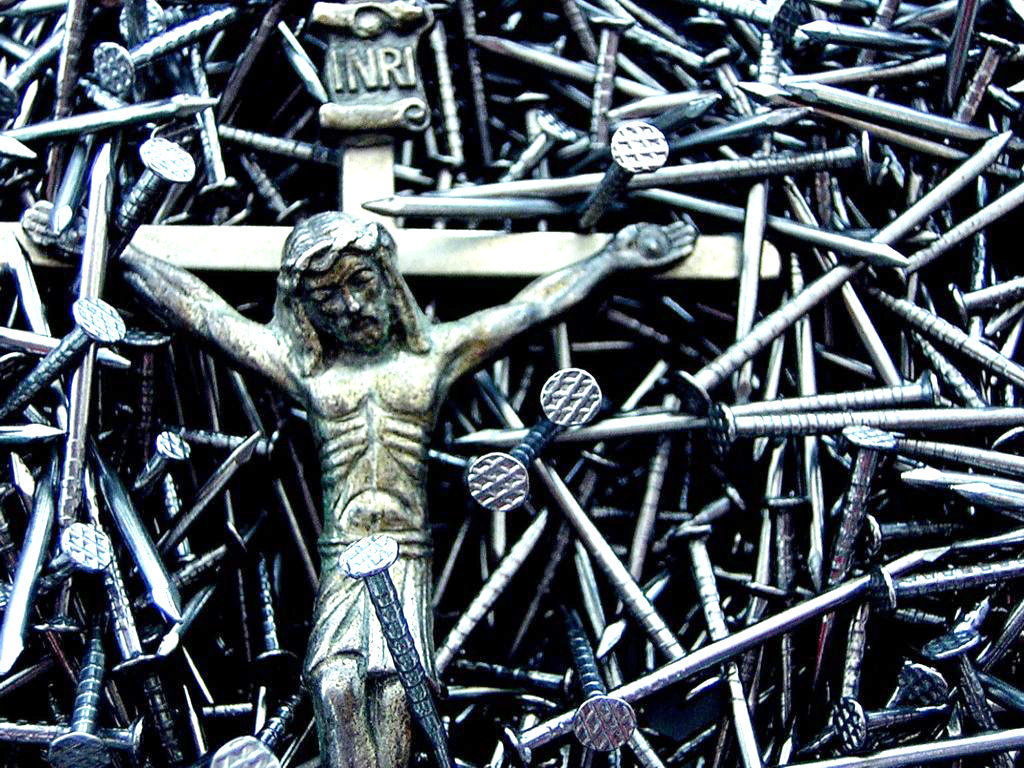 This reflection is reposted here with the permission of the author. It originally appeared on the Dmergent blog.
Wrestling with our fear of failing and learning to fail graciously is essential to the concept of Slow Church that we are exploring here, and we are honored to repost this excellent piece.
My Dirty Secret
I have a secret fear. I don’t like to talk about it, because I find it embarrassing.
I’m afraid of looking stupid.
I don’t like to be laughed at. As a professor, I operate with a low-grade fear that at any moment one of my students will pipe up and say, “That’s not correct, what you said.”
I teach World Religions–mostly the big five: Hinduism, Buddhism, Judaism, Christianity, and Islam. I’m fine with Christianity, and Judaism to a lesser extent. The other three, though …
I’ve taught the course so many times that I maintain a fair comfort-level. But when I get into a tradition that’s not my own, I realize how much I don’t know. It can get pretty nervy.
I had a student one time who had been a Buddhist monk. I found that out, of course, just as we reached the unit on Buddhism.
Really? It already feels like I’m doing this without a net. Now, you’re going to tell me you know this stuff better than I do? How am I supposed to teach this stuff in front of you?
I told him to jump in if I got it wrong. (I hope my commitment to education surpasses my fear of looking incompetent.)
He was really nice about it–corrected me only a couple of times.
As a pastor, my recurring nightmare is that I show up to church on Sunday morning, everybody’s waiting for the processional–when I realize I can’t find my sermon. I look all over the place, growing more and more embarrassed by the moment. As I scramble around, the panic grows, and I can feel the disapproving looks joining together in some great meta-expression of disappointment, as if to say, “Yeah, we knew it was only a matter of time before he screwed up on such a grand scale.”
I can’t tell you how many times I’ve had that dream. After those dreams, I realize how much I have invested in wanting to appear omni-competent. Always ready. Never makes a mistake. Mr. reliable.
Looking stupid is something I assiduously try to avoid. I don’t like to fail.
But it happens.
It’s my dirty secret.
Failing in Church
The church, which ought to be a place where the penchant for failure is readily recognized, often has the same aversion to failure as individuals. This realization seems odd, since the church has traditionally understood itself as a reception hall for failures–which is to say, sinners, those who’ve failed to hit the target. The whole concept of grace centers on the idea that when we sing “Just as I am, without one plea,” whatever else we mean, we most certainly don’t mean, “Just as I am … as soon as I get it all together.”
I find it interesting, then, that the church often operates with such an institutional fear of failure. I don’t just mean failure in the large our-church-is-dying-and-we-don’t-know-what-to-do sense; I also mean failure in a much smaller we’d-like-to-paint-the-women’s-restroom-yellow-but-what-if-someone-feels-strongly-it-should-be-pink sense. On this account of the church, boldness and creativity emerge as threats to an ouchless existence. In fact, decisions don’t even have to be bold or creative to meet resistance, they just have to represent something different.
This paralyzing fear of failure is why the default answer for declining congregations is “no.”
“Should we launch a new ministry to homeless people?”
No.
“The largest part of our congregation works evenings and nights. Could we have a service at some other time than in the morning?”
No.
“There’s a Korean church who’d like to use space in our building. We’re not using it. Should we let them?”
No. No. No.
The interesting question is whether the relationship is causal or correlational between congregations in decline and congregations whose knee-jerk response to anything new tends to be “no.” That is to say, is continually meeting each new opportunity with a “no” a cause of congregational decline, or is it merely the case that congregations that tend to say no also tend to be in decline–but for different reasons? To put a finer point on it, is saying no at its heart a disease or just a symptom of disease?
I’m not sure I’m smart enough to untangle that knot fully, but I do think that confronting each new situation negatively suggests a persistent fear of failure. In sports, coaches call it “playing not to lose.”
I would like to suggest, however, that congregations that live with fear always gnawing at the edges hasten the very death that has them in such a constant state of panic. It’s a vicious cycle.
Get Used to It
I want to set down the paradoxical assertion that it’s only when a congregation can endure a load of small failures that it has a possibility of avoiding the largest failure–death. Conversely, a congregation that spends its life avoiding as many small failures as possible will often wind up dying earlier than it might have otherwise.
Failure is not an enemy to be avoided at all costs; it’s a guide to be embraced.
Notice I didn’t say that failure should be embraced because it feels good. I’m not saying that messing up isn’t painful; it is. What I am saying is that success only comes in the midst of a flurry of failures. Failures help you to refine the field of possibilities. This is true for individuals; it’s true for businesses; it’s true for athletes, musicians, people who play Sudoku; and it’s true for churches.
All right, so opening an ice cream store at the North Pole wasn’t such a great idea. So what? If the question is “What do we do next?” you’ve already trimmed the range of possible options by at least one.
Maybe that Emo Rock service wasn’t such a good fit for your country club neighborhood. Now you know. If it teaches you something about who you are, and where your gifts lie, and what kinds of things you’re able to do in the context in which you find yourselves–you’re now a smarter congregation. But just as importantly, you also know that you can survive decisions that don’t pan out. What is almost certainly a threat to your survival, however, is having three hour board meetings in which you painfully try to head off every possible failure, then wind up doing nothing.
Sitting on your hands is an option–one that many congregations have employed. But let’s not kid ourselves that the ministry Jesus has in mind requires nothing more than locking the doors and hoping that someone will magically bulldoze the neighborhood and build a sparkling new subdivision, filled only with young professional families.
Living like Jesus, really living like Jesus, is an outrageous act no sane group of people would presume to tackily. As a congregation of Jesus followers you’ve already taken a precipitous slide down the ladder of common sense. Get used to it.
Live Courageously
- Think hard. (Brainstorm. Dream. Embrace the vision of a different future.)
- Pray ceaselessly. (Why not bring God into the whole process?)*Do something interesting. (There’s plenty of mediocrity out there mass-marketed as “safe for church.” Hint: Throwing out your hymnals and getting a “praise team” was still daring in 1988. Now it just looks like you think that if you wear fishnet stockings you can be Madonna.)
- Evaluate. Evaluate. Evaluate. (This is the part where you learn from failure. If a ministry flops, factor it in as you get back on the horse.)
- If the timing wasn’t right, but everything else seemed poised to succeed, be flexible enough to try it again under better conditions. (The same idea may work next month, in the summer instead of the winter, or next year.)
- If a decision doesn’t work out, don’t make the mistake of automatically shutting out the person who brought the idea. (Monday morning quarterbacking that takes on an accusatory or condescending tone disincentivizes creativity … from everyone.)
- Bring young people into the process. (Let them try some crazy-sounding things. They need the experience, and the church needs the life and creativity they bring.)
The gospel is first about failure and death–because it’s only losers and corpses who who’ve got nothing left to lose. Why a people who remember the failure of crucifixion and celebrate the victory of resurrection in the Eucharist every Sunday should have its sphincter seize up every time it thinks of death is beyond me.
Embrace failure as a road to success–even God did.
——-
Derek Penwell is senior pastor of Douglass Boulevard Christian Church (Disciples of Christ) in Louisville, Kentucky and lecturer at the University of Louisville in Religious Studies and Humanities. He currently blogs at The Company of the Eudaimon and can be found on Twitter at @reseudaimon.
Previous Post

November 5, 2011
Getting to the heart of Slow Church
Next Post
November 8, 2011 Dorothy Day's Birthday
Browse Our Archives
Select a Category Abundance Advent Books Community Conferences Conversations Ecology Economics Emergent Eucharist Family Food Gratitude Happenings Health history Hospitality Justice Lent Meditations Neighborhoods News Peace Place Poetry Politics Sabbath Scripture Stories Technology The Table Theology Uncategorized What is Slow Church? Youth
Select a Month January 2017 December 2016 November 2016 March 2016 June 2015 March 2015 February 2015 December 2014 November 2014 October 2014 September 2014 August 2014 July 2014 June 2014 May 2014 April 2014 March 2014 February 2014 January 2014 December 2013 November 2013 October 2013 September 2013 August 2013 July 2013 June 2013 May 2013 April 2013 March 2013 February 2013 January 2013 December 2012 November 2012 October 2012 September 2012 August 2012 July 2012 June 2012 May 2012 April 2012 March 2012 February 2012 January 2012 December 2011 November 2011 October 2011 September 2011
Follow Us!
TAKE THE
Religious Wisdom Quiz
And my God will meet all your ____ according to the riches of his glory in Christ Jesus.
Select your answer to see how you score.
Needs Dreams Hopes Prayers
Related posts from Slow Church

Deeper into Your Love and Compassion - A...

Alexander Schmemann - Lent is a Time of...

Slow Church Playlist: Need Your Help...

J.R. Briggs - FAIL [Patheos Book Club]
TRENDING AT PATHEOS Progressive Christian

Why Christians Have a Sacred Duty to Vote:...
The Bible offers strong support for the sacred duty to vote. Here...

What Being a Modern-Day Apostle Means to Me
In my last column, I discussed the ins and outs of modern-day...

Did Ancient China Once Worship the God of...
Across human history, a common thread weaves through the origins of the...

Love Your Neighbor – Including Earth-Kin: Lev. 19,...
God’s command to love your neighbor means acting in an ethical and...

Lead a Church Study of “Jesus and Lao...
Guest writer Jack Thomas (The Irreverent Reverend) reflects on leading his church...

Principles for Understanding the Apostolic Ministry Today
Whenever people discover that my formal ministry title is "apostle," as in...
view all Progressive Christian blogs
Ad-Free & Subscriber Log-In Subscription Support
- About Us
- 2026 Calendar
- Videos
- Podcasts
- Library of World Religions
- Faith In Media Tracker
- Advertise With Us
- Write for Us
- Privacy Policy
- Terms of Service
- Do Not Sell My Data
- Contact Us
- Radiant Digital
- Manage Newsletter Subscriptions
- Unsubscribe From Notifications
- Sitemap
Copyright 2008-2026, Patheos. All rights reserved.
Subscription Support Ad-Free & Subscriber Log-In
Follow Patheos