
BuddhistCatholicContemplativeEvangelicalGeneral ChristianHinduJewishLatter-day SaintMuslimNew VisionsProgressive Christian
Beliefs
- Buddhist
- Catholic
- Contemplative
- Evangelical
- General Christian
- Hindu
- Jewish
- Latter-day Saint
- More Voices
- Muslim
- New Visions
- Pagan
- Progressive Christian
Topics
- Religion News
- Food and Religion
- Sports and Religion
- Religious Art
- Religious Music and Entertainment
- Religious Events
- History and Religion
- Style and Religion
- Politics and Religion
- Women in Religion
- Recreation Outdoors and Religion
- Business Finance and Religion
- Careers Workplace and Religion
- Education and Religion
- Family Parenting and Religion
- Health Fitness and Religion
- Home and Religion
- Relationships and Religion
- Technology and Religion
- Travel and Religion
Columnists
- Buddhist Columnists
- Business Finance and Religion Columnists
- Careers Workplace and Religion Columnists
- Catholic Columnists
- Contemplative Columnists
- Education and Religion Columnists
- Evangelists Columnists
- Family Parenting and Religion Columnists
- General Christian Columnists
- Health Fitness and Religion Columnists
- Hindu Columnists
- History and Religion Columnists
- Home and Religion Columnists
- Jewish Columnists
- More Voices Columnists
- Latter Day Columnists
- Muslim Columnists
- New Visions Columnists
- Nonreligious Columnists
- Pagan Columnists
- Politics and Religion Columnists
- Progressive Columnists
- Recreation Outdoors and Religion Columnists
- Relationships and Religion Columnists
- Religion News Columnists
- Religious Art Columnists
- Religious Events Columnists
- Religious Music and Entertainment Columnists
- Sports and Religion Columnists
- Style and Religion Columnists
- Technology and Religion Columnists
- Travel and Religion Columnists
- Women in Religion Columnists
Resource Library
- 2026 Calendar
- Library of World Religions
- The 100 Most Holy Places on Earth
- Patheos Answers
- Podcasts
- Videos
- Faith Leaders Database
- Anglican Episcopalian
- Bahai
- Baptist
- Buddhism
- Christianity
- Confucianism
- Eastern Orthodoxy
- Hinduism
- Holiness and Pentecostal
- ISKCON
- Islam
- Judaism
- Lutheran
- Methodist
- The Church of Jesus Christ of Latter-day Saints
- New Age
- Paganism
- Presbytarian and Reformed
- Protestantism
- Religion Behind the Scenes
- Roman Catholic
- Scientology
- Shia Islam
- Sikhism
- Sufism
- Sunni Islam
- Taoism
- Zen
- See all religions
Research Tools
 Ad-Free & Subscriber Log-In Subscription Support
Ad-Free & Subscriber Log-In Subscription Support
Follow Patheos 

- Trending:
- Forgiveness
- |
- Marriage
- |
- Consciousness
- |
- Death Penalty
- |
- Election
- |
- Halloween
 Slow Church
- Home
- Progressive Christian
- The Deeper and Richer Life of Gratitude.
The Deeper and Richer Life of Gratitude.
Last updated on: October 29, 2011 at 9:01 pm by Christopher Smith
The Deeper and Richer Life of Gratitude. 2011-10-29T21:01:37-05:00 Christopher Smith
Patheos Explore the world's faith through different perspectives on religion and spirituality! Patheos has the views of the prevalent religions and spiritualities of the world.
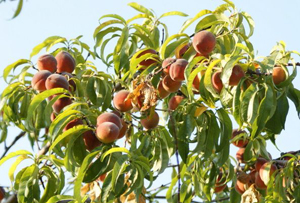 I wrote the following piece earlier this week for the lectionary blog of the Ekklesia Project. Thought I’d re-post it here as gratitude is a key virtue of a Slow Church, and because the text will be one used tomorrow in many churches that follow the Revised Common Lectionary.
(Also, the Ekklesia Project’s annual gathering next summer in Chicago –dates in early July, TBA soon — is on the theme of “Slow Church: Abiding Together in the Patient Work of God.” More info will be available soon…)
Twentieth Sunday After Pentecost
“O give thanks to the Lord, for he is good;
for his steadfast love endures for ever.”
Gratitude is at the core of our identity as the people of God. God has created us and continually provides for us. Even when times get tough in our broken world, when we’re hungry and thirsty and our soul is fainting within us (v. 5), God hears our cries and delivers us. The Israelite people certainly knew their share of troubles – being slaves in Egypt, wandering in the desert for forty years, going into exile, and so on – but yet the Psalms, their prayerbook that gave shape to their life together was filled with prayers of thanksgiving like today’s reading from Psalm 107 that celebrate the goodness and the provision of God.
And yet, gratitude is one of the most difficult virtues for us to cultivate in the Western world. Why is this? Above all, we are extraordinarily wealthy; we have the resources and technologies to take care of almost all our needs, and thus it is easy for us to lose sight of God’s provision. Additionally, we are immersed in a sea of advertising every day that fuels our ingratitude by reminding us of all the things that we don’t have, but that we should want. We also are so far removed from agriculture that we easily lose sight of God’s providing through creation for our most basic need, food.
So what can we, as Westerners, learn about gratitude from the Israelite people of the Old Testament?
Above all, we need to see ourselves as a people that God has gathered and among whom God is working, not just as a collection of autonomous individuals. Autonomy only serves to fuel our ingratitude; creation has been formed by God to be an interdependent whole. If we have isolated ourselves, we will find little comfort when hard times hit, as they inevitably will. In sharing life together in the local church communities to which God has called us, we come to see God’s provision for us in our brothers and sisters (and also to see how God uses us to provide for others).
Secondly, as the ancient Israelite people did in psalms and prayers like this one, we need to tell stories of God’s goodness, faithfulness and provision. Although there is adeep need for connection with God’s work in the historic people of God through liturgy and songs, there is also a deep need for local forms of worship that energize our hearts and minds with the very particular stories of God’s provision for us as a church community in our specific places. Our praise and thanksgiving to God should not just come in the broadest, most abstract sense – though I do believe there is a place for celebrating a God that is at work reconciling all creation at all places and all times; we need to find creative ways to tell stories that remind us regularly that God is always providing for us, and our neighbors, in our particular place.
We also need to recover regular practices of feasting together, as the Israelite people did. In the Eucharist – the very name of which means thanksgiving – we have hints and vestiges of the feasts of Israel. John Howard Yoder has argued poignantly that when Jesus instructed his disciples to “do this in remembrance of me” the this referred neither to eating the Passover meal nor to taking the symbolic bread and cup (a practice that developed later in church history), but rather to sharing a common meal together. Sharing a meal together, Yoder notes, is an economic practice; by eating together we demonstrate in a real and tangible way God’s provision for our needs – or at least our need to eat. And in connection with the previous point, the table is also a natural place for the sharing of stories, for telling and listening to what God is doing in our midst, and for strategizing how we might take our next baby steps together toward being a mature body of Christ (Eph. 4:7-16).
Finally, we need to learn from the ancient Israelites about our identity as a Sabbath people. Sabbath serves to remind us that God is sovereign and that it is God who provides for us. In our age of wealth and abundant technology, we need Sabbath practices to turn our attention back to God as provider. Certainly, there is justifiably much reaction today toward the legalistic ways in which Sabbath has been practiced historically, so it is a practice that is often ignored. And when it is discussed, the focus is typically on individual or family practices of Sabbath, which may help some people to live more healthfully but ultimately only serve to promote further fragmentation. Sabbath was intended as a corporate practice, and today there is a deep need to recover Sabbath practices that are shared at the heart of our life together as church communities.
The convictions and practices of ancient Israel that I have described here have much overlap and many synergies among themselves. Taken together, they point us in the direction of the deeper and richer life of interdependence for which we were created. May we be attentive to the ways in which God forms and shapes the people of God, in Israel and in the history of the Church; may we become a people that are attentive to the super-abundance of God’s provision in our daily lives; and may we become a people that is known above all for our gratitude!
(Photo credit – Brent Aldrich, Englewood Christian Church. Used with permission. )
Twentieth Sunday After Pentecost
“O give thanks to the Lord, for he is good;
for his steadfast love endures for ever.”
Gratitude is at the core of our identity as the people of God. God has created us and continually provides for us. Even when times get tough in our broken world, when we’re hungry and thirsty and our soul is fainting within us (v. 5), God hears our cries and delivers us. The Israelite people certainly knew their share of troubles – being slaves in Egypt, wandering in the desert for forty years, going into exile, and so on – but yet the Psalms, their prayerbook that gave shape to their life together was filled with prayers of thanksgiving like today’s reading from Psalm 107 that celebrate the goodness and the provision of God.
And yet, gratitude is one of the most difficult virtues for us to cultivate in the Western world. Why is this? Above all, we are extraordinarily wealthy; we have the resources and technologies to take care of almost all our needs, and thus it is easy for us to lose sight of God’s provision. Additionally, we are immersed in a sea of advertising every day that fuels our ingratitude by reminding us of all the things that we don’t have, but that we should want. We also are so far removed from agriculture that we easily lose sight of God’s providing through creation for our most basic need, food.
So what can we, as Westerners, learn about gratitude from the Israelite people of the Old Testament?
Above all, we need to see ourselves as a people that God has gathered and among whom God is working, not just as a collection of autonomous individuals. Autonomy only serves to fuel our ingratitude; creation has been formed by God to be an interdependent whole. If we have isolated ourselves, we will find little comfort when hard times hit, as they inevitably will. In sharing life together in the local church communities to which God has called us, we come to see God’s provision for us in our brothers and sisters (and also to see how God uses us to provide for others).
Secondly, as the ancient Israelite people did in psalms and prayers like this one, we need to tell stories of God’s goodness, faithfulness and provision. Although there is adeep need for connection with God’s work in the historic people of God through liturgy and songs, there is also a deep need for local forms of worship that energize our hearts and minds with the very particular stories of God’s provision for us as a church community in our specific places. Our praise and thanksgiving to God should not just come in the broadest, most abstract sense – though I do believe there is a place for celebrating a God that is at work reconciling all creation at all places and all times; we need to find creative ways to tell stories that remind us regularly that God is always providing for us, and our neighbors, in our particular place.
We also need to recover regular practices of feasting together, as the Israelite people did. In the Eucharist – the very name of which means thanksgiving – we have hints and vestiges of the feasts of Israel. John Howard Yoder has argued poignantly that when Jesus instructed his disciples to “do this in remembrance of me” the this referred neither to eating the Passover meal nor to taking the symbolic bread and cup (a practice that developed later in church history), but rather to sharing a common meal together. Sharing a meal together, Yoder notes, is an economic practice; by eating together we demonstrate in a real and tangible way God’s provision for our needs – or at least our need to eat. And in connection with the previous point, the table is also a natural place for the sharing of stories, for telling and listening to what God is doing in our midst, and for strategizing how we might take our next baby steps together toward being a mature body of Christ (Eph. 4:7-16).
Finally, we need to learn from the ancient Israelites about our identity as a Sabbath people. Sabbath serves to remind us that God is sovereign and that it is God who provides for us. In our age of wealth and abundant technology, we need Sabbath practices to turn our attention back to God as provider. Certainly, there is justifiably much reaction today toward the legalistic ways in which Sabbath has been practiced historically, so it is a practice that is often ignored. And when it is discussed, the focus is typically on individual or family practices of Sabbath, which may help some people to live more healthfully but ultimately only serve to promote further fragmentation. Sabbath was intended as a corporate practice, and today there is a deep need to recover Sabbath practices that are shared at the heart of our life together as church communities.
The convictions and practices of ancient Israel that I have described here have much overlap and many synergies among themselves. Taken together, they point us in the direction of the deeper and richer life of interdependence for which we were created. May we be attentive to the ways in which God forms and shapes the people of God, in Israel and in the history of the Church; may we become a people that are attentive to the super-abundance of God’s provision in our daily lives; and may we become a people that is known above all for our gratitude!
(Photo credit – Brent Aldrich, Englewood Christian Church. Used with permission. )
Next Post

October 30, 2011 Sunday Afternoon Book Review: SEEING TREES.
Browse Our Archives
Select a Category Abundance Advent Books Community Conferences Conversations Ecology Economics Emergent Eucharist Family Food Gratitude Happenings Health history Hospitality Justice Lent Meditations Neighborhoods News Peace Place Poetry Politics Sabbath Scripture Stories Technology The Table Theology Uncategorized What is Slow Church? Youth
Select a Month January 2017 December 2016 November 2016 March 2016 June 2015 March 2015 February 2015 December 2014 November 2014 October 2014 September 2014 August 2014 July 2014 June 2014 May 2014 April 2014 March 2014 February 2014 January 2014 December 2013 November 2013 October 2013 September 2013 August 2013 July 2013 June 2013 May 2013 April 2013 March 2013 February 2013 January 2013 December 2012 November 2012 October 2012 September 2012 August 2012 July 2012 June 2012 May 2012 April 2012 March 2012 February 2012 January 2012 December 2011 November 2011 October 2011 September 2011
Follow Us!
TAKE THE
Religious Wisdom Quiz
What does James say about faith without works?
Select your answer to see how you score.
Faith without works is dead. Faith is only for the righteous. Faith alone is enough. Works without faith is dead.
Related posts from Slow Church

Deeper into Your Love and Compassion - A...
Alexander Schmemann - Lent is a Time of...

Slow Church Playlist: Need Your Help...

Celebrate Interdependence Day 2014!
TRENDING AT PATHEOS Progressive Christian

Why Christians Have a Sacred Duty to Vote:...
The Bible offers strong support for the sacred duty to vote. Here...

What Being a Modern-Day Apostle Means to Me
In my last column, I discussed the ins and outs of modern-day...

Did Ancient China Once Worship the God of...
Across human history, a common thread weaves through the origins of the...

Love Your Neighbor – Including Earth-Kin: Lev. 19,...
God’s command to love your neighbor means acting in an ethical and...

Lead a Church Study of “Jesus and Lao...
Guest writer Jack Thomas (The Irreverent Reverend) reflects on leading his church...

Principles for Understanding the Apostolic Ministry Today
Whenever people discover that my formal ministry title is "apostle," as in...
view all Progressive Christian blogs
Ad-Free & Subscriber Log-In Subscription Support
- About Us
- 2026 Calendar
- Videos
- Podcasts
- Library of World Religions
- Faith In Media Tracker
- Advertise With Us
- Write for Us
- Privacy Policy
- Terms of Service
- Do Not Sell My Data
- Contact Us
- Radiant Digital
- Manage Newsletter Subscriptions
- Unsubscribe From Notifications
- Sitemap
Copyright 2008-2026, Patheos. All rights reserved.
Subscription Support Ad-Free & Subscriber Log-In
Follow Patheos