
BuddhistCatholicContemplativeEvangelicalGeneral ChristianHinduJewishLatter-day SaintMuslimNew VisionsProgressive Christian
Beliefs
- Buddhist
- Catholic
- Contemplative
- Evangelical
- General Christian
- Hindu
- Jewish
- Latter-day Saint
- More Voices
- Muslim
- New Visions
- Pagan
- Progressive Christian
Topics
- Religion News
- Food and Religion
- Sports and Religion
- Religious Art
- Religious Music and Entertainment
- Religious Events
- History and Religion
- Style and Religion
- Politics and Religion
- Women in Religion
- Recreation Outdoors and Religion
- Business Finance and Religion
- Careers Workplace and Religion
- Education and Religion
- Family Parenting and Religion
- Health Fitness and Religion
- Home and Religion
- Relationships and Religion
- Technology and Religion
- Travel and Religion
Columnists
- Buddhist Columnists
- Business Finance and Religion Columnists
- Careers Workplace and Religion Columnists
- Catholic Columnists
- Contemplative Columnists
- Education and Religion Columnists
- Evangelists Columnists
- Family Parenting and Religion Columnists
- General Christian Columnists
- Health Fitness and Religion Columnists
- Hindu Columnists
- History and Religion Columnists
- Home and Religion Columnists
- Jewish Columnists
- More Voices Columnists
- Latter Day Columnists
- Muslim Columnists
- New Visions Columnists
- Nonreligious Columnists
- Pagan Columnists
- Politics and Religion Columnists
- Progressive Columnists
- Recreation Outdoors and Religion Columnists
- Relationships and Religion Columnists
- Religion News Columnists
- Religious Art Columnists
- Religious Events Columnists
- Religious Music and Entertainment Columnists
- Sports and Religion Columnists
- Style and Religion Columnists
- Technology and Religion Columnists
- Travel and Religion Columnists
- Women in Religion Columnists
Resource Library
- 2026 Calendar
- Library of World Religions
- The 100 Most Holy Places on Earth
- Patheos Answers
- Podcasts
- Videos
- Faith Leaders Database
- Anglican Episcopalian
- Bahai
- Baptist
- Buddhism
- Christianity
- Confucianism
- Eastern Orthodoxy
- Hinduism
- Holiness and Pentecostal
- ISKCON
- Islam
- Judaism
- Lutheran
- Methodist
- The Church of Jesus Christ of Latter-day Saints
- New Age
- Paganism
- Presbytarian and Reformed
- Protestantism
- Religion Behind the Scenes
- Roman Catholic
- Scientology
- Shia Islam
- Sikhism
- Sufism
- Sunni Islam
- Taoism
- Zen
- See all religions
Research Tools
 Ad-Free & Subscriber Log-In Subscription Support
Ad-Free & Subscriber Log-In Subscription Support
Follow Patheos 

- Trending:
- Forgiveness
- |
- Marriage
- |
- Consciousness
- |
- Death Penalty
- |
- Election
- |
- Halloween
 Slow Church
- Home
- Progressive Christian
- God’s Patience, The City and THE WIRE.
God’s Patience, The City and THE WIRE.
Last updated on: October 6, 2011 at 9:38 am by Christopher Smith
God’s Patience, The City and THE WIRE. 2011-10-06T09:38:42-05:00 Christopher Smith
Patheos Explore the world's faith through different perspectives on religion and spirituality! Patheos has the views of the prevalent religions and spiritualities of the world.
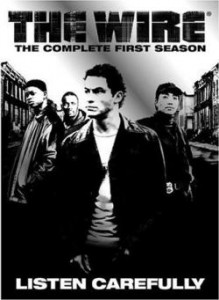 In my initial post on this blog, I noted that our vision of Slow Church was rooted in the slowness of God’s work in the world. One facet of that slowness, as I described in that post is God’s choice to redeem the world by gathering a people. Another facet is God’s patience with the depths and complexities of human rebellion. From Cain’s founding of the first city (Gen. 4: 9-17) onward, the city has been an image of brokenness, human rebellion against God. Jacques Ellul, in The Meaning of the City (a superb work for beginning to reflect on urban theology), observes:
[The builders of Babel] wanted to make a name for themselves. … [They] wanted to be definitively separated from God. They knew well that in spite of their revolt they were still tributary to God, that God was still their Lord, that God was still the one naming them, “calling them by their name”… Like it or not, they still belonged to God. And that is what people wanted to eliminate. … It was in [the city], man’s environment, built by man for man, with any other intervention or power excluded, that man could make a name for himself. It was there that his pretension of becoming a subject, never again to be an object, could be realized. The cities of our time are most certainly that place where man can with impunity declare himself master of nature. It is only in an urban civilization that man has the metaphysical possibility of saying, “I killed God.”
There are few depictions of the depths and complexities of human rebellion — as epitomized in the city — that are as stark and compelling as the HBO television series The Wire. Unlike most police shows on television, The Wire is not primarily a narrative of good versus evil. Rather, it portrays deep brokenness (and glimmers of the possibility of redemption) on all sides of its story. Each season focuses on a particular power in the urban system in all its brokenness (Season 1: Police and the drug trade, Season 2: The Port and Unions, Season 3: City Government, Season 4: The Schools, Season 5: The Newspaper). If one can tolerate the coarseness that fits its urban Baltimore context (violence, sexuality, language), the show is one of the most stunning and insightful in recently decades.
[ Brief Intro to The Wire from HBO ]
One of the shows most memorable moments that epitomizes the depths of brokenness in all humanity occurs when Omar, a vigilante who robs drug dealers, observes that he is no different than the lawyer who defends drug dealers. They have different tools, he says, but they both capitalize on the drug dealing “game.” (Click to watch this scene…)
The Wire is a poignant reminder of why we need Slow Church; although the contexts we live in might be vastly different, there is an odd ring of truth to the lies and compromises that the characters make in order to stay alive from one day to the next. Humankind is deeply broken, much moreso than we prefer to admit, and yet, God abides patiently with us, slowly redeeming the city of our rebelliousness from within, and indeed our eschatological hope is a city, the New Jerusalem (See Rev. 21-22).
Previous Post

October 5, 2011
A Slow Church Poem: The Host
Next Post
October 7, 2011 Churches catalyzing local culture.
Browse Our Archives
Select a Category Abundance Advent Books Community Conferences Conversations Ecology Economics Emergent Eucharist Family Food Gratitude Happenings Health history Hospitality Justice Lent Meditations Neighborhoods News Peace Place Poetry Politics Sabbath Scripture Stories Technology The Table Theology Uncategorized What is Slow Church? Youth
Select a Month January 2017 December 2016 November 2016 March 2016 June 2015 March 2015 February 2015 December 2014 November 2014 October 2014 September 2014 August 2014 July 2014 June 2014 May 2014 April 2014 March 2014 February 2014 January 2014 December 2013 November 2013 October 2013 September 2013 August 2013 July 2013 June 2013 May 2013 April 2013 March 2013 February 2013 January 2013 December 2012 November 2012 October 2012 September 2012 August 2012 July 2012 June 2012 May 2012 April 2012 March 2012 February 2012 January 2012 December 2011 November 2011 October 2011 September 2011
Follow Us!
TAKE THE
Religious Wisdom Quiz
What does "Sheol," often found in Psalms, mean?
Select your answer to see how you score.
Above the mountain Blessing The grave or abode of the dead Eternal light
Related posts from Slow Church


Scot McKnight - A Fellowship of Differents [Patheos...
Ragan Sutterfield - This is my Body [Patheos...
Two Slow Church-related ebooks on sale now!
TRENDING AT PATHEOS Progressive Christian

Why Christians Have a Sacred Duty to Vote:...
The Bible offers strong support for the sacred duty to vote. Here...

What Being a Modern-Day Apostle Means to Me
In my last column, I discussed the ins and outs of modern-day...

Did Ancient China Once Worship the God of...
Across human history, a common thread weaves through the origins of the...

Love Your Neighbor – Including Earth-Kin: Lev. 19,...
God’s command to love your neighbor means acting in an ethical and...

Lead a Church Study of “Jesus and Lao...
Guest writer Jack Thomas (The Irreverent Reverend) reflects on leading his church...

Principles for Understanding the Apostolic Ministry Today
Whenever people discover that my formal ministry title is "apostle," as in...
view all Progressive Christian blogs
Ad-Free & Subscriber Log-In Subscription Support
- About Us
- 2026 Calendar
- Videos
- Podcasts
- Library of World Religions
- Faith In Media Tracker
- Advertise With Us
- Write for Us
- Privacy Policy
- Terms of Service
- Do Not Sell My Data
- Contact Us
- Radiant Digital
- Manage Newsletter Subscriptions
- Unsubscribe From Notifications
- Sitemap
Copyright 2008-2026, Patheos. All rights reserved.
Subscription Support Ad-Free & Subscriber Log-In
Follow Patheos