
BuddhistCatholicContemplativeEvangelicalGeneral ChristianHinduJewishLatter-day SaintMuslimNew VisionsProgressive Christian
Beliefs
- Buddhist
- Catholic
- Contemplative
- Evangelical
- General Christian
- Hindu
- Jewish
- Latter-day Saint
- More Voices
- Muslim
- New Visions
- Pagan
- Progressive Christian
Topics
- Religion News
- Food and Religion
- Sports and Religion
- Religious Art
- Religious Music and Entertainment
- Religious Events
- History and Religion
- Style and Religion
- Politics and Religion
- Women in Religion
- Recreation Outdoors and Religion
- Business Finance and Religion
- Careers Workplace and Religion
- Education and Religion
- Family Parenting and Religion
- Health Fitness and Religion
- Home and Religion
- Relationships and Religion
- Technology and Religion
- Travel and Religion
Columnists
- Buddhist Columnists
- Business Finance and Religion Columnists
- Careers Workplace and Religion Columnists
- Catholic Columnists
- Contemplative Columnists
- Education and Religion Columnists
- Evangelists Columnists
- Family Parenting and Religion Columnists
- General Christian Columnists
- Health Fitness and Religion Columnists
- Hindu Columnists
- History and Religion Columnists
- Home and Religion Columnists
- Jewish Columnists
- More Voices Columnists
- Latter Day Columnists
- Muslim Columnists
- New Visions Columnists
- Nonreligious Columnists
- Pagan Columnists
- Politics and Religion Columnists
- Progressive Columnists
- Recreation Outdoors and Religion Columnists
- Relationships and Religion Columnists
- Religion News Columnists
- Religious Art Columnists
- Religious Events Columnists
- Religious Music and Entertainment Columnists
- Sports and Religion Columnists
- Style and Religion Columnists
- Technology and Religion Columnists
- Travel and Religion Columnists
- Women in Religion Columnists
Resource Library
- 2026 Calendar
- Library of World Religions
- The 100 Most Holy Places on Earth
- Patheos Answers
- Podcasts
- Videos
- Faith Leaders Database
- Anglican Episcopalian
- Bahai
- Baptist
- Buddhism
- Christianity
- Confucianism
- Eastern Orthodoxy
- Hinduism
- Holiness and Pentecostal
- ISKCON
- Islam
- Judaism
- Lutheran
- Methodist
- The Church of Jesus Christ of Latter-day Saints
- New Age
- Paganism
- Presbytarian and Reformed
- Protestantism
- Religion Behind the Scenes
- Roman Catholic
- Scientology
- Shia Islam
- Sikhism
- Sufism
- Sunni Islam
- Taoism
- Zen
- See all religions
Research Tools
 Ad-Free & Subscriber Log-In Subscription Support
Ad-Free & Subscriber Log-In Subscription Support
Follow Patheos 

- Trending:
- Forgiveness
- |
- Marriage
- |
- Consciousness
- |
- Death Penalty
- |
- Election
- |
- Halloween

- Home
- Progressive Christian
- No, most white evangelicals are not ‘egalitarian’
No, most white evangelicals are not ‘egalitarian’
Last updated on: October 12, 2026 at 4:58 pm by Fred Clark
No, most white evangelicals are not ‘egalitarian’ 2026-10-12T16:58:03-04:00 Fred Clark
Patheos Explore the world's faith through different perspectives on religion and spirituality! Patheos has the views of the prevalent religions and spiritualities of the world.
“Most evangelicals today are egalitarian like me,” Bonnie Kristian writes in In Defense of Evangelicalism.
And, like me, Richard Beck isn’t buying it.
I did a double take when I read that claim. Here’s the relevant passage from the book:
But most evangelicals today are egalitarian like me…As the political scientist Ryan Burge has found, a strong majority of evangelicals believe women can preach—and not only to children or other women, as complementarians tend to allow. To everyone. From the pulpit. “Nearly three quarters of evangelicals agree that a properly trained and certified woman can preach on Sunday morning,” Burge reported, citing national survey data.
This is a poll of self-identified evangelicals, but crucially, that pattern held across generations, church attendance rates, and views of Scripture. “Even among those who say that the Bible is literally true and attend church every week, 74 percent are in favor of women preaching,” Burge wrote. “The data is basically unequivocal on this point: A majority of evangelicals favor women serving in any and all capacities in their church.”
The claim I want to interrogate is this: “most evangelicals today are egalitarian.” I find that claim very hard to believe.
A lot, again, depends upon what we mean by “evangelical.” Recall, Episcopalians, who ordain women priests, can be described as Bebbington-style evangelical. And my church, which is egalitarian, is also Bebbington-style evangelical. But these egalitarian churches don’t self-identify as evangelical, and aren’t the referent when people use the word “evangelical.”
Beck drills down into the poll numbers and poll questions that Ryan Burge mined for this claim — and he talked to Burge himself — and doesn’t think that poll supports Kristian’s claim here.
 I’d suggest following up with another poll, surveying 100 white evangelical women who serve as head pastors to see if they agree that “most evangelicals today are egalitarian.” But that would be difficult because it would be very, very hard to find 100 white evangelical women who serve as head pastors.
One can find “evangelical” churches with women in such leadership roles, but only if one regards “evangelicalism” as an expansive category that includes the whole panoply of charismatic/Pentecostal/NAR Christianity that is otherwise excluded or marginalized as a negligible fringe in Kristian’s broader apologia for “mainstream” evangelicalism.
It won’t do to dismiss concerns about Paula White Cain and Cindy Jacobs as “nut-picking” that misleadingly elevates fringe figures and treats them as prominent and central and then to turn around and say, “Most evangelicals are egalitarian …” just look at Paula White Cain. We can’t exclude White Cain’s politics and theology as inconsequentially fringe and then come to her with open arms when needing to bolster a shaky claim about “egalitarianism.”
Richard Beck is also incisive about the constrained meaning of “egalitarian” — the weird evangelical jargon word that gets treated as a synonym for “feminist” when it actually only means something a bit more like “somewhat less aggressively anti-feminist.”
Here’s Beck:
Allowing women to preach isn’t a good operational definition for egalitarianism. True, there are forms of strict patriarchalism that would wholly prohibit a woman from preaching from the pulpit. And given Ryan’s data, about 25% of evangelical churches operate with those strict prohibitions. But even where evangelical churches allow women to preach or co-preach, that preaching is granted under a patriarchal “permission” structure, allowed and supervised solely by male leadership. Male “headship” is still operative even as she preaches. And if you think this is a difference that doesn’t really make a difference, you didn’t sit with the women in my church who had to endure this type of permission-giving for years.
Right. A lot of what gets lumped in as “egalitarian” isn’t. It’s just patriarchy lite.
But aren’t there also at least some white evangelical churches and institutions that advocate for something more like the genuine equality that the term “egalitarian” points toward?
Yes, but as Beck notes, such churches and spaces tend, very quickly, to wind up pushed out of evangelicalism as soon as they adopt such positions. Or they become perceived as no longer evangelical, which amounts to the same thing:
Here is the paradox: the very change I would recommend—becoming fully egalitarian—is precisely the change that many evangelicals experience as becoming progressive! I’m confident in saying this because I’ve walked with my own church through that change. When our church became egalitarian, about half the congregation left, and those who left rejected egalitarianism precisely because they experienced it as a move toward progressivism—as though we were opening a hermeneutical Pandora’s box. To be sure, there are evangelical churches that are fully egalitarian: they not only permit women to preach occasionally but also have women serving as lead pastors, leaders, and elders. But for a non-egalitarian evangelical church, asking it to become fully egalitarian is, from its own perspective, asking it to “become progressive.” … The reform I would recommend as a way for evangelicalism to become better without simply becoming progressive is the very reform that many evangelicals believe would make them progressive. In other words, while I can distinguish egalitarianism from progressivism conceptually, many if not most evangelicals experience the move from non-egalitarianism to egalitarianism as precisely the move from evangelicalism toward progressivism.
Beck is frustrated here because he, personally, “can distinguish egalitarianism from progressivism,” but it seems that many white evangelicals cannot or will not make such a distinction.
In other words, they regard “egalitarianism” as something that puts one outside of evangelicalism. In other words, they regard anti-egalitarianism as a defining characteristic — as a necessary component of any definition of what it means to be “evangelical.”
That brings us back to the historiography wars and the heated debate prompted by Matthew Avery Sutton’s pointedly precise attempt to define white evangelicalism. Sutton wrote “I argue that post–World War II evangelicalism is best defined as a white, patriarchal, nationalist religious movement made up of Christians who seek power to transform American culture through conservative-leaning politics and free-market economics.”
This made some other historians and religious studies folks very angry and the two sides have been exchanging fire ever since.
Sutton’s definition is perceived as a critique of evangelicalism rather than a mere description. But the half of the congregation that left Beck’s church was not doing so as a critique of evangelicalism from the outside. They left because they believed they were defending it from the inside. They rejected egalitarianism “in defense of evangelicalism.”
They agreed with and affirmed Sutton’s thesis, insisting that “evangelicalism is best defined as … patriarchal” because that is what they believed as evangelicals. They were neither willing nor able to distinguish patriarchy from evangelicalism conceptually and, thus, Sutton has described them accurately.
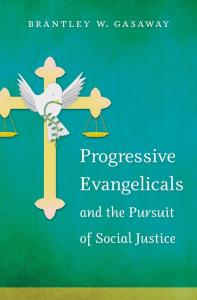
Beck’s language here also inadvertently lends some support to Sutton’s thesis. Note the way he employs “evangelical” and “progressive” as distinctive, exclusive, and almost opposing categories. This is received usage, not something unique to Beck, but it’s a fairly recent development. Consider Brantley Gasaway’s 2014 book Progressive Evangelicals and the Pursuit of Social Justice. The title of that modest history of a modest history suggests that these terms have not always been construed as opposites.
I’m a footnote in Gasaway’s book, which is itself a footnote in Sutton’s paper. But I also played a small footnote of a role in the popularization of the new terminology defining “progressive” as something separate from and opposed to “evangelical.” That happened here at Patheos, when Tim Dalrymple — before he became editor of Christianity Today — took charge of the “Evangelical” channel of blogs hosted here.
Tim inherited a marketing problem. He was charged with getting more “evangelicals” to come to read blogs here at Patheos, but some of the biggest, loudest blogs on the “Evangelical Channel” tended to scare off the audience he’d been hired to attract. Scot McKnight was too much of a champion of “egalitarianism” and much of the potential evangelical audience the Evangelical Channel sought tended to respond to his Jesus Creed blog the same way that half of Richard Beck’s congregation did — by leaving and not coming back. Tony Jones’s blog, likewise, was too “egalitarian” and too “emergent” (it was a thing), to appeal to “mainstream” evangelical readers. And the other relatively “big” blog on the channel was, well, this one.
Now, to his credit, Tim never suggested any censoring or alteration of anything I write here. In his interactions with me he never even hinted that I shouldn’t be free to continue writing about marriage equality or abortion rights or evolution or any of the other things I might write here that tended to upset the evangelical audience he was charged with attracting to Patheos’ “channel.” But he asked me to appreciate how this a-typical evangelical blog might create problems for his efforts to attract more typical evangelical readers. And I understood his situation.
To his further credit, Tim seemed not to want to suggest that any of us — Prof. McKnight or Tony or me — were illegitimate interlopers or foreign spies in the house of evangelicalism. He was not trying to banish or excommunicate us, only to solve the marketing problem our presence created. He didn’t want to suggest any such banishment by rechristening us all as “Mainline” bloggers. And so he and Patheos came up with the solution of changing the name of the site’s “Mainline” channel, relabeling that as “Progressive Christian” and relocating the problematic evangelical blogs under that new umbrella. (Scot McKnight decamped to Substack shortly thereafter.)
That term “progressive Christianity” has a long pedigree, but this was a new application with new connotations and — eventually — new denotations affixed to it. I don’t think the relabeling of Patheos’ blog channels is solely or primarily responsible for this new sense of “progressive as opposed to evangelical” or “progressive versus evangelical” implied by the terminology accepted and employed in Beck’s post, but I do think it was one significant contributing factor in that change.
And that change is … interesting.
It tells us something, I think, about the ongoing “evangelical definition wars” among historians and religious studies scholars. The fact that “Are you evangelical or are you progressive?” can be asked as a clear question clearly understood seems to suggest that Matthew Avery Sutton’s definition is at least as much a straightforward description as it is a polemical critique.
Previous Post
October 9, 2026
LBCF: That beats all
Next Post

October 13, 2026 'A hermeneutical Pandora’s box'
Recent Comments
"New measurement just dropped:1 Zacharia = 0.5 Scaramuccis"
The purpose-driven labor priest
"Bad news, guys. FIFA may be discontinuing their highly distnguished Peace Prize."
The purpose-driven labor priest
"Elon is funding the GOP campaigns, too. In case people still had any question about ..."
The purpose-driven labor priest
"I mean can you believe people who aren't white christians have the audacity to exist ..."
The purpose-driven labor priest
Browse Our Archives
Select a Category class warfare evangelicals Iraq Left Behind Mammon music Uncategorized
Select a Month October 2026 September 2026 August 2026 July 2026 June 2026 May 2026 April 2026 March 2026 January 2026 December 2025 November 2025 October 2025 September 2025 August 2025 July 2025 June 2025 May 2025 April 2025 March 2025 February 2025 January 2025 December 2024 November 2024 October 2024 September 2024 August 2024 July 2024 June 2024 May 2024 April 2024 March 2024 February 2024 January 2024 December 2023 November 2023 October 2023 September 2023 August 2023 July 2023 June 2023 May 2023 April 2023 March 2023 February 2023 January 2023 December 2022 November 2022 October 2022 September 2022 August 2022 July 2022 June 2022 May 2022 April 2022 March 2022 February 2022 January 2022 December 2021 November 2021 October 2021 September 2021 August 2021 July 2021 June 2021 May 2021 April 2021 March 2021 February 2021 January 2021 December 2020 November 2020 October 2020 September 2020 August 2020 July 2020 June 2020 May 2020 April 2020 March 2020 February 2020 January 2020 December 2019 November 2019 October 2019 September 2019 August 2019 July 2019 June 2019 May 2019 April 2019 March 2019 February 2019 January 2019 December 2018 November 2018 October 2018 September 2018 August 2018 July 2018 June 2018 May 2018 April 2018 March 2018 February 2018 January 2018 December 2017 November 2017 October 2017 September 2017 August 2017 July 2017 June 2017 May 2017 April 2017 March 2017 February 2017 January 2017 December 2016 November 2016 October 2016 September 2016 August 2016 July 2016 June 2016 May 2016 April 2016 March 2016 February 2016 January 2016 December 2015 November 2015 October 2015 September 2015 August 2015 July 2015 June 2015 May 2015 April 2015 March 2015 February 2015 January 2015 December 2014 November 2014 October 2014 September 2014 August 2014 July 2014 June 2014 May 2014 April 2014 March 2014 February 2014 January 2014 December 2013 November 2013 October 2013 September 2013 August 2013 July 2013 June 2013 May 2013 April 2013 March 2013 February 2013 January 2013 December 2012 November 2012 October 2012 September 2012 August 2012 July 2012 June 2012 May 2012 April 2012 March 2012 February 2012 January 2012 December 2011 November 2011 October 2011 September 2011 August 2011 July 2011 June 2011 May 2011 April 2011 March 2011 February 2011 January 2011 December 2010 November 2010 October 2010 September 2010 August 2010 July 2010 June 2010 May 2010 April 2010 March 2010 February 2010 January 2010 December 2009 November 2009 October 2009 September 2009 August 2009 July 2009 June 2009 May 2009 April 2009 March 2009 February 2009 January 2009 December 2008 November 2008 October 2008 September 2008 August 2008 July 2008 June 2008 May 2008 April 2008 March 2008 February 2008 January 2008 December 2007 November 2007 October 2007 September 2007 August 2007 July 2007 June 2007 May 2007 April 2007 March 2007 February 2007 January 2007 December 2006 November 2006 October 2006 September 2006 August 2006 July 2006 June 2006 May 2006 April 2006 March 2006 February 2006 January 2006 December 2005 November 2005 October 2005 September 2005 August 2005 July 2005 June 2005 May 2005 April 2005 March 2005 February 2005 January 2005 December 2004 November 2004 October 2004 September 2004 August 2004 July 2004 June 2004 May 2004 April 2004 March 2004 February 2004 January 2004 December 2003 November 2003 October 2003 September 2003
Follow Us!
TAKE THE
Religious Wisdom Quiz
Who built the first temple in Jerusalem?
Select your answer to see how you score.
Moses David Joshua Solomon
Related posts from slacktivist

The purpose-driven labor priest

'A hermeneutical Pandora’s box'


TRENDING AT PATHEOS Progressive Christian

Pope Leo Celebrates Mass for Nurses & Docs...
I don't have any idea how he did it, but Pope Leo...

The Sermon on the Mount, Part I: Matthew...
The Sermon on the Mount, Part I (Matthew 4:12-5:12) St. Matthew moves...

What's up from Crossway: Reviewing some of their latest A few weeks...

Janie Learns the Way of the Cross: A...
Teaching children about Jesus' Passion can be challenging. Many parents and educators...

Looking For Good Catholic Writing - October 2026
He alone extends the heavens, and he walks upon the waves of...

In "Irreplaceable," our book on vocation and technology, Trevor Sutton and I...
view all Progressive Christian blogs
What Are Your Thoughts?leave a comment
Ad-Free & Subscriber Log-In Subscription Support
- About Us
- 2026 Calendar
- Videos
- Podcasts
- Library of World Religions
- Faith In Media Tracker
- Advertise With Us
- Write for Us
- Privacy Policy
- Terms of Service
- Do Not Sell My Data
- Contact Us
- Radiant Digital
- Manage Newsletter Subscriptions
- Unsubscribe From Notifications
- Sitemap
Copyright 2008-2026, Patheos. All rights reserved.
Subscription Support Ad-Free & Subscriber Log-In
Follow Patheos