
BuddhistCatholicContemplativeEvangelicalGeneral ChristianHinduJewishLatter-day SaintMuslimNew VisionsProgressive Christian
Beliefs
- Buddhist
- Catholic
- Contemplative
- Evangelical
- General Christian
- Hindu
- Jewish
- Latter-day Saint
- More Voices
- Muslim
- New Visions
- Pagan
- Progressive Christian
Topics
- Religion News
- Food and Religion
- Sports and Religion
- Religious Art
- Religious Music and Entertainment
- Religious Events
- History and Religion
- Style and Religion
- Politics and Religion
- Women in Religion
- Recreation Outdoors and Religion
- Business Finance and Religion
- Careers Workplace and Religion
- Education and Religion
- Family Parenting and Religion
- Health Fitness and Religion
- Home and Religion
- Relationships and Religion
- Technology and Religion
- Travel and Religion
Columnists
- Buddhist Columnists
- Business Finance and Religion Columnists
- Careers Workplace and Religion Columnists
- Catholic Columnists
- Contemplative Columnists
- Education and Religion Columnists
- Evangelists Columnists
- Family Parenting and Religion Columnists
- General Christian Columnists
- Health Fitness and Religion Columnists
- Hindu Columnists
- History and Religion Columnists
- Home and Religion Columnists
- Jewish Columnists
- More Voices Columnists
- Latter Day Columnists
- Muslim Columnists
- New Visions Columnists
- Nonreligious Columnists
- Pagan Columnists
- Politics and Religion Columnists
- Progressive Columnists
- Recreation Outdoors and Religion Columnists
- Relationships and Religion Columnists
- Religion News Columnists
- Religious Art Columnists
- Religious Events Columnists
- Religious Music and Entertainment Columnists
- Sports and Religion Columnists
- Style and Religion Columnists
- Technology and Religion Columnists
- Travel and Religion Columnists
- Women in Religion Columnists
Resource Library
- 2026 Calendar
- Library of World Religions
- The 100 Most Holy Places on Earth
- Patheos Answers
- Podcasts
- Videos
- Faith Leaders Database
- Anglican Episcopalian
- Bahai
- Baptist
- Buddhism
- Christianity
- Confucianism
- Eastern Orthodoxy
- Hinduism
- Holiness and Pentecostal
- ISKCON
- Islam
- Judaism
- Lutheran
- Methodist
- The Church of Jesus Christ of Latter-day Saints
- New Age
- Paganism
- Presbytarian and Reformed
- Protestantism
- Religion Behind the Scenes
- Roman Catholic
- Scientology
- Shia Islam
- Sikhism
- Sufism
- Sunni Islam
- Taoism
- Zen
- See all religions
Research Tools
 Ad-Free & Subscriber Log-In Subscription Support
Ad-Free & Subscriber Log-In Subscription Support
Follow Patheos 

- Trending:
- Forgiveness
- |
- Marriage
- |
- Consciousness
- |
- Death Penalty
- |
- Election
- |
- Halloween

- Home
- Progressive Christian
- Reconstruction, history, law, and what we want it to be
Reconstruction, history, law, and what we want it to be
Last updated on: April 13, 2026 at 12:09 pm by Fred Clark
Reconstruction, history, law, and what we want it to be 2026-04-13T12:09:01-04:00 Fred Clark
Patheos Explore the world's faith through different perspectives on religion and spirituality! Patheos has the views of the prevalent religions and spiritualities of the world.
The title of this post from Paul Campos is snarky, but it’s not at all flippant: “Is the 14th amendment unconstitutional? Views differ.”
It seems like a joke, right? I mean, the 14th Amendment is part of the Constitution. It is the Constitution. And as such it has to be “constitutional,” doesn’t it?
 But Campos — an actual law professor who studies and teaches this stuff for a living — uses the tools of his trade to unpack the “meta-interpretive arguments” that explain why it might be possible to conceive of parts of the Constitution being unconstitutional. Helpfully, he then brings this back down to earth in a way that clarifies things for us laypeople and cuts to the core of what’s really going on in such arguments.
I find this helpful and insightful, not just when it comes to the perennially disputed constitutionality of the Reconstruction Amendments, but for a host of other muddily debated questions — including things such as “what is an ‘evangelical’?” or “Was America Founded as a Christian Nation?”
Campos gets into “the legal theoretical distinction between the constituent political power and the constituted power,” which is easier to understand when it’s applied to a specific example:
Here for example is an article from no less an eminent source than the Harvard Law Review, arguing that the 15th amendment, which purportedly took away from states and the federal government the right to deny non-white Americans the vote, may not actually be constitutional, because the right of the white man to control the franchise is at the core of the original Constitution itself, and to deny him that right is to essentially overthrow rather than amend that document, in the same sense that an amendment creating a hereditary aristocracy to rule the nation would be unconstitutional. Structurally similar arguments have been made in exactly the opposite direction, claiming that a constitutional amendment enshrining white supremacy would be unconstitutional, because it would violate the fundamental core principle of the constituent power, which is that all men are created equal, not just white men. (For what should be obvious reasons I’m using the term “men” rather than “people” here intentionally). It’s been argued that a constitutional amendment revoking the free speech clause would be similarly unconstitutional.
That last example is helpful to me. If Mayor Quimby signed a law banning free speech in Springfield, that law would be obviously unconstitutional, because it would violate the free speech clause of the First Amendment. But if we the people got together to add a 28th Amendment to the Constitution revoking the First Amendment, the new amendment would give “constitutional” a new meaning, for better or for worse. (It would be worse.)
I rather like the First Amendment, so I would very much oppose and resist the Quimby Amendment revoking our rights to free speech, religious liberty, freedom of the press, etc. But I wouldn’t advocate for the First Amendment’s reinstatement solely on the terms of constituent power vs. constituted power. I would advocate for it because I want the things the First Amendment secures — because I value them and seek to honor them and to make them real and keep them real. I would not be arguing solely about what is or about what was, but about what ought to be.
And that is basically Campos’s point:
The point is that we can and do have meta-interpretive arguments about what underlying fundamental political principles that make the Constitution fundamental law are. And here it’s critical to distinguish between historical and, narrowly defined, “legal” argument. The answer to the historical question of whether the Constitution is a white supremacist charter, or ultimately rejects white supremacism, is “yes.” That of course can’t be the technical legal answer, because as a functional matter law has to be a lot less complicated than history.
Which brings me to my real point here, which is that arguments about things like birthright citizenship are ultimately really arguments about whether the Constitution should be interpreted as a white supremacist charter, or a rejection of that fundamental interpretive understanding of the meaning of America. And it should be unnecessary to point out that any strictly formal legal answer to that question is necessarily a form of question-begging, since it attempts to enlist norms of formal legal description for normative rather than descriptive ends.
And this is a fancy way of saying that anybody who makes a historical argument for the claim that the 14th amendment doesn’t legalize birthright citizenship is, as a practical political matter, making an argument for white supremacy. Saying “I’m not arguing for white supremacy, I’m arguing for historical truth,” doesn’t get the putatively non-white supremacist legal historian out of this dilemma, because the question of which historical constitutional vision one is advancing, that is, one that is white supremacist or anti-supremacist, is not itself a historical question, but a question of political commitment and its attendant moral consequences.
History is complicated. That includes the slice of history we occupy at any given moment — the present. But, as Campos says, “as a functional matter law has to be a lot less complicated than history.”
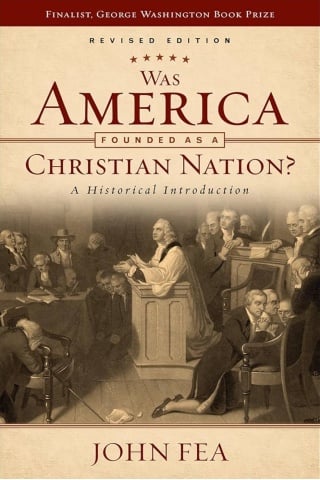
The title of John Fea’s book above — “Was America Founded as a Christian Nation?” — is really a shortened version of the question “Was America Founded as a Christian Nation or was America founded on the bedrock principle of religious liberty and the separation of church and state?” And the answer historians and the history itself give to that question is “Yes.” It’s complicated. But as a functional matter, the question of whether America should be “a Christian nation” with a formally established official, privileged sectarian identity has to be a lot less complicated.
And if we want to keep that question uncomplicated, we don’t need to worry about meta-interpretive arguments about constituent and constituted powers. We can keep things uncomplicated by cutting to the core of the argument, which is normative. What do we think it ought to be? What do we want?
That’s really at the core of John Fea’s debunking of the kind of pseudo-history and “Christian America” myth-making promoted by folks like David Barton and Peter Marshall. Historians like Fea provide an important, useful service by correcting — and complicating — the historical record to rebut Barton’s lies and his bad-faith “history.” But the normative question can’t ever be settled by correctly citing and contextualizing Benjamin Franklin’s call for prayer at the Constitutional Convention, or by exploring whether or not George Washington really prayed at Valley Forge.
If I want to refute Bartonism or dominionism or theonomy or Neo-Stuyvesant-ism or any of the other various forms of white Christian nationalism now being promoted I need to start by explaining that I do not want sectarian government. And by explaining why I do not want it. And then by explaining how and why pseudo-historian religious-right activists like David Barton and Doug Wilson and Stephen Wolfe and Sammy Alito do not and should not really want it either.
Legitimate historians responding to bogus mythologizers like Barton and Alito also recognize that while history tends to be more complicated than law, law is part of that history. So they cite “historical” documents like Jefferson’s letter to the Danbury Baptists and Washington’s letter to the Hebrew Congregation in Newport. But they will also cite the law — the Constitution itself — because that legal document is also a historical document. The Establishment clause and the Free Exercise clause (which is not restricted to only Christians) and the Constitution’s ban on religious tests are also part of our history and — like the stark language of the 14th Amendment — they’re really not all that ambiguous or ambivalent.
This is a fancy way of saying that anybody who makes a historical argument for the claim that the Constitution does not enshrine secular government is, as a practical political matter, making an argument for sectarian supremacy. They’re making a normative argument. They’re telling you what they want.
And, more specifically, they’re telling you what they want to do to you.
Previous Post

April 12, 2026
Sunday reading
Next Post

April 14, 2026 Flesh and bone by the telephone
Recent Comments
"I mean, these days, would Lois necessarily view it as a problem? https://uploads.disquscdn.c..."
The purpose-driven labor priest
"Like, for instance, how one major theme in Prince Caspian is that Lewis was determined ..."
Daughters of Adam and Sons of ..."
"I like his style overall - though everyone does always look a bit greasy to ..."
The purpose-driven labor priest
"Hope he enjoyed that last cheque, because he’s on notice now."
The purpose-driven labor priest
Browse Our Archives
Select a Category class warfare evangelicals Iraq Left Behind Mammon music Uncategorized
Select a Month October 2026 September 2026 August 2026 July 2026 June 2026 May 2026 April 2026 March 2026 January 2026 December 2025 November 2025 October 2025 September 2025 August 2025 July 2025 June 2025 May 2025 April 2025 March 2025 February 2025 January 2025 December 2024 November 2024 October 2024 September 2024 August 2024 July 2024 June 2024 May 2024 April 2024 March 2024 February 2024 January 2024 December 2023 November 2023 October 2023 September 2023 August 2023 July 2023 June 2023 May 2023 April 2023 March 2023 February 2023 January 2023 December 2022 November 2022 October 2022 September 2022 August 2022 July 2022 June 2022 May 2022 April 2022 March 2022 February 2022 January 2022 December 2021 November 2021 October 2021 September 2021 August 2021 July 2021 June 2021 May 2021 April 2021 March 2021 February 2021 January 2021 December 2020 November 2020 October 2020 September 2020 August 2020 July 2020 June 2020 May 2020 April 2020 March 2020 February 2020 January 2020 December 2019 November 2019 October 2019 September 2019 August 2019 July 2019 June 2019 May 2019 April 2019 March 2019 February 2019 January 2019 December 2018 November 2018 October 2018 September 2018 August 2018 July 2018 June 2018 May 2018 April 2018 March 2018 February 2018 January 2018 December 2017 November 2017 October 2017 September 2017 August 2017 July 2017 June 2017 May 2017 April 2017 March 2017 February 2017 January 2017 December 2016 November 2016 October 2016 September 2016 August 2016 July 2016 June 2016 May 2016 April 2016 March 2016 February 2016 January 2016 December 2015 November 2015 October 2015 September 2015 August 2015 July 2015 June 2015 May 2015 April 2015 March 2015 February 2015 January 2015 December 2014 November 2014 October 2014 September 2014 August 2014 July 2014 June 2014 May 2014 April 2014 March 2014 February 2014 January 2014 December 2013 November 2013 October 2013 September 2013 August 2013 July 2013 June 2013 May 2013 April 2013 March 2013 February 2013 January 2013 December 2012 November 2012 October 2012 September 2012 August 2012 July 2012 June 2012 May 2012 April 2012 March 2012 February 2012 January 2012 December 2011 November 2011 October 2011 September 2011 August 2011 July 2011 June 2011 May 2011 April 2011 March 2011 February 2011 January 2011 December 2010 November 2010 October 2010 September 2010 August 2010 July 2010 June 2010 May 2010 April 2010 March 2010 February 2010 January 2010 December 2009 November 2009 October 2009 September 2009 August 2009 July 2009 June 2009 May 2009 April 2009 March 2009 February 2009 January 2009 December 2008 November 2008 October 2008 September 2008 August 2008 July 2008 June 2008 May 2008 April 2008 March 2008 February 2008 January 2008 December 2007 November 2007 October 2007 September 2007 August 2007 July 2007 June 2007 May 2007 April 2007 March 2007 February 2007 January 2007 December 2006 November 2006 October 2006 September 2006 August 2006 July 2006 June 2006 May 2006 April 2006 March 2006 February 2006 January 2006 December 2005 November 2005 October 2005 September 2005 August 2005 July 2005 June 2005 May 2005 April 2005 March 2005 February 2005 January 2005 December 2004 November 2004 October 2004 September 2004 August 2004 July 2004 June 2004 May 2004 April 2004 March 2004 February 2004 January 2004 December 2003 November 2003 October 2003 September 2003
Follow Us!
TAKE THE
Religious Wisdom Quiz
What is a "cubit's" approximate length according to the Bible?
Select your answer to see how you score.
36 inches 12 inches 18 inches 24 inches
Related posts from slacktivist

The purpose-driven labor priest

'A hermeneutical Pandora’s box'

No, most white evangelicals are not 'egalitarian'

TRENDING AT PATHEOS Progressive Christian

Emotion in Early Christianity by Andrew Crislip
Andrew Crislip’s Emotion in Early Christianity examines an often overlooked dimension of...

16 Spiritual Touchstones for a More Grounded Life
After decades of spiritual study, here are 16 principles I try...

Catholic Evangelization: Sharing Your Faith Every Day
Welcome back to the Graceful Awakening mini-series called, “From Faith to Mission.” ...

The Pillar of the Boatmen: the Ancient Monument...
The Pillar of the Boatmen is a Romano-Gaulish sculpture that dates from...

In one sense walking into Westminster Abbey is like walking down the...

'Super Scam Me' Exposes AI Jon Bon Jovi...
Leslie Pickett believed she was in a relationship with Jon Bon Jovi....
view all Progressive Christian blogs
What Are Your Thoughts?leave a comment
Ad-Free & Subscriber Log-In Subscription Support
- About Us
- 2026 Calendar
- Videos
- Podcasts
- Library of World Religions
- Faith In Media Tracker
- Advertise With Us
- Write for Us
- Privacy Policy
- Terms of Service
- Do Not Sell My Data
- Contact Us
- Radiant Digital
- Manage Newsletter Subscriptions
- Unsubscribe From Notifications
- Sitemap
Copyright 2008-2026, Patheos. All rights reserved.
Subscription Support Ad-Free & Subscriber Log-In
Follow Patheos