
BuddhistCatholicContemplativeEvangelicalGeneral ChristianHinduJewishLatter-day SaintMuslimNew VisionsProgressive Christian
Beliefs
- Buddhist
- Catholic
- Contemplative
- Evangelical
- General Christian
- Hindu
- Jewish
- Latter-day Saint
- More Voices
- Muslim
- New Visions
- Pagan
- Progressive Christian
Topics
- Religion News
- Food and Religion
- Sports and Religion
- Religious Art
- Religious Music and Entertainment
- Religious Events
- History and Religion
- Style and Religion
- Politics and Religion
- Women in Religion
- Recreation Outdoors and Religion
- Business Finance and Religion
- Careers Workplace and Religion
- Education and Religion
- Family Parenting and Religion
- Health Fitness and Religion
- Home and Religion
- Relationships and Religion
- Technology and Religion
- Travel and Religion
Columnists
- Buddhist Columnists
- Business Finance and Religion Columnists
- Careers Workplace and Religion Columnists
- Catholic Columnists
- Contemplative Columnists
- Education and Religion Columnists
- Evangelists Columnists
- Family Parenting and Religion Columnists
- General Christian Columnists
- Health Fitness and Religion Columnists
- Hindu Columnists
- History and Religion Columnists
- Home and Religion Columnists
- Jewish Columnists
- More Voices Columnists
- Latter Day Columnists
- Muslim Columnists
- New Visions Columnists
- Nonreligious Columnists
- Pagan Columnists
- Politics and Religion Columnists
- Progressive Columnists
- Recreation Outdoors and Religion Columnists
- Relationships and Religion Columnists
- Religion News Columnists
- Religious Art Columnists
- Religious Events Columnists
- Religious Music and Entertainment Columnists
- Sports and Religion Columnists
- Style and Religion Columnists
- Technology and Religion Columnists
- Travel and Religion Columnists
- Women in Religion Columnists
Resource Library
- 2026 Calendar
- Library of World Religions
- The 100 Most Holy Places on Earth
- Patheos Answers
- Podcasts
- Videos
- Faith Leaders Database
- Anglican Episcopalian
- Bahai
- Baptist
- Buddhism
- Christianity
- Confucianism
- Eastern Orthodoxy
- Hinduism
- Holiness and Pentecostal
- ISKCON
- Islam
- Judaism
- Lutheran
- Methodist
- The Church of Jesus Christ of Latter-day Saints
- New Age
- Paganism
- Presbytarian and Reformed
- Protestantism
- Religion Behind the Scenes
- Roman Catholic
- Scientology
- Shia Islam
- Sikhism
- Sufism
- Sunni Islam
- Taoism
- Zen
- See all religions
Research Tools
 Ad-Free & Subscriber Log-In Subscription Support
Follow Patheos 

- Trending:
- Advent
- |
- Forgiveness
- |
- Thanksgiving
- |
- Election
- |
- Seasonal Holidays
- |
- Marriage

- Home
- Progressive Christian
- The network of mutuality is not escapable
The network of mutuality is not escapable
Last updated on: January 1, 2026 at 2:52 pm by Fred Clark
The network of mutuality is not escapable 2026-01-01T14:52:13-05:00 Fred Clark
Patheos Explore the world's faith through different perspectives on religion and spirituality! Patheos has the views of the prevalent religions and spiritualities of the world.
At the Anxious Bench, historian Paul Thompson dreams “of a post-Trump world as the soil for a new and improved DEI 2.0 arising phoenix-like from the ashes of DEI 1.0.”
I find much to admire in his description of “DEI 2.0,” but also a few points where I disagree. Here’s Thompson:
My fantasy is that whenever that time comes, theologians and humanities and social science scholars at explicitly evangelical universities will finally be empowered enough to play a meaningful role in birthing a DEI 2.0 appropriate for American society in general (not just Christians) that is rooted in such concepts as 1) oppression is a real thing that results from the sinful abuse of power by the powerful, 2) that sin (including racism and sexism) can become systematized and woven into social structures and produce measurably negative impacts on communities and individuals, 3) the biblical/Hebrew concepts of mishpat, sedeq, and shalom, and 4) that seeks to work independent of America’s two-party system as a “third way,” but yet influence those holding elected office. Will you dream with me?
I’m encouraged by those first three points, but concerned about the fourth one. The phrase “third way” is always a red flag, but Thompson sets it off with quotation marks that may indicate he recognizes the many dangers it carries — whether as an unprincipled, Hegel’s-bluff meet-the-flat-earthers-half-way muddle or as the “above the fray” sophistication of those who steadfastly refuse ever to take responsibility by taking sides.
Thus while his fourth point sets off alarm bells, those mitigating scare-quotes make me willing to play along. So, OK, yes, I am happy to dream along with Dr. Thompson. What’s next?
Well, he offers 10 more suggestions toward this new approach to affirming diversity (I’d prefer pluralism, but OK), equity, and inclusion. The latter half of that list is sketchier — brief nods in the direction of some ideas. But the first few items are where he concentrates his energy, and I’m not sharing what he’s dreaming here:
- reject (and reconceptualize) the premise of many critical theorists that “all oppressions (or oppressed peoples) are linked” and therefore must be treated as a unified whole. For decades, African American evangelicals like myself have been displeased by the way gender and sexuality movements have piggybacked on the political and legal legacies of the African American civil rights movement. Large numbers of those who marched with Martin Luther King, Jr. would not recognize the ideology underneath much of today’s DEI/DEIA agenda, and vice versa.
Ugh. The problem here again involves the ambiguous use of quotation marks. “All oppressions (or oppressed peoples) are linked” is not a quotation, but a (clumsy) paraphrase that serves here, in part, to mask who it is that is being paraphrased-and-not-quoted. That would be people like Kimberly Crenshaw and Audre Lorde and James Baldwin, among others. (Marsha P. Johnson would also like a word.)
The unnamed people he’s paraphrasing here would also absolutely include Bayard Rustin — which, inconveniently for Thompson, disproves and destroys the claim he makes in the final sentence there.
It’s really not possible to “reject the premise” of intersectionality without rejecting the premise of subsidiarity and without rejecting the premise of the network of mutuality at the center of MLK’s theology and praxis. This hostility to intersectionality is especially odd coming from a historian whose focus has been on “the nineteenth-century African American experience with temperance and prohibition.” That’s not an area I have any deep scholarly knowledge about, but to this layperson, it has always seemed like the temperance and suffrage movements could’ve benefited greatly from not viewing themselves as in competition with/against civil rights for Black people and from refusing to understand or accept that “All oppressions are linked.”

No results found. This continues to be a big problem.
We should also note that while terminology like “intersectionality” is relatively recent, the idea underlying this more recent terminology and critical theory and such is not at all new. It can be detected in that ancient biblical refrain that instructs us to see widows, orphans, strangers, and the poor as disparate, but interconnected, “oppressed peoples.”
And, of course, throughout history the idea of “intersectionality” has been understood and exploited by every successful oppressor, from Pharaoh to the local schoolyard bully. Oppressors rely on divide and conquer not unite and conquer, because their success depends on their ability to convince those they dominate and subjugate to “reject the premise” that all oppressions are linked.
Anyway, perhaps Point No. 2 will be more promising.
- work to build consensus around standardized definitions of such terms as racism, anti-semitism, and of DEI that is rooted in sound historical scholarship. We must stop calling people racists! We must stop saying blacks and other minorities “can’t be racists!” People are not racists; people discriminate, but systems are racist, and racism describes what we see when policies create different outcomes that correlate strongly with racial identity.
This is both the quirkiest and most adamantly exclamation-pointed item in Thompson’s list. It’s also the one that has me swallowing back that “Amen!” I uttered in response to his first Point No. 2 up there at the top, when he called on white evangelical scholars to recognize “that sin (including racism and sexism) can become systematized and woven into social structures and produce measurably negative impacts on communities and individuals.” That excellent and necessary corrective — sin can and will become systematized — here seems to swing into overcorrection and the claim that these sins “racism and sexism” somehow exist exclusively in their systemic forms.
Coupled with the rejection of intersectionality and subsidiarity — the refusal to allow any consideration that “racism and sexism” are often linked injustices — I’m really starting to worry about the shape and coherence of Thompson’s proposed DEI 2.0. I’m particularly puzzled by the contradiction of insisting that “people” cannot be racist while also insisting that “blacks and other minorities” can be. (I’m going to chalk that one up to Thompson not succeeding in saying whatever it was he was trying to say there.)
There’s something deeply disorienting about Thompson’s claim here in that it is based on the opposite error to the one that has doomed decades of earnest evangelical talk of “racial reconciliation.” Those efforts had us desperately pleading with our evangelical brethren to understand that “racism” did not exclusively involve individual animus and individual bigotry, but that it was a structural, systemic aspect of the Powers That Be in this fallen world. Communicating that without sounding like a dense academic paper on critical theory could be difficult, but gradually we learned to address this without resorting to terms of art like “disparate impact,” which proved difficult to grasp for that target audience.
So it’s jarring, here, to read an explicitly evangelical condemnation of racism that contends it refers only to disparate impact and does not at all include sinful personal animus — that contends, instead, that there is no such thing as sinful personal animus.
This is, to be blunt, wrong. It’s just factually wrong. “We must stop calling people racists!” might be a defensible pragmatic case if the point was that focusing on individual attitudes might prove counter-productive to both overall outcomes and individual persuasion. But what Thompson asserts here is that individual persuasion — individual repentance — is not necessary because “people are not racists.”
This is, as a matter of fact, wrong. It is untrue. People are racists. Quite a few of them.
Steven Miller, for example.

This post from the Department of Homeland Security calls for the deportation of 100 million Americans — a third of the nation’s populace and all of its non-white citizens. The appeal here is racist. That appeal is only appealing to white people who are, themselves, racist.
Miller is a racist. He is an individual who carries and verbally expresses his animus toward whole classes and categories of his neighbors based solely on what he perceives to be their “race” or “racial identity.” Miller is also, as an individual, bound by and bound in racist systems — by “policies [that] create different outcomes that correlate strongly with racial identity.”
But also Miller has chosen, as an individual, to seek power to control those racist systems, and to ensure that its policies create even more extremely different outcomes. He has chosen to do this because he is, as an individual, racist (adjective) and because he is, as an individual, a racist (noun).
These terms are applied to Miller not as invective, but because they best and most accurately describe him.
The only way one could make an attempt to say that Steven Miller is not racist or that he is not a racist would be to theorize that he is, instead, merely a cynical political demagogue who is attempting to harness the populist political power that comes from making an explicitly racist appeal to voters who find such an appeal to be appealing. We can debate whether such a distinction would be meaningful in any way — he’s not racist, he’s just acting exactly as a racist would act in service of some other agenda. And we can debate the long-term prospects for success from such an approach — are there enough people who find this racist appeal appealing for this approach to succeed over time?
But what we cannot debate is that there are, in fact, some number of people who do, in fact, find this appeal to be appealing.
Those people are racist. The support of such people is how this sin gets embedded in systems and structures and laws and customs.
Those systems and structures cannot be wholly understood apart from individual belief and sentiment any more than that individual belief and sentiment can be wholly understood apart from those systems and structures.
(Do I have to quote that Orwell essay on Charles Dickens again? Don’t make me do it. You know I will.)
Thompson pads out the rest of his list with less energy and attention than he invests in those first two items, but the remainder of that list offers some worthy considerations toward his dream of “a new, improved DEI 2.0.”
I’m not convinced, though, that any of those positive contributions would be able to overcome the initial obstacles provided by a rejection of interconnection and the strange denial of undeniable individual sin.
Previous Post

December 31, 2025
The smell of hospitals in winter
Next Post

January 2, 2026 LBCF: Domestic agenda
Recent Comments
"It's a weird world. Not the good kind of weird, either."
"To be fair, Ayn Rand also thought "Atlas Shrugged" was a how-to manual, not a ..."
"The judge's order was very detailed in telling the government what it could NOT do. ..."
"The guys deeply involved with AI have not yet achieved adulthood. They read "Atlas Shrugged" ..."
Browse Our Archives
Select a Category class warfare evangelicals Iraq Left Behind Mammon music Uncategorized
Select a Month November 2026 October 2026 September 2026 August 2026 July 2026 June 2026 May 2026 April 2026 March 2026 January 2026 December 2025 November 2025 October 2025 September 2025 August 2025 July 2025 June 2025 May 2025 April 2025 March 2025 February 2025 January 2025 December 2024 November 2024 October 2024 September 2024 August 2024 July 2024 June 2024 May 2024 April 2024 March 2024 February 2024 January 2024 December 2023 November 2023 October 2023 September 2023 August 2023 July 2023 June 2023 May 2023 April 2023 March 2023 February 2023 January 2023 December 2022 November 2022 October 2022 September 2022 August 2022 July 2022 June 2022 May 2022 April 2022 March 2022 February 2022 January 2022 December 2021 November 2021 October 2021 September 2021 August 2021 July 2021 June 2021 May 2021 April 2021 March 2021 February 2021 January 2021 December 2020 November 2020 October 2020 September 2020 August 2020 July 2020 June 2020 May 2020 April 2020 March 2020 February 2020 January 2020 December 2019 November 2019 October 2019 September 2019 August 2019 July 2019 June 2019 May 2019 April 2019 March 2019 February 2019 January 2019 December 2018 November 2018 October 2018 September 2018 August 2018 July 2018 June 2018 May 2018 April 2018 March 2018 February 2018 January 2018 December 2017 November 2017 October 2017 September 2017 August 2017 July 2017 June 2017 May 2017 April 2017 March 2017 February 2017 January 2017 December 2016 November 2016 October 2016 September 2016 August 2016 July 2016 June 2016 May 2016 April 2016 March 2016 February 2016 January 2016 December 2015 November 2015 October 2015 September 2015 August 2015 July 2015 June 2015 May 2015 April 2015 March 2015 February 2015 January 2015 December 2014 November 2014 October 2014 September 2014 August 2014 July 2014 June 2014 May 2014 April 2014 March 2014 February 2014 January 2014 December 2013 November 2013 October 2013 September 2013 August 2013 July 2013 June 2013 May 2013 April 2013 March 2013 February 2013 January 2013 December 2012 November 2012 October 2012 September 2012 August 2012 July 2012 June 2012 May 2012 April 2012 March 2012 February 2012 January 2012 December 2011 November 2011 October 2011 September 2011 August 2011 July 2011 June 2011 May 2011 April 2011 March 2011 February 2011 January 2011 December 2010 November 2010 October 2010 September 2010 August 2010 July 2010 June 2010 May 2010 April 2010 March 2010 February 2010 January 2010 December 2009 November 2009 October 2009 September 2009 August 2009 July 2009 June 2009 May 2009 April 2009 March 2009 February 2009 January 2009 December 2008 November 2008 October 2008 September 2008 August 2008 July 2008 June 2008 May 2008 April 2008 March 2008 February 2008 January 2008 December 2007 November 2007 October 2007 September 2007 August 2007 July 2007 June 2007 May 2007 April 2007 March 2007 February 2007 January 2007 December 2006 November 2006 October 2006 September 2006 August 2006 July 2006 June 2006 May 2006 April 2006 March 2006 February 2006 January 2006 December 2005 November 2005 October 2005 September 2005 August 2005 July 2005 June 2005 May 2005 April 2005 March 2005 February 2005 January 2005 December 2004 November 2004 October 2004 September 2004 August 2004 July 2004 June 2004 May 2004 April 2004 March 2004 February 2004 January 2004 December 2003 November 2003 October 2003 September 2003
Follow Us!
TAKE THE
Religious Wisdom Quiz
True or False: Jonathan was David's best friend and King Saul's son.
Select your answer to see how you score.
TRUE FALSE
Related posts from slacktivist


Smart people saying smart things (11.24.26)
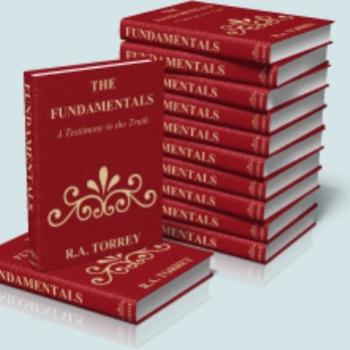
'Statements of Faith' never get shorter

TRENDING AT PATHEOS Progressive Christian

Watch and Pray: On Mark 13:33-37
Jesus said to his disciples: “Be watchful! Be alert! You do not...

Debate on Purgatory & Biblical Evidences for It
This is from a combox on my video channel, Catholic Bible Highlights....

Set the table for the coming King
On Thursday we visited my sister-in-law for Thanksgiving, and throughout the entire...

If I Stop Becoming, Will I Disappear?
(At our most recent half day Zen retreat, Dr Chris Hoff, a...

A Modest Proposal for President Trump
Trump should just quit the loser Republicans who failed him so badly...
Praise and Thanks As Natural as Breathing
This week I had the privilege of sitting down with Deacon Tom...
view all Progressive Christian blogs
What Are Your Thoughts?leave a comment
Ad-Free & Subscriber Log-In Subscription Support
- About Us
- 2026 Calendar
- Videos
- Podcasts
- Library of World Religions
- Faith In Media Tracker
- Advertise With Us
- Write for Us
- Privacy Policy
- Terms of Service
- Do Not Sell My Data
- Contact Us
- Radiant Digital
- Manage Newsletter Subscriptions
- Unsubscribe From Notifications
- Sitemap
Copyright 2008-2026, Patheos, part of the Radiant Digital network of media brands. All rights reserved.
Subscription Support Ad-Free & Subscriber Log-In
Follow Patheos