
BuddhistCatholicContemplativeEvangelicalGeneral ChristianHinduJewishLatter-day SaintMuslimNew VisionsProgressive Christian
Beliefs
- Buddhist
- Catholic
- Contemplative
- Evangelical
- General Christian
- Hindu
- Jewish
- Latter-day Saint
- More Voices
- Muslim
- New Visions
- Pagan
- Progressive Christian
Topics
- Religion News
- Food and Religion
- Sports and Religion
- Religious Art
- Religious Music and Entertainment
- Religious Events
- History and Religion
- Style and Religion
- Politics and Religion
- Women in Religion
- Recreation Outdoors and Religion
- Business Finance and Religion
- Careers Workplace and Religion
- Education and Religion
- Family Parenting and Religion
- Health Fitness and Religion
- Home and Religion
- Relationships and Religion
- Technology and Religion
- Travel and Religion
Columnists
- Buddhist Columnists
- Business Finance and Religion Columnists
- Careers Workplace and Religion Columnists
- Catholic Columnists
- Contemplative Columnists
- Education and Religion Columnists
- Evangelists Columnists
- Family Parenting and Religion Columnists
- General Christian Columnists
- Health Fitness and Religion Columnists
- Hindu Columnists
- History and Religion Columnists
- Home and Religion Columnists
- Jewish Columnists
- More Voices Columnists
- Latter Day Columnists
- Muslim Columnists
- New Visions Columnists
- Nonreligious Columnists
- Pagan Columnists
- Politics and Religion Columnists
- Progressive Columnists
- Recreation Outdoors and Religion Columnists
- Relationships and Religion Columnists
- Religion News Columnists
- Religious Art Columnists
- Religious Events Columnists
- Religious Music and Entertainment Columnists
- Sports and Religion Columnists
- Style and Religion Columnists
- Technology and Religion Columnists
- Travel and Religion Columnists
- Women in Religion Columnists
Resource Library
- 2026 Calendar
- Library of World Religions
- The 100 Most Holy Places on Earth
- Patheos Answers
- Podcasts
- Videos
- Faith Leaders Database
- Anglican Episcopalian
- Bahai
- Baptist
- Buddhism
- Christianity
- Confucianism
- Eastern Orthodoxy
- Hinduism
- Holiness and Pentecostal
- ISKCON
- Islam
- Judaism
- Lutheran
- Methodist
- The Church of Jesus Christ of Latter-day Saints
- New Age
- Paganism
- Presbytarian and Reformed
- Protestantism
- Religion Behind the Scenes
- Roman Catholic
- Scientology
- Shia Islam
- Sikhism
- Sufism
- Sunni Islam
- Taoism
- Zen
- See all religions
Research Tools
 Ad-Free & Subscriber Log-In Subscription Support
Ad-Free & Subscriber Log-In Subscription Support
Follow Patheos 

- Trending:
- Forgiveness
- |
- Marriage
- |
- Consciousness
- |
- Death Penalty
- |
- Election
- |
- Halloween

- Home
- Progressive Christian
- Telmarine theater
Telmarine theater
Last updated on: November 18, 2024 at 7:00 am by Fred Clark
Telmarine theater 2024-11-18T04:05:00-05:00 Fred Clark
Patheos Explore the world's faith through different perspectives on religion and spirituality! Patheos has the views of the prevalent religions and spiritualities of the world.
Here’s the saddest and unintentionally funniest bit from Rebecca Ritzel’s report “An evangelical theater troupe is gaining traction in Washington“:
Nicole Stratton defends the policy on sexuality as necessary. “Nowadays, you just have to put that out there from the beginning as where your direction is going.” A friend of hers from high school who “came to the Lord out of the gay lifestyle” has played Trumpkin the Dwarf in “Prince Caspian,” she said.
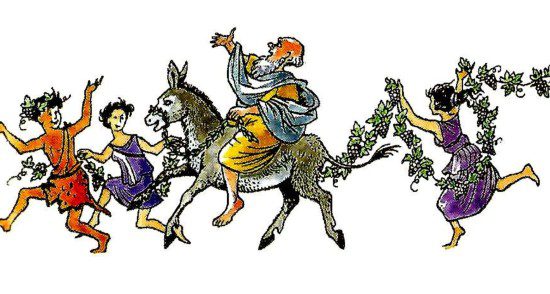
Bacchus, the god of wine (and theater) rides in with the maenads as the wild creatures of Old Narnia triumph in Prince Caspian.
We need to unpack why that’s darkly comical, and why it’s even funnier in the context of this same all-straight white Christian theater group is also touring with a production of John Bunyan’s Pilgrim’s Progress.
Since the early 1970s, Stratton’s family has been nurturing evangelical Christian talent from its home base in Taylors, South Carolina. What began with her father, Nicky Chavers, packing the family and their sets into a van and putting on shows for churches and home-school groups has evolved into a performing arts conservatory, a 300-seat theater and a twice-annual residency at the Museum of the Bible just south of the National Mall, where “Pilgrim’s Progress” wrapped up a six-week run in October.
The museum has booked Logos for two more shows in 2025, including a yet-to-be-named adaptation of a C.S. Lewis novel. As Washington prepares for the return of President-elect Donald Trump, the museum says its successful partnership with Logos demonstrates that there is a growing audience in the nation’s capital for Christian, and decidedly culturally conservative, entertainment. For Logos, that commitment extends beyond subject matter: The company requires its artists to affirm a 14-point doctrinal statement, including a policy that prohibits those who identify as LGBTQ.
One thing that shines through in this piece is that Stratton and her family have the bug. They’re hooked. Being “theater people” in their specific politico-religious subculture may not express itself in the same way that it does everywhere else, but it’s clear that these are people who love to get on stage and tell stories for an audience and the exhilaration that sometimes comes from that shared experience.
They remind me of Eugene Levy’s sweet, kind portrayal of a dentist-turned-amateur thespian in Waiting for Guffman — not in terms of that character’s limited talents, but just in terms of the enthusiastic epiphany he has and his weirdly admirable willingness to turn his whole life upside down in order to pursue this thing that makes him feel so much more alive. (Call it the Dr. Allan Pearl of Great Price — the kingdom is like unto this.)
These folks also seem to have a bit in common with the Fred Willard and Catherine O’Hara characters in that movie — sometimes coming across as somewhat star-struck by themselves. Some people fall in love with the stage, some with the spotlight. Some with both.
In any case, the universe of acceptable fare for a theater troupe like this is quite limited. For all the “Classical Western Culture” airs put on by the white Christian home-schooling world, most of that heritage is frighteningly unacceptable for these folks. Shakespeare is out of bounds. We briefly had someone from that world on the crew of a production of Hamlet I was in.* They flounced off after the first rehearsal for the “country matters” scene, indignantly refusing to be associated with such filth. Very, very few of the “classics” don’t involve something that would be an objectionable deal-breaker for the “world-view” of a troupe like this or, even more so, for most of their audience.
This is especially true for a troupe that began and grew by performing in churches. That brings an expectation of more explicitly religious material. Their repertoire can’t merely be wholesome or unobjectionable, it also has to be edifying — a theatrical production that can stand in for a sermon.
Bunyan’s allegory is ideal for that. Plus, it’s already a favorite in the white conservative home-school world because not only is it religious and devotional, it’s easy to teach. Bunyan isn’t a subtle or difficult-to-interpret writer. No interpretation or deciphering is really necessary for a book in which nearly every character or place is labeled.
This is also why these conservative white Christians love The Lion, the Witch, and the Wardrobe — the first book in Lewis’ Narnia series. The centerpiece of that book is also transparently allegorical, offering an exposition on substitutionary atonement. The obviousness and ease of understanding Aslan as a representative of Jesus Christ is so clear that the rest of the Narnia books earn the white Christian imprimatur as well, even when their allegorical lessons are less clear.
Which brings us back to the tragic irony of that paragraph we quoted up top:
Logos … doesn’t allow LGBTQ performers. Line 12 of the company’s “belief statement” reads, in part: “We believe that any form of sexual immorality, such as adultery, fornication, homosexuality, bisexual conduct, bestiality, incest, pornography or any attempt to change one’s sex, or disagreement with one’s biological sex, is sinful and offensive to God.”
Nicole Stratton defends the policy on sexuality as necessary. “Nowadays, you just have to put that out there from the beginning as where your direction is going.” A friend of hers from high school who “came to the Lord out of the gay lifestyle” has played Trumpkin the Dwarf in “Prince Caspian,” she said.
If you’ve never read Prince Caspian, or if it’s just been a while, let me explain. The book is as straightforward and unambiguous an allegory as Pilgrim’s Progress. The villains of the story, the wicked, interloping “Telmarines” conquer Narnia, outlawing all of its wild, magical creatures and talking beasts and forcing them underground. But then Aslan returns and sets all the wild things free and they reclaim the land from those rotten Telmarines.
It is, in other words, a book about the white American Christians who wanted to take away Lewis’ beer.***
More generally, it’s a tract against legalism and puritanism and joyless asceticism. The climax of Aslan’s victory in the book has his friend and ally, Bacchus, causing grapevines to shoot up everywhere, tearing down the oppressive structures of the Telmarines’ empire, and Lewis seems most passionate when discussing how the end of their rule would allow wine and ale to flow freely once again. But that particular form of legalism is a stand-in for every other expression of it. The Telmarines weren’t simply teetotalers. They had restricted and restrained and repressed the free creatures of “Old Narnia,” choking off their vitality and denying their validity. This is what makes them the villains of the story — the Bad Guys.
The Telmarines were, in other words, just exactly the sort of people who would allow live theater, but only under very strict conditions, such as if the works performed were deemed safely orthodox and if all of the LGBT actors and artists involved were forced to pretend that they were “ex-gays.”
Once I was old enough to understand what I was reading in Prince Caspian, I was confused as to why all the grown-ups at my white fundamentalist church had encouraged me to read it. I was surprised that they had even allowed me to read it.
I supposed it was some kind of Old Narnian magic. There’s some enchantment on that story that keeps the Telmarines themselves from ever comprehending what the story very obviously means.
* I played the ghost, the gravedigger’s assistant, and Fortinbras.
To be clear, I played the unspeaking ghost, wordlessly haunting Marcellus and Barnardo. The actual ghost was played by a terrific actor named George Mulford. We wore identical costumes — armed at point exactly, cap-à-pie — with hoods pulled down low over our faces. I entered stage left, and with courteous action waved Hamlet and his friends to a more removéd ground. As they approached, I ducked into the wings stage left and George immediately entered from stage right, pulled back his hood, and spoke.
Two guys in the same costume is not an elaborately sophisticated bit of trickery, but audiences loved the effect and seemed genuinely amazed at how the ghost was able to disappear and reappear so quickly. After every show, people would ask George how he managed to get from one place to another almost instantaneously. He always just smiled and asked, “How do you think I did it?” Then, whatever they came up with, he’d say, “Yep, you got it. That’s what we did.” And they would head home convinced that there was some kind of elaborate trap-door and pulley system underneath the stage.
** I did scenes from The Normal Heart and Angels in America in a church sanctuary as part of an AIDS benefit in the early ’90s. But that was a UU church, which probably doesn’t count. Nor does a place like Germantown Mennonite, where I once saw a terrific, hilarious production of Lysistrata, complete with enormous prosthetics. Those strap-ons are absolutely part of the Canon of Classical Western Literature, but they probably aren’t included in the “classic education” of the white Christian home-schoolers being forced to read Bunyan unabridged.
*** It can also be read, somewhat, as a critique of the British Empire. And, like almost everything Lewis wrote, it works as an allegory about the evils of British boarding schools. But, yes, really, truly it’s very much and very explicitly about Lewis telling American fundamentalists to back off and leave his beer alone.
Previous Post

November 17, 2024
Sunday reading
Next Post

November 19, 2024 Postcards from America (11.19.24)
Recent Comments
"JD Couchfucker says that El-Sayed should "show gratitude", so in case you were wondering what ..."
The purpose-driven labor priest
"I'm told he has "testosterone like a Mustang"."
The purpose-driven labor priest
"I think it's very sweet in Superman and Lois that he tells her when he ..."
‘A hermeneutical Pandora’s box’
""Vibe coding" is what people do when they have no clue how programs work or ..."
The purpose-driven labor priest
Browse Our Archives
Select a Category class warfare evangelicals Iraq Left Behind Mammon music Uncategorized
Select a Month October 2026 September 2026 August 2026 July 2026 June 2026 May 2026 April 2026 March 2026 January 2026 December 2025 November 2025 October 2025 September 2025 August 2025 July 2025 June 2025 May 2025 April 2025 March 2025 February 2025 January 2025 December 2024 November 2024 October 2024 September 2024 August 2024 July 2024 June 2024 May 2024 April 2024 March 2024 February 2024 January 2024 December 2023 November 2023 October 2023 September 2023 August 2023 July 2023 June 2023 May 2023 April 2023 March 2023 February 2023 January 2023 December 2022 November 2022 October 2022 September 2022 August 2022 July 2022 June 2022 May 2022 April 2022 March 2022 February 2022 January 2022 December 2021 November 2021 October 2021 September 2021 August 2021 July 2021 June 2021 May 2021 April 2021 March 2021 February 2021 January 2021 December 2020 November 2020 October 2020 September 2020 August 2020 July 2020 June 2020 May 2020 April 2020 March 2020 February 2020 January 2020 December 2019 November 2019 October 2019 September 2019 August 2019 July 2019 June 2019 May 2019 April 2019 March 2019 February 2019 January 2019 December 2018 November 2018 October 2018 September 2018 August 2018 July 2018 June 2018 May 2018 April 2018 March 2018 February 2018 January 2018 December 2017 November 2017 October 2017 September 2017 August 2017 July 2017 June 2017 May 2017 April 2017 March 2017 February 2017 January 2017 December 2016 November 2016 October 2016 September 2016 August 2016 July 2016 June 2016 May 2016 April 2016 March 2016 February 2016 January 2016 December 2015 November 2015 October 2015 September 2015 August 2015 July 2015 June 2015 May 2015 April 2015 March 2015 February 2015 January 2015 December 2014 November 2014 October 2014 September 2014 August 2014 July 2014 June 2014 May 2014 April 2014 March 2014 February 2014 January 2014 December 2013 November 2013 October 2013 September 2013 August 2013 July 2013 June 2013 May 2013 April 2013 March 2013 February 2013 January 2013 December 2012 November 2012 October 2012 September 2012 August 2012 July 2012 June 2012 May 2012 April 2012 March 2012 February 2012 January 2012 December 2011 November 2011 October 2011 September 2011 August 2011 July 2011 June 2011 May 2011 April 2011 March 2011 February 2011 January 2011 December 2010 November 2010 October 2010 September 2010 August 2010 July 2010 June 2010 May 2010 April 2010 March 2010 February 2010 January 2010 December 2009 November 2009 October 2009 September 2009 August 2009 July 2009 June 2009 May 2009 April 2009 March 2009 February 2009 January 2009 December 2008 November 2008 October 2008 September 2008 August 2008 July 2008 June 2008 May 2008 April 2008 March 2008 February 2008 January 2008 December 2007 November 2007 October 2007 September 2007 August 2007 July 2007 June 2007 May 2007 April 2007 March 2007 February 2007 January 2007 December 2006 November 2006 October 2006 September 2006 August 2006 July 2006 June 2006 May 2006 April 2006 March 2006 February 2006 January 2006 December 2005 November 2005 October 2005 September 2005 August 2005 July 2005 June 2005 May 2005 April 2005 March 2005 February 2005 January 2005 December 2004 November 2004 October 2004 September 2004 August 2004 July 2004 June 2004 May 2004 April 2004 March 2004 February 2004 January 2004 December 2003 November 2003 October 2003 September 2003
Follow Us!
TAKE THE
Religious Wisdom Quiz
Who said, "The Lord is my shepherd, I shall not want"?
Select your answer to see how you score.
Solomon David Paul Moses
Related posts from slacktivist

Is this the right room for an argument?

The Amish are not 'Evangelicals.' They're Amish.

The lumpers, the splitters, and me

'Is it right on red or left on...
TRENDING AT PATHEOS Progressive Christian

The Sermon on the Mount, Part I: Matthew...
The Sermon on the Mount, Part I (Matthew 4:12-5:12) St. Matthew moves...

What's up from Crossway: Reviewing some of their latest A few weeks...

Janie Learns the Way of the Cross: A...
Teaching children about Jesus' Passion can be challenging. Many parents and educators...

Looking For Good Catholic Writing - October 2026
He alone extends the heavens, and he walks upon the waves of...

In "Irreplaceable," our book on vocation and technology, Trevor Sutton and I...

I was strolling through the top floor of the brand new Parthenon...
view all Progressive Christian blogs
What Are Your Thoughts?leave a comment
Ad-Free & Subscriber Log-In Subscription Support
- About Us
- 2026 Calendar
- Videos
- Podcasts
- Library of World Religions
- Faith In Media Tracker
- Advertise With Us
- Write for Us
- Privacy Policy
- Terms of Service
- Do Not Sell My Data
- Contact Us
- Radiant Digital
- Manage Newsletter Subscriptions
- Unsubscribe From Notifications
- Sitemap
Copyright 2008-2026, Patheos. All rights reserved.
Subscription Support Ad-Free & Subscriber Log-In
Follow Patheos