
BuddhistCatholicContemplativeEvangelicalGeneral ChristianHinduJewishLatter-day SaintMuslimNew VisionsProgressive Christian
Beliefs
- Buddhist
- Catholic
- Contemplative
- Evangelical
- General Christian
- Hindu
- Jewish
- Latter-day Saint
- More Voices
- Muslim
- New Visions
- Pagan
- Progressive Christian
Topics
- Religion News
- Food and Religion
- Sports and Religion
- Religious Art
- Religious Music and Entertainment
- Religious Events
- History and Religion
- Style and Religion
- Politics and Religion
- Women in Religion
- Recreation Outdoors and Religion
- Business Finance and Religion
- Careers Workplace and Religion
- Education and Religion
- Family Parenting and Religion
- Health Fitness and Religion
- Home and Religion
- Relationships and Religion
- Technology and Religion
- Travel and Religion
Columnists
- Buddhist Columnists
- Business Finance and Religion Columnists
- Careers Workplace and Religion Columnists
- Catholic Columnists
- Contemplative Columnists
- Education and Religion Columnists
- Evangelists Columnists
- Family Parenting and Religion Columnists
- General Christian Columnists
- Health Fitness and Religion Columnists
- Hindu Columnists
- History and Religion Columnists
- Home and Religion Columnists
- Jewish Columnists
- More Voices Columnists
- Latter Day Columnists
- Muslim Columnists
- New Visions Columnists
- Nonreligious Columnists
- Pagan Columnists
- Politics and Religion Columnists
- Progressive Columnists
- Recreation Outdoors and Religion Columnists
- Relationships and Religion Columnists
- Religion News Columnists
- Religious Art Columnists
- Religious Events Columnists
- Religious Music and Entertainment Columnists
- Sports and Religion Columnists
- Style and Religion Columnists
- Technology and Religion Columnists
- Travel and Religion Columnists
- Women in Religion Columnists
Resource Library
- 2026 Calendar
- Library of World Religions
- The 100 Most Holy Places on Earth
- Patheos Answers
- Podcasts
- Videos
- Faith Leaders Database
- Anglican Episcopalian
- Bahai
- Baptist
- Buddhism
- Christianity
- Confucianism
- Eastern Orthodoxy
- Hinduism
- Holiness and Pentecostal
- ISKCON
- Islam
- Judaism
- Lutheran
- Methodist
- The Church of Jesus Christ of Latter-day Saints
- New Age
- Paganism
- Presbytarian and Reformed
- Protestantism
- Religion Behind the Scenes
- Roman Catholic
- Scientology
- Shia Islam
- Sikhism
- Sufism
- Sunni Islam
- Taoism
- Zen
- See all religions
Research Tools
 Ad-Free & Subscriber Log-In Subscription Support
Ad-Free & Subscriber Log-In Subscription Support
Follow Patheos 

- Trending:
- Forgiveness
- |
- Marriage
- |
- Consciousness
- |
- Death Penalty
- |
- Election
- |
- Halloween

- Home
- Progressive Christian
- If destruction be our lot
If destruction be our lot
Last updated on: November 6, 2024 at 10:56 am by Fred Clark
If destruction be our lot 2024-11-06T10:56:25-05:00 Fred Clark
Patheos Explore the world's faith through different perspectives on religion and spirituality! Patheos has the views of the prevalent religions and spiritualities of the world.
The ads appealed to the very worst aspects of human nature.
The ads appealed. And they were found appealing.
They did not persuade so much as they allowed. They gave permission. And millions of our neighbors took that permission because they wanted it. And now they have it because they have given it to themselves.
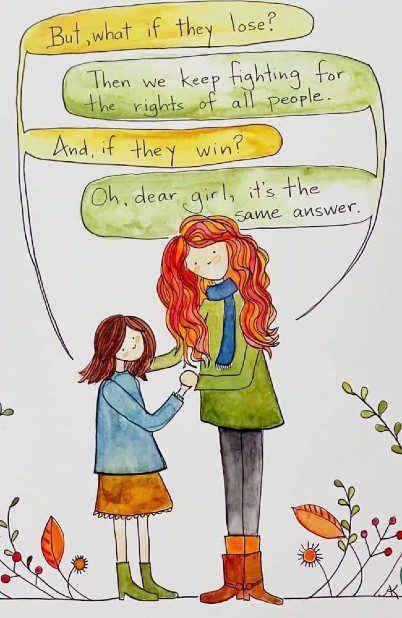
Cartoon by Angie King (click for link)
I’m reminded of all of those puzzling conversations with acquaintances enamored by the premise of those “Purge” movies. Just imagine, they’d say, imagine what you could do if you could do anything — if there were no rules, no legal consequences, and you could do whatever you wanted. It seems the reason they find this premise so fascinating and alluring is that, for them, laws and legal consequences are the only — or at least the main — reason they’re not doing whatever it is they’re imagining right now. They seem to be admitting that they have no qualms about pillage and violence and vengeance per se, only concern about potentially being punished for it. Remove the threat of punishment and, they’re suggesting, anything goes.
I used to think this couldn’t really be true for them. Surely they wouldn’t really transform into violent thieves and sexual predators just because the fear of external punishment were suddenly removed.
But I’m less sure of that now. I’m less sure of a lot of things because millions of my neighbors found those ads appealing.
Most of them, I’m still sure, understood that this appeal was not to the best part of themselves. These ads asked them to be afraid, to be bullies, to hate strangers. The ads didn’t hide any of that. It was not possible, was not an option, to find them appealing or compelling without recognizing that such appeal was shameful. (“Round them up” and “put them in camps” the poll said. And no one who said yes to that failed to understand what they were saying yes to or what that always means about the person saying yes.)
And so part of the appeal of those ads was to promise freedom from that shame — something like “The Purge,” but instead of anarchic freedom from legal punishment, it was the idea of freedom from needing to worry about whether or not you could be proud of yourself. Be craven and cowardly without shame. Be selfish and bullying, without shame. Be hateful and hurtful, without shame.
The appeal of that constricts and ratchets ever tighter as it intensifies the shamefulness and thus the desire to embrace the shameless existence it promises.
The ads told them they had permission to be shameful and yet shameless. And so the ads were appealing.
What those millions of our neighbors will eventually realize — alas, too late — is that they are not the ones being given permission. They’re the ones giving it. And those they are giving it to are taking it and not giving it back. It’s theirs now. And now that they have it, they no longer need you to give it to them. They no longer need you at all.
This is what those folks fantasizing about the fantasy of The Purge failed to imagine. It’s what they failed to understand. The flip side of “I could do anything to anyone” is that anyone could do anything to you.
This is the permission that has been given and taken thanks to the shameless, lawless appeal of those ads.
It comes back, as so much does, to composer Frank Wilhoit’s crystalline description of conservatism: “Conservatism consists of exactly one proposition, to wit: There must be in-groups whom the law protects but does not bind, alongside out-groups whom the law binds but does not protect.”
This was the appeal of those ads and of the entire MAGA movement over the past 10 years. Join with us and you can be in the in-group. The law will protect you, but it will not constrain you. It seems like a sweet deal once one gets past the pesky shamefulness of it. But it’s never a good bet.
And it is always that: a bet. To embrace conservatism is to wager that those you have given permission to create and define “in-groups” and “out-groups” will perpetually regard you as one of them, as one of theirs, as a lifelong member in good standing of the in-group “whom the law protects but does not bind.”
But the in-group is small and it is always getting smaller. If you’re in it today there is no guarantee you will still be in it tomorrow. A year from now? Two years? Four years from now? Good luck with that. It’s far more likely that by then you’ll be out and no longer in. You will wind up, eventually — perhaps inevitably — among those whom the law binds, harshly, but does not protect.
This morning I sat on the porch in the dark and re-read Abraham Lincoln’s 1838 “Speech to the Young Men’s Lyceum of Springfield.” The news about my neighbors’ love for the sordid appeal of those ads was all too much and I was looking for that famous warning, that “if destruction be our lot” bit. I’m not sure if I was seeking that out of a desire for consolation or grim confirmation, but I wanted to read it again:
At what point shall we expect the approach of danger? By what means shall we fortify against it?—Shall we expect some transatlantic military giant, to step the Ocean, and crush us at a blow? Never!—All the armies of Europe, Asia and Africa combined, with all the treasure of the earth (our own excepted) in their military chest; with a Buonaparte for a commander, could not by force, take a drink from the Ohio, or make a track on the Blue Ridge, in a trial of a thousand years.
At what point then is the approach of danger to be expected? I answer, if it ever reach us, it must spring up amongst us. It cannot come from abroad. If destruction be our lot, we must ourselves be its author and finisher. As a nation of free men, we must live through all time, or die by suicide.
Lincoln goes on to imagine the shape of such a national “suicide” and this bit — the part I hadn’t remembered and hadn’t been looking for — is the part that struck me this morning:
There is, even now, something of ill-omen, amongst us. I mean the increasing disregard for law which pervades the country; the growing disposition to substitute the wild and furious passions, in lieu of the sober judgment of Courts . . . . Accounts of outrages committed by mobs, form the every-day news of the times. They have pervaded the country, from New England to Louisiana . . . . Whatever, then, their cause may be, it is common to the whole country. . . .
But you are, perhaps, ready to ask, “What has this to do with the perpetuation of our political institutions?” . . . When men take it in their heads to day, to hang gamblers, or burn murderers, they should recollect, that, in the confusion usually attending such transactions, they will be as likely to hang or burn someone who is neither a gambler nor a murderer as one who is; and that, acting upon the example they set, the mob of tomorrow, may, and probably will, hang or burn some of them by the very same mistake. . . . [A]nd thus it goes on, step by step, till all the walls erected for the defense of the persons and property of individuals, are trodden down, and disregarded. But all this even, is not the full extent of the evil. By such examples, by instances of the perpetrators of such acts going unpunished, the lawless in spirit, are encouraged to become lawless in practice; and having been used to no restraint, but dread of punishment, they thus become, absolutely unrestrained. Having ever regarded Government as their deadliest bane, they make a jubilee of the suspension of its operations; and pray for nothing so much, as its total annihilation.
This lawlessness, “this mobocratic spirit,” was what he perceived as the gravest and likeliest threat, the one thing that could weaken the nation to the point of accepting the eventual rise of an authoritarian tyrant. Only by remembering that “to violate the law, is to … tear the character of his own, and his children’s liberty” would America be able to “frustrate the designs” of a would-be “Caesar or Napoleon.”
The sentiment of Lincoln’s speech is one we often describe as “conservative.” It’s a call to preserve institutions and laws against their erosion and deterioration. But there are also hints that even here, in 1838, as a young man not yet 30, Lincoln was starting to suspect that the biggest threat to a “nation of free men” was the suicidal contradiction of what Wilhoit describes as the sole proposition of conservatism. Despite his unqualified praise of “liberty and equal rights” in America, Lincoln was just beginning to recognize how America’s original sin of slavery was utterly incompatible with the “rule of law” that he argued was the only guarantor of that liberty. He’s singing in the key of Jefferson, but at times seems to realize that the whole project is doomed and damned so long as there are “in-groups whom the law protects but does not bind, alongside out-groups whom the law binds but does not protect.”
That same self-destroying conservative proposition was the promise of all of those winning ads and it promises, yet again, to make destruction our lot. It is a graver, surer threat to the freedom of any of us than even the lawless mob violence decried in young Lincoln’s speech.
I’m remembering Lincoln here because it’s important to remember that none of this is new. America, since its founding — and since its re-founding after Lincoln’s victory and death — has always had “in-groups” unrestrained by the bounds of law and out-groups bound, but never protected, by that same purported rule of law. Our politics has always been shaped and driven by white people desperate to maintain both categories in the hopes that they might somehow secure themselves a place in the former group.
It has happened before and it is happening again. We have had, at best, spasms of something better — fleeting moments of clarity when we briefly seemed to realize that neither liberty nor rights can sustainably exist without laws that both bind and protect us all. Black folks have tried to tell us. For centuries. But we still seem — as a nation — unable to abandon our fantasies of Purge-like pseudo-freedom and the lawless, suicidal nightmare Wilhoit described so well.
But if that hasn’t changed much since 1838, neither has the task before us. That task is the same as it was yesterday or last week or last year and it is the same as it will be tomorrow and next week and next year. We have to eradicate those false categories. We have to insist that no one is above the law and unbound by its constraints. And even more so we have to insist that no one is outside the law, unprotected by its rights.
The cartoon above is sweet. It’s by an artist from Vermont who sells her work on Etsy and it looks it. It may seem somewhat sappy or sentimental and that may seem inappropriate for this moment, when the vicious appeal of those toxic ads has set the tone and the agenda for our country.
But that cartoon is also true.
The “mobocractic spirit” is inflamed. The lawless and violent have been newly empowered. Lives are at stake. The context has changed for the worse and the crisis is real, and acute, and urgent. But what we are called to do has not changed.
We are here to protect those whom the law will not protect. This is, among other things, the only way to protect ourselves.
What that will entail, more specifically, and what it is likely to cost, is something we will have to discuss in greater detail later. (But not too much later — we have only three months to plan and to prepare.)
Previous Post

November 4, 2024
Pro-lifers keep killing women and their children
Next Post

November 7, 2024 Back to basics
Recent Comments
"New measurement just dropped:1 Zacharia = 0.5 Scaramuccis"
The purpose-driven labor priest
"Bad news, guys. FIFA may be discontinuing their highly distnguished Peace Prize."
The purpose-driven labor priest
"Elon is funding the GOP campaigns, too. In case people still had any question about ..."
The purpose-driven labor priest
"I mean can you believe people who aren't white christians have the audacity to exist ..."
The purpose-driven labor priest
Browse Our Archives
Select a Category class warfare evangelicals Iraq Left Behind Mammon music Uncategorized
Select a Month October 2026 September 2026 August 2026 July 2026 June 2026 May 2026 April 2026 March 2026 January 2026 December 2025 November 2025 October 2025 September 2025 August 2025 July 2025 June 2025 May 2025 April 2025 March 2025 February 2025 January 2025 December 2024 November 2024 October 2024 September 2024 August 2024 July 2024 June 2024 May 2024 April 2024 March 2024 February 2024 January 2024 December 2023 November 2023 October 2023 September 2023 August 2023 July 2023 June 2023 May 2023 April 2023 March 2023 February 2023 January 2023 December 2022 November 2022 October 2022 September 2022 August 2022 July 2022 June 2022 May 2022 April 2022 March 2022 February 2022 January 2022 December 2021 November 2021 October 2021 September 2021 August 2021 July 2021 June 2021 May 2021 April 2021 March 2021 February 2021 January 2021 December 2020 November 2020 October 2020 September 2020 August 2020 July 2020 June 2020 May 2020 April 2020 March 2020 February 2020 January 2020 December 2019 November 2019 October 2019 September 2019 August 2019 July 2019 June 2019 May 2019 April 2019 March 2019 February 2019 January 2019 December 2018 November 2018 October 2018 September 2018 August 2018 July 2018 June 2018 May 2018 April 2018 March 2018 February 2018 January 2018 December 2017 November 2017 October 2017 September 2017 August 2017 July 2017 June 2017 May 2017 April 2017 March 2017 February 2017 January 2017 December 2016 November 2016 October 2016 September 2016 August 2016 July 2016 June 2016 May 2016 April 2016 March 2016 February 2016 January 2016 December 2015 November 2015 October 2015 September 2015 August 2015 July 2015 June 2015 May 2015 April 2015 March 2015 February 2015 January 2015 December 2014 November 2014 October 2014 September 2014 August 2014 July 2014 June 2014 May 2014 April 2014 March 2014 February 2014 January 2014 December 2013 November 2013 October 2013 September 2013 August 2013 July 2013 June 2013 May 2013 April 2013 March 2013 February 2013 January 2013 December 2012 November 2012 October 2012 September 2012 August 2012 July 2012 June 2012 May 2012 April 2012 March 2012 February 2012 January 2012 December 2011 November 2011 October 2011 September 2011 August 2011 July 2011 June 2011 May 2011 April 2011 March 2011 February 2011 January 2011 December 2010 November 2010 October 2010 September 2010 August 2010 July 2010 June 2010 May 2010 April 2010 March 2010 February 2010 January 2010 December 2009 November 2009 October 2009 September 2009 August 2009 July 2009 June 2009 May 2009 April 2009 March 2009 February 2009 January 2009 December 2008 November 2008 October 2008 September 2008 August 2008 July 2008 June 2008 May 2008 April 2008 March 2008 February 2008 January 2008 December 2007 November 2007 October 2007 September 2007 August 2007 July 2007 June 2007 May 2007 April 2007 March 2007 February 2007 January 2007 December 2006 November 2006 October 2006 September 2006 August 2006 July 2006 June 2006 May 2006 April 2006 March 2006 February 2006 January 2006 December 2005 November 2005 October 2005 September 2005 August 2005 July 2005 June 2005 May 2005 April 2005 March 2005 February 2005 January 2005 December 2004 November 2004 October 2004 September 2004 August 2004 July 2004 June 2004 May 2004 April 2004 March 2004 February 2004 January 2004 December 2003 November 2003 October 2003 September 2003
Follow Us!
TAKE THE
Religious Wisdom Quiz
What river did Jesus get baptized in?
Select your answer to see how you score.
Tigris Nile Euphrates Jordan
Related posts from slacktivist

The purpose-driven labor priest

'A hermeneutical Pandora’s box'

No, most white evangelicals are not 'egalitarian'

TRENDING AT PATHEOS Progressive Christian

Swimfan: Forgotten Aughts Pleasures
This is a recovery effort. In 2002, My Big Fat Greek Wedding...

Top Three Anti-Catholic Lies About Catholicism
This is my initial transcript for the video, "THE 3 WORST...

Pope Leo Celebrates Mass for Nurses & Docs...
I don't have any idea how he did it, but Pope Leo...

The Sermon on the Mount, Part I: Matthew...
The Sermon on the Mount, Part I (Matthew 4:12-5:12) St. Matthew moves...

What's up from Crossway: Reviewing some of their latest A few weeks...

Janie Learns the Way of the Cross: A...
Teaching children about Jesus' Passion can be challenging. Many parents and educators...
view all Progressive Christian blogs
What Are Your Thoughts?leave a comment
Ad-Free & Subscriber Log-In Subscription Support
- About Us
- 2026 Calendar
- Videos
- Podcasts
- Library of World Religions
- Faith In Media Tracker
- Advertise With Us
- Write for Us
- Privacy Policy
- Terms of Service
- Do Not Sell My Data
- Contact Us
- Radiant Digital
- Manage Newsletter Subscriptions
- Unsubscribe From Notifications
- Sitemap
Copyright 2008-2026, Patheos. All rights reserved.
Subscription Support Ad-Free & Subscriber Log-In
Follow Patheos