
BuddhistCatholicContemplativeEvangelicalGeneral ChristianHinduJewishLatter-day SaintMuslimNew VisionsProgressive Christian
Beliefs
- Buddhist
- Catholic
- Contemplative
- Evangelical
- General Christian
- Hindu
- Jewish
- Latter-day Saint
- More Voices
- Muslim
- New Visions
- Pagan
- Progressive Christian
Topics
- Religion News
- Food and Religion
- Sports and Religion
- Religious Art
- Religious Music and Entertainment
- Religious Events
- History and Religion
- Style and Religion
- Politics and Religion
- Women in Religion
- Recreation Outdoors and Religion
- Business Finance and Religion
- Careers Workplace and Religion
- Education and Religion
- Family Parenting and Religion
- Health Fitness and Religion
- Home and Religion
- Relationships and Religion
- Technology and Religion
- Travel and Religion
Columnists
- Buddhist Columnists
- Business Finance and Religion Columnists
- Careers Workplace and Religion Columnists
- Catholic Columnists
- Contemplative Columnists
- Education and Religion Columnists
- Evangelists Columnists
- Family Parenting and Religion Columnists
- General Christian Columnists
- Health Fitness and Religion Columnists
- Hindu Columnists
- History and Religion Columnists
- Home and Religion Columnists
- Jewish Columnists
- More Voices Columnists
- Latter Day Columnists
- Muslim Columnists
- New Visions Columnists
- Nonreligious Columnists
- Pagan Columnists
- Politics and Religion Columnists
- Progressive Columnists
- Recreation Outdoors and Religion Columnists
- Relationships and Religion Columnists
- Religion News Columnists
- Religious Art Columnists
- Religious Events Columnists
- Religious Music and Entertainment Columnists
- Sports and Religion Columnists
- Style and Religion Columnists
- Technology and Religion Columnists
- Travel and Religion Columnists
- Women in Religion Columnists
Resource Library
- 2026 Calendar
- Library of World Religions
- The 100 Most Holy Places on Earth
- Patheos Answers
- Podcasts
- Videos
- Faith Leaders Database
- Anglican Episcopalian
- Bahai
- Baptist
- Buddhism
- Christianity
- Confucianism
- Eastern Orthodoxy
- Hinduism
- Holiness and Pentecostal
- ISKCON
- Islam
- Judaism
- Lutheran
- Methodist
- The Church of Jesus Christ of Latter-day Saints
- New Age
- Paganism
- Presbytarian and Reformed
- Protestantism
- Religion Behind the Scenes
- Roman Catholic
- Scientology
- Shia Islam
- Sikhism
- Sufism
- Sunni Islam
- Taoism
- Zen
- See all religions
Research Tools
 Ad-Free & Subscriber Log-In Subscription Support
Follow Patheos 

- Trending:
- Advent
- |
- Forgiveness
- |
- Thanksgiving
- |
- Election
- |
- Seasonal Holidays
- |
- Marriage

- Home
- Progressive Christian
- Jonathan Edwards, Home Run Baker, and Washington Irving
Jonathan Edwards, Home Run Baker, and Washington Irving
Last updated on: November 15, 2023 at 5:30 pm by Fred Clark
Jonathan Edwards, Home Run Baker, and Washington Irving 2023-11-15T17:30:29-05:00 Fred Clark
Patheos Explore the world's faith through different perspectives on religion and spirituality! Patheos has the views of the prevalent religions and spiritualities of the world.
Jonathan Edwards was the Greatest American Theologian of his time, we say. And that may even be true.*
But it’s also true in the same way that Frank Baker was the Greatest American Slugger of his time. That’s why they called the man “Home Run” Baker, after all — hitting twelve home runs in a single season earned you a nickname like that in the dead-ball era.

Home Run Baker hit 96 round-trippers in his career. 96!
Or think about the enduring influence of the Greatest American Composer of the 1700s. Who was that, you ask?
I’m asking too. Does anybody know? Or care? Or need to know or care?
I’m sure that music history people could provide us a list of candidates for that title and could probably get into heated arguments for and against various American composers who might have a claim to it.
And that’s all good. If some music historian wants to write a two-volume biography arguing that Francis Hopkinson deserves to be remembered as a composer just as much as he is remembered as a signer of the Declaration of Independence, then I hope they do so. The world will be richer for it.
And if some music aficionado writes a passionate blog post on “Why You Need to Stop Everything and Listen to Charles Theodore Pachelbel’s Magnificat” I’ll probably read that and give it a listen and broadly accept that this lovely composition deserves to be remembered and merits the writer’s enthusiasm.
But I probably still won’t read that two-volume biography of Francis Hopkinson: Composer, because for those of us outside of the niche world of Early American Classical Music Studies it’s not really an urgently necessary topic.
I’m not at all suggesting that non-specialists should dismiss these composers and their music. I’m sure Hopkinson’s works are worth a listen. And I’m glad choirs are still performing the Palmetto Pachelbel’s Magnificat. People over here in the backwater colonies were producing substantial works of great beauty and insight that can still reward our time and attention, even if they weren’t at the vanguard or the pinnacle of the craft compared to what was happening elsewhere.
But for all that, the fact remains that outside of the niche study of American musical history, none of the Greatest American Composers of the 18th century is enduringly influential.
If you were writing a sweeping history of the development of classical music from its origins to the present day, you could easily skip over even the most accomplished composers of Colonial America without losing anything essential from the story. You might want to include some mention of them in an effort to be comprehensive, but you wouldn’t need to spend a great deal of time discussing their influence on the development of the music because, well, they really didn’t have much.
We can’t quite say the same thing about the Greatest American Theologian of Colonial America, but the truth about the influential contributions of Jonathan Edwards to theology is probably closer to that end of the spectrum than it is to the attempts to portray him as an early American Augustine. If you’re writing a sweeping history of the development of Protestant theology from its origins to the present day, you’ll probably want to mention Edwards, but you won’t need to spend a whole chapter on his many unique contributions to our theological thought because, well, he didn’t actually have a whole lot of those.
There is, in other words, a kind of Washington Irving factor in all of this discussion of Jonathan Edwards. Every anthology of American Literature is going to include something from Washington Irving because they need to put something American in there to cover that period of time, which is otherwise mostly slim pickings. An anthology of world literature covering that time period probably won’t include anything from The Sketch Book of Geoffrey Crayon, but if the exercise requires some representative of American literature that includes something about which we Americans can say “That’s ours,” then Irving is gonna have to be included. (That same anthology of American lit will likely also include Edwards’ “Sinners in the Hands of An Angry God,”** because the literary output of the colonies pre-Irving was so sparse that poems, plays, stories, and essays have to be supplemented with sermons from that time.)
So if you’re writing the theological equivalent of that American lit anthology — some more narrowly focused history looking only at Reformed Protestantism or only at Protestant theology in America — then you might need a whole chapter on Edwards. In that narrower context, Edwards’ influence is more essentially significant. But it’s also a bit slippery. This has to do with the First Great Awakening.
This is another of the grand titles often assigned to Jonathan Edwards — the Great Theologian of the First Great Awakening. The impact of that “awakening” on American Christianity and American culture is undeniably important, and Edwards’ role in that awakening is likewise important. But the significance of his theology in that role is harder to describe.
The revivalism of the First Great Awakening was picked up on by visiting British evangelists like Wesley and Whitefield, but their role is far easier to explain. They were Methodists — or, at least, they were creating Methodism — meaning they were anti-Calvinists and people for whom revivalism and conversionism was a natural expression of their essential theology.
Edwards was a Calvinist. Revivalism does not seem to flow naturally from TULIP Calvinism. It’s not obvious that revivalism is even compatible with TULIP Calvinism.
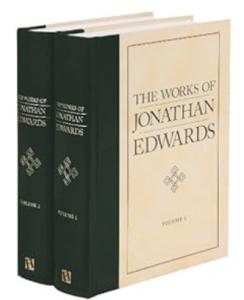
Yes, I actually own this. No, I haven’t read both volumes cover to cover.
Here in America, today, you can hear a Reformed preacher offer a ferocious sermon advocating the doctrine of predestination, affirming his staunch and unwavering commitment to unconditional election, limited atonement, and irresistible grace, and then you can hear him end that sermon with an altar call in which the congregation quietly sings “Just as I am, I come” and listeners are invited to choose to come forward to make a decision for Christ.
The staggering incoherence of that is difficult to explain, but it traces back to Jonathan Edwards and the revival that broke out in Northampton way back in 1733.
Edwards’ own revival sermons didn’t include that altar call. He mostly just laid out his Calvinist doctrine, explaining as starkly as possible that some few would be the undeserving recipients of God’s overwhelming grace and that everyone else was screwed — helplessly doomed to the damnation that all of us richly deserve. That didn’t leave room for an altar call. One wouldn’t expect it to leave much room for revival or “awakening” either. If you read those sermons, and accept the premise of them, then all you seem to be left with is the desperate hope that you might be among those with a winning lottery ticket. But just because you and Edwards might both hope and want that to be true for you, there was no guarantee it was, and there wasn’t really anything you could do about it anyway.
Having read some of Edwards’ other writings I think he’s a bit squishier than he wanted to admit on that point. One gets the sense, frequently, that he’s arguing something like “Human volition plays absolutely no role in salvation, but …” after which he describes something that sounds suspiciously like a role for human volition even as he insists it’s not that. One also gets the sense that Edwards sometimes leans — or at least hopes — toward a more expansive understanding of limited atonement. Yes, he tends to be very “wide the gate and broad the way that leadeth to destruction,” but he also seems open to the possibility that a substantial proportion of those in attendance at his sermons somehow beat the odds and are among those predestined for the narrow way that leads to salvation.***
I’m not really sure how Edwards squared the circle to produce his Reformed revivalism, but it exists. Conversionist Calvinism is a thing and it became a thing thanks, in large measure, to Jonathan Edwards. That’s evidence of his enduring influence.
But if the revivalism of the Great Awakening is the basis for our anointing of Edwards as the preeminent theologian of his time, the outcome of that revivalism might also undermine his case. A far greater number of Americans were church-goers after the Awakening than had been before. But most of those new converts and newly committed church-goers were Methodists and Baptists, not Reformed Congregationalists.
Still, though, that Awakening was pretty Great, and if Edwards was instrumental in starting it, then he probably deserves the whole “Greatest American Theologian of His Time” honorific. Just like Frank Baker deserves the name “Home Run.”
That’s not to disparage either one of them. Do you know how nearly impossible it was to hit one of those saggy, heavy balls over the fence? To do that 96 times earns you a spot in the Hall of Fame.
But Baker’s still not anybody’s pick as the starting third baseman for their all-time all-star team. Baseball Reference ranks him somewhere between Graig Nettles and Buddy Bell on the all-time list.
And if we’re going to insist on ranking theologians, that’s about where I’d rank TGATOHT too. Legit all-star. Very good player. Maybe even a borderline hall-of-famer.
* We seem to want it to be true. That’s understandable, because awarding this title to Jonathan Edwards spares us from having to concede it to anyone named Mather. That would be embarrassing. Though it’s still not clear to me why Salem in 1692 should be regarded as more shameful than New York City in 1741.
We also want the “Greatest American Theologian” of this time to be, you know, American. One of us and not just some visiting foreigner touring the colonies before returning home to England. So we’re in need of somebody local we can put up against Whitefield or Wesley.
Maybe the most interesting part of the “Jonathan Edwards was the Greatest American Theologian of his time” discussion involves the reasons for dismissing other contenders. Quakers need not apply because, I guess, Massachusetts outranks Pennsylvania or something. And anyway John Woolman and Benjamin Lay weren’t theologians. One was a saint and the other a prophet, and those don’t have anything to do with theology.
Oh, and no fair nominating anyone from outside the bounds of the 13 colonies. As Philip Jenkins points out, American history is always told right-to-left and east-to-west, and nothing counts in any of the places that became America until after they became part of America. Junipero Serra can’t possibly be compared to Edwards because Serra was a Spanish-speaking Catholic and Spanish-speaking Catholics don’t count as Americans — they’re just some of the unimportant people that Americans took America from.
** Many proponents of Edwards as The Greatest American Theologian of His Time don’t want to talk about “Sinners in the Hands of an Angry God” because they feel TGATOHT should not and cannot be reduced to a single famous sermon. That’s fair.
It’s also fair to note that Dexys Midnight Runners released six successful albums in a long career, including many singles over the years that appeared on the UK pop charts. Their greatest hits album — The Very Best of Dexys Midnight Runners — has 19 songs on it. And 18 of those songs are not “Come On Eileen.”
But it’s also kind of dumb to think you can ever talk about Dexys Midnight Runners without talking about “Come On Eileen,” a song that came out more than 40 years ago but still gets played at every wedding reception with more than 10 white people in attendance. No, it’s not the only thing they ever did, but it’s what they’re famous for, and it works as a representative and example of the rest of their work.
*** The word there isn’t “salvation,” of course, but “life.” And while this passage from the Sermon on the Mount is often cited as extolling limited atonement, it’s also entirely premised on human choice — “enter,” “find” — and teaches that membership in the kingdom of heaven is contingent on the fruit of good works.
Previous Post
November 13, 2023
Just showing up
Next Post

November 16, 2023 And you may ask yourself, 'Well, how did I get here?'
Recent Comments
"Yes, but "set it off in a controlled manner" is the best way to deal ..."
"I had it on a t-shirt..."There are very few personal problemsThat cannot be solvedWith a ..."
"In the silly movie "Top Secret", the evil officer has a rubber stamp that says ..."
"Speak for yourself. I intend to put on some sunglasses and spf 10,000 and watch ..."
Browse Our Archives
Select a Category class warfare evangelicals Iraq Left Behind Mammon music Uncategorized
Select a Month November 2026 October 2026 September 2026 August 2026 July 2026 June 2026 May 2026 April 2026 March 2026 January 2026 December 2025 November 2025 October 2025 September 2025 August 2025 July 2025 June 2025 May 2025 April 2025 March 2025 February 2025 January 2025 December 2024 November 2024 October 2024 September 2024 August 2024 July 2024 June 2024 May 2024 April 2024 March 2024 February 2024 January 2024 December 2023 November 2023 October 2023 September 2023 August 2023 July 2023 June 2023 May 2023 April 2023 March 2023 February 2023 January 2023 December 2022 November 2022 October 2022 September 2022 August 2022 July 2022 June 2022 May 2022 April 2022 March 2022 February 2022 January 2022 December 2021 November 2021 October 2021 September 2021 August 2021 July 2021 June 2021 May 2021 April 2021 March 2021 February 2021 January 2021 December 2020 November 2020 October 2020 September 2020 August 2020 July 2020 June 2020 May 2020 April 2020 March 2020 February 2020 January 2020 December 2019 November 2019 October 2019 September 2019 August 2019 July 2019 June 2019 May 2019 April 2019 March 2019 February 2019 January 2019 December 2018 November 2018 October 2018 September 2018 August 2018 July 2018 June 2018 May 2018 April 2018 March 2018 February 2018 January 2018 December 2017 November 2017 October 2017 September 2017 August 2017 July 2017 June 2017 May 2017 April 2017 March 2017 February 2017 January 2017 December 2016 November 2016 October 2016 September 2016 August 2016 July 2016 June 2016 May 2016 April 2016 March 2016 February 2016 January 2016 December 2015 November 2015 October 2015 September 2015 August 2015 July 2015 June 2015 May 2015 April 2015 March 2015 February 2015 January 2015 December 2014 November 2014 October 2014 September 2014 August 2014 July 2014 June 2014 May 2014 April 2014 March 2014 February 2014 January 2014 December 2013 November 2013 October 2013 September 2013 August 2013 July 2013 June 2013 May 2013 April 2013 March 2013 February 2013 January 2013 December 2012 November 2012 October 2012 September 2012 August 2012 July 2012 June 2012 May 2012 April 2012 March 2012 February 2012 January 2012 December 2011 November 2011 October 2011 September 2011 August 2011 July 2011 June 2011 May 2011 April 2011 March 2011 February 2011 January 2011 December 2010 November 2010 October 2010 September 2010 August 2010 July 2010 June 2010 May 2010 April 2010 March 2010 February 2010 January 2010 December 2009 November 2009 October 2009 September 2009 August 2009 July 2009 June 2009 May 2009 April 2009 March 2009 February 2009 January 2009 December 2008 November 2008 October 2008 September 2008 August 2008 July 2008 June 2008 May 2008 April 2008 March 2008 February 2008 January 2008 December 2007 November 2007 October 2007 September 2007 August 2007 July 2007 June 2007 May 2007 April 2007 March 2007 February 2007 January 2007 December 2006 November 2006 October 2006 September 2006 August 2006 July 2006 June 2006 May 2006 April 2006 March 2006 February 2006 January 2006 December 2005 November 2005 October 2005 September 2005 August 2005 July 2005 June 2005 May 2005 April 2005 March 2005 February 2005 January 2005 December 2004 November 2004 October 2004 September 2004 August 2004 July 2004 June 2004 May 2004 April 2004 March 2004 February 2004 January 2004 December 2003 November 2003 October 2003 September 2003
Follow Us!
TAKE THE
Religious Wisdom Quiz
What did Hannah bring annually for Samuel when he lived at the Tabernacle?
Select your answer to see how you score.
A crown A candle A robe A staff
Related posts from slacktivist

Is this the right room for an argument?

The Amish are not 'Evangelicals.' They're Amish.

The lumpers, the splitters, and me

'Is it right on red or left on...
TRENDING AT PATHEOS Progressive Christian

If I Stop Becoming, Will I Disappear?
(At our most recent half day Zen retreat, Dr Chris Hoff, a...

A Modest Proposal for President Trump
Trump should just quit the loser Republicans who failed him so badly...
Jesus is Coming with Glory and Power
https://www.youtube.com/watch?v=_lt60EDHOQ4&list=RD_lt60EDHOQ4&start_radio=1

The Late Francis Frangipane & the Failure Too...
I learned today that another one of my heroes has gone to...

Thomas Paine, the Smiths, the apostles in England,...
I'm pleased to announce that the Becoming Brigham Black Friday Sale,...

CatholicTV Series: Six Black Catholics on Path to...
WATERTOWN, Mass., November 9, 2026 – In recognition of Black Catholic History...
view all Progressive Christian blogs
What Are Your Thoughts?leave a comment
Ad-Free & Subscriber Log-In Subscription Support
- About Us
- 2026 Calendar
- Videos
- Podcasts
- Library of World Religions
- Faith In Media Tracker
- Advertise With Us
- Write for Us
- Privacy Policy
- Terms of Service
- Do Not Sell My Data
- Contact Us
- Radiant Digital
- Manage Newsletter Subscriptions
- Unsubscribe From Notifications
- Sitemap
Copyright 2008-2026, Patheos, part of the Radiant Digital network of media brands. All rights reserved.
Subscription Support Ad-Free & Subscriber Log-In
Follow Patheos