
BuddhistCatholicContemplativeEvangelicalGeneral ChristianHinduJewishLatter-day SaintMuslimNew VisionsProgressive Christian
Beliefs
- Buddhist
- Catholic
- Contemplative
- Evangelical
- General Christian
- Hindu
- Jewish
- Latter-day Saint
- More Voices
- Muslim
- New Visions
- Pagan
- Progressive Christian
Topics
- Religion News
- Food and Religion
- Sports and Religion
- Religious Art
- Religious Music and Entertainment
- Religious Events
- History and Religion
- Style and Religion
- Politics and Religion
- Women in Religion
- Recreation Outdoors and Religion
- Business Finance and Religion
- Careers Workplace and Religion
- Education and Religion
- Family Parenting and Religion
- Health Fitness and Religion
- Home and Religion
- Relationships and Religion
- Technology and Religion
- Travel and Religion
Columnists
- Buddhist Columnists
- Business Finance and Religion Columnists
- Careers Workplace and Religion Columnists
- Catholic Columnists
- Contemplative Columnists
- Education and Religion Columnists
- Evangelists Columnists
- Family Parenting and Religion Columnists
- General Christian Columnists
- Health Fitness and Religion Columnists
- Hindu Columnists
- History and Religion Columnists
- Home and Religion Columnists
- Jewish Columnists
- More Voices Columnists
- Latter Day Columnists
- Muslim Columnists
- New Visions Columnists
- Nonreligious Columnists
- Pagan Columnists
- Politics and Religion Columnists
- Progressive Columnists
- Recreation Outdoors and Religion Columnists
- Relationships and Religion Columnists
- Religion News Columnists
- Religious Art Columnists
- Religious Events Columnists
- Religious Music and Entertainment Columnists
- Sports and Religion Columnists
- Style and Religion Columnists
- Technology and Religion Columnists
- Travel and Religion Columnists
- Women in Religion Columnists
Resource Library
- 2026 Calendar
- Library of World Religions
- The 100 Most Holy Places on Earth
- Patheos Answers
- Podcasts
- Videos
- Faith Leaders Database
- Anglican Episcopalian
- Bahai
- Baptist
- Buddhism
- Christianity
- Confucianism
- Eastern Orthodoxy
- Hinduism
- Holiness and Pentecostal
- ISKCON
- Islam
- Judaism
- Lutheran
- Methodist
- The Church of Jesus Christ of Latter-day Saints
- New Age
- Paganism
- Presbytarian and Reformed
- Protestantism
- Religion Behind the Scenes
- Roman Catholic
- Scientology
- Shia Islam
- Sikhism
- Sufism
- Sunni Islam
- Taoism
- Zen
- See all religions
Research Tools
 Ad-Free & Subscriber Log-In Subscription Support
Ad-Free & Subscriber Log-In Subscription Support
Follow Patheos 

- Trending:
- Forgiveness
- |
- Marriage
- |
- Consciousness
- |
- Death Penalty
- |
- Election
- |
- Halloween

- Home
- Progressive Christian
- Hey man, nice shot … allegedly
Hey man, nice shot … allegedly
Last updated on: August 16, 2023 at 5:15 pm by Fred Clark
Hey man, nice shot … allegedly 2023-08-16T17:15:23-04:00 Fred Clark
Patheos Explore the world's faith through different perspectives on religion and spirituality! Patheos has the views of the prevalent religions and spiritualities of the world.
When I worked for the paper, we were extremely scrupulous about the distinction between crimes and criminal allegations. Journalists must, like the legal system itself, defend the principle of “innocent until proven guilty.”
This was an expression of our commitment to accuracy, but it was also vitally important for avoiding legal liability. (There’s a reason that the latter half of the AP Stylebook and Libel Manual was a lot longer than the stylebook part.)
So you should never read a newspaper article stating that a “Killer goes to trial.” He ain’t a killer until the trial says he is. And until the trial makes that determination, the newspaper should not and cannot say otherwise. The accused is exactly and only that — accused. To say more would be presumptuous — assuming we have all the facts before we can be sure we do.
This principled practice, admittedly, seems strange when it involves some extremely public crime with numerous witnesses or what appears to be slam-dunk photographic evidence. “The suspect, allegedly seen here in the ATM video allegedly holding a gun to the victim’s head …” But even — maybe especially — in such apparently obvious cases, the commitment to accuracy and to the legal presumption of innocence matters. Maybe that’s not the suspect in the ATM video, just some uncanny lookalike who also just happens to have an identical neck tattoo with his name on it.
Sure, if you were placing a bet on the outcome of that suspect’s trial, you’d bet on his conviction as an apparent slam-dunk. Horses not zebras and Occam’s razor and all of that. But “odds are” isn’t the same as certainty or verifiable fact, and accuracy means reporting what you know and can confirm, not what you’re pretty sure is probably the case.
Consider the example of Jack Ruby, seen below in Robert H. Jackson’s Pulitzer-Prize-winning photograph shooting Lee Harvey Oswald in front of hordes of reporters and photographers, police officers, and court officials.
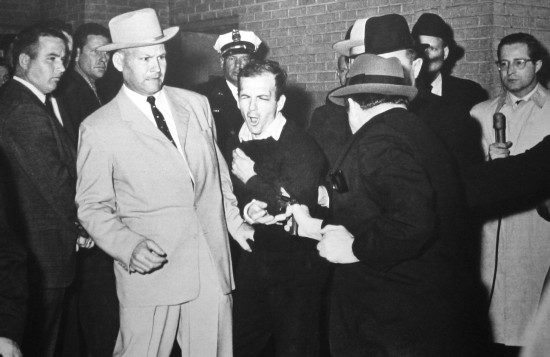
Before his trial, Ruby spoke publicly about his motives for that very public act of fatally shooting Oswald, and his defense never denied he did it, only that his actions were not premeditated. But even for all of that, until his actual conviction at trial, the rule was to say only that Ruby “allegedly” killed Oswald.
That initial conviction was overturned on legal technicalities and Ruby was granted a new trial, but Ruby died from cancer before that new trial could occur. That would have left him in “alleged” limbo forever — even though everybody saw him shoot Oswald — except that, before his death, Ruby fully confessed to the killing, and his own allegation could be taken as conclusive.
Alas, Ruby’s actions meant that Lee Harvey Oswald was never tried in court for the assassination of President John F. Kennedy. And because there was no trial to produce a conclusive verdict, Oswald has remained, forever, an alleged assassin — a status that feeds the wildest imaginations and leads to endless speculation.
The one exception I can think of to journalists’ strict adherence to this principle of “allegedly” is the case of former Pennsylvania State Treasurer Budd Dwyer. Dwyer took a $300,000 kickback from a California computing company in exchange for awarding them a state contract. Notice there’s no “allegedly” in that sentence. That’s not the exception here, that’s because Dwyer was tried and convicted, a court of law found him guilty of conspiracy, mail fraud, perjury and racketeering. So we can and do say that Budd Dwyer was guilty of corruption — that he took a bribe, full stop.
We can and should also add that Dwyer maintained his innocence throughout his trial and despite his conviction. That’s worth saying, too because, even when the courts have reached a conclusion based on apparently conclusive evidence, the courts don’t always get things right. In more than 30 years since his trial, no new evidence has emerged to support Dwyer’s claim of innocence, and the now-defunct Computer Technology Associates admitted to making the pay-off and accepted its punishment for its part in the crime, but for the record, Dwyer consistently protested that he was not guilty.
Dwyer was still serving as state treasurer at the time of his conviction but Pennsylvania law stated that he could not be removed from office until his sentencing. When he called a press conference on January 22, 1987, just before his sentencing hearing, the reporters gathered assumed Dwyer intended to announce his resignation.
Instead, Dwyer read from a long, rambling, oddly maudlin prepared statement which he eventually set aside. Then he abruptly pulled out a .357 Magnum revolver, stuck it in his mouth, and pulled the trigger. Budd Dwyer committed suicide on television.
This is the exception. I don’t think I’ve ever read any reporting that qualified that statement by saying that Dwyer “allegedly” killed himself. We all saw him do it. I saw him do it that night, on Channel 6 Action News, which chose to air the full video in both its 5 o’clock and 6 o’clock broadcasts that day. (“Move closer to your world, my friends …)
And no one ever speaks of Dwyer’s “apparent” suicide. That’s the abundance-of-caution word usually used in such cases until an official investigation confirms it. Suicide cases don’t go to trial, of course, but medical examiners and police detectives play the role here that the courts play for criminal allegations. Their investigation may determine that a suspected suicide was actually an accidental death, or — like in countless movies — a homicide staged to look like a suicide. Until they conduct that investigation, journalists avoid saying more than they can know — and avoid potential libel — by insisting on that cautious qualifier: apparent suicide.
But again, that word didn’t get employed in the case of Budd Dwyer because everyone saw it happen on TV. I don’t think this omission was a deliberate choice, just the result of the shock from his excessively public act. This blew apart and blew past our habitual cautious concerns about accuracy, uncertainty, or potential libel.
The extreme public nature of Dwyer’s actions had turned us all into witnesses, and witnesses bearing testimony have a duty not to qualify that testimony with words like “allegedly” or “apparently.” Their duty is to state, as clearly and plainly as they can, what it was they saw happen. To use anything other than such plain, straightforward language in our testimony would not seem principled, but merely pretentious — an artificial, disingenuous refusal to acknowledge what everybody had just seen happen.
All of which brings us to the multiple and multiplying criminal indictments against Donald J. Trump.
The first two sets of criminal indictments against the former president involve his alleged hush money payments to mistresses and his alleged theft and retention of classified documents, as well as his alleged obstruction of justice in both of those cases. We can read about those allegations and alleged crimes, and read some of the impressive evidence prosecutors have collected that appears to demonstrate Trump’s guilt. But we are not ourselves witnesses to those crimes.
It may seem somewhat strange to speak of Trump’s “alleged” crimes in the hush money case, given that his then-attorney Michael Cohen has already been convicted and served time in prison for his role as a co-conspirator in the same crime, but it’s still appropriate because we did not personally witness those crimes, they did not play out before our own eyes, and so it’s proper to wait for a court verdict before speaking with certainty of Trump’s guilt in the matter.
But the latter two, and far more serious, sets of indictments against Trump are different. The criminal allegations brought against him in Washington, DC, and in Georgia involve crimes that were committed publicly, nakedly, and defiantly before our very eyes. We saw them happen on TV and on social media in real time. We were there, in the room where it happened. We are not just consumers of reports in the press, but witnesses who can all testify to criminal actions we saw him do.
Most of us are not lawyers and cannot cite the line and language of specific criminal statutes in the way that experienced prosecutors like Jack Smith and Fani Willis can. Heck, most of us probably aren’t sure what “RICO” stands for, let alone the complexities of criminal law as it applies to public corruption and conspiracy. We mostly are not able to articulate the precise boundaries and distinctions that delineate between actions that are permitted and those that are prohibited.
But none of this has been subtle. Or hidden. Or anything that Trump and his co-conspirators have even attempted to hide.
We’ve all seen them nakedly, proudly, criming in public as hard as they can. We’ve seen them violating the law, the Constitution, and several of the Ten Commandments, repeatedly, for years on live TV and on tape. We’ve already seen much of the evidence presented by prosecutors because Trump and his co-conspirators posted it themselves, deliberately, on social media.
The election interference cases against Donald Trump, in other words, place us squarely in Jack Ruby and Budd Dwyer territory.
We know what happened. We all saw it happen.
We will continue to honor the bedrock principle of innocent until proven guilty, but that doesn’t change that we all know what we saw. Ain’t nothing “alleged” about it.
Previous Post

August 11, 2023
Ragged Dick
Next Post

August 18, 2023 She said, 'Hang the rich'
Recent Comments
"https://uploads.disquscdn.c..."
The purpose-driven labor priest
"That one wasn't?"
The purpose-driven labor priest
"https://apnews.com/article/trump-sanctions-waiver-russa-putin-ukraine-war-3cc9740c39e9e9eb713b1c553b5709e6 I am SO tired of the Cheeto being more loyal to Russia than the ..."
‘A hermeneutical Pandora’s box’
"Look, I saw a car do a full barrel roll over a river fifty years ..."
The purpose-driven labor priest
Browse Our Archives
Select a Category class warfare evangelicals Iraq Left Behind Mammon music Uncategorized
Select a Month October 2026 September 2026 August 2026 July 2026 June 2026 May 2026 April 2026 March 2026 January 2026 December 2025 November 2025 October 2025 September 2025 August 2025 July 2025 June 2025 May 2025 April 2025 March 2025 February 2025 January 2025 December 2024 November 2024 October 2024 September 2024 August 2024 July 2024 June 2024 May 2024 April 2024 March 2024 February 2024 January 2024 December 2023 November 2023 October 2023 September 2023 August 2023 July 2023 June 2023 May 2023 April 2023 March 2023 February 2023 January 2023 December 2022 November 2022 October 2022 September 2022 August 2022 July 2022 June 2022 May 2022 April 2022 March 2022 February 2022 January 2022 December 2021 November 2021 October 2021 September 2021 August 2021 July 2021 June 2021 May 2021 April 2021 March 2021 February 2021 January 2021 December 2020 November 2020 October 2020 September 2020 August 2020 July 2020 June 2020 May 2020 April 2020 March 2020 February 2020 January 2020 December 2019 November 2019 October 2019 September 2019 August 2019 July 2019 June 2019 May 2019 April 2019 March 2019 February 2019 January 2019 December 2018 November 2018 October 2018 September 2018 August 2018 July 2018 June 2018 May 2018 April 2018 March 2018 February 2018 January 2018 December 2017 November 2017 October 2017 September 2017 August 2017 July 2017 June 2017 May 2017 April 2017 March 2017 February 2017 January 2017 December 2016 November 2016 October 2016 September 2016 August 2016 July 2016 June 2016 May 2016 April 2016 March 2016 February 2016 January 2016 December 2015 November 2015 October 2015 September 2015 August 2015 July 2015 June 2015 May 2015 April 2015 March 2015 February 2015 January 2015 December 2014 November 2014 October 2014 September 2014 August 2014 July 2014 June 2014 May 2014 April 2014 March 2014 February 2014 January 2014 December 2013 November 2013 October 2013 September 2013 August 2013 July 2013 June 2013 May 2013 April 2013 March 2013 February 2013 January 2013 December 2012 November 2012 October 2012 September 2012 August 2012 July 2012 June 2012 May 2012 April 2012 March 2012 February 2012 January 2012 December 2011 November 2011 October 2011 September 2011 August 2011 July 2011 June 2011 May 2011 April 2011 March 2011 February 2011 January 2011 December 2010 November 2010 October 2010 September 2010 August 2010 July 2010 June 2010 May 2010 April 2010 March 2010 February 2010 January 2010 December 2009 November 2009 October 2009 September 2009 August 2009 July 2009 June 2009 May 2009 April 2009 March 2009 February 2009 January 2009 December 2008 November 2008 October 2008 September 2008 August 2008 July 2008 June 2008 May 2008 April 2008 March 2008 February 2008 January 2008 December 2007 November 2007 October 2007 September 2007 August 2007 July 2007 June 2007 May 2007 April 2007 March 2007 February 2007 January 2007 December 2006 November 2006 October 2006 September 2006 August 2006 July 2006 June 2006 May 2006 April 2006 March 2006 February 2006 January 2006 December 2005 November 2005 October 2005 September 2005 August 2005 July 2005 June 2005 May 2005 April 2005 March 2005 February 2005 January 2005 December 2004 November 2004 October 2004 September 2004 August 2004 July 2004 June 2004 May 2004 April 2004 March 2004 February 2004 January 2004 December 2003 November 2003 October 2003 September 2003
Follow Us!
TAKE THE
Religious Wisdom Quiz
What biblical figure was prepared to sacrifice his son Isaac on an altar?
Select your answer to see how you score.
Moses Noah Abraham Isaiah
Related posts from slacktivist
'For there is nothing hidden that will not...
Nazi shit (intra ecclesiam nulla salus)

Do you want plagues? Because that's how you...

They're not all hypocrites. They're perfectly consistent.
TRENDING AT PATHEOS Progressive Christian

The Iron Gates and the Lion of the...
Yesterday, I didn't finish my report about, well, yesterday. So I'll...

Dolly Parton’s Last Song Wins Dove Award with...
Bluegrass band The Grascals, speaking on the red carpet at the 57th...

The Image: On the Horror of Capitalism and...
The Image Then went the Pharisees, and took counsel how they might...

We are approaching the date of our new American national holiday: October...

Letters on Living the Faith by C.S. Lewis
Most of us met C.S. Lewis as a public intellectual. Mere Christianity....

When Halloween Unmasks Married Hearts
Written by Dr. David K. Ewen from Eternal Truth Bible College Behind...
view all Progressive Christian blogs
What Are Your Thoughts?leave a comment
Ad-Free & Subscriber Log-In Subscription Support
- About Us
- 2026 Calendar
- Videos
- Podcasts
- Library of World Religions
- Faith In Media Tracker
- Advertise With Us
- Write for Us
- Privacy Policy
- Terms of Service
- Do Not Sell My Data
- Contact Us
- Radiant Digital
- Manage Newsletter Subscriptions
- Unsubscribe From Notifications
- Sitemap
Copyright 2008-2026, Patheos. All rights reserved.
Subscription Support Ad-Free & Subscriber Log-In
Follow Patheos