
BuddhistCatholicContemplativeEvangelicalGeneral ChristianHinduJewishLatter-day SaintMuslimNew VisionsProgressive Christian
Beliefs
- Buddhist
- Catholic
- Contemplative
- Evangelical
- General Christian
- Hindu
- Jewish
- Latter-day Saint
- More Voices
- Muslim
- New Visions
- Pagan
- Progressive Christian
Topics
- Religion News
- Food and Religion
- Sports and Religion
- Religious Art
- Religious Music and Entertainment
- Religious Events
- History and Religion
- Style and Religion
- Politics and Religion
- Women in Religion
- Recreation Outdoors and Religion
- Business Finance and Religion
- Careers Workplace and Religion
- Education and Religion
- Family Parenting and Religion
- Health Fitness and Religion
- Home and Religion
- Relationships and Religion
- Technology and Religion
- Travel and Religion
Columnists
- Buddhist Columnists
- Business Finance and Religion Columnists
- Careers Workplace and Religion Columnists
- Catholic Columnists
- Contemplative Columnists
- Education and Religion Columnists
- Evangelists Columnists
- Family Parenting and Religion Columnists
- General Christian Columnists
- Health Fitness and Religion Columnists
- Hindu Columnists
- History and Religion Columnists
- Home and Religion Columnists
- Jewish Columnists
- More Voices Columnists
- Latter Day Columnists
- Muslim Columnists
- New Visions Columnists
- Nonreligious Columnists
- Pagan Columnists
- Politics and Religion Columnists
- Progressive Columnists
- Recreation Outdoors and Religion Columnists
- Relationships and Religion Columnists
- Religion News Columnists
- Religious Art Columnists
- Religious Events Columnists
- Religious Music and Entertainment Columnists
- Sports and Religion Columnists
- Style and Religion Columnists
- Technology and Religion Columnists
- Travel and Religion Columnists
- Women in Religion Columnists
Resource Library
- 2026 Calendar
- Library of World Religions
- The 100 Most Holy Places on Earth
- Patheos Answers
- Podcasts
- Videos
- Faith Leaders Database
- Anglican Episcopalian
- Bahai
- Baptist
- Buddhism
- Christianity
- Confucianism
- Eastern Orthodoxy
- Hinduism
- Holiness and Pentecostal
- ISKCON
- Islam
- Judaism
- Lutheran
- Methodist
- The Church of Jesus Christ of Latter-day Saints
- New Age
- Paganism
- Presbytarian and Reformed
- Protestantism
- Religion Behind the Scenes
- Roman Catholic
- Scientology
- Shia Islam
- Sikhism
- Sufism
- Sunni Islam
- Taoism
- Zen
- See all religions
Research Tools
 Ad-Free & Subscriber Log-In Subscription Support
Ad-Free & Subscriber Log-In Subscription Support
Follow Patheos 

- Trending:
- Forgiveness
- |
- Marriage
- |
- Consciousness
- |
- Death Penalty
- |
- Election
- |
- Halloween

- Home
- Progressive Christian
- ‘Onesimus’
‘Onesimus’
Last updated on: March 15, 2022 at 12:44 pm by Fred Clark
‘Onesimus’ 2022-03-15T12:44:08-04:00 Fred Clark
Patheos Explore the world's faith through different perspectives on religion and spirituality! Patheos has the views of the prevalent religions and spiritualities of the world.
I want to talk about the nonsense happening at (and to) Grove City College and how a very conservative, Presbyterian school has come to be accused of being a hotbed of Critical Race Theory Bolshevism. But to really appreciate the many-layered weirdness of this business, I want to start at the beginning. Or, at least, near the beginning — with a story that starts in Boston in 1706.
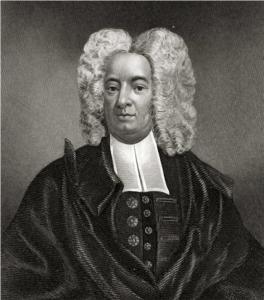
Cotton Mather
Cotton Mather was then the pastor of North Church in Boston.* The Puritan congregation was so fond of their minister that they presented him with a gift: an enslaved West African man. Mather assigned his new slave the name of Onesimus. We have no record of his real name, the name he was forced to abandon when he was sold to the good Christians of North Church.
Onesimus proved to be — in Mather’s own words — a “pretty intelligent fellow.” And that proved to be a Good Thing for the city of Boston, eventually resulting in countless lives being saved there during the smallpox epidemic that struck the city 15 years later. It’s a remarkable story. Rick Snedeker wrote about it recently at OnlySky — “COVID-19 is Boston’s 1721 smallpox epidemic redux” — and that sent me off, looking for and reading a whole bunch of other articles on this 300-year-old tale of Puritan slavery, disease, African science, and New England superstition.
This is a story that unsettles the legendary version of Cotton Mather most of us acquire from grade school and pop culture. I tend to think of Mather as a creature of the 1600s, someone mainly associated with the Salem witch trials, even if I’m sometimes a bit fuzzy about whether he supported or opposed “spectral evidence,” and what that meant. Yet here is a story in the 1700s, featuring that same Cotton Mather engaging in scientific arguments with members of the Royal Society of London and acting more like a wise and responsible leader than like the Hawthorne villain of my imagination.
But there’s another, larger piece here that doesn’t fit in with the general picture of the Mathers and of New England Puritanism that we learned from school and the movies. In our national mythology, the realm of New England Puritans and Scarlet Letter Calvinists was separate from the southern realm of plantation slavery. But Cotton Mather, like many of the Puritan divines of Boston and Plymouth, was a slave owner who participated in and benefited from stolen labor and human trafficking. (Throughout Cotton Mather’s lifetime, slavery was illegal in the colony of Georgia.)
It was, in fact, the enslaved man Mather regarded as his own property who introduced him to the life-saving practice of inoculation. Cotton Mather and the intellectuals of the Royal Society of London didn’t save Boston from smallpox. An enslaved man named Onesimus did.
As a child in Africa (perhaps Ghana), “Onesimus” had been inoculated himself and had seen the procedure performed on others. The so-called “Dark Continent,” it seems, was generations ahead of London and of Puritan New England when it came to understanding and combating infectious disease. Onesimus taught Mather how to inoculate himself and others against smallpox, and Mather — to his credit — was willing to listen and learn.
That credit is limited, alas, in that Cotton Mather was not also willing to listen to or to learn from Onesimus about the decency and morality of slavery. But I respect that Mather was willing to endure criticism for heeding Onesimus’s advice and for publicly arguing that others ought to do so.
Mather was able to convince a Boston physician to inoculate hundreds of people, demonstrating that the technique dramatically reduced mortality for those it protected from smallpox. The success of Onesimus’s technique led others to adopt it throughout the colonies and back in England, saving countless lives over the next century and contributing, eventually, to the development of Edward Jenner’s vaccine in 1796.
But what we really need to talk about here is that name: Onesimus.
That’s a biblical name. This was fashionable for good white Christians here in America. When we enslaved people and assigned them new names for their lives of bondage, enriching ourselves from their unpaid labor, we liked to display our piety by assigning those people biblical names. Perhaps the most famous example of this is from Alex Haley’s Roots, in which Haley’s ancestor, Kunta Kinte, was forced to accept the slave-name “Toby” — from the biblical Tobias, meaning “God is good.”
The blasphemous irony of this practice is particularly staggering when it was done by slave-owning white theologians — men who fully understood all the bitter resonances of the biblical names they assigned to the people they enslaved. Charles Hodge enslaved a man he renamed “John.” Was that name meant to be a reminder of the beloved disciple? Or was it meant to refer to the author of 1 John? Or perhaps to the liberationist visionary of Patmos? Any of those would be cruelly obscene, so it hardly matters which.
Jonathan Edwards renamed the enslaved people he purchased Titus, Susanna, and Joseph. The first is the name of the uncircumcised foreigner who became a Christian bishop, the second is the name of a righteous captive living in Babylonian exile, and the third is the name of the man who helped Pharaoh enslave the entire known world — creating the context for the defining events of Exodus. The venomous absurdity of all of those names couldn’t have been unnoticed by someone like Edwards.
Cotton Mather, likewise, surely understood the vicious cruelty and hypocrisy of his imposition of the name Onesimus.
That comes from the book of Philemon. Onesimus was both the subject and the bearer of that epistle from the apostle Paul. It’s a pointed and to-the-point letter — just 25 verses, a single page with a singular focus. Onesimus was a fugitive slave and he was returning to his former “master,” Philemon, who would have to decide whether to re-enslave him or to welcome him back as a brother and an equal. Cotton Mather — who was a pretty intelligent fellow himself — could not have missed the point of Paul’s letter, which is that Paul wasn’t really giving Philemon any choice at all when it came to Onesimus, his brother in Christ.
Mather may have read John Calvin’s commentary on Philemon. Calvin’s perspective isn’t entirely coherent there. His commentary is frequently distracted by strained devotional tangents, and when he focuses on the question of slavery itself it can be deeply problematic (to be generous). But for all of that, Calvin recognizes that both Philemon the person and the readers of Philemon, the scripture, are presented with a clear and overwhelming case for recognizing Onesimus as a brother and an equal, no longer as a slave.
Mather was a Puritan and a Calvinist, but he lived 150-ish years after Calvin wrote that commentary. The modern slave trade already existed in Calvin’s time, but he was not personally involved or invested in it the way that Mather and the entire Massachusetts Bay Colony were. As the article linked above discusses, Calvin didn’t seem to know much about the modern slave trade and most of what he imagined he knew about slavery in first-century Rome was wrong. (Calvin’s understanding of first-century Roman slavery was about as reliable as his understanding of first-century Judaism — which is to say it was wildly and weirdly misleading, at best.)
The passage of that 150 years and white Calvinists’ deepening investment in the modern slave trade changed the way that Calvin’s theological heirs understood the story of Philemon. The reformer himself saw it as an obvious and insurmountable obstacle to any notion of “Christian slavery,” but the Christian slave-owners and Christian slave-traders who otherwise followed his teachings had already begun reinterpreting the story to twist it into something very much the opposite. Over time they transformed that story into one they regarded as a clobber-text affirming their white Christian right to enslave others — an implausibly strained and twisted reading that would have baffled Calvin, Philemon, and Onesimus, and that would have enraged Paul.
White Calvinists, when forced to choose, proved more committed to whiteness than they were to Calvinism. Both of those things — whiteness and Calvinism — were still relatively young when Cotton Mather was born in Puritan Boston. But by the time he was serving as pastor of North Church, a century and half of shackles and chains had already elevated the former over the latter to the extent that he could blasphemously assign that name Onesimus without fearing the righteous wrath of “the Lord your God, who brought you out of the land of Egypt, out of the house of slavery.”
Fast forward another 300 years and white Calvinism seems even more deeply confused about which is which. And that brings us back to Grove City and the weird spectacle of “conservative” Presbyterians explicitly rejecting everything Calvin taught about human nature and sin.
We’ll pick up the story there in a bit. (It’s warm and sunny here in Chester County and all that mulch ain’t gonna stack itself.)
* This was the old “North Church,” not to be confused with the Old North Church that would later become famous for “One if by land, two if by sea.” To avoid confusing the two, this first North Church is sometimes referred to as Second Church, which isn’t actually very helpful.
The nothing-to-do-with-Paul-Revere North Church became Unitarian in the 1800s, but it began as a Puritan congregation led by Increase Mather, then by his son, Cotton Mather, and still later by his son, Samuel Mather. I can’t complain that this sounds like nepotism since Samuel was eventually succeeded by John Lathrop, the great-great-grandson of John Lowthorpe, who is an ancestor of mine.
Lowthorpe may well be an ancestor of yours, too, actually, since the guy had 14 children 400 years ago on both sides of the Atlantic and that makes him a branch in a whole lot of family trees.
Previous Post

March 15, 2022
March 15 Flashback: Sacred milestones
Next Post
March 16, 2022 March 16 Flashback: Infernal subcontractors
Browse Our Archives
Select a Category class warfare evangelicals Iraq Left Behind Mammon music Uncategorized
Select a Month October 2026 September 2026 August 2026 July 2026 June 2026 May 2026 April 2026 March 2026 January 2026 December 2025 November 2025 October 2025 September 2025 August 2025 July 2025 June 2025 May 2025 April 2025 March 2025 February 2025 January 2025 December 2024 November 2024 October 2024 September 2024 August 2024 July 2024 June 2024 May 2024 April 2024 March 2024 February 2024 January 2024 December 2023 November 2023 October 2023 September 2023 August 2023 July 2023 June 2023 May 2023 April 2023 March 2023 February 2023 January 2023 December 2022 November 2022 October 2022 September 2022 August 2022 July 2022 June 2022 May 2022 April 2022 March 2022 February 2022 January 2022 December 2021 November 2021 October 2021 September 2021 August 2021 July 2021 June 2021 May 2021 April 2021 March 2021 February 2021 January 2021 December 2020 November 2020 October 2020 September 2020 August 2020 July 2020 June 2020 May 2020 April 2020 March 2020 February 2020 January 2020 December 2019 November 2019 October 2019 September 2019 August 2019 July 2019 June 2019 May 2019 April 2019 March 2019 February 2019 January 2019 December 2018 November 2018 October 2018 September 2018 August 2018 July 2018 June 2018 May 2018 April 2018 March 2018 February 2018 January 2018 December 2017 November 2017 October 2017 September 2017 August 2017 July 2017 June 2017 May 2017 April 2017 March 2017 February 2017 January 2017 December 2016 November 2016 October 2016 September 2016 August 2016 July 2016 June 2016 May 2016 April 2016 March 2016 February 2016 January 2016 December 2015 November 2015 October 2015 September 2015 August 2015 July 2015 June 2015 May 2015 April 2015 March 2015 February 2015 January 2015 December 2014 November 2014 October 2014 September 2014 August 2014 July 2014 June 2014 May 2014 April 2014 March 2014 February 2014 January 2014 December 2013 November 2013 October 2013 September 2013 August 2013 July 2013 June 2013 May 2013 April 2013 March 2013 February 2013 January 2013 December 2012 November 2012 October 2012 September 2012 August 2012 July 2012 June 2012 May 2012 April 2012 March 2012 February 2012 January 2012 December 2011 November 2011 October 2011 September 2011 August 2011 July 2011 June 2011 May 2011 April 2011 March 2011 February 2011 January 2011 December 2010 November 2010 October 2010 September 2010 August 2010 July 2010 June 2010 May 2010 April 2010 March 2010 February 2010 January 2010 December 2009 November 2009 October 2009 September 2009 August 2009 July 2009 June 2009 May 2009 April 2009 March 2009 February 2009 January 2009 December 2008 November 2008 October 2008 September 2008 August 2008 July 2008 June 2008 May 2008 April 2008 March 2008 February 2008 January 2008 December 2007 November 2007 October 2007 September 2007 August 2007 July 2007 June 2007 May 2007 April 2007 March 2007 February 2007 January 2007 December 2006 November 2006 October 2006 September 2006 August 2006 July 2006 June 2006 May 2006 April 2006 March 2006 February 2006 January 2006 December 2005 November 2005 October 2005 September 2005 August 2005 July 2005 June 2005 May 2005 April 2005 March 2005 February 2005 January 2005 December 2004 November 2004 October 2004 September 2004 August 2004 July 2004 June 2004 May 2004 April 2004 March 2004 February 2004 January 2004 December 2003 November 2003 October 2003 September 2003
Follow Us!
TAKE THE
Religious Wisdom Quiz
Who rebuilt the walls of Jerusalem after the exile?
Select your answer to see how you score.
Nehemiah Ezra Zerubbabel Joshua
Related posts from slacktivist

It's not 'pick and choose.' It's pick a...

Is this the right room for an argument?

Team Everybody sliding into our DMs

TRENDING AT PATHEOS Progressive Christian

The First Eucharistic Controversy: Christ’s Real Presence
For Catholics, the Eucharist is the source and summit of the Christian...

What a Stop Sign Can Teach Us About...
How to Make a Decision When You Can't Hear God Main point:...

Archdiocese Hosts Military Marriage Retreat in Germany
RASTATT, Germany — The transient military lifestyle, with its frequent deployments and...

Nearly every morning, I make the drive to Detroit with my high-school-age...

The Real AI Story Is Adoption Without Trust
Artificial intelligence has crossed a political threshold. It is no longer a...

A new article, written by Jeff Lindsay and Gale L. Pooley,...
view all Progressive Christian blogs
Ad-Free & Subscriber Log-In Subscription Support
- About Us
- 2026 Calendar
- Videos
- Podcasts
- Library of World Religions
- Faith In Media Tracker
- Advertise With Us
- Write for Us
- Privacy Policy
- Terms of Service
- Do Not Sell My Data
- Contact Us
- Radiant Digital
- Manage Newsletter Subscriptions
- Unsubscribe From Notifications
- Sitemap
Copyright 2008-2026, Patheos. All rights reserved.
Subscription Support Ad-Free & Subscriber Log-In
Follow Patheos