
BuddhistCatholicContemplativeEvangelicalGeneral ChristianHinduJewishLatter-day SaintMuslimNew VisionsProgressive Christian
Beliefs
- Buddhist
- Catholic
- Contemplative
- Evangelical
- General Christian
- Hindu
- Jewish
- Latter-day Saint
- More Voices
- Muslim
- New Visions
- Pagan
- Progressive Christian
Topics
- Religion News
- Food and Religion
- Sports and Religion
- Religious Art
- Religious Music and Entertainment
- Religious Events
- History and Religion
- Style and Religion
- Politics and Religion
- Women in Religion
- Recreation Outdoors and Religion
- Business Finance and Religion
- Careers Workplace and Religion
- Education and Religion
- Family Parenting and Religion
- Health Fitness and Religion
- Home and Religion
- Relationships and Religion
- Technology and Religion
- Travel and Religion
Columnists
- Buddhist Columnists
- Business Finance and Religion Columnists
- Careers Workplace and Religion Columnists
- Catholic Columnists
- Contemplative Columnists
- Education and Religion Columnists
- Evangelists Columnists
- Family Parenting and Religion Columnists
- General Christian Columnists
- Health Fitness and Religion Columnists
- Hindu Columnists
- History and Religion Columnists
- Home and Religion Columnists
- Jewish Columnists
- More Voices Columnists
- Latter Day Columnists
- Muslim Columnists
- New Visions Columnists
- Nonreligious Columnists
- Pagan Columnists
- Politics and Religion Columnists
- Progressive Columnists
- Recreation Outdoors and Religion Columnists
- Relationships and Religion Columnists
- Religion News Columnists
- Religious Art Columnists
- Religious Events Columnists
- Religious Music and Entertainment Columnists
- Sports and Religion Columnists
- Style and Religion Columnists
- Technology and Religion Columnists
- Travel and Religion Columnists
- Women in Religion Columnists
Resource Library
- 2026 Calendar
- Library of World Religions
- The 100 Most Holy Places on Earth
- Patheos Answers
- Podcasts
- Videos
- Faith Leaders Database
- Anglican Episcopalian
- Bahai
- Baptist
- Buddhism
- Christianity
- Confucianism
- Eastern Orthodoxy
- Hinduism
- Holiness and Pentecostal
- ISKCON
- Islam
- Judaism
- Lutheran
- Methodist
- The Church of Jesus Christ of Latter-day Saints
- New Age
- Paganism
- Presbytarian and Reformed
- Protestantism
- Religion Behind the Scenes
- Roman Catholic
- Scientology
- Shia Islam
- Sikhism
- Sufism
- Sunni Islam
- Taoism
- Zen
- See all religions
Research Tools
 Ad-Free & Subscriber Log-In Subscription Support
Ad-Free & Subscriber Log-In Subscription Support
Follow Patheos 

- Trending:
- Forgiveness
- |
- Marriage
- |
- Consciousness
- |
- Death Penalty
- |
- Election
- |
- Halloween

- Home
- Progressive Christian
- Stairways circle back to where you’ve been
Stairways circle back to where you’ve been
Last updated on: July 8, 2021 at 7:00 am by Fred Clark
Stairways circle back to where you’ve been 2021-07-07T19:09:38-04:00 Fred Clark
Patheos Explore the world's faith through different perspectives on religion and spirituality! Patheos has the views of the prevalent religions and spiritualities of the world.
This Hedgehog Review essay by Philip S. Gorski — “The Long, Withdrawing Roar: From Culture Wars to Culture Clashes” — is academic, weedy, and dense (in a good way). It’s a conservative screed against the cartoonish nightmare of contemporary “conservatism” as embodied by the 21st-century Republican Party, the smirking bad faith of Fox News, and the freak show of Franklin-replacing-Billy white evangelicalism.
Gorski borrows from French sociologist Pierre Bourdeau in an attempt to make sense of this state of affairs, but his essay isn’t really about analysis or diagnosis as much as it is about lamentation. As such, it’s less concerned with prescribing solutions than it is with just sizing up the massive scope of the problem.
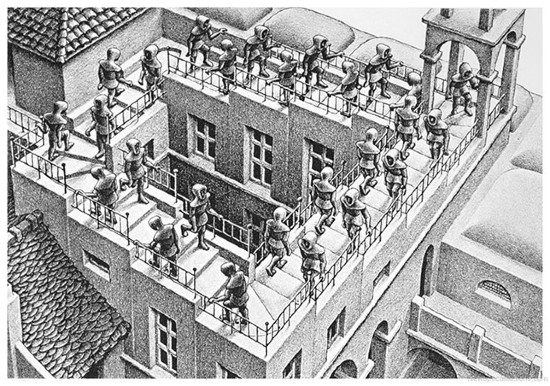
That’s good, because Gorski’s piece is a fine bit of lamentation that does a capable job of outlining the immensity of the problem. But his proposed solutions are underwhelming and unhelpful.
See for example his conclusion:
There are no easy remedies for these multifarious ills, only hard ones. Religious leaders need to retreat from politics and re-establish their authority over the religious field. They should focus on building the Kingdom instead of “changing the culture” — because “the culture” has already colonized their kingdom. Political leaders need to retreat from culture wars and focus on the common good. They should spend more time on governance and less on grievance. And members of the metropolitan meritocracy should own up to the role they and their elite institutions and attitudes have played in creating the very ills they bemoan. They should spend more time on real community building and less on scolding the insufficiently “woke.”
No easy remedies, to be sure.
I suspect Gorski is at least somewhat aware of the ways his “remedies” amount to contradictions. Everything he’s written preceding that paragraph shows that he’s aware of the impossibility of delineating a stark distinction between “politics” and “the religious field.” And the next sentence, advocating a “focus on building the Kingdom instead of ‘changing the culture'” ends with the recognition that “‘the culture’ has already colonized their kingdom” and their understanding of “the Kingdom.”
This remedy, then, is a snake swallowing its tail. People whose understanding of “the religious field” or “the Kingdom,” the gospel, the church, etc., has been wholly colonized by culture and politics are asked to retreat to some imagined pure version of religion/Kingdom/gospel/church that — by definition — is wholly unavailable to them. To whatever extent such a theoretical abstraction as this purely “religious field” exists, their [our] utter inability to identify it is the problem we’re dealing with here.
The same self-refuting contradiction is at work in Gorski’s proposed “remedies” for “political leaders” and for “elite institutions.” He urges political leaders to “focus on the common good,” which is lovely advice in any situation other than the one he’s addressing here — a context in which our understanding of “the common good” is perpetually disputed because our understanding of who constitutes “our” and who does/does not belong to “our” commons is fiercely contested.
Ditto for Gorski’s exhortation to “spend more time on real community building and less on scolding the insufficiently ‘woke.'” There, I would guess, Gorski is less aware of the self-refuting irony of his advice due to his unwillingness to understand or allow any understanding of what he caricatures as “woke.” He is again proposing no solution other than “Stop having this problem.” He urges a higher priority on “real community building” as a solution to the problem of being unable to agree on what our “real community” is or ought to be or how to build it. And any attempt to address the actual matter of contention — who does and who does not belong to “our” community? — he dismisses as “wokeness.”
There’s another bitter irony there, harking back to his empty advice to “religious leaders” — people whom he identifies, correctly, as having been “colonized.” They are, he says, in a state where their perception and their capacity for perception of their true condition is diminished. Which is to say they are asleep. And so his advice to them is essentially that of Ephesians 5:14, “Wake up, sleeper! Rise from the dead.” Rub the sleep out of your eyes, get moving, and don’t lie back down lest you drift back into dreamland.
Or, in other words, Get woke and stay woke. That’s only useful advice if we allow ourselves to imagine what waking up might actually mean. Reflexively mocking wakefulness isn’t a positive step in that direction. It represents only a fumbling for the snooze button as it defies any change in perception that asks us to open our eyes and see more clearly.
If our predicament is what I’ve described above — a dispute over who “we” are and should be arising from our disagreement over who is and who is not to be included in “we” — then I think Gorski and I are essentially on the same side of that dispute. He and I agree that “we” does and ought to include more than just one subset of white male Protestants. I suspect he and I disagree, somewhat, over the implications of that, but we’re still on the same side of this dispute against those who are arguing — explicitly or implicitly — for a more homogenous, exclusive definition of “we” and “us.”
I don’t want to distract from the urgency of that larger dispute by picking on or picking at Gorski’s remedial “remedies.” What I’m trying to suggest, instead, is that a proper focus on the dispute itself as it actually confronts us will have the additional benefit of requiring us to imagine and to work for remedies that actually address that actual problem. Anything less than that is sleepwalking.
Previous Post

July 7, 2021
Incentivizing religious insincerity
Next Post
July 12, 2021 'For you were [redacted] in Egypt': Concordance-ism and the ESV (part 1)
Browse Our Archives
Select a Category class warfare evangelicals Iraq Left Behind Mammon music Uncategorized
Select a Month October 2026 September 2026 August 2026 July 2026 June 2026 May 2026 April 2026 March 2026 January 2026 December 2025 November 2025 October 2025 September 2025 August 2025 July 2025 June 2025 May 2025 April 2025 March 2025 February 2025 January 2025 December 2024 November 2024 October 2024 September 2024 August 2024 July 2024 June 2024 May 2024 April 2024 March 2024 February 2024 January 2024 December 2023 November 2023 October 2023 September 2023 August 2023 July 2023 June 2023 May 2023 April 2023 March 2023 February 2023 January 2023 December 2022 November 2022 October 2022 September 2022 August 2022 July 2022 June 2022 May 2022 April 2022 March 2022 February 2022 January 2022 December 2021 November 2021 October 2021 September 2021 August 2021 July 2021 June 2021 May 2021 April 2021 March 2021 February 2021 January 2021 December 2020 November 2020 October 2020 September 2020 August 2020 July 2020 June 2020 May 2020 April 2020 March 2020 February 2020 January 2020 December 2019 November 2019 October 2019 September 2019 August 2019 July 2019 June 2019 May 2019 April 2019 March 2019 February 2019 January 2019 December 2018 November 2018 October 2018 September 2018 August 2018 July 2018 June 2018 May 2018 April 2018 March 2018 February 2018 January 2018 December 2017 November 2017 October 2017 September 2017 August 2017 July 2017 June 2017 May 2017 April 2017 March 2017 February 2017 January 2017 December 2016 November 2016 October 2016 September 2016 August 2016 July 2016 June 2016 May 2016 April 2016 March 2016 February 2016 January 2016 December 2015 November 2015 October 2015 September 2015 August 2015 July 2015 June 2015 May 2015 April 2015 March 2015 February 2015 January 2015 December 2014 November 2014 October 2014 September 2014 August 2014 July 2014 June 2014 May 2014 April 2014 March 2014 February 2014 January 2014 December 2013 November 2013 October 2013 September 2013 August 2013 July 2013 June 2013 May 2013 April 2013 March 2013 February 2013 January 2013 December 2012 November 2012 October 2012 September 2012 August 2012 July 2012 June 2012 May 2012 April 2012 March 2012 February 2012 January 2012 December 2011 November 2011 October 2011 September 2011 August 2011 July 2011 June 2011 May 2011 April 2011 March 2011 February 2011 January 2011 December 2010 November 2010 October 2010 September 2010 August 2010 July 2010 June 2010 May 2010 April 2010 March 2010 February 2010 January 2010 December 2009 November 2009 October 2009 September 2009 August 2009 July 2009 June 2009 May 2009 April 2009 March 2009 February 2009 January 2009 December 2008 November 2008 October 2008 September 2008 August 2008 July 2008 June 2008 May 2008 April 2008 March 2008 February 2008 January 2008 December 2007 November 2007 October 2007 September 2007 August 2007 July 2007 June 2007 May 2007 April 2007 March 2007 February 2007 January 2007 December 2006 November 2006 October 2006 September 2006 August 2006 July 2006 June 2006 May 2006 April 2006 March 2006 February 2006 January 2006 December 2005 November 2005 October 2005 September 2005 August 2005 July 2005 June 2005 May 2005 April 2005 March 2005 February 2005 January 2005 December 2004 November 2004 October 2004 September 2004 August 2004 July 2004 June 2004 May 2004 April 2004 March 2004 February 2004 January 2004 December 2003 November 2003 October 2003 September 2003
Follow Us!
TAKE THE
Religious Wisdom Quiz
Which short letter urges forgiveness for a runaway slave named Onesimus?
Select your answer to see how you score.
Jude Philemon 2 Timothy Titus
Related posts from slacktivist

Is this the right room for an argument?

The Amish are not 'Evangelicals.' They're Amish.

The lumpers, the splitters, and me

'Is it right on red or left on...
TRENDING AT PATHEOS Progressive Christian

The Iron Gates and the Lion of the...
Yesterday, I didn't finish my report about, well, yesterday. So I'll...

Dolly Parton’s Last Song Wins Dove Award with...
Bluegrass band The Grascals, speaking on the red carpet at the 57th...

The Image: On the Horror of Capitalism and...
The Image Then went the Pharisees, and took counsel how they might...

We are approaching the date of our new American national holiday: October...

Letters on Living the Faith by C.S. Lewis
Most of us met C.S. Lewis as a public intellectual. Mere Christianity....

When Halloween Unmasks Married Hearts
Written by Dr. David K. Ewen from Eternal Truth Bible College Behind...
view all Progressive Christian blogs
Ad-Free & Subscriber Log-In Subscription Support
- About Us
- 2026 Calendar
- Videos
- Podcasts
- Library of World Religions
- Faith In Media Tracker
- Advertise With Us
- Write for Us
- Privacy Policy
- Terms of Service
- Do Not Sell My Data
- Contact Us
- Radiant Digital
- Manage Newsletter Subscriptions
- Unsubscribe From Notifications
- Sitemap
Copyright 2008-2026, Patheos. All rights reserved.
Subscription Support Ad-Free & Subscriber Log-In
Follow Patheos