
BuddhistCatholicContemplativeEvangelicalGeneral ChristianHinduJewishLatter-day SaintMuslimNew VisionsProgressive Christian
Beliefs
- Buddhist
- Catholic
- Contemplative
- Evangelical
- General Christian
- Hindu
- Jewish
- Latter-day Saint
- More Voices
- Muslim
- New Visions
- Pagan
- Progressive Christian
Topics
- Religion News
- Food and Religion
- Sports and Religion
- Religious Art
- Religious Music and Entertainment
- Religious Events
- History and Religion
- Style and Religion
- Politics and Religion
- Women in Religion
- Recreation Outdoors and Religion
- Business Finance and Religion
- Careers Workplace and Religion
- Education and Religion
- Family Parenting and Religion
- Health Fitness and Religion
- Home and Religion
- Relationships and Religion
- Technology and Religion
- Travel and Religion
Columnists
- Buddhist Columnists
- Business Finance and Religion Columnists
- Careers Workplace and Religion Columnists
- Catholic Columnists
- Contemplative Columnists
- Education and Religion Columnists
- Evangelists Columnists
- Family Parenting and Religion Columnists
- General Christian Columnists
- Health Fitness and Religion Columnists
- Hindu Columnists
- History and Religion Columnists
- Home and Religion Columnists
- Jewish Columnists
- More Voices Columnists
- Latter Day Columnists
- Muslim Columnists
- New Visions Columnists
- Nonreligious Columnists
- Pagan Columnists
- Politics and Religion Columnists
- Progressive Columnists
- Recreation Outdoors and Religion Columnists
- Relationships and Religion Columnists
- Religion News Columnists
- Religious Art Columnists
- Religious Events Columnists
- Religious Music and Entertainment Columnists
- Sports and Religion Columnists
- Style and Religion Columnists
- Technology and Religion Columnists
- Travel and Religion Columnists
- Women in Religion Columnists
Resource Library
- 2026 Calendar
- Library of World Religions
- The 100 Most Holy Places on Earth
- Patheos Answers
- Podcasts
- Videos
- Faith Leaders Database
- Anglican Episcopalian
- Bahai
- Baptist
- Buddhism
- Christianity
- Confucianism
- Eastern Orthodoxy
- Hinduism
- Holiness and Pentecostal
- ISKCON
- Islam
- Judaism
- Lutheran
- Methodist
- The Church of Jesus Christ of Latter-day Saints
- New Age
- Paganism
- Presbytarian and Reformed
- Protestantism
- Religion Behind the Scenes
- Roman Catholic
- Scientology
- Shia Islam
- Sikhism
- Sufism
- Sunni Islam
- Taoism
- Zen
- See all religions
Research Tools
 Ad-Free & Subscriber Log-In Subscription Support
Ad-Free & Subscriber Log-In Subscription Support
Follow Patheos 

- Trending:
- Forgiveness
- |
- Marriage
- |
- Consciousness
- |
- Death Penalty
- |
- Election
- |
- Halloween

- Home
- Progressive Christian
- Hospitality in Zarephath
Hospitality in Zarephath
Last updated on: June 8, 2021 at 8:02 pm by Fred Clark
Hospitality in Zarephath 2021-06-08T20:02:32-04:00 Fred Clark
Patheos Explore the world's faith through different perspectives on religion and spirituality! Patheos has the views of the prevalent religions and spiritualities of the world.
There are a bunch of miracles in the stories recounted in 1 Kings 17. The first one is unpleasant — a severe drought sent by God to punish the evil King Ahab:
Now Elijah … said to Ahab, “As the Lord, the God of Israel, lives, whom I serve, there will be neither dew nor rain in the next few years except at my word.
This drought is a heavy punishment for all the people of Israel, including Elijah himself, but God provides for the prophet by sending him east of the Jordan, to a small brook where he will have water to drink. God also makes sure Elijah has food to eat thanks to the second miracle in this story: “I have directed the ravens to supply you with food there,” God tells Elijah. And “The ravens brought him bread and meat in the morning and bread and meat in the evening.”
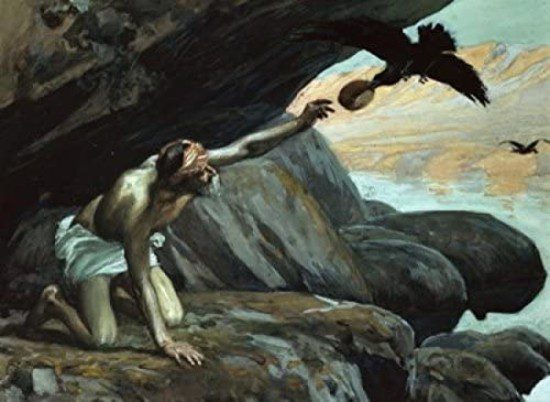
“Elijah Fed by the Ravens” by James Tissot. Ravens are smart and loyal birds, so my biggest question about this miracle involves who did the baking for this bread.
Eventually, though, the drought dries up the brook, so God sends Elijah far away in the opposite direction: “Go at once to Zarephath in the region of Sidon and stay there. I have directed a widow there to supply you with food.”
This is odd for a couple of reasons. First because he’s going to Sidon, which already featured earlier in this story as the birthplace of Jezebel, the Sidonian princess who marries King Ahab of Israel and leads him to adopt her Sidonian religion. And second because, unlike the ravens, the widow of Zarephath doesn’t seem to have been told about God’s plan for her to supply Elijah with food:
So he went to Zarephath. When he came to the town gate, a widow was there gathering sticks. He called to her and asked, “Would you bring me a little water in a jar so I may have a drink?” As she was going to get it, he called, “And bring me, please, a piece of bread.”
“As surely as the Lord your God lives,” she replied, “I don’t have any bread — only a handful of flour in a jar and a little olive oil in a jug. I am gathering a few sticks to take home and make a meal for myself and my son, that we may eat it — and die.”
Which sets the stage for miracle No. 3:
Elijah said to her, “Don’t be afraid. Go home and do as you have said. But first make a small loaf of bread for me from what you have and bring it to me, and then make something for yourself and your son. For this is what the Lord, the God of Israel, says: ‘The jar of flour will not be used up and the jug of oil will not run dry until the day the Lord sends rain on the land.'”
She went away and did as Elijah had told her. So there was food every day for Elijah and for the woman and her family. For the jar of flour was not used up and the jug of oil did not run dry, in keeping with the word of the Lord spoken by Elijah.
So amidst all the wickedness of Ahab and the divine wrath of Elijah, we get this sweet little story about the miraculous hospitality of a desperately poor Phoenician widow. There are echoes here of lots of other biblical stories about not-enough miraculously becoming enough when it gets shared. That happens with manna in the wilderness and with loaves and fishes on the hillside in Galilee. It’s kind of a major recurring theme in both the Hebrew and Greek scriptures.
This story also has echoes of lots of other biblical stories and other ancient stories emphasizing the duty of hospitality. Some of those stories, like this one, are happy stories of generosity and miraculous plenitude. Others aren’t so positive — emphasizing the taboo wickedness of denying hospitality. Think of Procrustes, or of the Nasty 19s (the stories told in Genesis 19 and Judges 19).
The Phoenician widow in this story extends as much hospitality toward Elijah as she is able. She brings him water when he asks. But she apologizes for having to say “no” when he asks from her more hospitality than she is able to provide. When he asks for bread as well, she tells him that she is unable to give him any as she has only just enough for one final meal with her child, after which they will both quietly die of starvation.
At this point in the story, Elijah tests her faith. He promises her a miracle, telling her that she and her son don’t have to die. But while this tests her faith, Elijah isn’t a jerk about it. He scales back his initial request, asking only for “a small loaf,” and then immediately reassures her that if she does this, she and her son will be provided for, in perpetuity. He doesn’t test her hospitality and then reward her with this miraculous provision only after she passes that test. And Elijah doesn’t threaten her the way he often threatens the rich and the powerful in other stories. He says “Bring me what little bread you can manage and I will make sure you and your child can survive,” not “Give me the last of your bread, or else I will let you and your son die.”
(He also never at any point compares her or her child to “dogs,” so Elijah comes across a bit better here than the protagonist of the other famous Bible story involving a desperate Phoenician widow.)
This is an important Bible story because hospitality is an important thing. Hospitality is an important moral duty.
But hospitality is also a contingent duty. In this story, the widow was obliged to provide water for Elijah because she was able to do so. But she was not obliged to starve her own son in order to provide bread for Elijah. She had no bread and therefore no obligation to share it.
The duty of hospitality, in other words, can never be made into a weapon used to force someone to give what they cannot give. The duty to share applies only to those who are able to share.
It would be cruel, monstrous, and absurd to suggest that a poor widow without bread had a moral duty to provide bread for Elijah. The story presents her initial hospitality — sharing water — as evidence that she is a good person. Her refusal to share bread she does not have is not presented as evidence that she is a bad person. The story and Elijah himself do not condemn her for that.
Once the widow of Zarephath becomes both the recipient of and the conduit for miraculous divine providence, she’s presented as more than merely a decent person fulfilling her bare-minimum moral duty. She goes beyond mere moral duty to engage in a heroic, supererogatory form of generosity and hospitality, one that is not and cannot be expected, required, or mandated. She is rewarded for that supererogatory goodness by Miracle No. 4, when Elijah raises her son from the dead.
All those miracles — those exceptional acts of divine intervention — make it a bit trickier for us to seek ethical guidance from this story. We can’t presume miraculous intervention when trying to decide what the right thing to do should be any more than we can presume to direct the ravens to bring meat and bread to the hungry.
But I think this story helps us to understand the moral obligation of hospitality and the limits of that obligation. Hospitality is always a Good Thing, but we cannot insist that it is a mandatory thing for those unable to provide it. If we find ourselves chastising a starving mother for inhospitality because she has no bread left to share, we’re doing something wrong — something both incorrect and immoral.
Hospitality toward the poor is a duty. Demanding hospitality from the poor is tying up heavy burdens hard to bear and laying them on the shoulders of the powerless. Insisting on a duty of hospitality from those unable to provide it takes us away from the territory of the story of Elijah and the Widow of Zarephath and into the territory of the story a few chapters later of Ahab and Naboth’s vineyard. It’s not morality; it’s an abomination.
Previous Post

June 8, 2021
Zarephath and the Garden State Grand Dragon
Next Post
June 10, 2021 Your jokes won't land in the same space you're used to
Browse Our Archives
Select a Category class warfare evangelicals Iraq Left Behind Mammon music Uncategorized
Select a Month October 2026 September 2026 August 2026 July 2026 June 2026 May 2026 April 2026 March 2026 January 2026 December 2025 November 2025 October 2025 September 2025 August 2025 July 2025 June 2025 May 2025 April 2025 March 2025 February 2025 January 2025 December 2024 November 2024 October 2024 September 2024 August 2024 July 2024 June 2024 May 2024 April 2024 March 2024 February 2024 January 2024 December 2023 November 2023 October 2023 September 2023 August 2023 July 2023 June 2023 May 2023 April 2023 March 2023 February 2023 January 2023 December 2022 November 2022 October 2022 September 2022 August 2022 July 2022 June 2022 May 2022 April 2022 March 2022 February 2022 January 2022 December 2021 November 2021 October 2021 September 2021 August 2021 July 2021 June 2021 May 2021 April 2021 March 2021 February 2021 January 2021 December 2020 November 2020 October 2020 September 2020 August 2020 July 2020 June 2020 May 2020 April 2020 March 2020 February 2020 January 2020 December 2019 November 2019 October 2019 September 2019 August 2019 July 2019 June 2019 May 2019 April 2019 March 2019 February 2019 January 2019 December 2018 November 2018 October 2018 September 2018 August 2018 July 2018 June 2018 May 2018 April 2018 March 2018 February 2018 January 2018 December 2017 November 2017 October 2017 September 2017 August 2017 July 2017 June 2017 May 2017 April 2017 March 2017 February 2017 January 2017 December 2016 November 2016 October 2016 September 2016 August 2016 July 2016 June 2016 May 2016 April 2016 March 2016 February 2016 January 2016 December 2015 November 2015 October 2015 September 2015 August 2015 July 2015 June 2015 May 2015 April 2015 March 2015 February 2015 January 2015 December 2014 November 2014 October 2014 September 2014 August 2014 July 2014 June 2014 May 2014 April 2014 March 2014 February 2014 January 2014 December 2013 November 2013 October 2013 September 2013 August 2013 July 2013 June 2013 May 2013 April 2013 March 2013 February 2013 January 2013 December 2012 November 2012 October 2012 September 2012 August 2012 July 2012 June 2012 May 2012 April 2012 March 2012 February 2012 January 2012 December 2011 November 2011 October 2011 September 2011 August 2011 July 2011 June 2011 May 2011 April 2011 March 2011 February 2011 January 2011 December 2010 November 2010 October 2010 September 2010 August 2010 July 2010 June 2010 May 2010 April 2010 March 2010 February 2010 January 2010 December 2009 November 2009 October 2009 September 2009 August 2009 July 2009 June 2009 May 2009 April 2009 March 2009 February 2009 January 2009 December 2008 November 2008 October 2008 September 2008 August 2008 July 2008 June 2008 May 2008 April 2008 March 2008 February 2008 January 2008 December 2007 November 2007 October 2007 September 2007 August 2007 July 2007 June 2007 May 2007 April 2007 March 2007 February 2007 January 2007 December 2006 November 2006 October 2006 September 2006 August 2006 July 2006 June 2006 May 2006 April 2006 March 2006 February 2006 January 2006 December 2005 November 2005 October 2005 September 2005 August 2005 July 2005 June 2005 May 2005 April 2005 March 2005 February 2005 January 2005 December 2004 November 2004 October 2004 September 2004 August 2004 July 2004 June 2004 May 2004 April 2004 March 2004 February 2004 January 2004 December 2003 November 2003 October 2003 September 2003
Follow Us!
TAKE THE
Religious Wisdom Quiz
Skin for skin! All that a man has he will give for something precious. What is it?
Select your answer to see how you score.
His life His family His soul His wealth
Related posts from slacktivist

Is this the right room for an argument?

The Amish are not 'Evangelicals.' They're Amish.

The lumpers, the splitters, and me

'Is it right on red or left on...
TRENDING AT PATHEOS Progressive Christian

Janie Learns the Way of the Cross: A...
Teaching children about Jesus' Passion can be challenging. Many parents and educators...

Looking For Good Catholic Writing - October 2026
He alone extends the heavens, and he walks upon the waves of...

In "Irreplaceable," our book on vocation and technology, Trevor Sutton and I...

I was strolling through the top floor of the brand new Parthenon...

What Does Gêvâh Mean For Kimberley Guifoyle &...
This week, a lot of the news is focused on Kimberly Guilfoyle....

INNER CIRCLE: Profound Mystery (Of Christ In All...
Ephesians 5:31-32 “For this reason, a man will leave his father and...
view all Progressive Christian blogs
Ad-Free & Subscriber Log-In Subscription Support
- About Us
- 2026 Calendar
- Videos
- Podcasts
- Library of World Religions
- Faith In Media Tracker
- Advertise With Us
- Write for Us
- Privacy Policy
- Terms of Service
- Do Not Sell My Data
- Contact Us
- Radiant Digital
- Manage Newsletter Subscriptions
- Unsubscribe From Notifications
- Sitemap
Copyright 2008-2026, Patheos. All rights reserved.
Subscription Support Ad-Free & Subscriber Log-In
Follow Patheos