
BuddhistCatholicContemplativeEvangelicalGeneral ChristianHinduJewishLatter-day SaintMuslimNew VisionsProgressive Christian
Beliefs
- Buddhist
- Catholic
- Contemplative
- Evangelical
- General Christian
- Hindu
- Jewish
- Latter-day Saint
- More Voices
- Muslim
- New Visions
- Pagan
- Progressive Christian
Topics
- Religion News
- Food and Religion
- Sports and Religion
- Religious Art
- Religious Music and Entertainment
- Religious Events
- History and Religion
- Style and Religion
- Politics and Religion
- Women in Religion
- Recreation Outdoors and Religion
- Business Finance and Religion
- Careers Workplace and Religion
- Education and Religion
- Family Parenting and Religion
- Health Fitness and Religion
- Home and Religion
- Relationships and Religion
- Technology and Religion
- Travel and Religion
Columnists
- Buddhist Columnists
- Business Finance and Religion Columnists
- Careers Workplace and Religion Columnists
- Catholic Columnists
- Contemplative Columnists
- Education and Religion Columnists
- Evangelists Columnists
- Family Parenting and Religion Columnists
- General Christian Columnists
- Health Fitness and Religion Columnists
- Hindu Columnists
- History and Religion Columnists
- Home and Religion Columnists
- Jewish Columnists
- More Voices Columnists
- Latter Day Columnists
- Muslim Columnists
- New Visions Columnists
- Nonreligious Columnists
- Pagan Columnists
- Politics and Religion Columnists
- Progressive Columnists
- Recreation Outdoors and Religion Columnists
- Relationships and Religion Columnists
- Religion News Columnists
- Religious Art Columnists
- Religious Events Columnists
- Religious Music and Entertainment Columnists
- Sports and Religion Columnists
- Style and Religion Columnists
- Technology and Religion Columnists
- Travel and Religion Columnists
- Women in Religion Columnists
Resource Library
- 2026 Calendar
- Library of World Religions
- The 100 Most Holy Places on Earth
- Patheos Answers
- Podcasts
- Videos
- Faith Leaders Database
- Anglican Episcopalian
- Bahai
- Baptist
- Buddhism
- Christianity
- Confucianism
- Eastern Orthodoxy
- Hinduism
- Holiness and Pentecostal
- ISKCON
- Islam
- Judaism
- Lutheran
- Methodist
- The Church of Jesus Christ of Latter-day Saints
- New Age
- Paganism
- Presbytarian and Reformed
- Protestantism
- Religion Behind the Scenes
- Roman Catholic
- Scientology
- Shia Islam
- Sikhism
- Sufism
- Sunni Islam
- Taoism
- Zen
- See all religions
Research Tools
 Ad-Free & Subscriber Log-In Subscription Support
Ad-Free & Subscriber Log-In Subscription Support
Follow Patheos 

- Trending:
- Forgiveness
- |
- Marriage
- |
- Consciousness
- |
- Death Penalty
- |
- Election
- |
- Halloween

- Home
- Progressive Christian
- A tale of two “faculty lounges”
A tale of two “faculty lounges”
Last updated on: April 27, 2021 at 6:27 pm by Fred Clark
A tale of two “faculty lounges” 2021-04-27T18:27:14-04:00 Fred Clark
Patheos Explore the world's faith through different perspectives on religion and spirituality! Patheos has the views of the prevalent religions and spiritualities of the world.
I usually like Vox’s “explainer” pieces. I could have used one today to explain why Vox thinks we all need to read “James Carville on the state of Democratic politics.”
Alas, I need to respond to the Headline Chasin’ Cajun here because of this bit:
James Carville: Honestly, if we’re just talking about Biden, it’s very difficult to find something to complain about. And to me his biggest attribute is that he’s not into “faculty lounge” politics.
Sean Illing: “Faculty lounge” politics?
Carville: You ever get the sense that people in faculty lounges in fancy colleges use a different language than ordinary people? They come up with a word like “Latinx” that no one else uses. Or they use a phrase like “communities of color.” I don’t know anyone who speaks like that. I don’t know anyone who lives in a “community of color.” I know lots of white and Black and brown people and they all live in … neighborhoods.
There’s nothing inherently wrong with these phrases. But this is not how people talk. This is not how voters talk. And doing it anyway is a signal that you’re talking one language and the people you want to vote for you are speaking another language. This stuff is harmless in one sense, but in another sense it’s not.
Illing: Is the problem the language or the fact that there are lots of voters who just don’t want to hear about race and racial injustice?
Carville: We have to talk about race. We should talk about racial injustice. What I’m saying is, we need to do it without using jargon-y language that’s unrecognizable to most people — including most Black people, by the way — because it signals that you’re trying to talk around them. This “too cool for school” shit doesn’t work, and we have to stop it.
I wholly agree that we should avoid “using jargon-y language that’s unrecognizable to most people.” Which is why I think it’s ironic that Carville himself immediately transitions into doing exactly that by ranting against “wokeness.”
What does that jargon — that bit of “fancy” college talk — mean here? I don’t know. Most “ordinary people” don’t know.
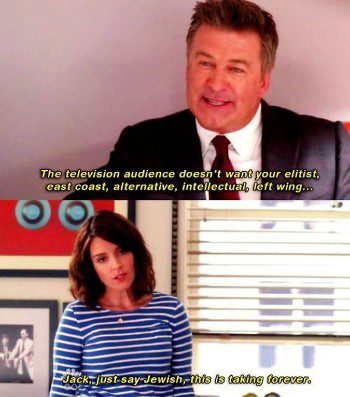 And James Carville very clearly doesn’t know either. He did not choose this word to express some meaning, but instead has simply thrown open his mind and let the ready-made phrases come crowding in. “They will construct your sentences for you – even think your thoughts for you, to a certain extent – and at need they will perform the important service of partially concealing your meaning even from yourself.”
My guess is that Carville is using “wokeness” as a rough synonym for what those in his 20th-century called “political correctness,” which is to say as a self-flattering, dismissive evasion-by-caricature of anything that a cranky old man hasn’t yet bothered to understand.
In any case, though, Carville’s invocation of “wokeness” is undeniably jargon — language used only by and within the close-knit guild of punditry and not language used, preferred, or understood by the vast majority of “ordinary people” outside of that guild. Sometimes the jargon of guilds conveys layers of complex meaning that non-experts would struggle to grasp, but sometimes — as is the case here — it conveys no meaning other than one’s exclusive membership in that exclusive guild.
What I most need to address here, though, is Carville’s use of the phrase “faculty lounge” — a phrase I’ve also used quite a bit to mean something very different from what he apparently means by it.
Carville speaks of “faculty lounge politics” as a form of sneering elitism that uses opaque language that most normal people would find off-putting and confusing. But I adopted that phrase because I admire professors and scholars — admire that they have dedicated themselves to learning and knowing things that others often don’t know.
Here’s how I described this back in 2013:
The faculty lounge is a place where teachers and professors can relax and talk amongst themselves without worrying about who might be listening in. I think that also describes the role that Books & Culture has played in American evangelicalism. … It was a place where scholars could engage one another, writing long or writing deep in a way that the general-public format of Christianity Today did not allow.
But Books & Culture also, from the outset, was a forum for something else that popular evangelical publications did not allow: candid, unapologetic discussion of taboo knowledge and subject matter that had to be tip-toed around delicately when writing for a wider evangelical audience. If you are an evangelical scholar writing for Christianity Today, there are a host of Things That Cannot Be Said without sparking a heated controversy — even though none of them is actually controversial even among very conservative evangelical scholars. Whether the topic is the authorship of the pastoral epistles, or the archaeological evidence for (i.e., against) the conquest of Canaan, or more secular subjects such as the age of the Earth, Books & Culture allowed evangelicals to discuss what we’re learning honestly and openly without having to worry about setting off the hair-pin trigger alarms of either the culture warriors or the inerrantists patrolling the pages of CT for anything they perceived to be a deviation from their factually challenged version of God’s Own Truth.
See also this 2017 post, which uses the latest N.T. Wright book on Paul to get at both the good and the bad aspects of the “evangelical faculty lounge.”
Carville and I agree that “the faculty” need to learn to communicate to laypeople and non-scholars by avoiding “jargon-y language” and “fancy college” talk. But where I’m arguing that those faculty have an obligation to share their knowledge with “ordinary people,” Carville seems to be warning them not to tell those “ordinary people” anything they don’t already know. Or think they know. And certainly not to say anything that those ordinary people wouldn’t want to hear.
Those of us who belong or have belonged to the “evangelical faculty lounge” all know and understand that the universe is 13-14 billion years old. We all read Mark Noll’s The Scandal of the Evangelical Mind and nodded in somber agreement with his dismay at the anti-intellectualism of young-Earth creationists. But when we’re speaking to a more general evangelical audience, we’ve learned to be hesitant to say too much about that lest we get bogged down in conflict and controversy or find ourselves in the crosshairs of the perpetually indignant direct-mail fundraising “ministries” always on the lookout for new scapegoats.
It’s not easy to communicate complex truths to a general audience, and it takes courage when you know that doing so will put a target on your back, but I still contend that it’s the calling of the faculty to teach and thus we are obliged to find ways to speak the same truths to the general public that we speak to one another within the safety and comfort of the faculty lounge.
Carville seems to be using the same phrase — “faculty lounge” — to argue the opposite. He’s not merely urging “the faculty” to learn “to speak the way regular people speak,” but to keep their “metropolitan, over-educated” ideas to themselves. That seems unhelpful.
Previous Post

April 27, 2021
Postcards from the class & culture wars (4.27.21)
Next Post
April 28, 2021 Safe and sound with nothing left to send
Browse Our Archives
Select a Category class warfare evangelicals Iraq Left Behind Mammon music Uncategorized
Select a Month October 2026 September 2026 August 2026 July 2026 June 2026 May 2026 April 2026 March 2026 January 2026 December 2025 November 2025 October 2025 September 2025 August 2025 July 2025 June 2025 May 2025 April 2025 March 2025 February 2025 January 2025 December 2024 November 2024 October 2024 September 2024 August 2024 July 2024 June 2024 May 2024 April 2024 March 2024 February 2024 January 2024 December 2023 November 2023 October 2023 September 2023 August 2023 July 2023 June 2023 May 2023 April 2023 March 2023 February 2023 January 2023 December 2022 November 2022 October 2022 September 2022 August 2022 July 2022 June 2022 May 2022 April 2022 March 2022 February 2022 January 2022 December 2021 November 2021 October 2021 September 2021 August 2021 July 2021 June 2021 May 2021 April 2021 March 2021 February 2021 January 2021 December 2020 November 2020 October 2020 September 2020 August 2020 July 2020 June 2020 May 2020 April 2020 March 2020 February 2020 January 2020 December 2019 November 2019 October 2019 September 2019 August 2019 July 2019 June 2019 May 2019 April 2019 March 2019 February 2019 January 2019 December 2018 November 2018 October 2018 September 2018 August 2018 July 2018 June 2018 May 2018 April 2018 March 2018 February 2018 January 2018 December 2017 November 2017 October 2017 September 2017 August 2017 July 2017 June 2017 May 2017 April 2017 March 2017 February 2017 January 2017 December 2016 November 2016 October 2016 September 2016 August 2016 July 2016 June 2016 May 2016 April 2016 March 2016 February 2016 January 2016 December 2015 November 2015 October 2015 September 2015 August 2015 July 2015 June 2015 May 2015 April 2015 March 2015 February 2015 January 2015 December 2014 November 2014 October 2014 September 2014 August 2014 July 2014 June 2014 May 2014 April 2014 March 2014 February 2014 January 2014 December 2013 November 2013 October 2013 September 2013 August 2013 July 2013 June 2013 May 2013 April 2013 March 2013 February 2013 January 2013 December 2012 November 2012 October 2012 September 2012 August 2012 July 2012 June 2012 May 2012 April 2012 March 2012 February 2012 January 2012 December 2011 November 2011 October 2011 September 2011 August 2011 July 2011 June 2011 May 2011 April 2011 March 2011 February 2011 January 2011 December 2010 November 2010 October 2010 September 2010 August 2010 July 2010 June 2010 May 2010 April 2010 March 2010 February 2010 January 2010 December 2009 November 2009 October 2009 September 2009 August 2009 July 2009 June 2009 May 2009 April 2009 March 2009 February 2009 January 2009 December 2008 November 2008 October 2008 September 2008 August 2008 July 2008 June 2008 May 2008 April 2008 March 2008 February 2008 January 2008 December 2007 November 2007 October 2007 September 2007 August 2007 July 2007 June 2007 May 2007 April 2007 March 2007 February 2007 January 2007 December 2006 November 2006 October 2006 September 2006 August 2006 July 2006 June 2006 May 2006 April 2006 March 2006 February 2006 January 2006 December 2005 November 2005 October 2005 September 2005 August 2005 July 2005 June 2005 May 2005 April 2005 March 2005 February 2005 January 2005 December 2004 November 2004 October 2004 September 2004 August 2004 July 2004 June 2004 May 2004 April 2004 March 2004 February 2004 January 2004 December 2003 November 2003 October 2003 September 2003
Follow Us!
TAKE THE
Religious Wisdom Quiz
What language was most of the Old Testament originally written in?
Select your answer to see how you score.
Aramaic Latin Hebrew Greek
Related posts from slacktivist

Is this the right room for an argument?

The Amish are not 'Evangelicals.' They're Amish.

The lumpers, the splitters, and me

'Is it right on red or left on...
TRENDING AT PATHEOS Progressive Christian

Letters on Living the Faith by C.S. Lewis
Most of us met C.S. Lewis as a public intellectual. Mere Christianity....

When Halloween Unmasks Married Hearts
Written by Dr. David K. Ewen from Eternal Truth Bible College Behind...

Aristotle. He’s been called the father of logic, the father of the...

Methodist Central Hall and Westminster Abbey
Situated on the same square is Methodist Central Hall and Westminster Abbey. ...

57th Dove Awards Honor Dolly Parton, Crown New...
On gospel music’s biggest night, the 57th annual GMA Dove Awards honored...

The First Eucharistic Controversy: Christ’s Real Presence
For Catholics, the Eucharist is the source and summit of the Christian...
view all Progressive Christian blogs
Ad-Free & Subscriber Log-In Subscription Support
- About Us
- 2026 Calendar
- Videos
- Podcasts
- Library of World Religions
- Faith In Media Tracker
- Advertise With Us
- Write for Us
- Privacy Policy
- Terms of Service
- Do Not Sell My Data
- Contact Us
- Radiant Digital
- Manage Newsletter Subscriptions
- Unsubscribe From Notifications
- Sitemap
Copyright 2008-2026, Patheos. All rights reserved.
Subscription Support Ad-Free & Subscriber Log-In
Follow Patheos