
BuddhistCatholicContemplativeEvangelicalGeneral ChristianHinduJewishLatter-day SaintMuslimNew VisionsProgressive Christian
Beliefs
- Buddhist
- Catholic
- Contemplative
- Evangelical
- General Christian
- Hindu
- Jewish
- Latter-day Saint
- More Voices
- Muslim
- New Visions
- Pagan
- Progressive Christian
Topics
- Religion News
- Food and Religion
- Sports and Religion
- Religious Art
- Religious Music and Entertainment
- Religious Events
- History and Religion
- Style and Religion
- Politics and Religion
- Women in Religion
- Recreation Outdoors and Religion
- Business Finance and Religion
- Careers Workplace and Religion
- Education and Religion
- Family Parenting and Religion
- Health Fitness and Religion
- Home and Religion
- Relationships and Religion
- Technology and Religion
- Travel and Religion
Columnists
- Buddhist Columnists
- Business Finance and Religion Columnists
- Careers Workplace and Religion Columnists
- Catholic Columnists
- Contemplative Columnists
- Education and Religion Columnists
- Evangelists Columnists
- Family Parenting and Religion Columnists
- General Christian Columnists
- Health Fitness and Religion Columnists
- Hindu Columnists
- History and Religion Columnists
- Home and Religion Columnists
- Jewish Columnists
- More Voices Columnists
- Latter Day Columnists
- Muslim Columnists
- New Visions Columnists
- Nonreligious Columnists
- Pagan Columnists
- Politics and Religion Columnists
- Progressive Columnists
- Recreation Outdoors and Religion Columnists
- Relationships and Religion Columnists
- Religion News Columnists
- Religious Art Columnists
- Religious Events Columnists
- Religious Music and Entertainment Columnists
- Sports and Religion Columnists
- Style and Religion Columnists
- Technology and Religion Columnists
- Travel and Religion Columnists
- Women in Religion Columnists
Resource Library
- 2026 Calendar
- Library of World Religions
- The 100 Most Holy Places on Earth
- Patheos Answers
- Podcasts
- Videos
- Faith Leaders Database
- Anglican Episcopalian
- Bahai
- Baptist
- Buddhism
- Christianity
- Confucianism
- Eastern Orthodoxy
- Hinduism
- Holiness and Pentecostal
- ISKCON
- Islam
- Judaism
- Lutheran
- Methodist
- The Church of Jesus Christ of Latter-day Saints
- New Age
- Paganism
- Presbytarian and Reformed
- Protestantism
- Religion Behind the Scenes
- Roman Catholic
- Scientology
- Shia Islam
- Sikhism
- Sufism
- Sunni Islam
- Taoism
- Zen
- See all religions
Research Tools
 Ad-Free & Subscriber Log-In Subscription Support
Ad-Free & Subscriber Log-In Subscription Support
Follow Patheos 

- Trending:
- Forgiveness
- |
- Marriage
- |
- Consciousness
- |
- Death Penalty
- |
- Election
- |
- Halloween

- Home
- Progressive Christian
- Ravi and Joss and John Howard Yoder
Ravi and Joss and John Howard Yoder
Last updated on: February 20, 2021 at 4:35 pm by Fred Clark
Ravi and Joss and John Howard Yoder 2021-02-20T16:35:38-05:00 Fred Clark
Patheos Explore the world's faith through different perspectives on religion and spirituality! Patheos has the views of the prevalent religions and spiritualities of the world.
This RNS commentary on the Ravi Zacharias scandal — “Ministry leaders’ rush to empathize with Ravi Zacharias is beyond alarming” — gets at a key point in the response to so many church/ministry scandals. Kyle J. Howard writes:
Instead of condemning the perverted secret life of Ravi Zacharias and empathizing with his victims, many leaders rushed to express a degree of identification and even empathy with Zacharias. From pastors to seminary professors, many declared that apart from the grace of God, they, too, would be like Zacharias. Some of these leaders even chastised others for not more readily identifying with Zacharias. …
A healthy response from someone who has been made aware of abuse is not a consideration of how they could be like the abuser, but rather a connection with the abused.
A healthy empathetic person considers the experience and pain of the victim as an image-bearer of God and may connect with an individual on a more personal level, such as, “this could’ve been me, my spouse, my child or other relatives.”
It is deeply troubling to see so many men, especially in ministry leadership, find a more immediate connection with abusers rather than the abused.
The rest of Howard’s piece turns to a longer discussion aimed at that audience of “men, especially in ministry leadership,” attempting to persuade them through chapter-and-verse scriptural arguments and a discussion of the doctrine of sanctification. But this is the compelling point: The instinctive “connection with abusers rather than the abused” as the primary response of these men.
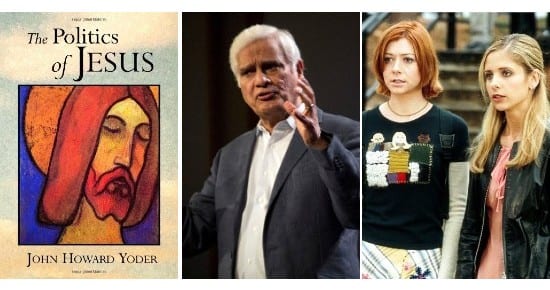
It’s hard not to suspect that the men responding in this way are inadvertently telling on themselves. It comes across as though they’re saying, “I don’t want you to be harshly judgmental of Ravi Zacharias now that you’ve learned about his years of predatory sexual and spiritual abuse because I don’t want you to be harshly judgmental of me should you ever learn about my years of predatory sexual and spiritual abuse.”
Or as Howard says, at best, these men are telling us that they view life as a daily struggle in which only the intervening grace of God keeps them from following their own inclination to start siphoning off church funds to pay for their own secret indentured concubines. That’s not “humility,” that’s a confession.
In any case, most people are not “ministry leaders” or clergy or the “president/founder” of some eponymous spiritual empire, so most of us aren’t going to respond to the sordid revelations about Ravi Zacharias with such men’s instinctive impulse to defend a colleague and fellow-member of that exclusive club.
What most of us are thinking will be, instead, something like what Tanya Marlow writes about here: “But his books are still good, right? – 5 things Christians must stop saying about sexual abusers.”
This is a potent little essay full of fierce wisdom and truth. Marlow sets the tone right at the beginning with this clarifying statement:
Pop quiz:
If you have just found out that a famous Christian leader has been systematically sexually and spiritually abusing women throughout his entire ministry, should you be defending:
a) The sexual predator, or
b) His books?The answer, of course, is only this: the women. Nothing else.
But that’s easy for me to agree with in the case of Ravi Zacharias. He wrote more than 30 popular books which were read and admired by millions of people, but I wasn’t one of those people. I’ve never read any of those books and I’ve never been shaped or influenced in any way by Zacharias’ thinking or teaching. I’ve never even cared much for or about the whole realm of so-called “apologetics,” so I don’t even have to worry about the reverberations of his scandalous double-life in that field.
I don’t have any stake in defending Zacharias or his books or his body of work. If the books of Ravi Zacharias quietly blinked out of existence, that wouldn’t affect me at all because those books have not, in any way, affected who I think I am or how I became who I am.
And because I have nothing at stake, it’s easy for me to nod in agreement, seconding Tanya Marlow’s emphatic “No” in response to that question: “But his books are still good, right?”
That gets much, much harder and much more complicated, though, when it comes to the books and creations of other abusers whose works I have enjoyed, and learned from, and been influenced by. Forget Ravi Zacharias. What about John Howard Yoder?
I have a copy of Yoder’s The Politics of Jesus on my bookshelf, heavily underlined and annotated with marginalia that reflects the significance of the many ways that book challenged and influenced and inspired me. It was an important book to me. Reading and re-reading it shaped decisions that shaped the direction of my life. And I don’t know what to do with that, because while I had no idea at the time I was reading and underlining and wrestling with the profound ideas expressed in that book, it turns out that John Howard Yoder was a serial rapist and a deeply twisted spiritual abuser. On the page, he seemed to be a fearlessly honest theologian determined to follow the hard truths of the gospel of the kingdom wherever it led, but off the page he was a monstrous predator, like some kind of Buffy villain come to life.
That analogy comes naturally for me because I loved that show. It didn’t affect me in the same way or on the same levels that Yoder’s once-classic books did, but I’ve spent hours absorbing and revisiting stories about Buffy Anne Summers as she saved the world, a lot. My dog is named “Willow.” So it pains me to learn that Joss Whedon, the creator of that show and the teller of many other stories I’ve enjoyed and absorbed, also turns out to have been a serial philanderer, a bully, and a coercive, abusive jerk to the women he surrounded himself with.
What do I do about that?
I agree with Tanya Marlow that it’s wholly inadequate to just say: “Sure, we can now condemn the abuser. But we can still enjoy, quote and revere his words because those are really good.” She describes this response further:
This one is so insidious and pervasive that even N.T. Wright vocalized this sentiment in a much-praised interview with Justin Brierly about Jean Vanier … It’s the logic that says, “his acts were bad, but his words were good, so God can use his words and we can continue to use his words, even though they come from an imperfect source.”
… I don’t want to downplay the damage it does to ‘secondary victims’, who came to faith because of Zacharias or started work with disabled people because of Vanier. It can involve a tremendous amount of untangling and deconstruction when Christians who changed our lives turn out to be abusive of others. But however hard that may be, it is not as hard as the direct survivors of abuse, and our duty is to support them rather than avoid the pain of our own disappointment.
What does it say to survivors of abuse everywhere when the church quotes from sexual predators as authorities on human life or the things of God?
What does it say to the whole world that Christian academics will continue to read and promote the works of sexual predators as necessary as ‘important theologians’ – as though we can offer no better theology than that written by rapists? Do we hear how this sounds?
That the words of a secret abuser have helped people in the past does not mean we should continue to use those words once the abuse has been discovered.
But the challenge of this “untangling and deconstruction” may be even greater than she describes. What she goes on to say here is true, but understates the problem:
It is inconvenient to find another theologian who has said basically the same thing as someone else in a slightly less pithy phrase, but there will be one.
The inconvenience of having to change our lectures, alter our talks, the sadness of having to put aside books that have meant a lot to us and the deep disappointment of learning that teachers we revered were wolves in sheep’s clothing is significant – but it is absolutely nothing in comparison to the stab of pain that survivors have to carry each and every time they hear a sexual predator revered in the church or academe.
That slips back into the logic of “his acts were bad, but his words were good,” assuming that those words and ideas can easily be abstracted from the actions, and that those words and ideas were not in any meaningful way shaped by or tangled up with the ideas that caused those actions. It won’t do for me to simply abandon Yoder and find some substitute writer “who has said basically the same thing.” I need to explore how that basic thing was the product of the same mind that spent decades preying on women.
Maybe Yoder was the kind of sociopath who was capable of completely compartmentalizing his writing from his personal life. Maybe there are aspects of Jean Vanier’s inspiring ministry for outcasts that can be easily disentangled from his grooming of and preying on those same outcasts. Maybe it’s possible to segregate out some nuggets of argument from Ravi Zacharias that you can retain without any worry that those arguments will lead you where they led him. But maybe not and maybe not and maybe not.
“While I am proud to have my name associated with Buffy Summers,” Sarah Michelle Gellar wrote, “I don’t want to be forever associated with the name Joss Whedon.” That’s another good distinction that’s a lot more complicated than it might seem at first.
The “untangling and deconstruction” of Buffy is off to a promising start with pieces like this one, from Alison Stine, “An abusive reckoning for Buffy, a badass, occasionally feminist show created by a monstrous man,” or this one, from Marina Watanabe, “Bad Blood: The Quiet Misogyny of Buffy the Vampire Slayer.” Pieces like that help us start dealing with questions like whether what we took from Nice Guy Xander and Angel/Angelus and (maybe especially) Warren Mears was the same as what Whedon intended for them to mean, and just how different those two things are or can be.
But it’s not a simple problem. I can’t just declare that, forthwith, who I am and how I am shall be wholly untainted by any previous association with John Howard Yoder or Joss Whedon because who I am and how I am is someone shaped, in part, by my interaction with The Politics of Jesus, and with The Fullness of Christ, and with Buffy and Firefly.
If we cannot say “But the books are still good, right?” — and we can’t — then those of us influenced by those books can’t be sure that we’re all good either. This will take work.
It’s a project. It’s similar to what I half-jokingly call “The 1611 Project” — the long and difficult work of disentangling English-speaking Bible Christianity from the white supremacy that has fundamentally shaped it for as long as there has ever been such a thing as English-speaking Bible Christianity. It’s a tearing-down-and-rebuilding process. It takes time.
Test everything; hold on to the good.
Previous Post

February 17, 2021
Pitchers and catchers reported today
Next Post
February 23, 2021 You can't tell the rabbit from the hat
Browse Our Archives
Select a Category class warfare evangelicals Iraq Left Behind Mammon music Uncategorized
Select a Month October 2026 September 2026 August 2026 July 2026 June 2026 May 2026 April 2026 March 2026 January 2026 December 2025 November 2025 October 2025 September 2025 August 2025 July 2025 June 2025 May 2025 April 2025 March 2025 February 2025 January 2025 December 2024 November 2024 October 2024 September 2024 August 2024 July 2024 June 2024 May 2024 April 2024 March 2024 February 2024 January 2024 December 2023 November 2023 October 2023 September 2023 August 2023 July 2023 June 2023 May 2023 April 2023 March 2023 February 2023 January 2023 December 2022 November 2022 October 2022 September 2022 August 2022 July 2022 June 2022 May 2022 April 2022 March 2022 February 2022 January 2022 December 2021 November 2021 October 2021 September 2021 August 2021 July 2021 June 2021 May 2021 April 2021 March 2021 February 2021 January 2021 December 2020 November 2020 October 2020 September 2020 August 2020 July 2020 June 2020 May 2020 April 2020 March 2020 February 2020 January 2020 December 2019 November 2019 October 2019 September 2019 August 2019 July 2019 June 2019 May 2019 April 2019 March 2019 February 2019 January 2019 December 2018 November 2018 October 2018 September 2018 August 2018 July 2018 June 2018 May 2018 April 2018 March 2018 February 2018 January 2018 December 2017 November 2017 October 2017 September 2017 August 2017 July 2017 June 2017 May 2017 April 2017 March 2017 February 2017 January 2017 December 2016 November 2016 October 2016 September 2016 August 2016 July 2016 June 2016 May 2016 April 2016 March 2016 February 2016 January 2016 December 2015 November 2015 October 2015 September 2015 August 2015 July 2015 June 2015 May 2015 April 2015 March 2015 February 2015 January 2015 December 2014 November 2014 October 2014 September 2014 August 2014 July 2014 June 2014 May 2014 April 2014 March 2014 February 2014 January 2014 December 2013 November 2013 October 2013 September 2013 August 2013 July 2013 June 2013 May 2013 April 2013 March 2013 February 2013 January 2013 December 2012 November 2012 October 2012 September 2012 August 2012 July 2012 June 2012 May 2012 April 2012 March 2012 February 2012 January 2012 December 2011 November 2011 October 2011 September 2011 August 2011 July 2011 June 2011 May 2011 April 2011 March 2011 February 2011 January 2011 December 2010 November 2010 October 2010 September 2010 August 2010 July 2010 June 2010 May 2010 April 2010 March 2010 February 2010 January 2010 December 2009 November 2009 October 2009 September 2009 August 2009 July 2009 June 2009 May 2009 April 2009 March 2009 February 2009 January 2009 December 2008 November 2008 October 2008 September 2008 August 2008 July 2008 June 2008 May 2008 April 2008 March 2008 February 2008 January 2008 December 2007 November 2007 October 2007 September 2007 August 2007 July 2007 June 2007 May 2007 April 2007 March 2007 February 2007 January 2007 December 2006 November 2006 October 2006 September 2006 August 2006 July 2006 June 2006 May 2006 April 2006 March 2006 February 2006 January 2006 December 2005 November 2005 October 2005 September 2005 August 2005 July 2005 June 2005 May 2005 April 2005 March 2005 February 2005 January 2005 December 2004 November 2004 October 2004 September 2004 August 2004 July 2004 June 2004 May 2004 April 2004 March 2004 February 2004 January 2004 December 2003 November 2003 October 2003 September 2003
Follow Us!
TAKE THE
Religious Wisdom Quiz
True or False: 2 John is addressed to Gaius, the beloved friend.
Select your answer to see how you score.
TRUE FALSE
Related posts from slacktivist

Maybe they should post the 10 Commandments in...

An artifact from the Before Time

The problem with vulgar racism is not the...
TRENDING AT PATHEOS Progressive Christian

Nearly every morning, I make the drive to Detroit with my high-school-age...

The Real AI Story Is Adoption Without Trust
Artificial intelligence has crossed a political threshold. It is no longer a...

A new article, written by Jeff Lindsay and Gale L. Pooley,...

Swimfan: Forgotten Aughts Pleasures
This is a recovery effort. In 2002, My Big Fat Greek Wedding...

Top Three Anti-Catholic Lies About Catholicism
This is my initial transcript for the video, "THE 3 WORST...

Pope Leo Celebrates Mass for Nurses & Docs...
I don't have any idea how he did it, but Pope Leo...
view all Progressive Christian blogs
Ad-Free & Subscriber Log-In Subscription Support
- About Us
- 2026 Calendar
- Videos
- Podcasts
- Library of World Religions
- Faith In Media Tracker
- Advertise With Us
- Write for Us
- Privacy Policy
- Terms of Service
- Do Not Sell My Data
- Contact Us
- Radiant Digital
- Manage Newsletter Subscriptions
- Unsubscribe From Notifications
- Sitemap
Copyright 2008-2026, Patheos. All rights reserved.
Subscription Support Ad-Free & Subscriber Log-In
Follow Patheos