
BuddhistCatholicContemplativeEvangelicalGeneral ChristianHinduJewishLatter-day SaintMuslimNew VisionsProgressive Christian
Beliefs
- Buddhist
- Catholic
- Contemplative
- Evangelical
- General Christian
- Hindu
- Jewish
- Latter-day Saint
- More Voices
- Muslim
- New Visions
- Pagan
- Progressive Christian
Topics
- Religion News
- Food and Religion
- Sports and Religion
- Religious Art
- Religious Music and Entertainment
- Religious Events
- History and Religion
- Style and Religion
- Politics and Religion
- Women in Religion
- Recreation Outdoors and Religion
- Business Finance and Religion
- Careers Workplace and Religion
- Education and Religion
- Family Parenting and Religion
- Health Fitness and Religion
- Home and Religion
- Relationships and Religion
- Technology and Religion
- Travel and Religion
Columnists
- Buddhist Columnists
- Business Finance and Religion Columnists
- Careers Workplace and Religion Columnists
- Catholic Columnists
- Contemplative Columnists
- Education and Religion Columnists
- Evangelists Columnists
- Family Parenting and Religion Columnists
- General Christian Columnists
- Health Fitness and Religion Columnists
- Hindu Columnists
- History and Religion Columnists
- Home and Religion Columnists
- Jewish Columnists
- More Voices Columnists
- Latter Day Columnists
- Muslim Columnists
- New Visions Columnists
- Nonreligious Columnists
- Pagan Columnists
- Politics and Religion Columnists
- Progressive Columnists
- Recreation Outdoors and Religion Columnists
- Relationships and Religion Columnists
- Religion News Columnists
- Religious Art Columnists
- Religious Events Columnists
- Religious Music and Entertainment Columnists
- Sports and Religion Columnists
- Style and Religion Columnists
- Technology and Religion Columnists
- Travel and Religion Columnists
- Women in Religion Columnists
Resource Library
- 2026 Calendar
- Library of World Religions
- The 100 Most Holy Places on Earth
- Patheos Answers
- Podcasts
- Videos
- Faith Leaders Database
- Anglican Episcopalian
- Bahai
- Baptist
- Buddhism
- Christianity
- Confucianism
- Eastern Orthodoxy
- Hinduism
- Holiness and Pentecostal
- ISKCON
- Islam
- Judaism
- Lutheran
- Methodist
- The Church of Jesus Christ of Latter-day Saints
- New Age
- Paganism
- Presbytarian and Reformed
- Protestantism
- Religion Behind the Scenes
- Roman Catholic
- Scientology
- Shia Islam
- Sikhism
- Sufism
- Sunni Islam
- Taoism
- Zen
- See all religions
Research Tools
 Ad-Free & Subscriber Log-In Subscription Support
Ad-Free & Subscriber Log-In Subscription Support
Follow Patheos 

- Trending:
- Forgiveness
- |
- Marriage
- |
- Consciousness
- |
- Death Penalty
- |
- Election
- |
- Halloween

- Home
- Progressive Christian
- The night before emancipation
The night before emancipation
Last updated on: June 19, 2020 at 5:43 pm by Fred Clark
The night before emancipation 2020-06-19T17:43:15-04:00 Fred Clark
Patheos Explore the world's faith through different perspectives on religion and spirituality! Patheos has the views of the prevalent religions and spiritualities of the world.
Years ago, I had a part-time job as a clerk for the American Baptist Foreign Mission Society in Valley Forge. This was, mostly, a long room filled with rows and rows of battleship-gray file cabinets, and they were filled with treasure.
The mission society archives went back to Adoniram Judson, including the hand-written correspondence between him and William Carey. I’ve previously described some of what was in those cabinets as:
The minutes from the mission society meetings of 1844 and 1845, detailing the Baptist’s great schism over slavery; Calista Vinton’s letters from the early 1800s explaining that God had called her to preach and that therefore no man had the authority to tell her otherwise thankyouverymuch; testimonies from witnesses to the atrocities under King Leopold in the Congo; abolitionist newspapers from the 1850s; a first edition of the first English-Burmese dictionary; documents relating to the founding of Liberia; a report on local missionaries’ investigation of a resurrection attributed to Simon Kimbangu. And then there were the drawers filled with photographs, daguerrotypes, and the uncategorized figurines representing domestic gods and goddesses.
The files were a bit haphazard — some filed by date, some by country, some by individual, some by finance. I spent one day putting together the various crash reports of a single bush-pilot missionary from the early 20th century. He crash-landed at least six times, that we know of.
And while we worked to sift through nearly 200 years of history, history kept arriving. We were receiving regular updates, for example, from the American Baptist missionary doctors and nurses who were at the epicenter of an ebola outbreak in what was then called Zaire (now the Democratic Republic of the Congo). The job had its share of mundane gruntwork, like painstakingly de-stapling folders full of handwritten letters from the 1890s, but on the whole it was a pretty cool gig.
I want to again share here one of my favorite treasures from those wonderful archives. This is an entry from the diary of Nathan Brown. He began his missionary career in the 1830s in India, where he translated the New Testament into Assamese and founded a missionary press that championed the language, publishing a host of nonreligious books by local writers as well. After his wife died, he returned to America to join his brother’s work as an abolitionist preacher. He became the editor of an abolitionist newspaper and published a host of harsh satires calling for the end of slavery. After the war, in 1868, Brown married a widowed missionary who had spent the previous decades working in Africa. They were both now in their 60s, but they decided to sail for Japan where he immersed himself in the language, founded a church, and founded another missionary press like the one he’d established in Assam.
The diary entry that follows is from Brown’s abolitionist period here in the U.S. He’d been part of a group of clergy that had written a “memorial” addressed to President Abraham Lincoln, urging him to declare immediate emancipation as both a moral and a military imperative. Thanks to Sen. James Harlan of Iowa, one of the other preachers had arranged a meeting where they might present this memorial to Lincoln himself, in person.
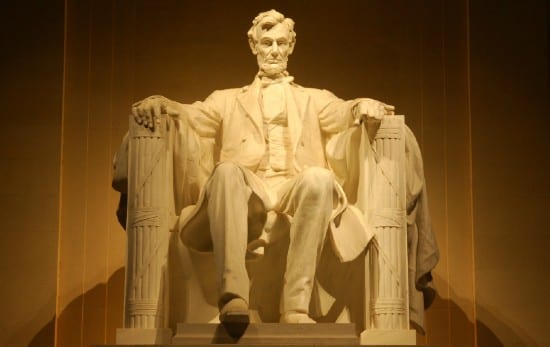
“… the President stretched out his legs across the fireplace, leaning, or rather lying back in his chair, in such a posture as a tired man or an invalid would assume in order to rest.”
So Brown and two of his colleagues, then in Philadelphia, rode all night to knock on the door of the White House in the hopes of preaching one more abolitionist sermon directly to the president himself. What follows is Brown’s account of that meeting.
I’ve shared this before, but I’m sharing it again, on Juneteenth, because I love everything about this. I love the contrast between the earnest righteousness of the Rev. Dr. Cheever and the mordant sensibility of the president. Unlike the idealistic ministers, Lincoln felt the weight of responsibility for outcomes and consequences. They assured him that righteous actions would ensure righteous outcomes, but he couldn’t share their confidence that the world worked quite so neatly as all that. From what he’d seen, he was sure at least that America didn’t work like that. But — at least in Nathan Brown’s eyes — he seemed to wish that it did.
Anyway, this is long, but well worth reading in full. We weren’t there, in the White House on the eve of the Emancipation Proclamation. Nathan Brown was, and here’s what his shrewd eyes saw.
Dec. 30, 1862. Dr. Cheever and Mr. Goodell sent in urging me to go on to Washington with them, as a telegram had been received from Senator Harlan, that an interview could doubtless be obtained, and that it was important for the Committee to come on and present the memorial – that adopted at the meeting of ministers and others at the Church of the Puritans.
I declined going, Bro. Duer being absent. Besides, I thought the time had passed, the Proclamation was doubtless settled and finished by this time. Dr. Cheever came in himself, a little after noon, and was very pressing, so I agreed to go.
We started from the Jersey ferry, at six o’clock. Rode all night and reached Washington in the morning. Found Senator Harlan at the National Hotel. Went up to the White House in the afternoon, Senator Harlan conducting us, but could not get an interview. The Cabinet were in session.
About six in the evening went up again. Senator H. seated us in an ante-chamber, and went to ascertain from the Private Secretary if we could be admitted. After being gone fifteen or twenty minutes, he came giving the intelligence that the President could give us but five minutes, as he had agreed to meet the West Virginia deputation, at 7, and it was now very near that hour. So we followed the Senator to the President’s room. We were ushered in where the tall man stood up near the fire, apparently waiting to receive us. Were introduced and shook hands. Mr. Harlan excused himself and passed out of the room.
“Well, gentlemen, be seated.”
The President sat down in a large chair near the fireplace, Dr. Cheever in a chair on his right hand, near the table and under the gas, Mr. Goodell in another chair next him, while I took the big chair opposite the President, at the other end of the fire. Dr. Cheever got out the memorial and began to introduce his subject, explaining our object – was afraid the memorial was too long to read. (It wanted then just five minutes of seven by the clock that stood on the mantel.)
“How many pages are there?”
Dr. Cheever began to turn them over and count – the length was formidable. He did not venture to tell him how many pages there were.
“Well, read on; if it is too long I’ll tell you when to stop.”
The doctor began: the President stretched out his legs across the fireplace, leaning, or rather lying back in his chair, in such a posture as a tired man or an invalid would assume in order to rest. He fixed his eyes upon me mechanically, and did not, as far as I could judge, take them off, except in a single instance, during the whole reading. In order that I might not appear to be watching the effect of the reading upon him, I directed my eyes to the reader, looking up but seldom towards the President. He listened with imperturbable attention; the memorial was read by Dr. Cheever in a somewhat rapid manner, not with the terrible emphasis with which he had read it in his own church – that of course, would have been to insult the President. The soft unpassioned tone did not, however, take away from the edge of its severity – but the President showed no emotion. Only once did he interrupt that part of the memorial which said that if emancipation was a military necessity in any States, it was in all.
“That’s a non sequitur,” said he, hurriedly, raising himself up in his chair and turning his look upon Dr. Cheever – “that’s a non sequitur.” (The President pronounced it as if written “sekkitur.”)
Dr. Cheever thought the statement was correct, and the President dropping the subject, allowed the reading to go on till the memorial was done, and Dr. Cheever began to follow it up with further remarks. At length a pause gave the President opportunity to begin. The sleepy eyes opened, the dark complexioned face assumed an expression of interest; a consciousness of mental power, perhaps of superiority, gleaned from the eye, the wide mouth disclosed a seemingly half-sarcastic smile, and if I could read the countenance, it said, “Now, gentlemen, I have borne a pretty severe lecture from you, and you don’t get off without something of the same sort yourselves.” His first words were:
“Well, gentlemen, if you could prove to me one half of what you have read in that memorial, I should be a happy man!”
He then went on to show that the wonderful effects which the memorial predicted would follow the proclamation, in ending the war, were imaginary and without any foundation.
“I know it is not so,” he said with much emphasis. “You have addressed me a letter through Mr. Greeley, in behalf of twenty millions, assuring me that as soon as I issued the proclamation, the whole country would rally round me, and thousands of volunteers would rush into the ranks. The proclamation was issued, and see what the result was in the elections; the opposition gaining strength and carrying the majority against us. Instead of the proclamation having brought support to the administration, it has done the reverse.”
Mr. Goodell and Dr. Cheever remarked that there was another cause, “that the proclamation was not a proclamation of immediate emancipation, but a postponement of it.”
“Yes, I know that is the reason you give for its failure.”
According to previous agreement Mr. Goodell and myself left it chiefly to Dr. Cheever to carry on the argument, knowing that the time was so limited. The President said:
“You state in the memorial that the whole country would be united on emancipation, that they would be unanimous. How could we believe that such men as were leading the opposition in New York city, would be unanimous in approving emancipation?”
Dr. Cheever contended that it would have been so if the blow had been struck at once, instead of deferring it three months. “Your enemies in New York city, even the Herald and Fernando Wood would have quailed under it.”
The President said one or two victories would do a great deal more towards disarming the Herald of its opposition than any proclamation.
While the discussion was going on, one of the President’s children, (Tad) a smart little boy, six or eight years old, came bouncing into the room; “You must go away, my son, you can come and see pa by and by.”
The President said the Committee were unwilling to allow him to be the judge of what would be best; their memorial assumed that they knew better than he did, what measures would save the country.
“You come to me as God’s ministers, and you are positive that you know exactly what God’s will is. You tell me that slavery is a sin; but other’s of God’s ministers say the opposite – which am I to believe? You assume that you only have the knowledge of God’s will.”
“No, Mr. President,” said Dr. Cheever, “we only refer to God’s word, which speaks plainly on this point. The Golden Rule is sufficient.”
The President said to Dr. Cheever, that he presumed he was the writer of the memorial. Mr. Goodell said that the other members of the Committee had a part in it.
“Well, Dr. Cheever, I must say that you are a very illogical reasoner, at least, that is my opinion – ha! ha! ha!” The President seemed to have a habit, whenever he said anything sharp or sarcastic, of finishing it up with a sort of forced, mechanical laugh – a pretty good imitation, too, of a right hearty, spontaneous laugh – to show that he was in good humor. This made his sarcasm appear not at all offensive, but rather as good natured pleasantry, and Dr. Cheever could not but thank him for his frankness. Several times his laugh was so earnest, that, mingled with his wit, it succeeded in bringing the whole Committee into a tolerably sympathetic he-haw.
The President said all his convictions and feelings were against slavery. “But,”? said he, “I am not so certain that God’s views and feelings in respect to it are the same as mine. If his feelings were like mine, how could he have permitted it to remain so long? I am obliged to believe that God may not, after all, look upon it in the same light as I do.”
The Committee answered that this would prove too much – it would excuse any crime which God permits, adultery, murder, treason. Does God’s failure to interpose, relieve the government of its obligation to punish these crimes?
As the time wore away, the West Virginia Deputation became impatient, sand the Private Secretary came in to say they had come. “Tell them to wait a little,” said the President, and went on with his conversation.
“Your memorial represents that a decree of emancipation would produce a transfiguration – but I have no evidence that it would produce a transfiguration. I do not know that the British decree of emancipation produced any such transfiguration in England.”
Dr. Cheever: “Was there not a transfiguration in the British West Indies? Nor in the Sandwich Islands?”
The President said the idea seemed to be that there would be something miraculous in the effect of emancipation, but he had no evidence of miraculous events in our times. The memorial attributed our military defeats to our generals who did not favor emancipation, and predicted that if other generals were in command, of the same sentiments on abolition as the Committee, we should be sure of victory. He supposed, as a general thing, an officer who was hearty in the work he was doing, would do rather better than one who was not, but when we looked at the facts, he did not see that the generals who were in favor with that part of the community which we represented had done much better than others. Some of the generals of this class had done pretty well, and some had not done so well. He did not see that there was on the whole much difference. Such generals as Reno, Stevens and Kearney had been denounced as pro-slavery, and abused as if they were traitors, but there was this proof of their patriotism, that they had given their lives for their country.
The President did not appear to be at all sanguine as to the results of emancipation. He said, however, that the experiment would be commenced to-morrow on a scale of some two or three millions, and if it succeeded with them as the memorialists anticipated, they could then with propriety call on him to emancipate the rest. He thought the proclamation would do something; that it was, on the whole, the best course that could now be pursued, and therefore he had adopted the measure.
The Committee urged upon the President the duty of carrying out emancipation as a measure of justice; and not as a mere military necessity. He considered that he had no power to do it except as a military measure; he would be glad to have slavery done away with, but he knew no authority by which he could interfere, except as a measure of war.
Dr. Cheever appealed to him whether if one of those children of his should be kidnapped and carried into bondage, he would not feel that there was authority in the National Government to rescue and restore them to their parents? This seemed to affect the President, it was a solemn question. He hesitated for a moment, then said hurriedly, as near as I could make out the expression, that it was a case not provided for.
The clock had now reached about twenty minutes to eight, and the topics seemed to have been nearly exhausted, Dr. Cheever having, as chief spokesman, well sustained the argument. Thinking that we had held the President quite as long as we could, with propriety, I remarked that perhaps we ought not to trespass upon his time further, so we rose to go. He rose and continued his talking – we thanked him for his frankness and candor. He seemed in perfect good-nature, and not at all anxious to hurry us off – made several pleasant remarks, and wound up with an anecdote to show that proclaiming slaves free did not make them free.
I told him we were very thankful for the proclamation, and I hoped it would not prove a mere proclamation, but that it would be fully carried into effect. Mr. Goodell said a few words on the importance of having generals who were heartily in favor of carrying it into execution, and we took our leave, the President shaking hands with us as we left.
The next morning everybody was on tiptoe to get a sight of the morning papers, as it was understood they were to contain it, but the document did not appear till three o’clock in the afternoon, and when it did appear it contained the extraordinary declaration that emancipation was an act of “justice!” Was that word added subsequently to the reading of the memorial, and the discussion of this subject with the Committee?
P.S. It appears that the word was added by Mr. Chase with the President’s acquiescence.
Previous Post

June 16, 2020
When did an ambulance become an ambulance?
Next Post
June 23, 2020 'Shake Shack' who?
Browse Our Archives
Select a Category class warfare evangelicals Iraq Left Behind Mammon music Uncategorized
Select a Month October 2026 September 2026 August 2026 July 2026 June 2026 May 2026 April 2026 March 2026 January 2026 December 2025 November 2025 October 2025 September 2025 August 2025 July 2025 June 2025 May 2025 April 2025 March 2025 February 2025 January 2025 December 2024 November 2024 October 2024 September 2024 August 2024 July 2024 June 2024 May 2024 April 2024 March 2024 February 2024 January 2024 December 2023 November 2023 October 2023 September 2023 August 2023 July 2023 June 2023 May 2023 April 2023 March 2023 February 2023 January 2023 December 2022 November 2022 October 2022 September 2022 August 2022 July 2022 June 2022 May 2022 April 2022 March 2022 February 2022 January 2022 December 2021 November 2021 October 2021 September 2021 August 2021 July 2021 June 2021 May 2021 April 2021 March 2021 February 2021 January 2021 December 2020 November 2020 October 2020 September 2020 August 2020 July 2020 June 2020 May 2020 April 2020 March 2020 February 2020 January 2020 December 2019 November 2019 October 2019 September 2019 August 2019 July 2019 June 2019 May 2019 April 2019 March 2019 February 2019 January 2019 December 2018 November 2018 October 2018 September 2018 August 2018 July 2018 June 2018 May 2018 April 2018 March 2018 February 2018 January 2018 December 2017 November 2017 October 2017 September 2017 August 2017 July 2017 June 2017 May 2017 April 2017 March 2017 February 2017 January 2017 December 2016 November 2016 October 2016 September 2016 August 2016 July 2016 June 2016 May 2016 April 2016 March 2016 February 2016 January 2016 December 2015 November 2015 October 2015 September 2015 August 2015 July 2015 June 2015 May 2015 April 2015 March 2015 February 2015 January 2015 December 2014 November 2014 October 2014 September 2014 August 2014 July 2014 June 2014 May 2014 April 2014 March 2014 February 2014 January 2014 December 2013 November 2013 October 2013 September 2013 August 2013 July 2013 June 2013 May 2013 April 2013 March 2013 February 2013 January 2013 December 2012 November 2012 October 2012 September 2012 August 2012 July 2012 June 2012 May 2012 April 2012 March 2012 February 2012 January 2012 December 2011 November 2011 October 2011 September 2011 August 2011 July 2011 June 2011 May 2011 April 2011 March 2011 February 2011 January 2011 December 2010 November 2010 October 2010 September 2010 August 2010 July 2010 June 2010 May 2010 April 2010 March 2010 February 2010 January 2010 December 2009 November 2009 October 2009 September 2009 August 2009 July 2009 June 2009 May 2009 April 2009 March 2009 February 2009 January 2009 December 2008 November 2008 October 2008 September 2008 August 2008 July 2008 June 2008 May 2008 April 2008 March 2008 February 2008 January 2008 December 2007 November 2007 October 2007 September 2007 August 2007 July 2007 June 2007 May 2007 April 2007 March 2007 February 2007 January 2007 December 2006 November 2006 October 2006 September 2006 August 2006 July 2006 June 2006 May 2006 April 2006 March 2006 February 2006 January 2006 December 2005 November 2005 October 2005 September 2005 August 2005 July 2005 June 2005 May 2005 April 2005 March 2005 February 2005 January 2005 December 2004 November 2004 October 2004 September 2004 August 2004 July 2004 June 2004 May 2004 April 2004 March 2004 February 2004 January 2004 December 2003 November 2003 October 2003 September 2003
Follow Us!
TAKE THE
Religious Wisdom Quiz
Which writer besides Solomon and David contributed to Proverbs?
Select your answer to see how you score.
Nathan Asaph Agur Moses
Related posts from slacktivist

Jesus loves me, this I know, for Pete...



TRENDING AT PATHEOS Progressive Christian

How to Make a Decision When You Can't...
Main point: It’s much more valuable to stay close to God so...

Archdiocese Hosts Military Marriage Retreat in Germany
RASTATT, Germany — The transient military lifestyle, with its frequent deployments and...

Nearly every morning, I make the drive to Detroit with my high-school-age...

The Real AI Story Is Adoption Without Trust
Artificial intelligence has crossed a political threshold. It is no longer a...

A new article, written by Jeff Lindsay and Gale L. Pooley,...

Swimfan: Forgotten Aughts Pleasures
This is a recovery effort. In 2002, My Big Fat Greek Wedding...
view all Progressive Christian blogs
Ad-Free & Subscriber Log-In Subscription Support
- About Us
- 2026 Calendar
- Videos
- Podcasts
- Library of World Religions
- Faith In Media Tracker
- Advertise With Us
- Write for Us
- Privacy Policy
- Terms of Service
- Do Not Sell My Data
- Contact Us
- Radiant Digital
- Manage Newsletter Subscriptions
- Unsubscribe From Notifications
- Sitemap
Copyright 2008-2026, Patheos. All rights reserved.
Subscription Support Ad-Free & Subscriber Log-In
Follow Patheos