
BuddhistCatholicContemplativeEvangelicalGeneral ChristianHinduJewishLatter-day SaintMuslimNew VisionsProgressive Christian
Beliefs
- Buddhist
- Catholic
- Contemplative
- Evangelical
- General Christian
- Hindu
- Jewish
- Latter-day Saint
- More Voices
- Muslim
- New Visions
- Pagan
- Progressive Christian
Topics
- Religion News
- Food and Religion
- Sports and Religion
- Religious Art
- Religious Music and Entertainment
- Religious Events
- History and Religion
- Style and Religion
- Politics and Religion
- Women in Religion
- Recreation Outdoors and Religion
- Business Finance and Religion
- Careers Workplace and Religion
- Education and Religion
- Family Parenting and Religion
- Health Fitness and Religion
- Home and Religion
- Relationships and Religion
- Technology and Religion
- Travel and Religion
Columnists
- Buddhist Columnists
- Business Finance and Religion Columnists
- Careers Workplace and Religion Columnists
- Catholic Columnists
- Contemplative Columnists
- Education and Religion Columnists
- Evangelists Columnists
- Family Parenting and Religion Columnists
- General Christian Columnists
- Health Fitness and Religion Columnists
- Hindu Columnists
- History and Religion Columnists
- Home and Religion Columnists
- Jewish Columnists
- More Voices Columnists
- Latter Day Columnists
- Muslim Columnists
- New Visions Columnists
- Nonreligious Columnists
- Pagan Columnists
- Politics and Religion Columnists
- Progressive Columnists
- Recreation Outdoors and Religion Columnists
- Relationships and Religion Columnists
- Religion News Columnists
- Religious Art Columnists
- Religious Events Columnists
- Religious Music and Entertainment Columnists
- Sports and Religion Columnists
- Style and Religion Columnists
- Technology and Religion Columnists
- Travel and Religion Columnists
- Women in Religion Columnists
Resource Library
- 2026 Calendar
- Library of World Religions
- The 100 Most Holy Places on Earth
- Patheos Answers
- Podcasts
- Videos
- Faith Leaders Database
- Anglican Episcopalian
- Bahai
- Baptist
- Buddhism
- Christianity
- Confucianism
- Eastern Orthodoxy
- Hinduism
- Holiness and Pentecostal
- ISKCON
- Islam
- Judaism
- Lutheran
- Methodist
- The Church of Jesus Christ of Latter-day Saints
- New Age
- Paganism
- Presbytarian and Reformed
- Protestantism
- Religion Behind the Scenes
- Roman Catholic
- Scientology
- Shia Islam
- Sikhism
- Sufism
- Sunni Islam
- Taoism
- Zen
- See all religions
Research Tools
 Ad-Free & Subscriber Log-In Subscription Support
Ad-Free & Subscriber Log-In Subscription Support
Follow Patheos 

- Trending:
- Forgiveness
- |
- Marriage
- |
- Consciousness
- |
- Death Penalty
- |
- Election
- |
- Halloween

- Home
- Progressive Christian
- LBCF, No. 259: ‘Calvin and Hobbes’
LBCF, No. 259: ‘Calvin and Hobbes’
Last updated on: January 17, 2020 at 10:05 am by Fred Clark
LBCF, No. 259: ‘Calvin and Hobbes’ 2020-01-17T10:05:50-05:00 Fred Clark
Patheos Explore the world's faith through different perspectives on religion and spirituality! Patheos has the views of the prevalent religions and spiritualities of the world.
Originally posted July 20, 2010.
You can read this entire series, for free, via the convenient Left Behind Index. The ebook collection The Anti-Christ Handbook: Volume 1 seems to have disappeared from Amazon. I’m trying to figure out how to get it back on there.
Tribulation Force, pp. 257
Rayford dozed with his earphones on in first class. Images from the news filled the screen in front of him, but he had lost interest in reports of record crime waves throughout the United States.
I’m not buying this. This is the sort of detail one can’t just off-handedly toss into a novel and have it be convincing or believable.
It’s not just a detail, really. What the authors are suggesting is the transformation of the entire world into an anarchic jungle of unrestrained, irredeemable lawlessness and chaos. If the authors want readers to believe that the world has become such a place, they’re going to have to do more than just tell us, occasionally, in passing, that this is so. That isn’t enough. Particularly when the rest of these novels constantly and repeatedly show us — demonstrate to us, prove to us — that this is not how the world is.
The world readers encounter in these pages is a remarkably orderly, law-abiding and safe place. The planes are flying on time and telephone service is fantastically reliable. Traffic and commerce flow uninterrupted. Young couples think nothing of going out for a leisurely midnight stroll and do so easily, unthreatened and unmolested. The main stories on the news indicate that life has become one long slow news day in which trivial non-events — the hiring of a pilot, an esoteric religious conference — make headlines without having to compete with crime or calamity.
We’ve paid a lot of attention to this conspicuous lack of chaos and upheaval because it seems impossible to reconcile with the premise of the Event and its traumatic aftermath. Imagine a Stephen King novel involving a sudden and devastating worldwide plague* that killed every child on earth, plus a few hundred million adults (kind of like The Stand, only with a few billion more adult survivors). Walk the streets of such a world. It would be bedlam, grief-wracked mayhem, a world infected with a thousand varieties of crazed nihilism, havoc and despair.
The instantaneously childless world of Left Behind is nothing at all like that. It is weirdly, inhumanly imperturbed by the sudden and unfathomable theft of all of its children. This is, to me, the largest and deadliest of these books’ many, many flaws.
LaHaye & Jenkins’ occasional and unconvincing references to “record crime waves” have nothing to do with the shocking, world-altering aftermath of the Event. It’s simply a reflection of their view of human nature — human nature as it is now, here, today. The only difference between now and the record crime waves of the post-Rapture world is the restraining presence here on earth of real, true Christians and their message of the threat of Hell. Take that away and the world will quickly be overrun with the unchecked debauchery of godless humanity left to its own devices — a place resembling something out of Mad Max or Escape From New York or It’s Always Sunny in Philadelphia.
This is a theological claim about human nature. Without the presence of the sanctified, RTC remnant, they believe, the world will run riot because this is what everyone would be doing all the time if not for the fear of punishment and the holy preserving influence of the RTC salt of the earth. It is only that preserving presence and fear of punishment that prevents every atheist, Episcopalian, Hindu, Jew, pagan, and agnostic from revealing their true selves as ultimately nihilistic, brutal, and violent.
The root of this theological claim, I suspect, arises partly from a misunderstanding of the idea of “total depravity.” (That term comes to us from Calvinism, which presents a bit of a dilemma here. I’m about to express qualified praise for one aspect of Calvinism. Any Calvinists stumbling across this post are likely to be upset by that, since they’re usually upset by anything short of un-qualified praise for every aspect of Calvinism. So my apologies ahead of time to you readers from Calvin fandom.)
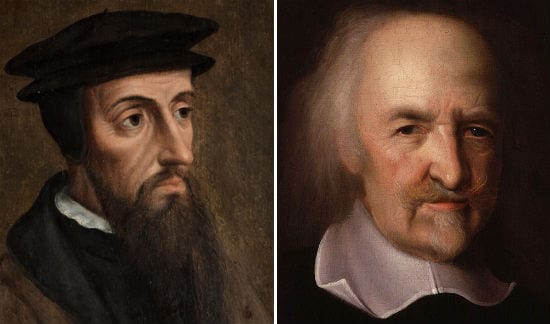
L&J’s belief in post-Rapture crime waves and wilding in the streets arises, I think, from their mistaken belief that John Calvin’s idea that the human condition is one of “total depravity” means the same thing as utter depravity.
It doesn’t. And the distinction is rather important.
“Total depravity” was Calvin’s response to the question of what it means that humanity is fallen and sinful. That word “total” leads to some confusion as to what he was saying. “Pervasive” or “across-the-board” might have conveyed the point more clearly.
He was responding to a debate over what aspect or aspects of our humanity are the sinful parts. This sounds esoteric, and maybe it is, but bear with me. Calvin’s great project was to revive and reclaim the teaching of St. Augustine. All of Calvin’s Big Ideas were reprises of ideas first expressed by Augustine. But Augustine’s embrace of the New Testament emphasis on grace often came mixed up with a large chunk of the Neo-Platonism he never quite got over. Augustine carried forward all sorts of hints and suggestions that the physical world is inherently evil as opposed to the purer, virtuous world of the spirit. This had disastrous results when Augustine turned his attention to the question of humanity’s fallenness or, as he called it, the matter of “original sin,” leading him and many who followed him to regard it almost as a kind of sexually transmitted disease.
Calvin, to his great credit, wanted to correct that idea. Calvin didn’t want to say that we were divine spirits trapped in sinfully fleshy, genital-laden bodies. Nor did he have much patience for debates over what particular aspect of our humanity carries the fallenness of original sin. Some argued that our reason was where original sin abides, or our conscience, or our will. But Calvin rejected that whole approach. It’s across-the-board, he said, pervading every aspect and part of us — body and spirit, mind, reason, will, conscience … everything. That idea came to be expressed in the unfortunate phrase “total depravity.”
Keep in mind, though, that this is not the entire story. If every aspect of our humanity is fallen and tainted by sin, it’s also true that every aspect of our humanity also reflects the image of our creator. We humans are created in the image of God and that divine spark of invaluable goodness is equally pervasive. No part of us is untouched by “depravity,” but no part of us is utterly depraved. We are capable of reason, justice and virtue, but never of untainted reason, justice and virtue.
By reinterpreting “total depravity” as utter depravity, LaHaye & Jenkins disregard a very important part of the picture and arrive at a very different picture of humanity than the one held by Paul or Augustine or Calvin. They arrive at this different picture in part because of that misreading of what those others were saying, but also because they’re trying to answer a different question. Those other theologians were interested in why we humans do the things we do — why it is we seem capable of both marvels and monstrosities. L&J are interested, instead, only in the monstrosity because only a wholly monstrous humanity could be imagined to be deserving of the wrath and punishment they imagine God will soon delight in administering. The actual human race as it is won’t fit neatly into this scheme, so they’ve replaced it with an invented human race that will — a barbarous horde running wild in the streets, a perverse, Hobbesian mob that can only be restrained by the iron fist of a divine Leviathan.
L&J’s invisible “record crime waves” are thus based on a theological claim about human nature. The problem for them is that human nature is the one area of theology that is most easily subjected to scrutiny through direct observation. God may be mysterious, invisible and ineffable, but there are billions of us humans wandering around, living our lives. Human nature can be studied and explored. We can examine it through interviews and introspection. Theories of human nature can thus be evaluated and refined or rejected based on how well they fit with what we can observe in others and in ourselves.
And L&J’s notion of monstrous, vicious, utter depravity just won’t fit.
The authors themselves can’t make it fit. They can’t sustain their portrayal of humanity gone wild, resorting instead to these drive-by assertions of a supposed crime wave while at the same time exposing us to dozens of peripheral characters who all seem decent and law-abiding (albeit two-dimensional).
Stanton Bailey, for example, hasn’t transformed into a knife-and-chain wielding thug. Rayford’s boss Earl hasn’t proclaimed that God is dead and anything goes and therefore flown off to Kansas to slaughter the Clutter family. Why would he? To the extent that Earl has any character, that would be horrifically out of character for him.
The Jimmy Bats episode in the last book was meant to illustrate this theme of godless humanity run amok, but Chloe’s reaction to their home being burglarized illustrated just the opposite. Frightened by the break-in, she sought and found refuge with a neighbor up the block. She ran to the home of unsaved, godless, left-behind heathen Mr. Anderson because she knew him to be a reasonable fellow and a good man willing and able to assist a neighbor in distress.
Anderson’s basic decency refutes the authors’ own theory of human nature. So do most minor characters you’ll meet in these books. So do most people you’ll meet in real life.
These different views of human nature have consequences. The contrasting visions of human nature correspond with contrasting visions of the kind of human society that is necessary and possible. Those words — necessary and possible — come from one of my favorite summations of the implications of the Pauline/Augustinian/Calvinist view of human nature, from Reinhold Niebuhr:
[Humanity’s] capacity for justice makes democracy possible, but [humanity’s] inclination to injustice makes democracy necessary.
That’s a theological claim about human nature that withstands comparison to observable reality. It rings true. It fits.**
Significantly, it’s not just a Pauline view, but also a Madisonian one — the view that shapes American-style democracy with its checks and balances and its insistence on a limited government still powerful enough to protect the rights and freedoms of minorities. If L&J’s portrait of utter depravity were accurate, then such a system would be unworkable folly. If humans are utterly depraved, then self-government is an impossibility. Government of, by and for the people cannot work if the people are nothing more than bestial sin-machines. Such humans cannot be trusted or expected to govern themselves. They can only be ruled and restrained by an iron hand.
Tim LaHaye, like most of the activist religious right he helped to create, loves flags and fireworks and the whole red, white and blue costume of extravagant patriotism. But ultimately he does not believe in democracy. He does not believe it is possible or that it is compatible with wretched, sinful, utterly depraved human nature. LaHaye believes that these utterly depraved humans will always seek the tyranny they require — whether its the international Soviet rule prophesied by his John Birch Society mentors or the Antichrist one world government he imagines was prophesied by the Bible.
In opposition to such potential godless dictatorships, LaHaye has worked for what he sees as their only antidote — the godly dictatorship of theocracy.
– – – – – – – – – –
* As I mentioned in an earlier post, I’m in the middle of Barbara Tuchman’s A Distant Mirror: The Calamitous 14th Century. Tuchman’s account of the Black Death, which killed about 1 in 3 Europeans in a few short years, gives a sense of how massive, inscrutable trauma altered every aspect of that society. Nothing like that happens following the Event in the Left Behind series, even though it carries off the same proportion of the population.
** Here’s where our fiercely Calvinist friends will protest that by believing that humanity possesses any capacity for justice, Niebuhr and I are succumbing to “Semi-Pelagianism.” They get even more upset when I fail to recoil from that as a grave insult.
Previous Post

January 17, 2020
Whatever I've got, I'm eager to lose
Next Post
January 18, 2020 The pellet with the poison's in the vessel with the pestle
Browse Our Archives
Select a Category class warfare evangelicals Iraq Left Behind Mammon music Uncategorized
Select a Month October 2026 September 2026 August 2026 July 2026 June 2026 May 2026 April 2026 March 2026 January 2026 December 2025 November 2025 October 2025 September 2025 August 2025 July 2025 June 2025 May 2025 April 2025 March 2025 February 2025 January 2025 December 2024 November 2024 October 2024 September 2024 August 2024 July 2024 June 2024 May 2024 April 2024 March 2024 February 2024 January 2024 December 2023 November 2023 October 2023 September 2023 August 2023 July 2023 June 2023 May 2023 April 2023 March 2023 February 2023 January 2023 December 2022 November 2022 October 2022 September 2022 August 2022 July 2022 June 2022 May 2022 April 2022 March 2022 February 2022 January 2022 December 2021 November 2021 October 2021 September 2021 August 2021 July 2021 June 2021 May 2021 April 2021 March 2021 February 2021 January 2021 December 2020 November 2020 October 2020 September 2020 August 2020 July 2020 June 2020 May 2020 April 2020 March 2020 February 2020 January 2020 December 2019 November 2019 October 2019 September 2019 August 2019 July 2019 June 2019 May 2019 April 2019 March 2019 February 2019 January 2019 December 2018 November 2018 October 2018 September 2018 August 2018 July 2018 June 2018 May 2018 April 2018 March 2018 February 2018 January 2018 December 2017 November 2017 October 2017 September 2017 August 2017 July 2017 June 2017 May 2017 April 2017 March 2017 February 2017 January 2017 December 2016 November 2016 October 2016 September 2016 August 2016 July 2016 June 2016 May 2016 April 2016 March 2016 February 2016 January 2016 December 2015 November 2015 October 2015 September 2015 August 2015 July 2015 June 2015 May 2015 April 2015 March 2015 February 2015 January 2015 December 2014 November 2014 October 2014 September 2014 August 2014 July 2014 June 2014 May 2014 April 2014 March 2014 February 2014 January 2014 December 2013 November 2013 October 2013 September 2013 August 2013 July 2013 June 2013 May 2013 April 2013 March 2013 February 2013 January 2013 December 2012 November 2012 October 2012 September 2012 August 2012 July 2012 June 2012 May 2012 April 2012 March 2012 February 2012 January 2012 December 2011 November 2011 October 2011 September 2011 August 2011 July 2011 June 2011 May 2011 April 2011 March 2011 February 2011 January 2011 December 2010 November 2010 October 2010 September 2010 August 2010 July 2010 June 2010 May 2010 April 2010 March 2010 February 2010 January 2010 December 2009 November 2009 October 2009 September 2009 August 2009 July 2009 June 2009 May 2009 April 2009 March 2009 February 2009 January 2009 December 2008 November 2008 October 2008 September 2008 August 2008 July 2008 June 2008 May 2008 April 2008 March 2008 February 2008 January 2008 December 2007 November 2007 October 2007 September 2007 August 2007 July 2007 June 2007 May 2007 April 2007 March 2007 February 2007 January 2007 December 2006 November 2006 October 2006 September 2006 August 2006 July 2006 June 2006 May 2006 April 2006 March 2006 February 2006 January 2006 December 2005 November 2005 October 2005 September 2005 August 2005 July 2005 June 2005 May 2005 April 2005 March 2005 February 2005 January 2005 December 2004 November 2004 October 2004 September 2004 August 2004 July 2004 June 2004 May 2004 April 2004 March 2004 February 2004 January 2004 December 2003 November 2003 October 2003 September 2003
Follow Us!
TAKE THE
Religious Wisdom Quiz
Which Psalm is the longest chapter in the Bible?
Select your answer to see how you score.
Psalm 23 Psalm 50 Psalm 119 Psalm 1
Related posts from slacktivist

Can't seem to get it through my head

For Buffy and Carl so loved the world


'To every generation': Child abuse at Cornerstone Church
TRENDING AT PATHEOS Progressive Christian

The Iron Gates and the Lion of the...
Yesterday, I didn't finish my report about, well, yesterday. So I'll...

Dolly Parton’s Last Song Wins Dove Award with...
Bluegrass band The Grascals, speaking on the red carpet at the 57th...

The Image: On the Horror of Capitalism and...
The Image Then went the Pharisees, and took counsel how they might...

We are approaching the date of our new American national holiday: October...

Letters on Living the Faith by C.S. Lewis
Most of us met C.S. Lewis as a public intellectual. Mere Christianity....

When Halloween Unmasks Married Hearts
Written by Dr. David K. Ewen from Eternal Truth Bible College Behind...
view all Progressive Christian blogs
Ad-Free & Subscriber Log-In Subscription Support
- About Us
- 2026 Calendar
- Videos
- Podcasts
- Library of World Religions
- Faith In Media Tracker
- Advertise With Us
- Write for Us
- Privacy Policy
- Terms of Service
- Do Not Sell My Data
- Contact Us
- Radiant Digital
- Manage Newsletter Subscriptions
- Unsubscribe From Notifications
- Sitemap
Copyright 2008-2026, Patheos. All rights reserved.
Subscription Support Ad-Free & Subscriber Log-In
Follow Patheos