
BuddhistCatholicContemplativeEvangelicalGeneral ChristianHinduJewishLatter-day SaintMuslimNew VisionsProgressive Christian
Beliefs
- Buddhist
- Catholic
- Contemplative
- Evangelical
- General Christian
- Hindu
- Jewish
- Latter-day Saint
- More Voices
- Muslim
- New Visions
- Pagan
- Progressive Christian
Topics
- Religion News
- Food and Religion
- Sports and Religion
- Religious Art
- Religious Music and Entertainment
- Religious Events
- History and Religion
- Style and Religion
- Politics and Religion
- Women in Religion
- Recreation Outdoors and Religion
- Business Finance and Religion
- Careers Workplace and Religion
- Education and Religion
- Family Parenting and Religion
- Health Fitness and Religion
- Home and Religion
- Relationships and Religion
- Technology and Religion
- Travel and Religion
Columnists
- Buddhist Columnists
- Business Finance and Religion Columnists
- Careers Workplace and Religion Columnists
- Catholic Columnists
- Contemplative Columnists
- Education and Religion Columnists
- Evangelists Columnists
- Family Parenting and Religion Columnists
- General Christian Columnists
- Health Fitness and Religion Columnists
- Hindu Columnists
- History and Religion Columnists
- Home and Religion Columnists
- Jewish Columnists
- More Voices Columnists
- Latter Day Columnists
- Muslim Columnists
- New Visions Columnists
- Nonreligious Columnists
- Pagan Columnists
- Politics and Religion Columnists
- Progressive Columnists
- Recreation Outdoors and Religion Columnists
- Relationships and Religion Columnists
- Religion News Columnists
- Religious Art Columnists
- Religious Events Columnists
- Religious Music and Entertainment Columnists
- Sports and Religion Columnists
- Style and Religion Columnists
- Technology and Religion Columnists
- Travel and Religion Columnists
- Women in Religion Columnists
Resource Library
- 2026 Calendar
- Library of World Religions
- The 100 Most Holy Places on Earth
- Patheos Answers
- Podcasts
- Videos
- Faith Leaders Database
- Anglican Episcopalian
- Bahai
- Baptist
- Buddhism
- Christianity
- Confucianism
- Eastern Orthodoxy
- Hinduism
- Holiness and Pentecostal
- ISKCON
- Islam
- Judaism
- Lutheran
- Methodist
- The Church of Jesus Christ of Latter-day Saints
- New Age
- Paganism
- Presbytarian and Reformed
- Protestantism
- Religion Behind the Scenes
- Roman Catholic
- Scientology
- Shia Islam
- Sikhism
- Sufism
- Sunni Islam
- Taoism
- Zen
- See all religions
Research Tools
 Ad-Free & Subscriber Log-In Subscription Support
Ad-Free & Subscriber Log-In Subscription Support
Follow Patheos 

- Trending:
- Forgiveness
- |
- Marriage
- |
- Consciousness
- |
- Death Penalty
- |
- Election
- |
- Halloween

- Home
- Progressive Christian
- Never been partial to shackles or chains
Never been partial to shackles or chains
Last updated on: February 13, 2019 at 6:03 pm by Fred Clark
Never been partial to shackles or chains 2019-02-13T18:03:29-05:00 Fred Clark
Patheos Explore the world's faith through different perspectives on religion and spirituality! Patheos has the views of the prevalent religions and spiritualities of the world.
On the one hand, Benjamin Lay was easy to dismiss. He was an angry, impatient, impertinent radical who employed ridicule and sarcasm. He had a penchant for confrontational theatrical stunts. He was an un-Quakerly Quaker — a pugnacious member of a pacifist sect considered disreputable by mainstream churches. And he was also a hunch-backed dwarf and a cave-dwelling vegetarian.
On the other hand, all of that also made Benjamin Lay very hard to ignore. Benjamin Franklin understood that. Franklin knew a thing or two about publicity and he happily published Lay’s anti-slavery screed because he recognized that this book, and this author, were sure to get people talking.
Franklin published Lay’s book in 1737 — almost 20 years before the abolitionist Quaker John Woolman self-published his own book. The difference between Lay’s and Woolman’s styles can be seen in the titles of their books. Woolman’s somewhat meekly suggested that he had some Considerations on the Keeping of Negroes that he politely requested readers to judge for themselves. Lay, on the other hand, titled his book All Slave-keepers That Keep the Innocent in Bondage, Apostates.
If that wasn’t blunt enough, Lay laid it on further in his expansive sub-title: “Pretending to lay Claim to the Pure & Holy Christian Religion; of what Congregation soever; but especially in their Ministers, by whose example the filthy Leprosy and Apostasy is spread far and near; it is a notorious Sin, which many of the true Friends of Christ, and his pure Truth, called Quakers, has been for many Years, and still are concern’d to write and bear Testimony against; as a Practice so gross and hurtful to Religion, and destructive to Government, beyond what Words can set forth, or can be declared of by Men or Angels, and yet lived in by Ministers and Magistrates in America.”
Lay chastises slave-owning ministers and magistrates as impure, unholy, false, filthy, gross, and hurtful apostates. And that’s all before the first page of his text. Phew. That might give you a sense of why he was formally barred from four different Quaker meetings — including one from which he was physically expelled, carried out the door and tossed onto the ground after a stunt in which he stabbed a Bible he’d rigged with fake blood.
Apologists for the slave-trading, slave-keeping American theologians and evangelists of the 18th century always take pains to remind us that they were “men of their time.” Which they of course were, because everyone must be. But Benjamin Lay (1682-1759) was also a man of their time. He was born before and died after Jonathan Edwards (1703-1758). George Whitefield (1710-1770) was not only a man of Benjamin Lay’s time, he and the radical Quaker shared a mutual friend in Ben Franklin.
This is why we sometimes describe people like Benjamin Lay as being “ahead of their time.” Which they of course weren’t, because no one can be. That odd phrase — “ahead of their time” — is sometimes meant as a compliment, but it is also sometimes employed to deny people like Lay the same gracious solicitude we’re eager to bestow on their contemporaries. We tend to be, in other words, more willing to forgive people like Edwards and Whitefield for being disgracefully wrong than we are to forgive people like Benjamin Lay for being defiantly right.
So we read Edwards’ indignant defense of slave-owning ministers and we reflexively rush to explain it away, even though every word of what Edwards argued was wrong. But then we read Lay’s indignant condemnation of slave-owning ministers and we reflexively critique his tone or his approach, even though every word of what Lay argued was, and is, true. Look at the way we treat figures from a century later on and you’ll see the same dynamic at work. Proponents of failed, inadequate compromises and “colonization” schemes are defended, sympathetically, as “men of their time.” Those who were unambiguously right — William Lloyd Garrison may be the most obvious example — are criticized, unsympathetically, as intemperate cranks. We withhold our forgiveness and generosity from them, even though they don’t require our forgiveness — only our thanks.
Fast-forward another half-century and we can find even more examples. We display an instinctive, boundless sympathy for those who faltered and surrendered the unfinished work of Reconstruction while at the same time we offer a kind of harsh, dismissive criticism for those unseemly “radicals” who were steadfastly right both from the perspective of their time and of our own. (“Hindsight is 20/20” we say, with that same weirdly dismissive resentment toward those whose sight and foresight our later hindsight has confirmed to be accurate.)
I think this strange, instinctive reluctance to forgive those who were right when most people were wrong comes partly from a defensible impulse. It arises, in part, from our commendable frustration that these folks were not better able to persuade and convince their contemporaries. And we judge them harshly for that — viewing them with far less grace than we’re eager to extend to the great mass of people who refused to listen or to be persuaded by them.
Maybe more people would have been convinced by Benjamin Lay’s arguments if he hadn’t been so quick to condemn them all as leprous apostates, spraying fake blood all over their pews. Maybe every white person in America would have unanimously cried out, “Yes, you’re so right! I see it now! Let’s end slavery immediately!” if only Garrison hadn’t been so rude as to command their attention by burning copies of the Constitution.
We deplore the tone and the supposedly off-putting anger and impatience of such demonstrations. But, I am sorry to say, we fail to express a similar concern for the conditions that brought about those demonstrations.
That’s a paraphrase from the scripture, from the same Birmingham epistle in which King writes:
I have almost reached the regrettable conclusion that the Negro’s great stumbling block in his stride toward freedom is not the White Citizen’s Counciler or the Ku Klux Klanner, but the white moderate, who is more devoted to “order” than to justice; who prefers a negative peace which is the absence of tension to a positive peace which is the presence of justice; who constantly says: “I agree with you in the goal you seek, but I cannot agree with your methods of direct action;” who paternalistically believes he can set the timetable for another man’s freedom; who lives by a mythical concept of time and who constantly advises the Negro to wait for a “more convenient season.”
King wrote that in 1963, which was before my time. Lay and Garrison and Thaddeus Stevens were all, obviously, before my time as well.
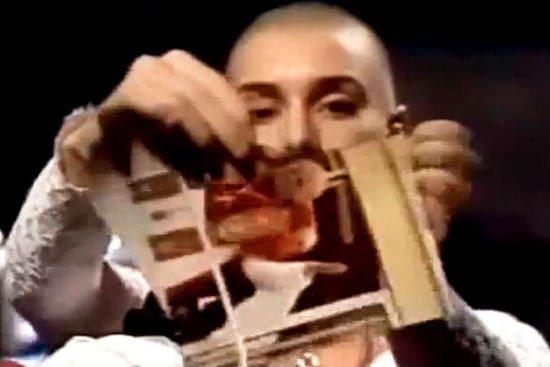
So I want to turn next to an example that is from my time. It’s from 1992, and you can probably guess what it is from the photo above.
This example is why I’ve been using the words “we” and “our” in the hazy, squishy (and, for some readers, inaccurate) way I’ve employed them throughout this post. That use of the first-person pronoun is partly a rhetorical trick — a way of trying to inoculate against a more defensive reaction by including myself, suggesting a tone that is more confessional than condemnatory. But that confessional tone is also necessary, because I personally have much to confess. I have far more in common with the Quakers who carried Benjamin Lay out the door than I have with Lay himself. I don’t want to conscript anyone into that first-person plural pronoun who doesn’t deserve to be included in it, but speaking for myself I can say “We have met the white moderate stumbling block, and he is us.”
Previous Post

February 11, 2019
'Yeah, that was me'
Next Post
February 14, 2019 Sacrifice if you care
Browse Our Archives
Select a Category class warfare evangelicals Iraq Left Behind Mammon music Uncategorized
Select a Month October 2026 September 2026 August 2026 July 2026 June 2026 May 2026 April 2026 March 2026 January 2026 December 2025 November 2025 October 2025 September 2025 August 2025 July 2025 June 2025 May 2025 April 2025 March 2025 February 2025 January 2025 December 2024 November 2024 October 2024 September 2024 August 2024 July 2024 June 2024 May 2024 April 2024 March 2024 February 2024 January 2024 December 2023 November 2023 October 2023 September 2023 August 2023 July 2023 June 2023 May 2023 April 2023 March 2023 February 2023 January 2023 December 2022 November 2022 October 2022 September 2022 August 2022 July 2022 June 2022 May 2022 April 2022 March 2022 February 2022 January 2022 December 2021 November 2021 October 2021 September 2021 August 2021 July 2021 June 2021 May 2021 April 2021 March 2021 February 2021 January 2021 December 2020 November 2020 October 2020 September 2020 August 2020 July 2020 June 2020 May 2020 April 2020 March 2020 February 2020 January 2020 December 2019 November 2019 October 2019 September 2019 August 2019 July 2019 June 2019 May 2019 April 2019 March 2019 February 2019 January 2019 December 2018 November 2018 October 2018 September 2018 August 2018 July 2018 June 2018 May 2018 April 2018 March 2018 February 2018 January 2018 December 2017 November 2017 October 2017 September 2017 August 2017 July 2017 June 2017 May 2017 April 2017 March 2017 February 2017 January 2017 December 2016 November 2016 October 2016 September 2016 August 2016 July 2016 June 2016 May 2016 April 2016 March 2016 February 2016 January 2016 December 2015 November 2015 October 2015 September 2015 August 2015 July 2015 June 2015 May 2015 April 2015 March 2015 February 2015 January 2015 December 2014 November 2014 October 2014 September 2014 August 2014 July 2014 June 2014 May 2014 April 2014 March 2014 February 2014 January 2014 December 2013 November 2013 October 2013 September 2013 August 2013 July 2013 June 2013 May 2013 April 2013 March 2013 February 2013 January 2013 December 2012 November 2012 October 2012 September 2012 August 2012 July 2012 June 2012 May 2012 April 2012 March 2012 February 2012 January 2012 December 2011 November 2011 October 2011 September 2011 August 2011 July 2011 June 2011 May 2011 April 2011 March 2011 February 2011 January 2011 December 2010 November 2010 October 2010 September 2010 August 2010 July 2010 June 2010 May 2010 April 2010 March 2010 February 2010 January 2010 December 2009 November 2009 October 2009 September 2009 August 2009 July 2009 June 2009 May 2009 April 2009 March 2009 February 2009 January 2009 December 2008 November 2008 October 2008 September 2008 August 2008 July 2008 June 2008 May 2008 April 2008 March 2008 February 2008 January 2008 December 2007 November 2007 October 2007 September 2007 August 2007 July 2007 June 2007 May 2007 April 2007 March 2007 February 2007 January 2007 December 2006 November 2006 October 2006 September 2006 August 2006 July 2006 June 2006 May 2006 April 2006 March 2006 February 2006 January 2006 December 2005 November 2005 October 2005 September 2005 August 2005 July 2005 June 2005 May 2005 April 2005 March 2005 February 2005 January 2005 December 2004 November 2004 October 2004 September 2004 August 2004 July 2004 June 2004 May 2004 April 2004 March 2004 February 2004 January 2004 December 2003 November 2003 October 2003 September 2003
Follow Us!
TAKE THE
Religious Wisdom Quiz
Which king prayed and saw the shadow go backward as a sign from God?
Select your answer to see how you score.
Solomon Hezekiah Uzziah Ahab
Related posts from slacktivist




Postcards from America (02.05.25)
TRENDING AT PATHEOS Progressive Christian

A new article, written by Jeff Lindsay and Gale L. Pooley,...

Swimfan: Forgotten Aughts Pleasures
This is a recovery effort. In 2002, My Big Fat Greek Wedding...

Top Three Anti-Catholic Lies About Catholicism
This is my initial transcript for the video, "THE 3 WORST...

Pope Leo Celebrates Mass for Nurses & Docs...
I don't have any idea how he did it, but Pope Leo...

The Sermon on the Mount, Part I: Matthew...
The Sermon on the Mount, Part I (Matthew 4:12-5:12) St. Matthew moves...

What's up from Crossway: Reviewing some of their latest A few weeks...
view all Progressive Christian blogs
Ad-Free & Subscriber Log-In Subscription Support
- About Us
- 2026 Calendar
- Videos
- Podcasts
- Library of World Religions
- Faith In Media Tracker
- Advertise With Us
- Write for Us
- Privacy Policy
- Terms of Service
- Do Not Sell My Data
- Contact Us
- Radiant Digital
- Manage Newsletter Subscriptions
- Unsubscribe From Notifications
- Sitemap
Copyright 2008-2026, Patheos. All rights reserved.
Subscription Support Ad-Free & Subscriber Log-In
Follow Patheos