
BuddhistCatholicContemplativeEvangelicalGeneral ChristianHinduJewishLatter-day SaintMuslimNew VisionsProgressive Christian
Beliefs
- Buddhist
- Catholic
- Contemplative
- Evangelical
- General Christian
- Hindu
- Jewish
- Latter-day Saint
- More Voices
- Muslim
- New Visions
- Pagan
- Progressive Christian
Topics
- Religion News
- Food and Religion
- Sports and Religion
- Religious Art
- Religious Music and Entertainment
- Religious Events
- History and Religion
- Style and Religion
- Politics and Religion
- Women in Religion
- Recreation Outdoors and Religion
- Business Finance and Religion
- Careers Workplace and Religion
- Education and Religion
- Family Parenting and Religion
- Health Fitness and Religion
- Home and Religion
- Relationships and Religion
- Technology and Religion
- Travel and Religion
Columnists
- Buddhist Columnists
- Business Finance and Religion Columnists
- Careers Workplace and Religion Columnists
- Catholic Columnists
- Contemplative Columnists
- Education and Religion Columnists
- Evangelists Columnists
- Family Parenting and Religion Columnists
- General Christian Columnists
- Health Fitness and Religion Columnists
- Hindu Columnists
- History and Religion Columnists
- Home and Religion Columnists
- Jewish Columnists
- More Voices Columnists
- Latter Day Columnists
- Muslim Columnists
- New Visions Columnists
- Nonreligious Columnists
- Pagan Columnists
- Politics and Religion Columnists
- Progressive Columnists
- Recreation Outdoors and Religion Columnists
- Relationships and Religion Columnists
- Religion News Columnists
- Religious Art Columnists
- Religious Events Columnists
- Religious Music and Entertainment Columnists
- Sports and Religion Columnists
- Style and Religion Columnists
- Technology and Religion Columnists
- Travel and Religion Columnists
- Women in Religion Columnists
Resource Library
- 2026 Calendar
- Library of World Religions
- The 100 Most Holy Places on Earth
- Patheos Answers
- Podcasts
- Videos
- Faith Leaders Database
- Anglican Episcopalian
- Bahai
- Baptist
- Buddhism
- Christianity
- Confucianism
- Eastern Orthodoxy
- Hinduism
- Holiness and Pentecostal
- ISKCON
- Islam
- Judaism
- Lutheran
- Methodist
- The Church of Jesus Christ of Latter-day Saints
- New Age
- Paganism
- Presbytarian and Reformed
- Protestantism
- Religion Behind the Scenes
- Roman Catholic
- Scientology
- Shia Islam
- Sikhism
- Sufism
- Sunni Islam
- Taoism
- Zen
- See all religions
Research Tools
 Ad-Free & Subscriber Log-In Subscription Support
Follow Patheos 

- Trending:
- Advent
- |
- Forgiveness
- |
- Thanksgiving
- |
- Election
- |
- Seasonal Holidays
- |
- Marriage

- Home
- Progressive Christian
- If ‘we’ didn’t know, now ‘we’ know
If ‘we’ didn’t know, now ‘we’ know
Last updated on: February 10, 2019 at 9:46 pm by Fred Clark
If ‘we’ didn’t know, now ‘we’ know 2019-02-10T21:46:13-05:00 Fred Clark
Patheos Explore the world's faith through different perspectives on religion and spirituality! Patheos has the views of the prevalent religions and spiritualities of the world.
I wanted to see if I was really hearing the phrase “the #MeToo Era” as often as it seemed. This is just from the first page of Google results:
- “Google Is Struggling to Remake Itself for the #MeToo Era”
- “Democrats grapple with Fairfax accusations in the #MeToo era”
- “How to Find Mentors in the #MeToo Era”
- “Digital marketing in the #MeToo era”
- “R. Kelly and the Complexities of Race in the #MeToo Era”
- “Shakespeare in the #MeToo Era”
- “In #MeToo era, will Democrats rally around accused of their own?”
- “What does real leadership look like in the #MeToo era?”
- “The financial service industry has largely escaped a reckoning in the #MeToo era”
So if you didn’t already know it, it has been decided that we are officially now in “the #MeToo Era.” (There remains only some dispute, apparently, as to whether the word era should be upper-case.)
This recent, widespread use of a phrase sets off copyeditor alarm bells, but that’s not my point here. My point it that this can help us better understand how to think about folks like Jonathan Edwards and George Whitefield and Charles Hodge. (And also about Thomas Jefferson, George Washington, etc.)
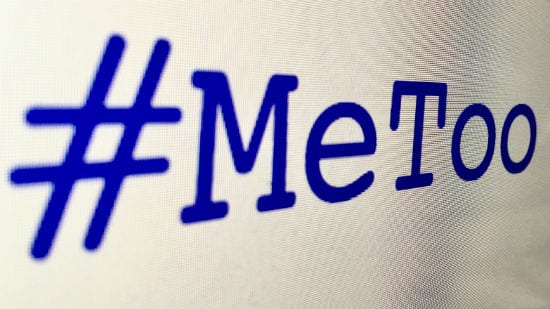
(Wikimedia Commons)
“#MeToo” refers to the movement on Twitter and other social media that was begun Tarana Burke back in 2006 and then later was popularized by the Charmed ones after the inauguration of President Pussy-Grabber and the public acknowledgement of allegations against film-mogul Harvey Weinstein in 2017.
The phrase “Me Too” became a way for the victims of sexual assault and sexual harassment to make their previously ignored voices heard and to support one another. In October of 2017, millions of people used the #MeToo hashtag to speak up on social media, forcing the subject onto the front page of our public conversation.
The effect of this is often described as a new or increased “awareness” of the scale and magnitude of this problem. This is what all those articles above seem to be referring to when they talk about us now being in “the #MeToo Era.” It suggests a before and an after. The commencement of the #MeToo Era removed the possibility of innocence via ignorance going forward. To paraphrase Biggie, if we didn’t know, now we know.
This idea of before and after is partly true. The #MeToo movement certainly did make the pervasive scope and gravity of sexual assault impossible to ignore thereafter. Now we know.
But who exactly is this “we” who didn’t know before the arrival of the “#MeToo Era”? Clearly any such “we” has to exclude the millions of people — mostly women — who posted their “Me Too” testimonies. They already knew. So did any of their friends or loved ones who had shown themselves capable of being trusted with knowing.
Another group that must surely have known all this prior to the “#MeToo Era” would be the millions of other people — mostly men — who have been perpetrating all of this sexual assault and sexual harassment. The massive scope of the problem wasn’t just something they knew, but something they reassured themselves with as a rationalization for their behavior. The same goes for all of their enablers and fixers and the assorted bystanders who participated in keeping their open secrets.
Much of the reporting on the viral explosion of “#MeToo” in late 2017 cited statistics from a World Health Organization report finding that a third of all women worldwide were the victims of sexual assault and harassment. Those women all knew. Billions of them.
And so did the World Health Organization — that widely cited statistic is from a 2013 report. It was in all the papers at the time, even though that was before what we’re now calling “the #MeToo Era.”
So it’s not that “we” didn’t know any better before this new era of awareness. It’s that “we” had not yet been forced to acknowledge that we knew better. “We” had not yet been forced to listen to the millions of voices it was easier not to listen to. And so “we” were able to go on pretending that we didn’t know what we should have known.
We can’t excuse or absolve our complicity or our willful (or, at best, semi-willful) ignorance by claiming that it was just a different time, a different era, way back in the hazy yesteryear of September 2017. We can’t excuse ourselves by saying we were just people of our time, so thoroughly steeped in and shaped by the zeitgeist of mid-2017 culture that we could not possibly have realized what was happening all around us.
It’d be nicer if we could. “We” would be much happier and more comfortable if we had recourse to such a free pass. But since it would be unseemly for us to plead such a shield of invincible ignorance for ourselves, we instead work hard to establish the principle by projecting it back onto our ancestors. If we can convince ourselves that “they” could not possibly have known any better, then it becomes possible to reassure ourselves that “we” could not possibly know any better. If we can assert the precedent that “they” should not have been expected to listen to the millions of voices they refused to listen to, then we can exempt ourselves from any obligation to listen to the voices we have been ignoring.
This is why, again, when I read “Let’s not be too hard on poor Jonathan Edwards,” what I’m also seeing is “C’mon, let’s go easy on ourselves.” I don’t think that’s necessarily the primary intent of this plea, or that it’s such a deliberate, consciously cynical and calculating maneuver. But it’s difficult to consider the former bit without finding the latter bit tangled up in it somehow.
It’s kind of like those awful “Christians Aren’t Perfect, Just Forgiven” bumper-stickers. The idea isn’t necessarily wrong if considered as an abstract claim existing in the theological equivalent of a frictionless vacuum. But in almost any real-world application it will be abused as a kind of get-out-of-jail-free card for hypocrisy.
Next Post

February 11, 2019 'Yeah, that was me'
Browse Our Archives
Select a Category class warfare evangelicals Iraq Left Behind Mammon music Uncategorized
Select a Month November 2026 October 2026 September 2026 August 2026 July 2026 June 2026 May 2026 April 2026 March 2026 January 2026 December 2025 November 2025 October 2025 September 2025 August 2025 July 2025 June 2025 May 2025 April 2025 March 2025 February 2025 January 2025 December 2024 November 2024 October 2024 September 2024 August 2024 July 2024 June 2024 May 2024 April 2024 March 2024 February 2024 January 2024 December 2023 November 2023 October 2023 September 2023 August 2023 July 2023 June 2023 May 2023 April 2023 March 2023 February 2023 January 2023 December 2022 November 2022 October 2022 September 2022 August 2022 July 2022 June 2022 May 2022 April 2022 March 2022 February 2022 January 2022 December 2021 November 2021 October 2021 September 2021 August 2021 July 2021 June 2021 May 2021 April 2021 March 2021 February 2021 January 2021 December 2020 November 2020 October 2020 September 2020 August 2020 July 2020 June 2020 May 2020 April 2020 March 2020 February 2020 January 2020 December 2019 November 2019 October 2019 September 2019 August 2019 July 2019 June 2019 May 2019 April 2019 March 2019 February 2019 January 2019 December 2018 November 2018 October 2018 September 2018 August 2018 July 2018 June 2018 May 2018 April 2018 March 2018 February 2018 January 2018 December 2017 November 2017 October 2017 September 2017 August 2017 July 2017 June 2017 May 2017 April 2017 March 2017 February 2017 January 2017 December 2016 November 2016 October 2016 September 2016 August 2016 July 2016 June 2016 May 2016 April 2016 March 2016 February 2016 January 2016 December 2015 November 2015 October 2015 September 2015 August 2015 July 2015 June 2015 May 2015 April 2015 March 2015 February 2015 January 2015 December 2014 November 2014 October 2014 September 2014 August 2014 July 2014 June 2014 May 2014 April 2014 March 2014 February 2014 January 2014 December 2013 November 2013 October 2013 September 2013 August 2013 July 2013 June 2013 May 2013 April 2013 March 2013 February 2013 January 2013 December 2012 November 2012 October 2012 September 2012 August 2012 July 2012 June 2012 May 2012 April 2012 March 2012 February 2012 January 2012 December 2011 November 2011 October 2011 September 2011 August 2011 July 2011 June 2011 May 2011 April 2011 March 2011 February 2011 January 2011 December 2010 November 2010 October 2010 September 2010 August 2010 July 2010 June 2010 May 2010 April 2010 March 2010 February 2010 January 2010 December 2009 November 2009 October 2009 September 2009 August 2009 July 2009 June 2009 May 2009 April 2009 March 2009 February 2009 January 2009 December 2008 November 2008 October 2008 September 2008 August 2008 July 2008 June 2008 May 2008 April 2008 March 2008 February 2008 January 2008 December 2007 November 2007 October 2007 September 2007 August 2007 July 2007 June 2007 May 2007 April 2007 March 2007 February 2007 January 2007 December 2006 November 2006 October 2006 September 2006 August 2006 July 2006 June 2006 May 2006 April 2006 March 2006 February 2006 January 2006 December 2005 November 2005 October 2005 September 2005 August 2005 July 2005 June 2005 May 2005 April 2005 March 2005 February 2005 January 2005 December 2004 November 2004 October 2004 September 2004 August 2004 July 2004 June 2004 May 2004 April 2004 March 2004 February 2004 January 2004 December 2003 November 2003 October 2003 September 2003
Follow Us!
TAKE THE
Religious Wisdom Quiz
What is the last book in the Old Testament?
Select your answer to see how you score.
Genesis Malachi Daniel Jonah
Related posts from slacktivist


Postcards from America (02.05.25)
TRENDING AT PATHEOS Progressive Christian

Happy Thanksgiving! I published this Thanksgiving column back in 2017 in...

More Than a Meal: A Messianic Thanksgiving
A Messianic Thanksgiving What if Thanksgiving became more than a meal to...

The Darkening of the Sun, Moon, and Stars
The darkening of the sun and moon and the falling of stars...

Gratitude as the Parent of All Virtues
Giving thanks stems from gratitude. Cicero said that gratitude is the parent...

Make Thanksgiving Bring Family Closer
Written by Dr. David K. Ewen from Eternal Truth Bible College Start...

Ghosts, Spirits, and Wizards in Post-Puritan New England
As it is Thanksgiving, I have a seasonal post concerned with New...
view all Progressive Christian blogs
Ad-Free & Subscriber Log-In Subscription Support
- About Us
- 2026 Calendar
- Videos
- Podcasts
- Library of World Religions
- Faith In Media Tracker
- Advertise With Us
- Write for Us
- Privacy Policy
- Terms of Service
- Do Not Sell My Data
- Contact Us
- Radiant Digital
- Manage Newsletter Subscriptions
- Unsubscribe From Notifications
- Sitemap
Copyright 2008-2026, Patheos, part of the Radiant Digital network of media brands. All rights reserved.
Subscription Support Ad-Free & Subscriber Log-In
Follow Patheos