
BuddhistCatholicContemplativeEvangelicalGeneral ChristianHinduJewishLatter-day SaintMuslimNew VisionsProgressive Christian
Beliefs
- Buddhist
- Catholic
- Contemplative
- Evangelical
- General Christian
- Hindu
- Jewish
- Latter-day Saint
- More Voices
- Muslim
- New Visions
- Pagan
- Progressive Christian
Topics
- Religion News
- Food and Religion
- Sports and Religion
- Religious Art
- Religious Music and Entertainment
- Religious Events
- History and Religion
- Style and Religion
- Politics and Religion
- Women in Religion
- Recreation Outdoors and Religion
- Business Finance and Religion
- Careers Workplace and Religion
- Education and Religion
- Family Parenting and Religion
- Health Fitness and Religion
- Home and Religion
- Relationships and Religion
- Technology and Religion
- Travel and Religion
Columnists
- Buddhist Columnists
- Business Finance and Religion Columnists
- Careers Workplace and Religion Columnists
- Catholic Columnists
- Contemplative Columnists
- Education and Religion Columnists
- Evangelists Columnists
- Family Parenting and Religion Columnists
- General Christian Columnists
- Health Fitness and Religion Columnists
- Hindu Columnists
- History and Religion Columnists
- Home and Religion Columnists
- Jewish Columnists
- More Voices Columnists
- Latter Day Columnists
- Muslim Columnists
- New Visions Columnists
- Nonreligious Columnists
- Pagan Columnists
- Politics and Religion Columnists
- Progressive Columnists
- Recreation Outdoors and Religion Columnists
- Relationships and Religion Columnists
- Religion News Columnists
- Religious Art Columnists
- Religious Events Columnists
- Religious Music and Entertainment Columnists
- Sports and Religion Columnists
- Style and Religion Columnists
- Technology and Religion Columnists
- Travel and Religion Columnists
- Women in Religion Columnists
Resource Library
- 2026 Calendar
- Library of World Religions
- The 100 Most Holy Places on Earth
- Patheos Answers
- Podcasts
- Videos
- Faith Leaders Database
- Anglican Episcopalian
- Bahai
- Baptist
- Buddhism
- Christianity
- Confucianism
- Eastern Orthodoxy
- Hinduism
- Holiness and Pentecostal
- ISKCON
- Islam
- Judaism
- Lutheran
- Methodist
- The Church of Jesus Christ of Latter-day Saints
- New Age
- Paganism
- Presbytarian and Reformed
- Protestantism
- Religion Behind the Scenes
- Roman Catholic
- Scientology
- Shia Islam
- Sikhism
- Sufism
- Sunni Islam
- Taoism
- Zen
- See all religions
Research Tools
 Ad-Free & Subscriber Log-In Subscription Support
Ad-Free & Subscriber Log-In Subscription Support
Follow Patheos 

- Trending:
- Forgiveness
- |
- Marriage
- |
- Consciousness
- |
- Death Penalty
- |
- Election
- |
- Halloween

- Home
- Progressive Christian
- LBCF, No. 222: ‘Unlikable’
LBCF, No. 222: ‘Unlikable’
Last updated on: February 8, 2019 at 1:46 pm by Fred Clark
LBCF, No. 222: ‘Unlikable’ 2019-02-08T13:46:40-05:00 Fred Clark
Patheos Explore the world's faith through different perspectives on religion and spirituality! Patheos has the views of the prevalent religions and spiritualities of the world.
Originally posted September 18, 2009.
You can read this entire series, for free, via the convenient Left Behind Index. The ebook collection The Anti-Christ Handbook: Volume 1, is available on Amazon for just $2.99. The Masculine Toilet salesman looked nervous testifying before Congress. Volume 2 of The Anti-Christ Handbook, completing all the posts on the first Left Behind book, is also now available. Volume 3 is coming soon(ish).
Tribulation Force, pp. 91-95
We should take a moment here at the beginning of Chapter 5 to note something else we’re not seeing: chaos, anarchy, lawlessness, and depravity.
The authors told us this was to be expected in the world of Tribulation Force — a world without any Real, True Christians. Those RTCs were whisked away, taking with them every vestige of salt and light, taking with them the very presence of the Holy Spirit indwelling them. The world has become something even worse than Sodom without five righteous men, it has become a world without the Spirit of God. (It’s a weirdly contra-biblical claim, but this seems to be LaHaye’s idea — that God is present in this world only to the extent that the Holy Spirit is present within RTCs. Take away those godly people and you take away every trace of God.)
The authors briefly hinted at what that ought to mean in the context of their story. In the early aftermath of the Event, they mentioned a crime wave. The Steele’s home was burglarized by Jimmy Bats and the beleaguered police told Rayford they were overwhelmed as this newly godless nation ran amok.
But then all of that just kind of stopped. No more crime or looting or savage attacks from roving bands of violent hoodlums unchecked by conscience or divine grace. Everything went back to normal.
Better than normal, really, considering how much work and disciplined cooperation must have gone into repairing all the damage from the Event — getting all of the infrastructure and machinery of daily life up and going again. It seems almost miraculous, really.
I’m fairly sure this wasn’t intentional — that the authors didn’t mean to present the world of Tribulation Force as the secular, post-RTC utopia it seems to be. I think they’re actually just lazy. Sustaining a premise takes thought, effort and attention, and those are all in short supply in this slap-dash first draft of a novel. Jerry Jenkins couldn’t be bothered to think about what the radically altered landscape of his story would entail, so he very quickly drifted back to default descriptions of a familiar world in which no airport, restaurant, suburban street or even local church appears affected by the removal of all of the world’s RTCs.
So I don’t think the astonishingly rapid return to normalcy post-Event was really something they thought about or that they meant anything by it. I think it’s just an accident of Very Bad Writing.
If we had the chance to sit down with the authors and ask them, I think they’d insist that a world without RTCs or the Holy Spirit would be utterly unlike the orderly, mundane place they’ve set forth in this book. I think they’d describe a depraved scene like something out of a Jack Chick tract, and I think they’d further explain that this is the sort of godless, lawless, bestial world they meant to convey in the pages of Tribulation Force.
Except they didn’t do that in their book. Here they presented instead a post-Event world that is indistinguishable from their version of the pre-Event world. The unintentional implication — found on every mundane page describing the characters’ unperturbed daily routines — is that the presence of a billion RTCs in this world really doesn’t make any difference one way or another.
This is a very strange message for these authors to be communicating, but it comes through loud and clear. As I said, I don’t think it’s an intentional message, but there it is.
A second unintentional message recurs throughout these books, something which also presents itself as Very Bad Writing, but in this case I think that’s the symptom, not the disease. I’m referring to the authors’ habit of reversing the usual shorthand signals most writers employ to prompt readers to like or dislike particular characters. Tim LaHaye and Jerry Jenkins frequently get these backwards without seeming to realize it.
In discussing some of the other flaws in these books we’ve noted instances where Bad Writing seems to emerge from the authors’ Bad Theology, or sometimes just from the authors themselves being Bad People. But I’m not talking about theology or morality here, I’m talking about likability — which is often related, but not the same thing.
What we have in these novels is a massive body of evidence that the authors simply don’t understand what makes most people like or dislike another person. Again and again we see Buck and Rayford behave in ways that range from the merely unappealing to the outright appalling, and in nearly every such instance the authors seem to have intended this behavior to persuade readers to be fond of these two jackasses.
I tried for a while to account for this bizarre characterization as some kind of attempt to present them as anti-heroes, or flawed heroes, or even just as rough-edged but lovable cads (like, say, Jimmy McNulty on The Wire). But such readings weren’t supportable or sustainable. That’s not what we have here.
What we have here is a compendium of reasons large and small for readers to detest Buck and Rayford, all set before us by wide-eyed authors who point to this very behavior and, grinning, say, “Aren’t they the coolest?”
No. No they’re not.
This gap is one of the main reasons these books are unreadable — the gap between how readers are forced to perceive the main characters and how the authors intended them to be perceived, or how the authors themselves perceive them. That chasm is so vast that one despairs of a common language.
We could go back to review prior examples of this — Buck’s juvenile misogyny toward Verna, Rayford’s pride in his off-putting obnoxiousness, both characters’ overweening sense of entitlement — but there are more than enough examples ahead of us. Such as here in the section of the book we’re considering today.
We left Buck in a limo headed toward cake or death, dimly fearing that the global despot and embodiment of evil he’s about to meet with might be planning something unkind:
Buck began to feel more confident that he wasn’t in mortal danger. Too many people had been involved in getting him from Chicago to New York and now to midtown. On the other hand, if Nicolae Carpathia could get away with murder in front of more than a dozen eyewitnesses, he could certainly eliminate one magazine writer.
Buck seems to have forgotten that Nicolae already has eliminated one magazine writer. Remember Eric Miller’s ferry ride? Buck’s worry that he might be in danger before his meeting with the Antichrist shows us that he doesn’t really understand what that meeting is about. This is the Find Out If Buck Knows Too Much meeting. You’re never in danger of being killed before such a meeting, but you won’t get out of it alive unless you’re able to convince the evil mastermind that you don’t Know Too Much, even if you actually do. That’s why it’s best to head into such a meeting with a plan that goes beyond simply recognizing, vaguely that one ought to have “some sort of plan … that sort of thing.”
The limo pulls up to “the exclusive Manhattan Yacht Club,” reimagined for the purposes of our story here as an ultra-swanky enclave for the mega-rich — a small piece of the Hamptons in downtown New York. The silent bodyguard from the limo leads Buck into the posh restaurant, “past a long line of patrons waiting for tables” directly to the maitre d’. More of the same business we saw at the airport, where Buck was allowed to board early and seated in Firster-than-First Class.
“Buck would have felt right at home in the Yacht Club,” we’re told, were it not for the presence of his hulking guide. Throughout this chapter, Jenkins takes pains to show us how relaxed and unperturbed by this setting Buck is. And we, the readers, are meant to be deeply impressed.
This is the sort of thing I was trying to describe above. Jenkins lays on the jet-set sophisticate details —
“How long will you be in town?” Buck asked, accepting a menu and allowing the waiter to drape a linen napkin on his lap.
What he’s shooting for, I think, is the effect of “Buck Williams is an impressive guy.” But he winds up, instead, with something more like “impressing others is important to Buck,” or, even worse, “Buck is terribly impressed with himself.” Throughout the restaurant interlude, Jenkins is desperately trying to get us to admire Buck, but it all produces the opposite reaction.
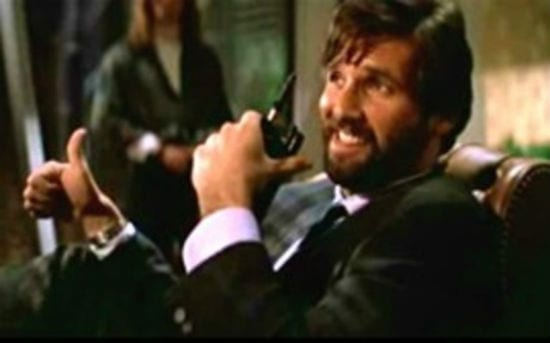
Buck Williams is, basically, Ellis from “Die Hard.”
The effect is like being out to dinner with the sort of egomaniac who makes a big show of paying with his Black Platinum Elite card while complaining that the port is an inferior vintage (because, yeah, he ordered port), not as good as what he has at home and probably not even from the Douro Valley, where, by the way, he can recommend a splendid little restaurant. I have little personal experience with such appalling dinner companions, but I’m familiar with the scene from having watched it in dozens of movies and read about it in dozens of books. It’s a stock scene, meant to convey — often unsubtly — that we’re not supposed to like this show-off, that we should regard him as an unlikable jerk. While such stock scenes are a cliché, they work as a kind of short-hand vocabulary — they communicate what they are intended to communicate. Jenkins seems wholly unfamiliar with this established vocabulary, applying its terms here to Buck — portraying him as the ultimate Wrong Other Guy in a hackneyed rom-com — while expecting us to find Buck more likable because of it.
If your setting is an “exclusive” yacht club, a playground for wealthy elites, and you want your readers to like your hero, then you need to show that he or she doesn’t “feel right at home” in such a place. There are some exceptions, some few likable heroes who might feel right at home: Nick and Nora Charles, Tony Stark, James Bond, the gang from Leverage, I suppose (although their motive for being there — casing the joint — probably means they shouldn’t count).
There are probably other examples, too, but the list is short. Far, far shorter than the list of heroes who would find the club’s ostentatious indulgence and exclusiveness off-putting and unsettling. This is true for most heroes because it is true for most readers — for most humans.
I’ve had the misfortune on occasion to stumble into such settings myself and was always keenly aware that I was anything but “right at home.” Such places seem claustrophobic and a little mad, impossible quite to reconcile with everywhere else. You feel an urgent need for fresher air, for a lungful of perspective, maybe a whip of cords. You tug at your collar and finish your business so you can return to reality as quickly as possible.
This is almost always what a fictional protagonist is thinking too. When they seem too at ease in such settings they become suspect. When they boast of feeling right at home, they become odious. Despite their intentions, this is how the authors are instructing us here to respond to Buck.
What I’m trying to get at here isn’t economic — not class conflict, but rather the kind of moral intuition that precedes any such choosing of sides. One of my favorite essays, George Orwell’s “Charles Dickens,” describes this precisely in discussing Dickens’ “quasi-instinctive siding with the oppressed against the oppressors. As a matter of course he is on the side of the underdog, always and everywhere.”
More than any specific instance or even the accumulation of myriad such instances, it’s this choosing of sides that Jenkins always gets wrong. He, and therefore his characters Buck and Rayford, instinctively side with the oppressors against the oppressed, with the powerful against the powerless, with the exclusive against the excluded. The heroes’ religious conversions were just additional examples of this same choosing sides writ large.
That makes our heroes unlikable to begin with, but then Jenkins compounds the problem with the insulting assumption that readers must share this instinctive preference for the haves over the have-nots and for the most-exclusive, most-expensive privileges of the privileged. Here at the Manhattan Yacht Club, as in the previous chapter where Buck luxuriated in the jealous stares of the other airline passengers, it’s clear that Buck always feels right at home on the side of the overlords and not the underdogs. And because the overlords are so much more impressive, Jenkins assumes that we will therefore be impressed with Buck.
But as desperate as they are to be impressive, it’s just not possible for readers to be impressed with the toadying instincts of Buck and Rayford, Jenkins and LaHaye. The best one can do, instead, is to feel a measure of pity for four characters so earnestly desiring to be liked but so confused about what might make them likable — so intent on being admired, but so utterly clueless as to what is admirable.
Previous Post

February 7, 2019
Milgram's gatekeepers
Next Post
February 8, 2019 'It was a kind of secret which we all knew and were too clever to tell'
Browse Our Archives
Select a Category class warfare evangelicals Iraq Left Behind Mammon music Uncategorized
Select a Month October 2026 September 2026 August 2026 July 2026 June 2026 May 2026 April 2026 March 2026 January 2026 December 2025 November 2025 October 2025 September 2025 August 2025 July 2025 June 2025 May 2025 April 2025 March 2025 February 2025 January 2025 December 2024 November 2024 October 2024 September 2024 August 2024 July 2024 June 2024 May 2024 April 2024 March 2024 February 2024 January 2024 December 2023 November 2023 October 2023 September 2023 August 2023 July 2023 June 2023 May 2023 April 2023 March 2023 February 2023 January 2023 December 2022 November 2022 October 2022 September 2022 August 2022 July 2022 June 2022 May 2022 April 2022 March 2022 February 2022 January 2022 December 2021 November 2021 October 2021 September 2021 August 2021 July 2021 June 2021 May 2021 April 2021 March 2021 February 2021 January 2021 December 2020 November 2020 October 2020 September 2020 August 2020 July 2020 June 2020 May 2020 April 2020 March 2020 February 2020 January 2020 December 2019 November 2019 October 2019 September 2019 August 2019 July 2019 June 2019 May 2019 April 2019 March 2019 February 2019 January 2019 December 2018 November 2018 October 2018 September 2018 August 2018 July 2018 June 2018 May 2018 April 2018 March 2018 February 2018 January 2018 December 2017 November 2017 October 2017 September 2017 August 2017 July 2017 June 2017 May 2017 April 2017 March 2017 February 2017 January 2017 December 2016 November 2016 October 2016 September 2016 August 2016 July 2016 June 2016 May 2016 April 2016 March 2016 February 2016 January 2016 December 2015 November 2015 October 2015 September 2015 August 2015 July 2015 June 2015 May 2015 April 2015 March 2015 February 2015 January 2015 December 2014 November 2014 October 2014 September 2014 August 2014 July 2014 June 2014 May 2014 April 2014 March 2014 February 2014 January 2014 December 2013 November 2013 October 2013 September 2013 August 2013 July 2013 June 2013 May 2013 April 2013 March 2013 February 2013 January 2013 December 2012 November 2012 October 2012 September 2012 August 2012 July 2012 June 2012 May 2012 April 2012 March 2012 February 2012 January 2012 December 2011 November 2011 October 2011 September 2011 August 2011 July 2011 June 2011 May 2011 April 2011 March 2011 February 2011 January 2011 December 2010 November 2010 October 2010 September 2010 August 2010 July 2010 June 2010 May 2010 April 2010 March 2010 February 2010 January 2010 December 2009 November 2009 October 2009 September 2009 August 2009 July 2009 June 2009 May 2009 April 2009 March 2009 February 2009 January 2009 December 2008 November 2008 October 2008 September 2008 August 2008 July 2008 June 2008 May 2008 April 2008 March 2008 February 2008 January 2008 December 2007 November 2007 October 2007 September 2007 August 2007 July 2007 June 2007 May 2007 April 2007 March 2007 February 2007 January 2007 December 2006 November 2006 October 2006 September 2006 August 2006 July 2006 June 2006 May 2006 April 2006 March 2006 February 2006 January 2006 December 2005 November 2005 October 2005 September 2005 August 2005 July 2005 June 2005 May 2005 April 2005 March 2005 February 2005 January 2005 December 2004 November 2004 October 2004 September 2004 August 2004 July 2004 June 2004 May 2004 April 2004 March 2004 February 2004 January 2004 December 2003 November 2003 October 2003 September 2003
Follow Us!
TAKE THE
Religious Wisdom Quiz
Who wrote most of the New Testament letters?
Select your answer to see how you score.
Paul Peter John James
Related posts from slacktivist

Can't seem to get it through my head

For Buffy and Carl so loved the world


'To every generation': Child abuse at Cornerstone Church
TRENDING AT PATHEOS Progressive Christian

'Super Scam Me' Exposes AI Jon Bon Jovi...
Leslie Pickett believed she was in a relationship with Jon Bon Jovi....

The Brazilian Remake of Kendricks' 'Flywheel' Opens in...
“Flywheel,” the story that launched the Kendrick Brothers’ filmmaking career is getting...

The Dangers of Gradual Accommodation (Winking at Sin)
Recently, the “law of gradualness” resurfaced during the opening of a weeklong,...

The Iron Gates and the Lion of the...
Yesterday, I didn't finish my report about, well, yesterday. So I'll...

The Image: On the Horror of Capitalism and...
The Image Then went the Pharisees, and took counsel how they might...

We are approaching the date of our new American national holiday: October...
view all Progressive Christian blogs
Ad-Free & Subscriber Log-In Subscription Support
- About Us
- 2026 Calendar
- Videos
- Podcasts
- Library of World Religions
- Faith In Media Tracker
- Advertise With Us
- Write for Us
- Privacy Policy
- Terms of Service
- Do Not Sell My Data
- Contact Us
- Radiant Digital
- Manage Newsletter Subscriptions
- Unsubscribe From Notifications
- Sitemap
Copyright 2008-2026, Patheos. All rights reserved.
Subscription Support Ad-Free & Subscriber Log-In
Follow Patheos