
BuddhistCatholicContemplativeEvangelicalGeneral ChristianHinduJewishLatter-day SaintMuslimNew VisionsProgressive Christian
Beliefs
- Buddhist
- Catholic
- Contemplative
- Evangelical
- General Christian
- Hindu
- Jewish
- Latter-day Saint
- More Voices
- Muslim
- New Visions
- Pagan
- Progressive Christian
Topics
- Religion News
- Food and Religion
- Sports and Religion
- Religious Art
- Religious Music and Entertainment
- Religious Events
- History and Religion
- Style and Religion
- Politics and Religion
- Women in Religion
- Recreation Outdoors and Religion
- Business Finance and Religion
- Careers Workplace and Religion
- Education and Religion
- Family Parenting and Religion
- Health Fitness and Religion
- Home and Religion
- Relationships and Religion
- Technology and Religion
- Travel and Religion
Columnists
- Buddhist Columnists
- Business Finance and Religion Columnists
- Careers Workplace and Religion Columnists
- Catholic Columnists
- Contemplative Columnists
- Education and Religion Columnists
- Evangelists Columnists
- Family Parenting and Religion Columnists
- General Christian Columnists
- Health Fitness and Religion Columnists
- Hindu Columnists
- History and Religion Columnists
- Home and Religion Columnists
- Jewish Columnists
- More Voices Columnists
- Latter Day Columnists
- Muslim Columnists
- New Visions Columnists
- Nonreligious Columnists
- Pagan Columnists
- Politics and Religion Columnists
- Progressive Columnists
- Recreation Outdoors and Religion Columnists
- Relationships and Religion Columnists
- Religion News Columnists
- Religious Art Columnists
- Religious Events Columnists
- Religious Music and Entertainment Columnists
- Sports and Religion Columnists
- Style and Religion Columnists
- Technology and Religion Columnists
- Travel and Religion Columnists
- Women in Religion Columnists
Resource Library
- 2026 Calendar
- Library of World Religions
- The 100 Most Holy Places on Earth
- Patheos Answers
- Podcasts
- Videos
- Faith Leaders Database
- Anglican Episcopalian
- Bahai
- Baptist
- Buddhism
- Christianity
- Confucianism
- Eastern Orthodoxy
- Hinduism
- Holiness and Pentecostal
- ISKCON
- Islam
- Judaism
- Lutheran
- Methodist
- The Church of Jesus Christ of Latter-day Saints
- New Age
- Paganism
- Presbytarian and Reformed
- Protestantism
- Religion Behind the Scenes
- Roman Catholic
- Scientology
- Shia Islam
- Sikhism
- Sufism
- Sunni Islam
- Taoism
- Zen
- See all religions
Research Tools
 Ad-Free & Subscriber Log-In Subscription Support
Ad-Free & Subscriber Log-In Subscription Support
Follow Patheos 

- Trending:
- Forgiveness
- |
- Marriage
- |
- Consciousness
- |
- Death Penalty
- |
- Election
- |
- Halloween

- Home
- Progressive Christian
- The MAGA Commission (part 1)
The MAGA Commission (part 1)
Last updated on: August 3, 2018 at 7:19 pm by Fred Clark
The MAGA Commission (part 1) 2018-08-03T19:19:31-04:00 Fred Clark
Patheos Explore the world's faith through different perspectives on religion and spirituality! Patheos has the views of the prevalent religions and spiritualities of the world.
I want to look at three recent, not-quite-connected articles and posts that all seem connected to me. They’re not quite all about the same thing, but I think maybe they’re all around the same thing — like separate orbits circling the same star.
The connecting thread here is the weird contradiction between American white evangelicals’ legacy as the heirs of the great missionary movement and those same white evangelicals’ exceptional antipathy toward immigrants, refugees, and pretty much everyone else who doesn’t look and talk exactly like them.
White evangelicals usually think of themselves as Great Commission Christians, or at least they used to do so. But in 2018, it seems, a defining characteristic of white evangelicalism is fearful contempt toward people in or from “Samaria and the uttermost parts of the earth.”
Missionary zeal was a genuine defining characteristic of evangelical Christianity for most of the 19th and 20th centuries. It was an essential component of white evangelicals’ sense of purpose and identity. When I was a kid, you could go to any white evangelical church and start singing “Jeee-sus loves the little chillll-dren …” and everybody’d join in, All the children of the world! Red and yellow, black and white, they are precious in his sight. Jesus loves the little children of the world.
And they meant it. They felt it.
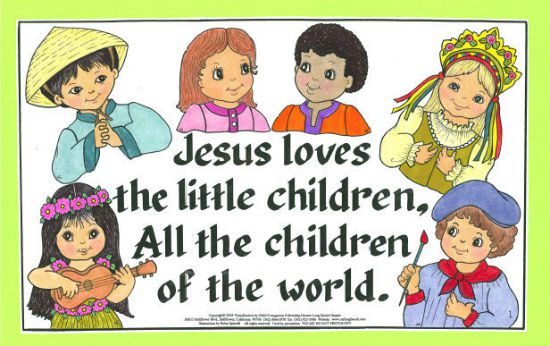
The “red and yellow, black and white” business is a bit awkward, both in this song and where John & Yoko adapted it in “Happy Christmas.”
Today, though, white evangelicals seem to find their sense of purpose and identity in their politics. And their politics decidedly does not love the little children. It is, rather, the politics that culminated in Shelby County and then led, in more ways than one, to the politics of Donald Trump. Trump ran for office as an explicit white nationalist. The birther-in-chief who still defends the full-page ads he once took out in defense of lynching has only become more baldly and aggressively white nationalist since taking office.
Trump’s narrow election — an electoral win despite an overwhelming loss of the total vote — was made possible primarily due to the enthusiastic support of white evangelicals. As Trump’s self-serving corruption, bigotry, and lethal incompetence has alienated most Americans, his support from white evangelicals has held steady. They love him. They love whatever he loves and they love whatever he tells them to love. They have embraced a Trump-shaped politics and thus a Trump-shaped spirituality. He now defines their religion. He now dictates what it is they believe.
As their support for Trump demonstrates — and as they voluntarily confess in poll after poll — white evangelical religion is today characterized by a contempt for and a fear of all the children of the world. “Red and yellow” and especially black, they are contemptible in their sight.
The immensity of this reversal is astonishing for those of us who grew up in white evangelicalism, who learned and experienced its previous missionary identity firsthand, and who absorbed what then seemed like their once-genuine concern for “foreign missions.”
How is it that the same people who donate special offerings to ministries translating the Bible into every language have come to be the people most likely to whinge that they’re being persecuted by having to “press 1 for English”? (Even though that’s not even a real thing, just a crotchety racist urban legend.) How is it that the same churches that spent the 1990s praying every day for people and nations in the “10-40 Window” are now the people most likely to support travel bans directed at those very same people and nations? How is it that people from churches that march a parade of flags through their sanctuary every year on Missions Sunday are also the same people who choose to pretend to be offended when their neighbors wave those same flags in parades on American streets? And how is it that those same people have chosen to pretend to regard that very word “sanctuary” as a repulsive menace?
Libby Anne of the wonderful blog Love, Joy, Feminism, contemplates this in a recent post: “Why Do So Many White Evangelicals Object to the Browning of America?”
That question arises from a recent survey by PRRI which asked Americans about demographic change: “U.S. Census projections show that by 2043, African-Americans, Latinos, Asians, and other mixed racial and ethnic groups will together be a majority of the population. Do you think the likely impact of this coming demographic change will be mostly positive or mostly negative?”
More than any other group, white evangelicals responded by saying this would be mostly negative:
Among religious groups, white evangelical Protestants are unique in the extent to which they feel demographic change will represent a negative development for the U.S. More than half (52 percent) of white evangelical Protestants say a majority of the U.S. population being nonwhite will be a negative development, while fewer than four in ten white mainline Protestants (39 percent), Catholics (32 percent), and religiously unaffiliated Americans (23 percent) say the same.
Libby Anne — who grew up immersed in white evangelicalism — notes that this exceptional antipathy toward non-white neighbors seems impossible to reconcile with those same white evangelicals’ fervent focus on missionary work:
Evangelicals tend to emphasize missions, and reaching all races with the gospel. Very conservative organizations like prominent creationist group Answers in Genesis argue that all humans are of “one blood,” and that racial distinctions are meaningless. While I was growing up in an evangelical home, my parents hosted international students from the Middle East and Asia, and sponsored children in Africa and South America through World Vision. Mission trips to foreign places are common among evangelicals.
“Where is the disconnect?” Libby Anne asks. “What makes reaching all of the nations of the world with the gospel so imperative, but having those same individuals move to and live in the United States so dangerous?”
I think Libby Anne is correct that there “are multiple answers” to these questions — multiple reasons for this strange disconnect. And I think the main such answer she considers in her post is astute:
A belief that developing populations need white help—and that they are incapable of helping themselves—is in no way incompatible with evangelical missions work. Instead, it’s integral. This creates a broken understanding of the world—an understanding that posits non-white populations as universally and fundamentally less able than white populations, and an understanding that makes it easy to accept the idea that the browning of America is a problem.
That’s a big part of the mix of multiple explanations here. I’ve previously discussed the transformation of evangelical missiology over the past generation, but that change in perspective hasn’t trickled out to the wider white evangelical community, which still views a lot of “mission work” through the same condescending, colonial lens that Libby Anne describes.
But I want to look also at some of the other related factors that made this strange reversal possible — starting with Melissa Borja’s recent essay over on the Anxious Bench, “Don’t Just Change Refugee Policy — Change the People in the Pews.” Borja offers a fascinating look at church-based advocacy for refugees, past and present, and ponders where it will go from here. Let’s all give that a read then come back here soon to continue this discussion.
Previous Post

August 3, 2018
LBCF, No. 196: 'The militant Verna'
Next Post
August 6, 2018 The MAGA Commission (part 2)
Browse Our Archives
Select a Category class warfare evangelicals Iraq Left Behind Mammon music Uncategorized
Select a Month October 2026 September 2026 August 2026 July 2026 June 2026 May 2026 April 2026 March 2026 January 2026 December 2025 November 2025 October 2025 September 2025 August 2025 July 2025 June 2025 May 2025 April 2025 March 2025 February 2025 January 2025 December 2024 November 2024 October 2024 September 2024 August 2024 July 2024 June 2024 May 2024 April 2024 March 2024 February 2024 January 2024 December 2023 November 2023 October 2023 September 2023 August 2023 July 2023 June 2023 May 2023 April 2023 March 2023 February 2023 January 2023 December 2022 November 2022 October 2022 September 2022 August 2022 July 2022 June 2022 May 2022 April 2022 March 2022 February 2022 January 2022 December 2021 November 2021 October 2021 September 2021 August 2021 July 2021 June 2021 May 2021 April 2021 March 2021 February 2021 January 2021 December 2020 November 2020 October 2020 September 2020 August 2020 July 2020 June 2020 May 2020 April 2020 March 2020 February 2020 January 2020 December 2019 November 2019 October 2019 September 2019 August 2019 July 2019 June 2019 May 2019 April 2019 March 2019 February 2019 January 2019 December 2018 November 2018 October 2018 September 2018 August 2018 July 2018 June 2018 May 2018 April 2018 March 2018 February 2018 January 2018 December 2017 November 2017 October 2017 September 2017 August 2017 July 2017 June 2017 May 2017 April 2017 March 2017 February 2017 January 2017 December 2016 November 2016 October 2016 September 2016 August 2016 July 2016 June 2016 May 2016 April 2016 March 2016 February 2016 January 2016 December 2015 November 2015 October 2015 September 2015 August 2015 July 2015 June 2015 May 2015 April 2015 March 2015 February 2015 January 2015 December 2014 November 2014 October 2014 September 2014 August 2014 July 2014 June 2014 May 2014 April 2014 March 2014 February 2014 January 2014 December 2013 November 2013 October 2013 September 2013 August 2013 July 2013 June 2013 May 2013 April 2013 March 2013 February 2013 January 2013 December 2012 November 2012 October 2012 September 2012 August 2012 July 2012 June 2012 May 2012 April 2012 March 2012 February 2012 January 2012 December 2011 November 2011 October 2011 September 2011 August 2011 July 2011 June 2011 May 2011 April 2011 March 2011 February 2011 January 2011 December 2010 November 2010 October 2010 September 2010 August 2010 July 2010 June 2010 May 2010 April 2010 March 2010 February 2010 January 2010 December 2009 November 2009 October 2009 September 2009 August 2009 July 2009 June 2009 May 2009 April 2009 March 2009 February 2009 January 2009 December 2008 November 2008 October 2008 September 2008 August 2008 July 2008 June 2008 May 2008 April 2008 March 2008 February 2008 January 2008 December 2007 November 2007 October 2007 September 2007 August 2007 July 2007 June 2007 May 2007 April 2007 March 2007 February 2007 January 2007 December 2006 November 2006 October 2006 September 2006 August 2006 July 2006 June 2006 May 2006 April 2006 March 2006 February 2006 January 2006 December 2005 November 2005 October 2005 September 2005 August 2005 July 2005 June 2005 May 2005 April 2005 March 2005 February 2005 January 2005 December 2004 November 2004 October 2004 September 2004 August 2004 July 2004 June 2004 May 2004 April 2004 March 2004 February 2004 January 2004 December 2003 November 2003 October 2003 September 2003
Follow Us!
TAKE THE
Religious Wisdom Quiz
Which Christian tradition developed the doctrine of the Holy Trinity most systematically?
Select your answer to see how you score.
Quakerism Nicene Christianity Jehovah's Witnesses Pentecostalism
Related posts from slacktivist

Is this the right room for an argument?

The Amish are not 'Evangelicals.' They're Amish.

The lumpers, the splitters, and me

'Is it right on red or left on...
TRENDING AT PATHEOS Progressive Christian

Swimfan: Forgotten Aughts Pleasures
This is a recovery effort. In 2002, My Big Fat Greek Wedding...

Top Three Anti-Catholic Lies About Catholicism
This is my initial transcript for the video, "THE 3 WORST...

Pope Leo Celebrates Mass for Nurses & Docs...
I don't have any idea how he did it, but Pope Leo...

The Sermon on the Mount, Part I: Matthew...
The Sermon on the Mount, Part I (Matthew 4:12-5:12) St. Matthew moves...

What's up from Crossway: Reviewing some of their latest A few weeks...

Janie Learns the Way of the Cross: A...
Teaching children about Jesus' Passion can be challenging. Many parents and educators...
view all Progressive Christian blogs
Ad-Free & Subscriber Log-In Subscription Support
- About Us
- 2026 Calendar
- Videos
- Podcasts
- Library of World Religions
- Faith In Media Tracker
- Advertise With Us
- Write for Us
- Privacy Policy
- Terms of Service
- Do Not Sell My Data
- Contact Us
- Radiant Digital
- Manage Newsletter Subscriptions
- Unsubscribe From Notifications
- Sitemap
Copyright 2008-2026, Patheos. All rights reserved.
Subscription Support Ad-Free & Subscriber Log-In
Follow Patheos