
BuddhistCatholicContemplativeEvangelicalGeneral ChristianHinduJewishLatter-day SaintMuslimNew VisionsProgressive Christian
Beliefs
- Buddhist
- Catholic
- Contemplative
- Evangelical
- General Christian
- Hindu
- Jewish
- Latter-day Saint
- More Voices
- Muslim
- New Visions
- Pagan
- Progressive Christian
Topics
- Religion News
- Food and Religion
- Sports and Religion
- Religious Art
- Religious Music and Entertainment
- Religious Events
- History and Religion
- Style and Religion
- Politics and Religion
- Women in Religion
- Recreation Outdoors and Religion
- Business Finance and Religion
- Careers Workplace and Religion
- Education and Religion
- Family Parenting and Religion
- Health Fitness and Religion
- Home and Religion
- Relationships and Religion
- Technology and Religion
- Travel and Religion
Columnists
- Buddhist Columnists
- Business Finance and Religion Columnists
- Careers Workplace and Religion Columnists
- Catholic Columnists
- Contemplative Columnists
- Education and Religion Columnists
- Evangelists Columnists
- Family Parenting and Religion Columnists
- General Christian Columnists
- Health Fitness and Religion Columnists
- Hindu Columnists
- History and Religion Columnists
- Home and Religion Columnists
- Jewish Columnists
- More Voices Columnists
- Latter Day Columnists
- Muslim Columnists
- New Visions Columnists
- Nonreligious Columnists
- Pagan Columnists
- Politics and Religion Columnists
- Progressive Columnists
- Recreation Outdoors and Religion Columnists
- Relationships and Religion Columnists
- Religion News Columnists
- Religious Art Columnists
- Religious Events Columnists
- Religious Music and Entertainment Columnists
- Sports and Religion Columnists
- Style and Religion Columnists
- Technology and Religion Columnists
- Travel and Religion Columnists
- Women in Religion Columnists
Resource Library
- 2026 Calendar
- Library of World Religions
- The 100 Most Holy Places on Earth
- Patheos Answers
- Podcasts
- Videos
- Faith Leaders Database
- Anglican Episcopalian
- Bahai
- Baptist
- Buddhism
- Christianity
- Confucianism
- Eastern Orthodoxy
- Hinduism
- Holiness and Pentecostal
- ISKCON
- Islam
- Judaism
- Lutheran
- Methodist
- The Church of Jesus Christ of Latter-day Saints
- New Age
- Paganism
- Presbytarian and Reformed
- Protestantism
- Religion Behind the Scenes
- Roman Catholic
- Scientology
- Shia Islam
- Sikhism
- Sufism
- Sunni Islam
- Taoism
- Zen
- See all religions
Research Tools
 Ad-Free & Subscriber Log-In Subscription Support
Ad-Free & Subscriber Log-In Subscription Support
Follow Patheos 

- Trending:
- Forgiveness
- |
- Marriage
- |
- Consciousness
- |
- Death Penalty
- |
- Election
- |
- Halloween

- Home
- Progressive Christian
- LBCF, No. 195: ‘A new car!’
LBCF, No. 195: ‘A new car!’
Last updated on: July 27, 2018 at 7:00 am by Fred Clark
LBCF, No. 195: ‘A new car!’ 2018-07-24T18:05:08-04:00 Fred Clark
Patheos Explore the world's faith through different perspectives on religion and spirituality! Patheos has the views of the prevalent religions and spiritualities of the world.
Originally posted March 6, 2009.
You can read this entire series, for free, via the convenient Left Behind Index. The ebook collection The Anti-Christ Handbook: Volume 1, is available on Amazon for just $2.99. Shelby County is a disgrace and everyone who made it happen is garbage. Volume 2 of The Anti-Christ Handbook, completing all the posts on the first Left Behind book, is also now available. Volume 3 is coming soon(ish).
Tribulation Force, pp. 2-5
After the book begins with a three-page revisionist summary of “What Has Gone Before …,” the opening pages of the first chapter find Rayford Steele reading a not-quite-current copy of the Chicago Tribune. This device allows Jenkins to offer a second, three-page revisionist summary of what has gone before.
I’ll give LaHaye & Jenkins the benefit of the doubt and guess that the prologue was tacked on later, at the insistence of the publisher, and that the authors only intended their second book to start with a single belabored review of Book 1, rather than two consecutive such reviews in the first eight pages. I’ll even allow that the newspaper article might have been a non-intrusive device for providing such a summary, if we hadn’t just finished going over all this in the prologue.
But it’s still difficult to abide the enthusiastic pride expressed in both of those summaries. These consecutive retellings of the events of the final chapter of the previous book convey the authors’ belief that the Big Finale bloodbath n’ brainwash was just the coolest thing they ever read, if they may say so themselves (twice). That nothing about that finale made any sense whatsoever still does not seem to have registered with them — even with these back-to-back repetitions of it. One wonders how long this could go on. How many times would Jenkins need to write and rewrite variations of “Nicolae revealed his powers by concealing them” before it struck him as odd?
Since we’ve already read all this before (twice), we can skim a bit here, but there are a few details worth highlighting in this second summary.
Rayford Steele was one of only four people on the planet who knew the truth about Nicolae Carpathia — that he was a liar, a hypnotic brainwasher, the Antichrist himself.
A page later, Rayford recalls Buck telling him that, “I’m absolutely convinced that if I had gone into that room without God … I would have been reprogrammed too.”
This is the first time L&J have applied such pedestrian, technical terms — “hypnotic brainwasher,” “reprogrammed” — to describe Nicolae’s mojo. This is disappointingly un-supernatural. I was hoping for the Antichrist to be a bit more intimidating than Dr. Yen Lo in The Manchurian Candidate.
I’d have gone with something grander and more complex. For example, the authors here repeat their suggestion that, post-Event, God has withdrawn from this world. Contrary to, say, Psalm 139, it seems possible in their Tribulation world to flee from the presence of God. The divine presence can be found, apparently, only within the saved — if Buck “had gone into that room without God,” it would truly have been a Room Without God.
That’s theological nonsense, of course, but stir in a bit of immaterialist mumbo-jumbo from Bishop Berkeley and then add the Pauline concept that Christ is “before all things, and by him all things consist,” and you could have a situation, due to the abdication of God during the Tribulation, in which the Antichrist becomes the mind that shapes all others’ perceptions of the world, and therefore reshapes the world itself. I’m not sure that makes any sense either, but it’d have been more impressive than giving the Antichrist nothing but some vaudeville sleight of hand to work with.
The other detail to note here also involves the relationship of perception and reality — which in the universe of Left Behind are always identical for RTCs. The narrative perspectives we receive from Rayford and Buck are thus always to be regarded as reliable. So when we read Rayford’s recollection here of his conversations with Buck and see the younger man consistently referring to him either as “Captain Steele” or “sir,” we’re meant to view this as an accurately rendered and appropriate show of respect on Buck’s part, not of an undeserved pomposity on Rayford’s part that colors his perception of every interaction he has with others.
That inadvertently distorting arrogance shines through in the text, of course, but the authors are as oblivious to it as Rayford is.
Now as Rayford read the bizarre story in the paper, he noticed Nick switching from autopilot to manual. “Initial descent,” Nick said. “You want to bring her in?”
“Of course,” Rayford said. Nick could have landed the plane, but Rayford felt responsible. He was the captain. He would answer for these people. And even though the plane could land itself, he had not lost the thrill of handling it. Few things reminded him of life as it had been just weeks before, but landing a 747 was one of them.
We switch to Buck’s point of view for the first time in Tribulation Force and encounter another possible explanation for all of that “Captain” and “sir” business. I doubt the authors would acknowledge or agree with this, but I think this explains Buck’s obsequious politeness to Chloe’s father:
He tried to convince himself that it was the church that would keep drawing him west of the city, not Rayford Steele’s daughter, Chloe. She was ten years his junior, and whatever attraction he might feel for her, he was certain she saw him as some sort of wizened mentor.
So Buck is a 30-year-old man whose compulsive daydreaming about an undergrad is constantly being interrupted by his having to talk to the young woman’s father. “I’m sorry, sir, Captain, sir. Yes. No. I mean, sir, that I certainly wasn’t thinking about banging your daughter. I mean the Captain’s daughter. Sir. Not thinking that at all, Captain sir.”
Buck has just relocated to Chicago — one day, apparently, after getting demoted from his office in New York.
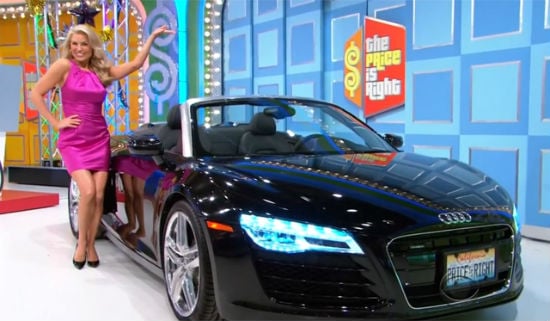
Buck Williams had spent the day buying a car — something he hadn’t needed in Manhattan — and hunting for an apartment. He found a beautiful condo, at a place that advertised already installed phones, midway between the Global Weekly Chicago bureau office and New Hope Village Church in Mount Prospect.
Here is another example of why even a Very Bad film, like Left Behind: The Movie, will often be better than a Very Bad book. If you’re shooting a movie, you’re going to have to show us the car. It will thus need to be a particular car — an actual automobile of a particular make and model, in a particular color, etc. — rather than the generic car being driven by Buck here thanks to the wholly unparticular Jerry Jenkins. Someone on the movie set will therefore need to ask, “What kind of car?” which will likely lead to the more specific question, “What kind of car would Buck drive?” And thus, despite themselves, even Very Bad filmmakers will wind up having to put more consideration into Buck’s character than Jenkins ever bothers to do here.
This scene also reminds us that Tribulation Force isn’t really set in a post-Event world.
The Event — the Rapture in which every child on earth and millions of adults vanished without explanation — was a wholly self-contained phenomenon that began and ended in Book 1 and will have no repercussions for the setting of our story here in the wholly separate realm of Book 2.
Here in TF, therefore, it still makes sense for Buck to go car-shopping and apartment-hunting, because the automobile and real-estate markets in this part of the series remain untouched and unperturbed by the Event. The fact that — just two weeks and a few hundred pages ago — we were reading about highways and parking garages packed with the abandoned cars of the disappeared doesn’t have any bearing on the availability or demand for vehicles at this point in the story.
The post-Event world ought to be a fascinating place. This, again, is what is so maddeningly frustrating about these books. The authors refuse to explore this world and they refuse to let us explore it either.
“Buck had spent the day buying a car” — that could have been an entire chapter. It could have been a chapter I’d have read with delight if the authors had shown the slightest bit of curiosity or imagination about what this task would have entailed in their alleged setting.
Global demand for cars, one assumes, would have declined even more than the one-third reduction in the global population, as a traumatized planet would likely respond by hoarding cash (and bottled water, canned goods and ammunition — something the Tribulation Force itself doesn’t get around to doing for a bewilderingly long time). Two weeks on, automakers would still be frantically trying to figure out how their suddenly diminished production capacity corresponded to this suddenly diminished worldwide demand. Local used car dealers might be pleading with local authorities to keep abandoned cars indefinitely impounded to prevent a further glut in the market, or they might be angling for some backroom bargain to get their hands on this massive inventory for next to nothing. In Buck’s new Chicago-area home, impromptu black markets for those abandoned cars would have sprung up in the student parking lots of Wheaton College and Moody Bible Institute.
Even if we confine ourselves to the particular details of Buck’s visit to a single dealership, the possibilities flood out faster than one can even write them down. … “I can let you have a minivan at cost. They’re hidden out back. People find them upsetting.” … “We’ve stopped doing trade-ins, no room on the lot” … “Excuse me, can you help me?” Buck said. “I’d like to test-drive the Camaro.” The man looked up, startled, his eyes wet with tears. … “I’ll throw in the 10-year warranty gratis.” “Thanks, but that’s more than I need,” Buck said. …
We could go on and on and on (I invite you to in comments below), exploring the many ways, large and small, surprising or illuminating, that buying a car in the post-Event world would be different than this transaction is in our world.
By exploring such differences, we would learn a great deal about what both worlds are like and how and why they work the way they do. That sort of thing can be fascinating, but only if you care about the fictional world or about the real one or both.
LaHaye and Jenkins aren’t interested in either one. Thus, “Buck had spent the day buying a car.”
Likewise we’re told almost nothing about Buck’s “hunting for an apartment.” Allow yourself even a moment’s thought about apartment-hunting in the post-Event world and again alps on alps arise.
Buck finds a condo with “already installed phones.” (What the …?) He’s wasting his money. He could easily have found a whole house with already installed furniture, clothing and ready-to-wear identity complete with line of credit. Or Bruce could have just said, “Here’s the church membership list, Buck. I’ve crossed off my house and Loretta’s, but there’s still a few hundred addresses there worth checking out.” (For an intriguing imagining of what post-Event squatter culture might look like, see Jim Munroe’s graphic novel “Therefore, Repent!” Read a half-dozen panels and you’ll realize that, no matter what L&J may claim, their series is not set in a post-Rapture world at all.)
Following some tangent from a comment thread the other day I wound up revisiting some of what J.R.R. Tolkien had to say about the artist’s imitation of the divine act of creation. That sense of loving reverence came through in Tolkien’s painstakingly detailed efforts at world-building. LaHaye & Jenkins’ approach to “subcreation” likewise mirrors their own concept of divine creation — slapdash, careless and unconcerned with the world itself. World-building, setting and character don’t matter, only the mechanical unfolding of the implacable grand scheme.
They are hack novelists, in other words, because they believe that God is a hack novelist.

Next Post

July 29, 2018 Sunday favorites
Browse Our Archives
Select a Category class warfare evangelicals Iraq Left Behind Mammon music Uncategorized
Select a Month October 2026 September 2026 August 2026 July 2026 June 2026 May 2026 April 2026 March 2026 January 2026 December 2025 November 2025 October 2025 September 2025 August 2025 July 2025 June 2025 May 2025 April 2025 March 2025 February 2025 January 2025 December 2024 November 2024 October 2024 September 2024 August 2024 July 2024 June 2024 May 2024 April 2024 March 2024 February 2024 January 2024 December 2023 November 2023 October 2023 September 2023 August 2023 July 2023 June 2023 May 2023 April 2023 March 2023 February 2023 January 2023 December 2022 November 2022 October 2022 September 2022 August 2022 July 2022 June 2022 May 2022 April 2022 March 2022 February 2022 January 2022 December 2021 November 2021 October 2021 September 2021 August 2021 July 2021 June 2021 May 2021 April 2021 March 2021 February 2021 January 2021 December 2020 November 2020 October 2020 September 2020 August 2020 July 2020 June 2020 May 2020 April 2020 March 2020 February 2020 January 2020 December 2019 November 2019 October 2019 September 2019 August 2019 July 2019 June 2019 May 2019 April 2019 March 2019 February 2019 January 2019 December 2018 November 2018 October 2018 September 2018 August 2018 July 2018 June 2018 May 2018 April 2018 March 2018 February 2018 January 2018 December 2017 November 2017 October 2017 September 2017 August 2017 July 2017 June 2017 May 2017 April 2017 March 2017 February 2017 January 2017 December 2016 November 2016 October 2016 September 2016 August 2016 July 2016 June 2016 May 2016 April 2016 March 2016 February 2016 January 2016 December 2015 November 2015 October 2015 September 2015 August 2015 July 2015 June 2015 May 2015 April 2015 March 2015 February 2015 January 2015 December 2014 November 2014 October 2014 September 2014 August 2014 July 2014 June 2014 May 2014 April 2014 March 2014 February 2014 January 2014 December 2013 November 2013 October 2013 September 2013 August 2013 July 2013 June 2013 May 2013 April 2013 March 2013 February 2013 January 2013 December 2012 November 2012 October 2012 September 2012 August 2012 July 2012 June 2012 May 2012 April 2012 March 2012 February 2012 January 2012 December 2011 November 2011 October 2011 September 2011 August 2011 July 2011 June 2011 May 2011 April 2011 March 2011 February 2011 January 2011 December 2010 November 2010 October 2010 September 2010 August 2010 July 2010 June 2010 May 2010 April 2010 March 2010 February 2010 January 2010 December 2009 November 2009 October 2009 September 2009 August 2009 July 2009 June 2009 May 2009 April 2009 March 2009 February 2009 January 2009 December 2008 November 2008 October 2008 September 2008 August 2008 July 2008 June 2008 May 2008 April 2008 March 2008 February 2008 January 2008 December 2007 November 2007 October 2007 September 2007 August 2007 July 2007 June 2007 May 2007 April 2007 March 2007 February 2007 January 2007 December 2006 November 2006 October 2006 September 2006 August 2006 July 2006 June 2006 May 2006 April 2006 March 2006 February 2006 January 2006 December 2005 November 2005 October 2005 September 2005 August 2005 July 2005 June 2005 May 2005 April 2005 March 2005 February 2005 January 2005 December 2004 November 2004 October 2004 September 2004 August 2004 July 2004 June 2004 May 2004 April 2004 March 2004 February 2004 January 2004 December 2003 November 2003 October 2003 September 2003
Follow Us!
TAKE THE
Religious Wisdom Quiz
Which Psalm is famous as the "Shepherd's Psalm"?
Select your answer to see how you score.
Psalm 23 Psalm 1 Psalm 119 Psalm 51
Related posts from slacktivist

Can't seem to get it through my head

For Buffy and Carl so loved the world


'To every generation': Child abuse at Cornerstone Church
TRENDING AT PATHEOS Progressive Christian

Dolly Parton’s Last Song Wins Dove Award with...
Bluegrass band The Grascals, speaking on the red carpet at the 57th...

The Image: On the Horror of Capitalism and...
The Image Then went the Pharisees, and took counsel how they might...

We are approaching the date of our new American national holiday: October...

Letters on Living the Faith by C.S. Lewis
Most of us met C.S. Lewis as a public intellectual. Mere Christianity....

When Halloween Unmasks Married Hearts
Written by Dr. David K. Ewen from Eternal Truth Bible College Behind...

Aristotle. He’s been called the father of logic, the father of the...
view all Progressive Christian blogs
Ad-Free & Subscriber Log-In Subscription Support
- About Us
- 2026 Calendar
- Videos
- Podcasts
- Library of World Religions
- Faith In Media Tracker
- Advertise With Us
- Write for Us
- Privacy Policy
- Terms of Service
- Do Not Sell My Data
- Contact Us
- Radiant Digital
- Manage Newsletter Subscriptions
- Unsubscribe From Notifications
- Sitemap
Copyright 2008-2026, Patheos. All rights reserved.
Subscription Support Ad-Free & Subscriber Log-In
Follow Patheos