
BuddhistCatholicContemplativeEvangelicalGeneral ChristianHinduJewishLatter-day SaintMuslimNew VisionsProgressive Christian
Beliefs
- Buddhist
- Catholic
- Contemplative
- Evangelical
- General Christian
- Hindu
- Jewish
- Latter-day Saint
- More Voices
- Muslim
- New Visions
- Pagan
- Progressive Christian
Topics
- Religion News
- Food and Religion
- Sports and Religion
- Religious Art
- Religious Music and Entertainment
- Religious Events
- History and Religion
- Style and Religion
- Politics and Religion
- Women in Religion
- Recreation Outdoors and Religion
- Business Finance and Religion
- Careers Workplace and Religion
- Education and Religion
- Family Parenting and Religion
- Health Fitness and Religion
- Home and Religion
- Relationships and Religion
- Technology and Religion
- Travel and Religion
Columnists
- Buddhist Columnists
- Business Finance and Religion Columnists
- Careers Workplace and Religion Columnists
- Catholic Columnists
- Contemplative Columnists
- Education and Religion Columnists
- Evangelists Columnists
- Family Parenting and Religion Columnists
- General Christian Columnists
- Health Fitness and Religion Columnists
- Hindu Columnists
- History and Religion Columnists
- Home and Religion Columnists
- Jewish Columnists
- More Voices Columnists
- Latter Day Columnists
- Muslim Columnists
- New Visions Columnists
- Nonreligious Columnists
- Pagan Columnists
- Politics and Religion Columnists
- Progressive Columnists
- Recreation Outdoors and Religion Columnists
- Relationships and Religion Columnists
- Religion News Columnists
- Religious Art Columnists
- Religious Events Columnists
- Religious Music and Entertainment Columnists
- Sports and Religion Columnists
- Style and Religion Columnists
- Technology and Religion Columnists
- Travel and Religion Columnists
- Women in Religion Columnists
Resource Library
- 2026 Calendar
- Library of World Religions
- The 100 Most Holy Places on Earth
- Patheos Answers
- Podcasts
- Videos
- Faith Leaders Database
- Anglican Episcopalian
- Bahai
- Baptist
- Buddhism
- Christianity
- Confucianism
- Eastern Orthodoxy
- Hinduism
- Holiness and Pentecostal
- ISKCON
- Islam
- Judaism
- Lutheran
- Methodist
- The Church of Jesus Christ of Latter-day Saints
- New Age
- Paganism
- Presbytarian and Reformed
- Protestantism
- Religion Behind the Scenes
- Roman Catholic
- Scientology
- Shia Islam
- Sikhism
- Sufism
- Sunni Islam
- Taoism
- Zen
- See all religions
Research Tools
 Ad-Free & Subscriber Log-In Subscription Support
Ad-Free & Subscriber Log-In Subscription Support
Follow Patheos 

- Trending:
- Forgiveness
- |
- Marriage
- |
- Consciousness
- |
- Death Penalty
- |
- Election
- |
- Halloween

- Home
- Progressive Christian
- Only visiting this planet
Only visiting this planet
Last updated on: March 22, 2018 at 8:31 pm by Fred Clark
Only visiting this planet 2018-03-22T20:31:44-04:00 Fred Clark
Patheos Explore the world's faith through different perspectives on religion and spirituality! Patheos has the views of the prevalent religions and spiritualities of the world.
Gregory Alan Thornbury has turned from writing books about the life and work of Carl F.H. Henry to writing a biography of Larry Norman. That’s a strange turn for an academic career, but there’s a certain logic to it, which becomes clearer when you read Thornbury’s recent Washington Post op-ed: “What evangelicals looked like before they entered the political fray.”
Thornbury’s essay capably covers the partisan transformation of white evangelicalism that started back when I was in junior high:
The public’s impression of evangelicals changed, too. During the ’70s they were seen, at best, as people with trite bumper stickers like “Smile, God Loves You,” and at worst, people who served up Jesus as an answer to things people didn’t see as problems. But in the minds of the new mass media radio and television evangelists, preaching Christ meant choosing sides. “Onward, Christian Soldiers” was not only a favorite hymn but their frequent theme.
Within Christian circles, Hollywood, rock and roll and anything that sounded “liberal” were now the enemy in the minds of the televangelists and their legions of followers. The culture wars proceeded apace, and they kept the faithful mobilized. Subsequent evangelicals didn’t get contracts with secular record labels, as Norman once did. If they did manage to do so, they stayed silent about their religious views. So increasingly evangelicals doubled down on building their own record companies, publishing houses, and increasingly, their own subculture. And the only time they poked their heads above their own wall was to hand out a voter’s guide or endorse a political candidate. By the time University of Virginia sociologist James Davison Hunter coined the term “culture wars” in 1991, the die had been cast. No longer could evangelicals be a part of the cultural mainstream, and eventually they would come to be known in the mind’s eye of the public as little more than the Republican Party, now Donald Trump’s party, for the foreseeable future.
Thornbury is pretty clearly a big fan of the long-haired godfather of “Christian rock,”* and his effort to make Larry Norman a touchstone for the pre- and post-partisan white evangelical subculture seems a bit forced. I think the same argument might’ve worked better if he’d used Carl Henry instead.**
But the subject of Larry Norman ties in neatly with what we’ve been discussing here recently — thanks to Michael Gerson — about the relationship between the transformation of white evangelical politics and white evangelical eschatology. Larry was a premillennial dispensationalist — a Rapture-obsessed, End Times, “Bible prophecy” devotee.
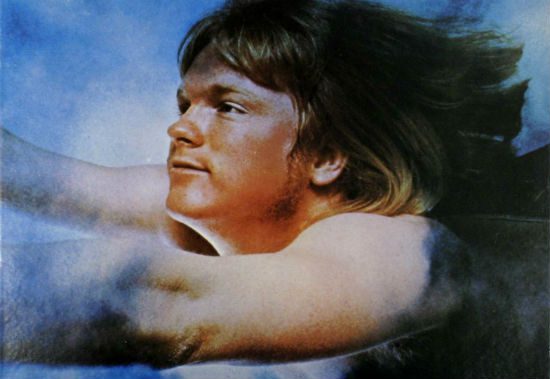
Like most pre-LaHaye Rapture-Christians, Larry Norman was nominally a-political. “What a mess this world is in, I wonder who began it? Don’t ask me, I’m only visiting this planet.”
But this a-political pose wasn’t credible. That’s partly because declaring oneself to be “a-political” is never credible. Carl Henry wanted to avoid partisan politics, so he kept Christianity Today “a-political” and “neutral” during the Civil Rights Movement. Being a by-stander doesn’t mean you’re not taking sides — it means you’re taking whichever side relies on the tacit support of by-standers. As Bishop Tutu put it: “If you are neutral in situations of injustice, you have chosen the side of the oppressor. If an elephant has its foot on the tail of a mouse and you say that you are neutral, the mouse will not appreciate your neutrality.”
More importantly, Norman’s End-Times Rapture obsession fiercely promoted a narrative of decline. The world, he proclaimed and sang, was spiraling toward Armageddon. “It’s all in Revelations, it part of the design / And if you’re truly wise you’ll keep your eyes on Palestine.” The injustices and social ills he rightly railed against in some of his attempted “protest songs” were all just signs of the times, evidence of the inevitable and inexorable downward slide.
This pessimistic premillennialism may be politically fatalistic, but the narrative of decline it reinforces is also a political call to action. And that call is explicitly reactionary. There’s a straight line from “It’s all in Revelations” to “MAGA.”
For an illustration of that trajectory, consider these lyrics from another 20th-century CCM relic:
It’s true, we look to Heaven and our mansions in the sky
And it’s true we’ve got the gaze of eternity in our eyesBut before this church is raptured
There’s no way we’re gonna leave here quiet
We want a righteous invasion of truth
We want a R.I.O.T.***
Yeah, that’s Carman — the novelty-song rock-star, perennial Charisma magazine favorite, and most successful Italian “rapper” ever to come out of Trenton. He’s still a big star in charismatic/Pentecostal/INC circles. The eschatological views of that branch of white evangelicalism are an unholy mess. They love premillennial dispensationalism and the Rapture and the “theology” of Left Behind, but they also — sometimes in the same breath — love postmillennial dominionism and “seven mountains” teaching.
It’s impossible to say how this mish-mash of pre- and post-millennial eschatologies influences the political ideology of INC Christians, but I also think that’s the wrong way to consider this. The eschatology/theology does not produce the politics. The politics is the starting point, and the eschatology/theology will be whatever jumble of beliefs it takes to retro-engineer that political preference.
See earlier: “My Top 10 Larry Norman Songs”
– – – – – – – – – – – –
* I haven’t read Thornbury’s biography: Why Should the Devil Have All the Good Music?: Larry Norman and the Perils of Christian Rock. He apparently had access to all of Norman’s copious journals, correspondence, and recordings — offering a more detailed and definitive look at the tormented rocker than we’ve previously gotten. Byron Borger loved it. And Ryan Vlastelica gives it a very positive review at the AV Club:
When it comes to telling the story of an artist, what makes a good biography is not the fame or even the talent of the book’s subject, but the complexity of the figure and how that manifests itself through their life and work. Norman’s story has this in abundance. Why Should The Devil also serves as a primer on Christian rock, a critical analysis of the genre, and a compact history of Christianity in the latter half of last century, a period where Jesus went from a counterculture hero to all outcasts to a cynically deployed tool of the religious right.
But there are two sides to every story, and when it came to Larry Norman, those two sides often broke down into Larry’s side vs. everybody else’s. I suspect I’m a bit more Larry-skeptical than Thornbury is, but it could be that my own fanhood for Randy, Terry, et. al., colors my view the same way I’m suspecting Thornbury’s fanhood for Larry colors his. Anyway, in the interest of balance, you may want to check this out too:
** Henry’s 1947 book The Uneasy Conscience of Modern Fundamentalism was an early, seminal call for white evangelical Christians to become more engaged in society and culture. He lived long enough to see the Monkey’s Paw grant him that wish in the form of the religious right. (I worked for “Evangelicals for Social Action” and can very much relate. When Ron Sider toyed with the idea of changing the group’s name in the 1990s, I suggested “Evangelicals for Social Action — No, Not Like That.”)
For my take on Carl Henry, see: “Five sentences that contain the entire history and explanation of white evangelicalism in America.”
*** This song is in the news at the moment because it was the namesake for the evangelical Bible club in which the now-deceased Austin bomber grew up.
Previous Post

March 21, 2018
Liberty U promoting biopic of Trump-idolizing conspiracy theorist
Next Post
March 23, 2018 LBCF, No. 177: 'Under cover'
Browse Our Archives
Select a Category class warfare evangelicals Iraq Left Behind Mammon music Uncategorized
Select a Month October 2026 September 2026 August 2026 July 2026 June 2026 May 2026 April 2026 March 2026 January 2026 December 2025 November 2025 October 2025 September 2025 August 2025 July 2025 June 2025 May 2025 April 2025 March 2025 February 2025 January 2025 December 2024 November 2024 October 2024 September 2024 August 2024 July 2024 June 2024 May 2024 April 2024 March 2024 February 2024 January 2024 December 2023 November 2023 October 2023 September 2023 August 2023 July 2023 June 2023 May 2023 April 2023 March 2023 February 2023 January 2023 December 2022 November 2022 October 2022 September 2022 August 2022 July 2022 June 2022 May 2022 April 2022 March 2022 February 2022 January 2022 December 2021 November 2021 October 2021 September 2021 August 2021 July 2021 June 2021 May 2021 April 2021 March 2021 February 2021 January 2021 December 2020 November 2020 October 2020 September 2020 August 2020 July 2020 June 2020 May 2020 April 2020 March 2020 February 2020 January 2020 December 2019 November 2019 October 2019 September 2019 August 2019 July 2019 June 2019 May 2019 April 2019 March 2019 February 2019 January 2019 December 2018 November 2018 October 2018 September 2018 August 2018 July 2018 June 2018 May 2018 April 2018 March 2018 February 2018 January 2018 December 2017 November 2017 October 2017 September 2017 August 2017 July 2017 June 2017 May 2017 April 2017 March 2017 February 2017 January 2017 December 2016 November 2016 October 2016 September 2016 August 2016 July 2016 June 2016 May 2016 April 2016 March 2016 February 2016 January 2016 December 2015 November 2015 October 2015 September 2015 August 2015 July 2015 June 2015 May 2015 April 2015 March 2015 February 2015 January 2015 December 2014 November 2014 October 2014 September 2014 August 2014 July 2014 June 2014 May 2014 April 2014 March 2014 February 2014 January 2014 December 2013 November 2013 October 2013 September 2013 August 2013 July 2013 June 2013 May 2013 April 2013 March 2013 February 2013 January 2013 December 2012 November 2012 October 2012 September 2012 August 2012 July 2012 June 2012 May 2012 April 2012 March 2012 February 2012 January 2012 December 2011 November 2011 October 2011 September 2011 August 2011 July 2011 June 2011 May 2011 April 2011 March 2011 February 2011 January 2011 December 2010 November 2010 October 2010 September 2010 August 2010 July 2010 June 2010 May 2010 April 2010 March 2010 February 2010 January 2010 December 2009 November 2009 October 2009 September 2009 August 2009 July 2009 June 2009 May 2009 April 2009 March 2009 February 2009 January 2009 December 2008 November 2008 October 2008 September 2008 August 2008 July 2008 June 2008 May 2008 April 2008 March 2008 February 2008 January 2008 December 2007 November 2007 October 2007 September 2007 August 2007 July 2007 June 2007 May 2007 April 2007 March 2007 February 2007 January 2007 December 2006 November 2006 October 2006 September 2006 August 2006 July 2006 June 2006 May 2006 April 2006 March 2006 February 2006 January 2006 December 2005 November 2005 October 2005 September 2005 August 2005 July 2005 June 2005 May 2005 April 2005 March 2005 February 2005 January 2005 December 2004 November 2004 October 2004 September 2004 August 2004 July 2004 June 2004 May 2004 April 2004 March 2004 February 2004 January 2004 December 2003 November 2003 October 2003 September 2003
Follow Us!
TAKE THE
Religious Wisdom Quiz
Where did David hide from Saul for many years?
Select your answer to see how you score.
The wilderness Philistine camp Jerusalem Jericho
Related posts from slacktivist

Is this the right room for an argument?


The Amish are not 'Evangelicals.' They're Amish.

The lumpers, the splitters, and me
TRENDING AT PATHEOS Progressive Christian

The Iron Gates and the Lion of the...
Yesterday, I didn't finish my report about, well, yesterday. So I'll...

Dolly Parton’s Last Song Wins Dove Award with...
Bluegrass band The Grascals, speaking on the red carpet at the 57th...

The Image: On the Horror of Capitalism and...
The Image Then went the Pharisees, and took counsel how they might...

We are approaching the date of our new American national holiday: October...

Letters on Living the Faith by C.S. Lewis
Most of us met C.S. Lewis as a public intellectual. Mere Christianity....

When Halloween Unmasks Married Hearts
Written by Dr. David K. Ewen from Eternal Truth Bible College Behind...
view all Progressive Christian blogs
Ad-Free & Subscriber Log-In Subscription Support
- About Us
- 2026 Calendar
- Videos
- Podcasts
- Library of World Religions
- Faith In Media Tracker
- Advertise With Us
- Write for Us
- Privacy Policy
- Terms of Service
- Do Not Sell My Data
- Contact Us
- Radiant Digital
- Manage Newsletter Subscriptions
- Unsubscribe From Notifications
- Sitemap
Copyright 2008-2026, Patheos. All rights reserved.
Subscription Support Ad-Free & Subscriber Log-In
Follow Patheos