
BuddhistCatholicContemplativeEvangelicalGeneral ChristianHinduJewishLatter-day SaintMuslimNew VisionsProgressive Christian
Beliefs
- Buddhist
- Catholic
- Contemplative
- Evangelical
- General Christian
- Hindu
- Jewish
- Latter-day Saint
- More Voices
- Muslim
- New Visions
- Pagan
- Progressive Christian
Topics
- Religion News
- Food and Religion
- Sports and Religion
- Religious Art
- Religious Music and Entertainment
- Religious Events
- History and Religion
- Style and Religion
- Politics and Religion
- Women in Religion
- Recreation Outdoors and Religion
- Business Finance and Religion
- Careers Workplace and Religion
- Education and Religion
- Family Parenting and Religion
- Health Fitness and Religion
- Home and Religion
- Relationships and Religion
- Technology and Religion
- Travel and Religion
Columnists
- Buddhist Columnists
- Business Finance and Religion Columnists
- Careers Workplace and Religion Columnists
- Catholic Columnists
- Contemplative Columnists
- Education and Religion Columnists
- Evangelists Columnists
- Family Parenting and Religion Columnists
- General Christian Columnists
- Health Fitness and Religion Columnists
- Hindu Columnists
- History and Religion Columnists
- Home and Religion Columnists
- Jewish Columnists
- More Voices Columnists
- Latter Day Columnists
- Muslim Columnists
- New Visions Columnists
- Nonreligious Columnists
- Pagan Columnists
- Politics and Religion Columnists
- Progressive Columnists
- Recreation Outdoors and Religion Columnists
- Relationships and Religion Columnists
- Religion News Columnists
- Religious Art Columnists
- Religious Events Columnists
- Religious Music and Entertainment Columnists
- Sports and Religion Columnists
- Style and Religion Columnists
- Technology and Religion Columnists
- Travel and Religion Columnists
- Women in Religion Columnists
Resource Library
- 2026 Calendar
- Library of World Religions
- The 100 Most Holy Places on Earth
- Patheos Answers
- Podcasts
- Videos
- Faith Leaders Database
- Anglican Episcopalian
- Bahai
- Baptist
- Buddhism
- Christianity
- Confucianism
- Eastern Orthodoxy
- Hinduism
- Holiness and Pentecostal
- ISKCON
- Islam
- Judaism
- Lutheran
- Methodist
- The Church of Jesus Christ of Latter-day Saints
- New Age
- Paganism
- Presbytarian and Reformed
- Protestantism
- Religion Behind the Scenes
- Roman Catholic
- Scientology
- Shia Islam
- Sikhism
- Sufism
- Sunni Islam
- Taoism
- Zen
- See all religions
Research Tools
 Ad-Free & Subscriber Log-In Subscription Support
Ad-Free & Subscriber Log-In Subscription Support
Follow Patheos 

- Trending:
- Forgiveness
- |
- Marriage
- |
- Consciousness
- |
- Death Penalty
- |
- Election
- |
- Halloween

- Home
- Progressive Christian
- The Mister, the Doctor, the Captain, and the Marshal (and you and me too)
The Mister, the Doctor, the Captain, and the Marshal (and you and me too)
Last updated on: January 31, 2018 at 6:48 pm by Fred Clark
The Mister, the Doctor, the Captain, and the Marshal (and you and me too) 2018-01-31T18:48:19-05:00 Fred Clark
Patheos Explore the world's faith through different perspectives on religion and spirituality! Patheos has the views of the prevalent religions and spiritualities of the world.
Yesterday I mentioned the news that Tom Hanks will be portraying Mister Rogers in an upcoming movie. Some reports on this news said that Hanks will be starring as Fred Rogers, but I don’t think that’s what the filmmakers have in mind. I don’t think that would even be possible. It wouldn’t work.
“The Fred Rogers Story” couldn’t be a movie because it isn’t really a story. Stories involve conflict and choices and changes. Mister Rogers didn’t change. According to the famous Tom Junod profile — the one that inspired this film project — Fred Rogers weighed 143 pounds for almost his entire life and scarcely ever varied his ascetic daily routine. As for choices, Rogers seems to have made them all a very long time ago, and to have committed to them so fully and fiercely that for the rest of his life they didn’t even seem like they were still choices anymore. And as for conflict — long considered the key to stories and to storytelling — well, conflict always turned out to be hard to sustain when Fred Rogers was in the picture. It seemed to flee or to melt away when he showed up.
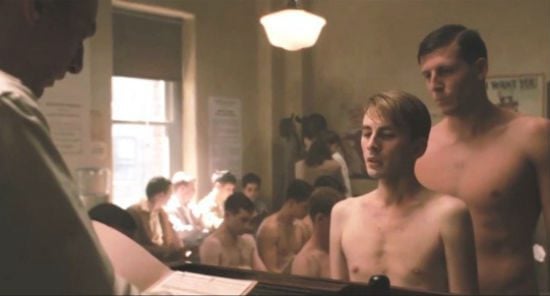
Rogers at 143 pounds.
So I don’t think anyone could make a movie called “The Fred Rogers Story” starring Tom Hanks as Fred Rogers, and that doesn’t seem to be what director Marielle Heller has in mind. The star of You Are My Friend — the main character of the story, the one who will face conflict and make choices and change — is going to be the Tom Junod character. Or, really, a fictionalized version of Junod, who will also serve, of course, as the stand-in for the rest of us. (Junod says he’d like to see Jon Hamm get the part.)
I happened to re-read that amazing Esquire piece after recently rewatching Peter Capaldi’s final scene on Doctor Who, and thus was struck by some of the similarities between these two madmen with their magic boxes. “Never be cruel; never be cowardly,” the Doctor says. “Remember: Hate is always foolish, and love is always wise.” And “Always try to be nice and never fail to be kind.” That works as a character-Bible for the show’s writers, but it could just as easily have been lifted from the lyrics of one of those gentle little songs from the Neighborhood. I rewatched that scene from Doctor Who and started wondering if the Mister, like the Doctor, had kept his true name a secret, because “No one would understand it anyway — except children. Children can hear it, sometimes.”
But the most Doctor Who thing about Fred Rogers, I think, doesn’t involve the actual Doctor. It’s that fun moment that happens every time some new companion or visitor enters the Tardis. They squirm through the doors of the tiny blue police box and then their eyes go wide in awe and bewilderment: “It’s … it’s bigger on the inside!” Mister Rogers had that same reaction every time he met anyone new. You’re bigger on the inside! Isn’t it marvelous? Aren’t you wonderful? And he meant it, too.
I was still chewing on this a bit when I tripped over this post from Richard Beck this morning, “What Is The Right Thing To Do?”
That question — a moral question, a should-y, ought-y question — is often at the heart of stories. The conflict and change and choice facing our protagonist often centers around that question: What is the right thing to do? Will our hero figure it out, and will our hero have the courage or moxie to choose to do it? That’s where suspense comes from, the thing that makes us want to keep turning pages or to keep watching because we need to know what happens next. It’s not really from Hitchcock’s famous bomb under the table — that’s something that happens to the characters, not something they do. Suspense comes from needing to know what they do and what they choose. Will they do “the right thing”?
High Noon is a classic example of that. There’s suspense in the final confrontation between Gary Cooper and the outlaws, but that scene is only about seven minutes long. The real suspense of the previous hour of the movie doesn’t come from kapow! kapow! or from who shoots who*,* but rather from watching the characters — Cooper and Grace Kelly and Katy Jurado and all rest — as they’re forced to make choices. Will they “do the right thing” or not?
But I think Beck is right when he warns us that “What Is the Right Thing To Do?” isn’t always the best question — whether for our stories or for ourselves. He writes:
More and more I’ve come to the conclusion that, as human beings, we rarely know what is the right thing to do. There are no guarantees. We cannot see into the future. There are things we may be missing.
What’s the right thing to do? God knows, but we rarely do. We are limited, finite creatures.
And yet, we fret, fearing that if we can’t find the right thing to do we’ll end up doing the wrong thing. And that choice — between doing the right thing or the wrong thing — fills us with dread.
So let me make this suggestion. Let’s stop thinking about decisions and choices as being “right” or “wrong.” We just won’t know. Can’t know.
So instead of thinking about a choice as right or wrong — instead of moralizing our decisions — let’s ask if a decision is wise. Is this a wise thing to do? I think the wise/foolish frame is better than the moralized right vs. wrong frame.
Rarely will we know, with absolute certainty, what is the right thing to do. But is it within our capacity to make wise rather than foolish decisions.
Of course, it’s also within our capacity — and within our tendency — to rationalize our choices in the most self-serving of ways. Wise can easily get whittled down to prudent, which gets further reduced to practical, and then down to expedient, and then to convenient, and then to whatever’s easiest. And before you know it we’re all getting on board the last train out of Hadleyville.
So I think Beck’s advice still requires moral considerations, but it approaches them in a more insightful, more fruitful, and less daunting way.
But we weren’t talking about morality, per se. We were talking about stories. And I think Beck’s rumination on the wisdom of wisdom suggests something interesting about storytelling.
The problem with stories about characters like Marshal Will Kane is that they can’t help but remind us that they are fundamentally morality tales. That can make them ponderous in several ways, in part because it saps a bit of their suspense. Will Gary Cooper do the right thing? Or course he will, because he’s Gary Cooper. (Or because he’s Jimmy Stewart. Or because he’s Tom Hanks.) Give us a character whose defining trait is that they always choose to do the right thing and put them in a story that asks whether or not they’ll choose to do the right thing and we’re not really left with much to wonder about what’s going to happen next.
The possibility of real suspense — of wondering what choices will be made, and of needing to know what happens next — is better served if we come at their morality tale from another angle, by avoiding, as Beck advises, that daunting, moralistic question of “What is the right thing to do?” I think that’s why I enjoy stories about the Doctor. S/he’s not perpetually worrying about that dreadful question, but, rather, about “Never be cruel; never be cowardly.” Such characters remain compelling even when their choices seem like a long-settled foregone conclusion. Characters like that are moral, but in a way that’s more concerned with good than with right. Their defining traits aren’t “Always Does The Right Thing,” but are located instead in their embodiment of some other virtue — whether it be Beck’s suggestion of wisdom (“love is always wise”) or something else, like courage, or kindness, or justice.
Think again of Fred Rogers. Or of Steve Rogers. But I think such archetypes of virtue should be the exception, rather than the norm. They can seem a bit unapproachably beyond us mere mortals. We’re not saints or superheroes or Timelords, and we can’t just will ourselves to become the Doctor or the Mister or the Captain. So it’s usually better, I think, to envision a character not as the embodiment of some defining virtue, but rather as someone who wants or aspires to be that. Show us what it is they want to be, then give them a chance to be it and we’ll all see how they do.
That’s also how it works out here in real life, too, of course. We can’t and don’t really spend all of our time pondering “What is the right thing to do?” but rather we decide what it is we want or aspire to be. Then we look for our chances to be that and we see how we do.
This, too, creates an element of suspense. We can’t help but keep watching to see what we’ll choose to do next and how we’ll turn out in the end.
Previous Post

January 30, 2018
I feel so good if I just say the word
Next Post
February 1, 2018 Smart people saying smart things (2.1)
Browse Our Archives
Select a Category class warfare evangelicals Iraq Left Behind Mammon music Uncategorized
Select a Month October 2026 September 2026 August 2026 July 2026 June 2026 May 2026 April 2026 March 2026 January 2026 December 2025 November 2025 October 2025 September 2025 August 2025 July 2025 June 2025 May 2025 April 2025 March 2025 February 2025 January 2025 December 2024 November 2024 October 2024 September 2024 August 2024 July 2024 June 2024 May 2024 April 2024 March 2024 February 2024 January 2024 December 2023 November 2023 October 2023 September 2023 August 2023 July 2023 June 2023 May 2023 April 2023 March 2023 February 2023 January 2023 December 2022 November 2022 October 2022 September 2022 August 2022 July 2022 June 2022 May 2022 April 2022 March 2022 February 2022 January 2022 December 2021 November 2021 October 2021 September 2021 August 2021 July 2021 June 2021 May 2021 April 2021 March 2021 February 2021 January 2021 December 2020 November 2020 October 2020 September 2020 August 2020 July 2020 June 2020 May 2020 April 2020 March 2020 February 2020 January 2020 December 2019 November 2019 October 2019 September 2019 August 2019 July 2019 June 2019 May 2019 April 2019 March 2019 February 2019 January 2019 December 2018 November 2018 October 2018 September 2018 August 2018 July 2018 June 2018 May 2018 April 2018 March 2018 February 2018 January 2018 December 2017 November 2017 October 2017 September 2017 August 2017 July 2017 June 2017 May 2017 April 2017 March 2017 February 2017 January 2017 December 2016 November 2016 October 2016 September 2016 August 2016 July 2016 June 2016 May 2016 April 2016 March 2016 February 2016 January 2016 December 2015 November 2015 October 2015 September 2015 August 2015 July 2015 June 2015 May 2015 April 2015 March 2015 February 2015 January 2015 December 2014 November 2014 October 2014 September 2014 August 2014 July 2014 June 2014 May 2014 April 2014 March 2014 February 2014 January 2014 December 2013 November 2013 October 2013 September 2013 August 2013 July 2013 June 2013 May 2013 April 2013 March 2013 February 2013 January 2013 December 2012 November 2012 October 2012 September 2012 August 2012 July 2012 June 2012 May 2012 April 2012 March 2012 February 2012 January 2012 December 2011 November 2011 October 2011 September 2011 August 2011 July 2011 June 2011 May 2011 April 2011 March 2011 February 2011 January 2011 December 2010 November 2010 October 2010 September 2010 August 2010 July 2010 June 2010 May 2010 April 2010 March 2010 February 2010 January 2010 December 2009 November 2009 October 2009 September 2009 August 2009 July 2009 June 2009 May 2009 April 2009 March 2009 February 2009 January 2009 December 2008 November 2008 October 2008 September 2008 August 2008 July 2008 June 2008 May 2008 April 2008 March 2008 February 2008 January 2008 December 2007 November 2007 October 2007 September 2007 August 2007 July 2007 June 2007 May 2007 April 2007 March 2007 February 2007 January 2007 December 2006 November 2006 October 2006 September 2006 August 2006 July 2006 June 2006 May 2006 April 2006 March 2006 February 2006 January 2006 December 2005 November 2005 October 2005 September 2005 August 2005 July 2005 June 2005 May 2005 April 2005 March 2005 February 2005 January 2005 December 2004 November 2004 October 2004 September 2004 August 2004 July 2004 June 2004 May 2004 April 2004 March 2004 February 2004 January 2004 December 2003 November 2003 October 2003 September 2003
Follow Us!
TAKE THE
Religious Wisdom Quiz
What does 2 John emphasize believers should walk in?
Select your answer to see how you score.
Love and truth Knowledge and power Faith and law Fear and wisdom
Related posts from slacktivist

The purpose-driven labor priest

'A hermeneutical Pandora’s box'

No, most white evangelicals are not 'egalitarian'

TRENDING AT PATHEOS Progressive Christian

Swimfan: Forgotten Aughts Pleasures
This is a recovery effort. In 2002, My Big Fat Greek Wedding...

Top Three Anti-Catholic Lies About Catholicism
This is my initial transcript for the video, "THE 3 WORST...

Pope Leo Celebrates Mass for Nurses & Docs...
I don't have any idea how he did it, but Pope Leo...

The Sermon on the Mount, Part I: Matthew...
The Sermon on the Mount, Part I (Matthew 4:12-5:12) St. Matthew moves...

What's up from Crossway: Reviewing some of their latest A few weeks...

Janie Learns the Way of the Cross: A...
Teaching children about Jesus' Passion can be challenging. Many parents and educators...
view all Progressive Christian blogs
Ad-Free & Subscriber Log-In Subscription Support
- About Us
- 2026 Calendar
- Videos
- Podcasts
- Library of World Religions
- Faith In Media Tracker
- Advertise With Us
- Write for Us
- Privacy Policy
- Terms of Service
- Do Not Sell My Data
- Contact Us
- Radiant Digital
- Manage Newsletter Subscriptions
- Unsubscribe From Notifications
- Sitemap
Copyright 2008-2026, Patheos. All rights reserved.
Subscription Support Ad-Free & Subscriber Log-In
Follow Patheos