
BuddhistCatholicContemplativeEvangelicalGeneral ChristianHinduJewishLatter-day SaintMuslimNew VisionsProgressive Christian
Beliefs
- Buddhist
- Catholic
- Contemplative
- Evangelical
- General Christian
- Hindu
- Jewish
- Latter-day Saint
- More Voices
- Muslim
- New Visions
- Pagan
- Progressive Christian
Topics
- Religion News
- Food and Religion
- Sports and Religion
- Religious Art
- Religious Music and Entertainment
- Religious Events
- History and Religion
- Style and Religion
- Politics and Religion
- Women in Religion
- Recreation Outdoors and Religion
- Business Finance and Religion
- Careers Workplace and Religion
- Education and Religion
- Family Parenting and Religion
- Health Fitness and Religion
- Home and Religion
- Relationships and Religion
- Technology and Religion
- Travel and Religion
Columnists
- Buddhist Columnists
- Business Finance and Religion Columnists
- Careers Workplace and Religion Columnists
- Catholic Columnists
- Contemplative Columnists
- Education and Religion Columnists
- Evangelists Columnists
- Family Parenting and Religion Columnists
- General Christian Columnists
- Health Fitness and Religion Columnists
- Hindu Columnists
- History and Religion Columnists
- Home and Religion Columnists
- Jewish Columnists
- More Voices Columnists
- Latter Day Columnists
- Muslim Columnists
- New Visions Columnists
- Nonreligious Columnists
- Pagan Columnists
- Politics and Religion Columnists
- Progressive Columnists
- Recreation Outdoors and Religion Columnists
- Relationships and Religion Columnists
- Religion News Columnists
- Religious Art Columnists
- Religious Events Columnists
- Religious Music and Entertainment Columnists
- Sports and Religion Columnists
- Style and Religion Columnists
- Technology and Religion Columnists
- Travel and Religion Columnists
- Women in Religion Columnists
Resource Library
- 2026 Calendar
- Library of World Religions
- The 100 Most Holy Places on Earth
- Patheos Answers
- Podcasts
- Videos
- Faith Leaders Database
- Anglican Episcopalian
- Bahai
- Baptist
- Buddhism
- Christianity
- Confucianism
- Eastern Orthodoxy
- Hinduism
- Holiness and Pentecostal
- ISKCON
- Islam
- Judaism
- Lutheran
- Methodist
- The Church of Jesus Christ of Latter-day Saints
- New Age
- Paganism
- Presbytarian and Reformed
- Protestantism
- Religion Behind the Scenes
- Roman Catholic
- Scientology
- Shia Islam
- Sikhism
- Sufism
- Sunni Islam
- Taoism
- Zen
- See all religions
Research Tools
 Ad-Free & Subscriber Log-In Subscription Support
Ad-Free & Subscriber Log-In Subscription Support
Follow Patheos 

- Trending:
- Forgiveness
- |
- Marriage
- |
- Consciousness
- |
- Death Penalty
- |
- Election
- |
- Halloween

- Home
- Progressive Christian
- The ‘work ethic’ can be unethical (part 1)
The ‘work ethic’ can be unethical (part 1)
Last updated on: May 19, 2017 at 7:52 pm by Fred Clark
The ‘work ethic’ can be unethical (part 1) 2017-05-19T19:52:03-04:00 Fred Clark
Patheos Explore the world's faith through different perspectives on religion and spirituality! Patheos has the views of the prevalent religions and spiritualities of the world.
You should always work hard and do your best. This is a moral obligation. Anything less that your best and most diligent effort is a deviation from your divinely appointed calling and responsibility. And it is a kind of theft. If you’re not working your hardest and doing your best, you are, in effect, stealing from your employer.
This is, more or less, the prevailing idea of a “work ethic.” You’ve probably heard some variation of this. One can find something like it in the teachings of Calvin and Luther and Wesley and Benjamin Franklin — in all of the major theologians who shaped American Protestantism, and thus it has been taught not just as a secular ethic, but also as a religious obligation. (Ever since Max Weber, we’ve talked about the Protestant work ethic, but in America this has never been an exclusively Protestant notion.*)
It seems reasonable. Who doesn’t think that working harder is better than slacking off? And who could possibly quarrel with something as uncontroversially wholesome as “always do your best”?
But this work ethic is misleading in at least two ways. Worse than that, it can be unethical. Immoral. Sinful.
The “work ethic,” as popularly promoted and understood, is a Bad Thing.
I want to consider two objections to this idea. The first suggests that our idea of a “work ethic” needs to be recalibrated and redirected, but that it might still be redeemable after such corrections are taken into account. The second objection, which is something I’ve only just begun to see and consider, cuts closer to the root of the problem.
I’ve written about the first objection before. See, for example, the 2011 post “Playoffs and rocking chairs” (which now reads as disturbingly prescient about my inevitable layoff from the newspaper business). This has to do with the mistaken notion that a worker’s primary obligation is to their employer.
That’s wrong. It’s wrong as in “inaccurate,” and it’s morally wrong. It’s wrongness is such that, if taken to heart, it will produce bad work.
The old post linked above considers the example of a hypothetical worker in a rocking-chair workshop. Because she is a good worker, she regards her first obligation as a duty to the people who will one day be sitting in the rocking chairs she is building. In corporate-speak, we would say that she puts her priority on her customers. But she, like most people who actually do that, wouldn’t think to use that word because she doesn’t think of them as people who will be paying for the chairs she makes, but rather as people who will be sitting on them — people who will be using them and enjoying them. To think of them only as “customers” would be to reduce them to the least-important aspect of their relationship to the chair and to the worker who created it.
The same is true for any worker in any given job or trade or profession. If they are to do their work well — if they are to work ethically — then they cannot and must not think of their employer or their paycheck-signer as being their first or their only obligation. Their obligation to their employer cannot even be their secondary consideration. It can only be, at best, a distant third — far behind their obligation to their don’t-call-them-customers and their obligation to their craft itself.
Whatever claim your employer has to your work — to your hard work and to your good work — must be subordinate to the greater, prior claims of the client/audience/end-user and of the craft itself. A good (in any sense) employer will understand this because they will share this same set of priorities.**
A bad employer will regard such proper subordination as *in-*subordination — as a perceived offense against their authority or rank or hierarchical power. They will demand that workers consider their concerns and desires and profits as having priority over the needs of the client and the needs of the craft. And they will thereby actively prevent their workers from doing their best — from working hard and working well.
This objection doesn’t directly challenge our idea of a “work ethic” — it simply refocuses its priorities. In a sense, this shifting of priorities only makes the obligation to work hard and do your best even stronger. That obligation is no longer tied to the moral claim your employer stakes by signing your paycheck, but to the much greater moral claim of the client/audience and of the craft itself. You should do your best, your most, your hardest not because failing to do so would be stealing from your employer, but because failing to do so would be like stealing from your audience. And it would be like stealing from, or eroding the value of, the craft itself.
If we shift our understanding of the “work ethic” in this direction, then, we’ll probably wind up working even harder and taking even greater care to do quality work. That this will likely get us viewed with hostile suspicion by our employers says a great deal about the pathological state of corporate America, but it’s neither here nor there as far as the ethics of our work ethic are concerned.
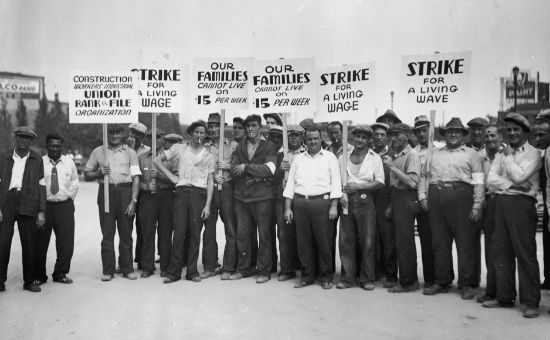
This strengthening of the work ethic, however, is on a collision course with the second objection I want to raise. That is, again, a more fundamental problem. This involves the recognition that always working our hardest and always doing our best may mean that we are stealing from our fellow workers — that we are, in fact, stealing from all workers everywhere.
This objection applies only given a specific set of circumstances, but those particular circumstances are disturbingly common. And if, like me, you find yourself in such circumstances, then you’re faced with this dilemma: In such a context, a “good” work ethic becomes ethically bad. In that circumstance, working hard and doing your best becomes immoral.
– – – – – – – – – – – –
* I suspect the particular emphasis on the Protestant work ethic isn’t entirely due to Weber, but also to a century’s worth of anti-Catholic and anti-immigrant sentiment propagandizing the xenophobic idea that those people — those newcomers threatening our hegemony — will erode our bedrock all-American values of hard work and honest livin’. (This accusation is usually incoherently coupled with its opposite concern — that these lazy, indolent immigrants were somehow also going to steal our jobs.)
Of course, if I were a Robber Baron capitalist looking to exploit religious teaching in service of exploiting workers, I would consider most forms of Protestant Christianity as more useful than Catholicism, which has all those encyclicals and all that social teaching about the priority of labor. This is why one can still find examples of that remarkable species, the labor priest, but why labor pastors seem as mythological and rare as Bigfoot. It’s also why most Protestant pastors dress like bankers (or, in hipster mega-churches, like venture capitalists funding a tech start-up).
** They will understand their role the way that theater-producer Hugh Fennyman comes to understand his role in Tom Stoppard’s Shakespeare in Love:
Hugh Fennyman: Uh, one moment, sir.
Ned Alleyn: Who are you?
Hugh Fennyman: I’m, uh… I’m the money.
Ned Alleyn: Then you may remain so long as you remain silent.
The producer is “the money” — the employer. He has an important role to play in the play and his concerns matter, but they do not matter as much as those of the audience and of the play itself.
Previous Post

May 19, 2017
LBCF, No. 135: 'A billion Samanthas'
Next Post
May 22, 2017 'Fighting for our children'
Browse Our Archives
Select a Category class warfare evangelicals Iraq Left Behind Mammon music Uncategorized
Select a Month October 2026 September 2026 August 2026 July 2026 June 2026 May 2026 April 2026 March 2026 January 2026 December 2025 November 2025 October 2025 September 2025 August 2025 July 2025 June 2025 May 2025 April 2025 March 2025 February 2025 January 2025 December 2024 November 2024 October 2024 September 2024 August 2024 July 2024 June 2024 May 2024 April 2024 March 2024 February 2024 January 2024 December 2023 November 2023 October 2023 September 2023 August 2023 July 2023 June 2023 May 2023 April 2023 March 2023 February 2023 January 2023 December 2022 November 2022 October 2022 September 2022 August 2022 July 2022 June 2022 May 2022 April 2022 March 2022 February 2022 January 2022 December 2021 November 2021 October 2021 September 2021 August 2021 July 2021 June 2021 May 2021 April 2021 March 2021 February 2021 January 2021 December 2020 November 2020 October 2020 September 2020 August 2020 July 2020 June 2020 May 2020 April 2020 March 2020 February 2020 January 2020 December 2019 November 2019 October 2019 September 2019 August 2019 July 2019 June 2019 May 2019 April 2019 March 2019 February 2019 January 2019 December 2018 November 2018 October 2018 September 2018 August 2018 July 2018 June 2018 May 2018 April 2018 March 2018 February 2018 January 2018 December 2017 November 2017 October 2017 September 2017 August 2017 July 2017 June 2017 May 2017 April 2017 March 2017 February 2017 January 2017 December 2016 November 2016 October 2016 September 2016 August 2016 July 2016 June 2016 May 2016 April 2016 March 2016 February 2016 January 2016 December 2015 November 2015 October 2015 September 2015 August 2015 July 2015 June 2015 May 2015 April 2015 March 2015 February 2015 January 2015 December 2014 November 2014 October 2014 September 2014 August 2014 July 2014 June 2014 May 2014 April 2014 March 2014 February 2014 January 2014 December 2013 November 2013 October 2013 September 2013 August 2013 July 2013 June 2013 May 2013 April 2013 March 2013 February 2013 January 2013 December 2012 November 2012 October 2012 September 2012 August 2012 July 2012 June 2012 May 2012 April 2012 March 2012 February 2012 January 2012 December 2011 November 2011 October 2011 September 2011 August 2011 July 2011 June 2011 May 2011 April 2011 March 2011 February 2011 January 2011 December 2010 November 2010 October 2010 September 2010 August 2010 July 2010 June 2010 May 2010 April 2010 March 2010 February 2010 January 2010 December 2009 November 2009 October 2009 September 2009 August 2009 July 2009 June 2009 May 2009 April 2009 March 2009 February 2009 January 2009 December 2008 November 2008 October 2008 September 2008 August 2008 July 2008 June 2008 May 2008 April 2008 March 2008 February 2008 January 2008 December 2007 November 2007 October 2007 September 2007 August 2007 July 2007 June 2007 May 2007 April 2007 March 2007 February 2007 January 2007 December 2006 November 2006 October 2006 September 2006 August 2006 July 2006 June 2006 May 2006 April 2006 March 2006 February 2006 January 2006 December 2005 November 2005 October 2005 September 2005 August 2005 July 2005 June 2005 May 2005 April 2005 March 2005 February 2005 January 2005 December 2004 November 2004 October 2004 September 2004 August 2004 July 2004 June 2004 May 2004 April 2004 March 2004 February 2004 January 2004 December 2003 November 2003 October 2003 September 2003
Follow Us!
TAKE THE
Religious Wisdom Quiz
Who was the last king of Israel before the Assyrian conquest?
Select your answer to see how you score.
Shallum Jehoahaz Amon Hoshea
Related posts from slacktivist




Postcards from America (02.05.25)
TRENDING AT PATHEOS Progressive Christian

57th Dove Awards Honor Dolly Parton, Crown New...
On gospel music’s biggest night, the 57th annual GMA Dove Awards honored...

The First Eucharistic Controversy: Christ’s Real Presence
For Catholics, the Eucharist is the source and summit of the Christian...

What a Stop Sign Can Teach Us About...
How to Make a Decision When You Can't Hear God Main point:...

Archdiocese Hosts Military Marriage Retreat in Germany
RASTATT, Germany — The transient military lifestyle, with its frequent deployments and...

Nearly every morning, I make the drive to Detroit with my high-school-age...

The Real AI Story Is Adoption Without Trust
Artificial intelligence has crossed a political threshold. It is no longer a...
view all Progressive Christian blogs
Ad-Free & Subscriber Log-In Subscription Support
- About Us
- 2026 Calendar
- Videos
- Podcasts
- Library of World Religions
- Faith In Media Tracker
- Advertise With Us
- Write for Us
- Privacy Policy
- Terms of Service
- Do Not Sell My Data
- Contact Us
- Radiant Digital
- Manage Newsletter Subscriptions
- Unsubscribe From Notifications
- Sitemap
Copyright 2008-2026, Patheos. All rights reserved.
Subscription Support Ad-Free & Subscriber Log-In
Follow Patheos