
BuddhistCatholicContemplativeEvangelicalGeneral ChristianHinduJewishLatter-day SaintMuslimNew VisionsProgressive Christian
Beliefs
- Buddhist
- Catholic
- Contemplative
- Evangelical
- General Christian
- Hindu
- Jewish
- Latter-day Saint
- More Voices
- Muslim
- New Visions
- Pagan
- Progressive Christian
Topics
- Religion News
- Food and Religion
- Sports and Religion
- Religious Art
- Religious Music and Entertainment
- Religious Events
- History and Religion
- Style and Religion
- Politics and Religion
- Women in Religion
- Recreation Outdoors and Religion
- Business Finance and Religion
- Careers Workplace and Religion
- Education and Religion
- Family Parenting and Religion
- Health Fitness and Religion
- Home and Religion
- Relationships and Religion
- Technology and Religion
- Travel and Religion
Columnists
- Buddhist Columnists
- Business Finance and Religion Columnists
- Careers Workplace and Religion Columnists
- Catholic Columnists
- Contemplative Columnists
- Education and Religion Columnists
- Evangelists Columnists
- Family Parenting and Religion Columnists
- General Christian Columnists
- Health Fitness and Religion Columnists
- Hindu Columnists
- History and Religion Columnists
- Home and Religion Columnists
- Jewish Columnists
- More Voices Columnists
- Latter Day Columnists
- Muslim Columnists
- New Visions Columnists
- Nonreligious Columnists
- Pagan Columnists
- Politics and Religion Columnists
- Progressive Columnists
- Recreation Outdoors and Religion Columnists
- Relationships and Religion Columnists
- Religion News Columnists
- Religious Art Columnists
- Religious Events Columnists
- Religious Music and Entertainment Columnists
- Sports and Religion Columnists
- Style and Religion Columnists
- Technology and Religion Columnists
- Travel and Religion Columnists
- Women in Religion Columnists
Resource Library
- 2026 Calendar
- Library of World Religions
- The 100 Most Holy Places on Earth
- Patheos Answers
- Podcasts
- Videos
- Faith Leaders Database
- Anglican Episcopalian
- Bahai
- Baptist
- Buddhism
- Christianity
- Confucianism
- Eastern Orthodoxy
- Hinduism
- Holiness and Pentecostal
- ISKCON
- Islam
- Judaism
- Lutheran
- Methodist
- The Church of Jesus Christ of Latter-day Saints
- New Age
- Paganism
- Presbytarian and Reformed
- Protestantism
- Religion Behind the Scenes
- Roman Catholic
- Scientology
- Shia Islam
- Sikhism
- Sufism
- Sunni Islam
- Taoism
- Zen
- See all religions
Research Tools
 Ad-Free & Subscriber Log-In Subscription Support
Ad-Free & Subscriber Log-In Subscription Support
Follow Patheos 

- Trending:
- Forgiveness
- |
- Marriage
- |
- Consciousness
- |
- Death Penalty
- |
- Election
- |
- Halloween

- Home
- Progressive Christian
- LBCF, No. 117: ‘A Very Bad Reporter’
LBCF, No. 117: ‘A Very Bad Reporter’
Last updated on: January 20, 2017 at 7:50 am by Fred Clark
LBCF, No. 117: ‘A Very Bad Reporter’ 2017-01-19T18:03:22-05:00 Fred Clark
Patheos Explore the world's faith through different perspectives on religion and spirituality! Patheos has the views of the prevalent religions and spiritualities of the world.
Originally posted June 22, 2007.
Read this entire series, for free, via the convenient Left Behind Index. This post is also part of the ebook collection The Anti-Christ Handbook: Volume 1, available on Amazon for just $2.99. Volume 2 of The Anti-Christ Handbook, completing all the posts on the first Left Behind book, is also now available.
Left Behind, pp. 292-298 (round 2)
Buck Williams, our hero, is a terrible reporter. During the past two days he has conducted two blockbuster interviews packed with astonishing revelations. He will not write about either of them. Ever.
First, back in London, he spoke with Inspector Alan Tompkins. Tompkins recounted scenes of brazen corruption, including his own eyewitness testimony of explicit death threats against police officers and their families. Those threats were made by a prominent public figure, Todd-Cothran, who as the head of the London Stock Exchange has to be concerned about his reputation and respectability.
Tompkins’ allegations were so explosive that I could understand Buck hesitating to publish them without confirmation from an additional source. But then again the interview ended with Tompkins’ execution, which would seem to provide at least enough confirmation to go ahead with publishing an account of his assertions about death threats moments before they were carried out.
But Buck never even considered doing that. Nor did he consider, at the very least, writing up his own eyewitness account of Tompkins’ death. Buck’s fleeing the scene made sense because the police were complicit in this murder, but that only makes this an even bigger story, a story that needed to be told.
Yet when he arrives safely back in New York, riding in a cab with his editor, neither of them even thinks of calling Todd-Cothran to force him to deny Tompkins’ story. Neither of them gives Tompkins’ story a second thought. Instead, they rush off to hear a speech about the history of the United Nations.
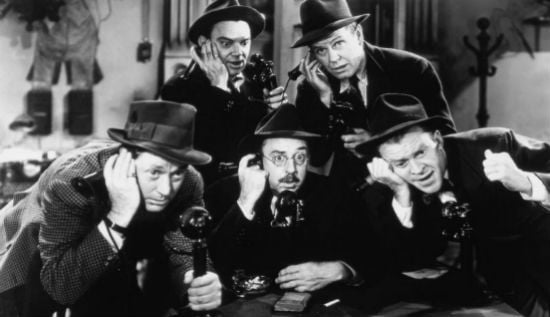
None of these guys is as good a reporter as Hildy Johnson, but they’re all way better than Buck Williams, who never actually reports anything.
Now it’s early Tuesday morning, less than 48 hours after the London interview, and Buck is sitting in the Plaza Hotel, talking to the president of Romania and with scarcely any prodding he begins telling Buck about the very same conspiracy that Tompkins told him about. Now he’s got two sources telling him the same thing and he’s still not interested in the story.
In Buck’s defense, the authors hint that he may be under the spell of Carpathia’s Antichrist mojo:
The Romanian sat forward and looked directly into Buck’s eyes. That gave Buck such a feeling of peace and security that he felt free to tell him everything. Everything. Even that his friend Dirk had tipped him off about someone meeting with Stonagal and Todd-Cothran, and Buck’s assuming it was Carpathia. …
That was the news that put Buck Williams on a plane to England — the hot tip that a banker, a stockbroker and a politician had attended a meeting. Riveting stuff. Very dog-bites-man, but without quite so much action. Here then is all you need to know about Buck’s idea of what constitutes a story: “Businessmen conduct meeting” is big news; “Businessman kills police inspector with car bomb” is not.
“It was I,” Carpathia said. “But let me make this very clear. I know nothing of any conspiracy. I have never even heard of such a thing. Mr. Stonagal felt it would be good for me to meet some of his colleagues and men of international influence. I formed no opinions about any of them, neither am I beholden to any of them.”
And then, after clearly stating that he’s never heard of any conspiracy, that he has no opinions about Stonagal’s friends, and that he owes nothing to anyone, Carpathia goes on — for the next several pages — to sketch out the shape of the conspiracy, to provide his opinion of those involved, and to explain the rather large favors they are doing for him. Stonagal, for example, plans to use his wealth and leverage to ensure that the current secretary-general will step down and be replaced by Carpathia. The group will then, well, conspire to ensure that Todd-Cothran represents the U.K. on a reconfigured Security Council.
“Would that not be interesting?” [Carpathia] said. “A nonpolitician, a brilliant financial mind, one who was wise enough and kind enough and globally minded enough to allow the world to go to a three-currency system that did not include his own pounds sterling?”
So again, no conspiracy, nope, none at all. And he doesn’t have any opinion one way or another about Todd-Cothran.
LaHaye and Jenkins used these interviews with Tompkins and Carpathia as expository shortcuts, a way of telling the readers about the machinations behind Nicolae’s rise to the U.N. “throne.” But in the course of this, Buck has learned about all of this too. He now knows all the details of an international conspiracy — one that includes bribery, extortion and murder — to alter the world’s currency system. (He still doesn’t know why these criminals would want a three-currency system, but he knows they’re using criminal means to bring it about.) Any respectable protagonist at this point ought to be thinking that he’s got to get out of there and find a reporter who will listen to his story, but of course Buck is a reporter.
We’ve all seen bad movies in which the plot doesn’t make sense because they haven’t provided a valid reason why the heroes don’t just go to the police. This is that movie. Except here it’s worse because the hero is a policeman and he won’t even go to himself.
The authors haven’t forgotten that Buck is a reporter, it’s just that, like Buck himself, they can’t seem to imagine how that might be relevant. In these same pages, while Carpathia tells of his past — and of why he is deeply, massively “beholden” to Stonagal — the authors try to portray Buck as a tough, probing investigative journalist. “This is the kind of thing I write against,” he says at one point. And then, of course, he doesn’t.
When he was younger, Carpathia says, he made some money as a businessman:
“I studied at night, many languages, the ones I needed to succeed. …”
L&J seem to think that fluency in multiple languages is a path to riches. They should know better since, after all, they’re millionaires and they’re not even fluent in English.
“During the day I ran my own import-and-export business and made myself wealthy. But what I thought was wealth was paltry compared to what was possible. I needed to learn that. I learned it the hard way. I borrowed millions from a European bank, then found that someone in that bank informed my major competitor what I was doing. I was defeated at my own game, defaulted on my loan, and was struggling. Then that same bank bailed me out and ruined my rival. I didn’t mean to or want to hurt the rival. He was used by the bank to lock me into a relationship.
“Was that bank owned by an influential American?”
Carpathia ignored the question. “What I had to learn, in just over a decade, is how much money is out there.”
“Out there?”
“In the banks of the world.”
“Especially those owned by Jonathan Stonagal,” Buck suggested.
Carpathia still wasn’t biting.
And he never does “bite.” He never gives Buck a straight answer to his slanted questions about Stonagal. He never has to because Buck just lets it drop. The authors, or Buck, or both seem to subscribe to the Tim Russert school of journalism: As long as you ask the tough questions it doesn’t matter whether or not you insist on, or receive, an answer.*
In all of this there is a seed of something better. There’s a hint here of Carpathia as an idealistic man who has allied himself with powerful but ruthless men in the hopes that they will enable him to achieve his own aims without interference. That could have been an interesting story — the Antichrist as a tragic figure. But the authors don’t have time for that, and any hint that Carpathia’s purported idealism is genuine gets blown away (literally) in the following chapters.
Carpathia prefaces the personal history above by asking Buck a question:
“I believe in the power of money. Do you?”
Buck says, “No.” I take it he means that he believes that money is not the only power, or not the greatest power, because otherwise, for an investigative reporter who’s been on the job for more than a day or two, that’s the wrong answer. One of the fundamental rules of investigative journalism after all is, in the words of Deep Throat [in William Goldman’s screenplay], “Follow the money.” Buck himself says that he “writes against” this power. Why bother doing that if it wasn’t real?**
For Buck, I suppose, money — even the manipulation of international currency systems by a cabal of bankers and stockbrokers — falls into the same non-newsworthy category as the assassination of police officers.
– – – – – – – – – – – –
* If you’re ever elected to office and subsequently caught red-handed in a lie, scandal or high treason, get yourself booked on Russert’s Meet the Press. Then, when he confronts you about it, say this, “I love America, Tim.” He will, unfailingly, treat this non-sequitur as a satisfactory answer and — for the rest of the interview and for the rest of your long, successful career in politics — your lie/scandal/treason will miraculously be transformed into an “old story” that has been “dealt with.”
** We tend to think of the monolatrous passages in the Hebrew scriptures — things like 1 Samuel 5 or Psalm 82 — as anachronistic remnants from before monolatry gave way to monotheism. But there’s at least one such passage in the New Testament as well: “You cannot serve God and Mammon.”
Previous Post

January 19, 2017
Smart people saying smart things (1.19.17)
Next Post
January 22, 2017 Sunday favorites
Browse Our Archives
Select a Category class warfare evangelicals Iraq Left Behind Mammon music Uncategorized
Select a Month October 2026 September 2026 August 2026 July 2026 June 2026 May 2026 April 2026 March 2026 January 2026 December 2025 November 2025 October 2025 September 2025 August 2025 July 2025 June 2025 May 2025 April 2025 March 2025 February 2025 January 2025 December 2024 November 2024 October 2024 September 2024 August 2024 July 2024 June 2024 May 2024 April 2024 March 2024 February 2024 January 2024 December 2023 November 2023 October 2023 September 2023 August 2023 July 2023 June 2023 May 2023 April 2023 March 2023 February 2023 January 2023 December 2022 November 2022 October 2022 September 2022 August 2022 July 2022 June 2022 May 2022 April 2022 March 2022 February 2022 January 2022 December 2021 November 2021 October 2021 September 2021 August 2021 July 2021 June 2021 May 2021 April 2021 March 2021 February 2021 January 2021 December 2020 November 2020 October 2020 September 2020 August 2020 July 2020 June 2020 May 2020 April 2020 March 2020 February 2020 January 2020 December 2019 November 2019 October 2019 September 2019 August 2019 July 2019 June 2019 May 2019 April 2019 March 2019 February 2019 January 2019 December 2018 November 2018 October 2018 September 2018 August 2018 July 2018 June 2018 May 2018 April 2018 March 2018 February 2018 January 2018 December 2017 November 2017 October 2017 September 2017 August 2017 July 2017 June 2017 May 2017 April 2017 March 2017 February 2017 January 2017 December 2016 November 2016 October 2016 September 2016 August 2016 July 2016 June 2016 May 2016 April 2016 March 2016 February 2016 January 2016 December 2015 November 2015 October 2015 September 2015 August 2015 July 2015 June 2015 May 2015 April 2015 March 2015 February 2015 January 2015 December 2014 November 2014 October 2014 September 2014 August 2014 July 2014 June 2014 May 2014 April 2014 March 2014 February 2014 January 2014 December 2013 November 2013 October 2013 September 2013 August 2013 July 2013 June 2013 May 2013 April 2013 March 2013 February 2013 January 2013 December 2012 November 2012 October 2012 September 2012 August 2012 July 2012 June 2012 May 2012 April 2012 March 2012 February 2012 January 2012 December 2011 November 2011 October 2011 September 2011 August 2011 July 2011 June 2011 May 2011 April 2011 March 2011 February 2011 January 2011 December 2010 November 2010 October 2010 September 2010 August 2010 July 2010 June 2010 May 2010 April 2010 March 2010 February 2010 January 2010 December 2009 November 2009 October 2009 September 2009 August 2009 July 2009 June 2009 May 2009 April 2009 March 2009 February 2009 January 2009 December 2008 November 2008 October 2008 September 2008 August 2008 July 2008 June 2008 May 2008 April 2008 March 2008 February 2008 January 2008 December 2007 November 2007 October 2007 September 2007 August 2007 July 2007 June 2007 May 2007 April 2007 March 2007 February 2007 January 2007 December 2006 November 2006 October 2006 September 2006 August 2006 July 2006 June 2006 May 2006 April 2006 March 2006 February 2006 January 2006 December 2005 November 2005 October 2005 September 2005 August 2005 July 2005 June 2005 May 2005 April 2005 March 2005 February 2005 January 2005 December 2004 November 2004 October 2004 September 2004 August 2004 July 2004 June 2004 May 2004 April 2004 March 2004 February 2004 January 2004 December 2003 November 2003 October 2003 September 2003
Follow Us!
TAKE THE
Religious Wisdom Quiz
Who interpreted Nebuchadnezzar's dream of a statue?
Select your answer to see how you score.
Ezekiel Daniel Abraham Joseph
Related posts from slacktivist

Can't seem to get it through my head

For Buffy and Carl so loved the world


'To every generation': Child abuse at Cornerstone Church
TRENDING AT PATHEOS Progressive Christian

Letters on Living the Faith by C.S. Lewis
Most of us met C.S. Lewis as a public intellectual. Mere Christianity....

When Halloween Unmasks Married Hearts
Written by Dr. David K. Ewen from Eternal Truth Bible College Behind...

Aristotle. He’s been called the father of logic, the father of the...

Methodist Central Hall and Westminster Abbey
Situated on the same square is Methodist Central Hall and Westminster Abbey. ...

57th Dove Awards Honor Dolly Parton, Crown New...
On gospel music’s biggest night, the 57th annual GMA Dove Awards honored...

The First Eucharistic Controversy: Christ’s Real Presence
For Catholics, the Eucharist is the source and summit of the Christian...
view all Progressive Christian blogs
Ad-Free & Subscriber Log-In Subscription Support
- About Us
- 2026 Calendar
- Videos
- Podcasts
- Library of World Religions
- Faith In Media Tracker
- Advertise With Us
- Write for Us
- Privacy Policy
- Terms of Service
- Do Not Sell My Data
- Contact Us
- Radiant Digital
- Manage Newsletter Subscriptions
- Unsubscribe From Notifications
- Sitemap
Copyright 2008-2026, Patheos. All rights reserved.
Subscription Support Ad-Free & Subscriber Log-In
Follow Patheos