
BuddhistCatholicContemplativeEvangelicalGeneral ChristianHinduJewishLatter-day SaintMuslimNew VisionsProgressive Christian
Beliefs
- Buddhist
- Catholic
- Contemplative
- Evangelical
- General Christian
- Hindu
- Jewish
- Latter-day Saint
- More Voices
- Muslim
- New Visions
- Pagan
- Progressive Christian
Topics
- Religion News
- Food and Religion
- Sports and Religion
- Religious Art
- Religious Music and Entertainment
- Religious Events
- History and Religion
- Style and Religion
- Politics and Religion
- Women in Religion
- Recreation Outdoors and Religion
- Business Finance and Religion
- Careers Workplace and Religion
- Education and Religion
- Family Parenting and Religion
- Health Fitness and Religion
- Home and Religion
- Relationships and Religion
- Technology and Religion
- Travel and Religion
Columnists
- Buddhist Columnists
- Business Finance and Religion Columnists
- Careers Workplace and Religion Columnists
- Catholic Columnists
- Contemplative Columnists
- Education and Religion Columnists
- Evangelists Columnists
- Family Parenting and Religion Columnists
- General Christian Columnists
- Health Fitness and Religion Columnists
- Hindu Columnists
- History and Religion Columnists
- Home and Religion Columnists
- Jewish Columnists
- More Voices Columnists
- Latter Day Columnists
- Muslim Columnists
- New Visions Columnists
- Nonreligious Columnists
- Pagan Columnists
- Politics and Religion Columnists
- Progressive Columnists
- Recreation Outdoors and Religion Columnists
- Relationships and Religion Columnists
- Religion News Columnists
- Religious Art Columnists
- Religious Events Columnists
- Religious Music and Entertainment Columnists
- Sports and Religion Columnists
- Style and Religion Columnists
- Technology and Religion Columnists
- Travel and Religion Columnists
- Women in Religion Columnists
Resource Library
- 2026 Calendar
- Library of World Religions
- The 100 Most Holy Places on Earth
- Patheos Answers
- Podcasts
- Videos
- Faith Leaders Database
- Anglican Episcopalian
- Bahai
- Baptist
- Buddhism
- Christianity
- Confucianism
- Eastern Orthodoxy
- Hinduism
- Holiness and Pentecostal
- ISKCON
- Islam
- Judaism
- Lutheran
- Methodist
- The Church of Jesus Christ of Latter-day Saints
- New Age
- Paganism
- Presbytarian and Reformed
- Protestantism
- Religion Behind the Scenes
- Roman Catholic
- Scientology
- Shia Islam
- Sikhism
- Sufism
- Sunni Islam
- Taoism
- Zen
- See all religions
Research Tools
 Ad-Free & Subscriber Log-In Subscription Support
Ad-Free & Subscriber Log-In Subscription Support
Follow Patheos 

- Trending:
- Forgiveness
- |
- Marriage
- |
- Consciousness
- |
- Death Penalty
- |
- Election
- |
- Halloween

- Home
- Progressive Christian
- Go and learn what this means — the bad-faith ‘biblical’ defense of injustice (part 1)
Go and learn what this means — the bad-faith ‘biblical’ defense of injustice (part 1)
Last updated on: January 9, 2017 at 4:14 pm by Fred Clark
Go and learn what this means — the bad-faith ‘biblical’ defense of injustice (part 1) 2017-01-09T16:14:23-05:00 Fred Clark
Patheos Explore the world's faith through different perspectives on religion and spirituality! Patheos has the views of the prevalent religions and spiritualities of the world.
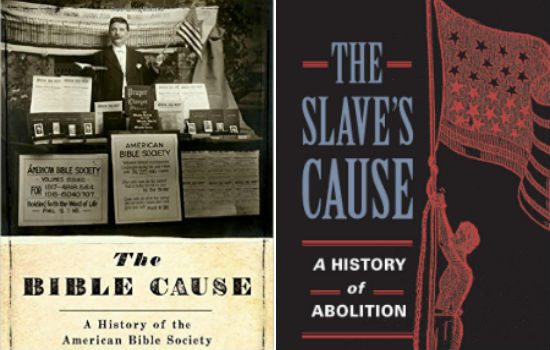
This weekend I listened to the latest episode of Messiah College history professor John Fea’s wonderful history podcast, The Way of Improvement Leads Home. Fea snagged a great guest for this episode, Dr. Manisha Sinha, whose massive The Slave’s Cause: A History of Abolition, is a National Book Award finalist. The conversation between these historians — and history teachers — is fascinating and insightful.
But what I want to talk about is Fea’s short reflection from just before his interview with Sinha, discussing how “The Slave’s Cause” intersected with The Bible Cause. That’s the name of his own most recent book following the 200-year history of the American Bible Society. The Bible society was founded in 1816 by many people who were generally sympathetic to the cause of abolition, but when pressed by leading abolitionists to do more, it flinched.
This may sound kind of esoteric — an academic discussion of some long-ago struggle between the long-dead leaders of two 19th-century benevolent societies. But it cuts to the heart of a debate that continues to this very day — as recently as Michael Wear’s backwards assertion just last month that “Democrats Have a Religion Problem.”
That’s the same thing that was said 180 years ago about the abolitionists. Just look — the American Anti-Slavery Society was at war with the American Bible Society. Clearly, then, the abolitionists had a religion problem.
That’s how such disputes are always framed. The faction defending the status quo is — correctly — portrayed as the “conservative” side. They’re fighting to prevent change, to prevent reform or progress. They embody William F. Buckley’s definition of conservatism by standing athwart history and yelling “Stop!” And thus, because they are in that sense conservative, they also tend to portray themselves and to be portrayed by others as being religiously conservative. Thus positioned as the representatives of religious conservatism, they are therefore also perceived as the defenders of true religion against the liberals and the anti-religious. Everyone else therefore has “a religion problem.” Everyone except them — the righteous remnant proudly defending true religion against the irreligious liberals who would abandon it.
And that’s wrong — upside-down and ass-backwards wrong.
Fea’s historical anecdote shows us why.
Fea sets the scene for the multi-year struggle that ensued between the American Bible Society and leading abolitionists beginning in the 1830s (this is my transcription from the podcast, so any errors here are likely mine):
Anti-slavery forces in America, particularly those who favored the immediate abolition of slavery, did not think the American Bible Society was doing enough to bring Bibles to slaves. The Bible Society was taken to task at the first meeting of the American Anti-Slavery Society in 1834.* The American Anti-Slavery Society included some of the leading abolitionists in the United States, including William Lloyd Garrison and Arthur Tappan. Up until this point, the American Bible Society did not have an official policy on the distribution of Bibles to enslaved men and women. According to the society’s constitution, the Bible should be distributed without note or comment to anyone who could read it, and this work then must be carried out by local American Bible Society auxiliary agencies operating in local communities across the country.
Because many Bible society auxiliaries in the South were governed by slaveholders who were not interested in having their slaves exposed to the message of liberty and freedom that, according to the anti-slavery forces of the North, was taught in the Bible, the leaders of the American Anti-Slavery Society pressed the American Bible Society to distribute Bibles directly to slaves. In order to encourage a move in this direction, the American Anti-Slavery Society offered the Bible society $5,000 to make sure that, as they put it, “every colored family in the United States be furnished with a copy of the Bible.”
The abolitionists quickly raised more than $14,000 to further bolster this effort — the equivalent of hundreds of thousands of dollars today. The American Bible Society punted — arguing that it was bound by its by-laws to work through its local auxiliaries and, therefore, not permitted to override the wishes of its Southern, slave-holding members. And they stuck with this lawyerly loophole for years. The dispute stretched on for decades, all the way up until the Civil War, with the Anti-Slavery Society and other abolitionist groups constantly trying to pressure the ABS to distribute Bibles directly to enslaved persons and slave-holding Christians fiercely resisting such a thing.
Here, then, is the raw fact of the matter: One side was fighting to promote the distribution of the Bible and the other was fighting to suppress and restrict it. One side was demonstrating utter and supreme confidence that the Bible supported its cause and that greater access to and familiarity with the Bible could only further its agenda. The other side was demonstrating that it feared, or suspected — or knew — that the Bible was, in fact, a dangerous threat to its agenda, its politics, and its beliefs.
That was the fundamental, undeniable fact of this dispute. And yet both then and now, today, more than a century later, this dispute is almost always framed and described in opposite terms.
The southern auxiliaries of the Bible society who fought tooth and nail to prevent enslaved persons from acquiring and reading those Bibles held themselves up as champions of the very Bible they were fighting to suppress. At the very same time they were using every tool they had to prevent others from reading that Bible, they were declaring themselves to be the sole defenders of its authority — the only trustworthy defenders of its trustworthiness and the only virtuous defenders of its virtue.
These slavery-defending Christians were loudly proclaiming that their interpretation of the Bible was the clearest, simplest, and only true, acceptable, or possible interpretation. Yet their actions showed — proved — that they knew this was not true. Their actions proved that they knew the abolitionists’ interpretation of the Bible was more obvious and evident, more powerful, more real and more true. That’s the only explanation for their fierce insistence that enslaved persons must be prevented from gaining access to the Bible.
Think about it. Consider the pretense of their own supposed premise: The Bible supports and defends the institution of slavery, they said. Therefore, they said, any challenge to the institution of slavery was a challenge to the authority of the Bible. It was impossible, they said, to open the Bible and read what was said there without sharing their position — without concluding that slavery was good, and just, and approved by God.
If they honestly believed that in good faith, if they were confident that it was true, then nothing would have benefited their cause more than allowing and enabling every enslaved person access to this straightforward, authoritative Word of God — this final, clear, ultimate word that settled the matter beyond all dispute.
If they truly believed that their arguments about the Bible were true, then they should have been the ones advocating the distribution of Bibles to every enslaved person. The fact that they did the precise opposite — adamantly, for decades — is clear evidence that they didn’t wholly believe what they claimed to be true about themselves.
The abolitionists called their bluff and they folded. But even as they did so, they continued to pretend that they held the winning hand.
– – – – – – – – – – – –
* It’s worth noting that this aggressive push to put Bibles in the hands of enslaved Americans began after Nat Turner’s rebellion, which took place in 1831. That uprising was a Bible-inspired, Bible-soaked revolt, and I have to think it played some role in both sides’ subsequent determination to get Bibles into, or to keep them out of, the hands of enslaved persons.
Previous Post

January 6, 2017
LBCF, No. 115: 'Late-night phone calls'
Browse Our Archives
Select a Category class warfare evangelicals Iraq Left Behind Mammon music Uncategorized
Select a Month October 2026 September 2026 August 2026 July 2026 June 2026 May 2026 April 2026 March 2026 January 2026 December 2025 November 2025 October 2025 September 2025 August 2025 July 2025 June 2025 May 2025 April 2025 March 2025 February 2025 January 2025 December 2024 November 2024 October 2024 September 2024 August 2024 July 2024 June 2024 May 2024 April 2024 March 2024 February 2024 January 2024 December 2023 November 2023 October 2023 September 2023 August 2023 July 2023 June 2023 May 2023 April 2023 March 2023 February 2023 January 2023 December 2022 November 2022 October 2022 September 2022 August 2022 July 2022 June 2022 May 2022 April 2022 March 2022 February 2022 January 2022 December 2021 November 2021 October 2021 September 2021 August 2021 July 2021 June 2021 May 2021 April 2021 March 2021 February 2021 January 2021 December 2020 November 2020 October 2020 September 2020 August 2020 July 2020 June 2020 May 2020 April 2020 March 2020 February 2020 January 2020 December 2019 November 2019 October 2019 September 2019 August 2019 July 2019 June 2019 May 2019 April 2019 March 2019 February 2019 January 2019 December 2018 November 2018 October 2018 September 2018 August 2018 July 2018 June 2018 May 2018 April 2018 March 2018 February 2018 January 2018 December 2017 November 2017 October 2017 September 2017 August 2017 July 2017 June 2017 May 2017 April 2017 March 2017 February 2017 January 2017 December 2016 November 2016 October 2016 September 2016 August 2016 July 2016 June 2016 May 2016 April 2016 March 2016 February 2016 January 2016 December 2015 November 2015 October 2015 September 2015 August 2015 July 2015 June 2015 May 2015 April 2015 March 2015 February 2015 January 2015 December 2014 November 2014 October 2014 September 2014 August 2014 July 2014 June 2014 May 2014 April 2014 March 2014 February 2014 January 2014 December 2013 November 2013 October 2013 September 2013 August 2013 July 2013 June 2013 May 2013 April 2013 March 2013 February 2013 January 2013 December 2012 November 2012 October 2012 September 2012 August 2012 July 2012 June 2012 May 2012 April 2012 March 2012 February 2012 January 2012 December 2011 November 2011 October 2011 September 2011 August 2011 July 2011 June 2011 May 2011 April 2011 March 2011 February 2011 January 2011 December 2010 November 2010 October 2010 September 2010 August 2010 July 2010 June 2010 May 2010 April 2010 March 2010 February 2010 January 2010 December 2009 November 2009 October 2009 September 2009 August 2009 July 2009 June 2009 May 2009 April 2009 March 2009 February 2009 January 2009 December 2008 November 2008 October 2008 September 2008 August 2008 July 2008 June 2008 May 2008 April 2008 March 2008 February 2008 January 2008 December 2007 November 2007 October 2007 September 2007 August 2007 July 2007 June 2007 May 2007 April 2007 March 2007 February 2007 January 2007 December 2006 November 2006 October 2006 September 2006 August 2006 July 2006 June 2006 May 2006 April 2006 March 2006 February 2006 January 2006 December 2005 November 2005 October 2005 September 2005 August 2005 July 2005 June 2005 May 2005 April 2005 March 2005 February 2005 January 2005 December 2004 November 2004 October 2004 September 2004 August 2004 July 2004 June 2004 May 2004 April 2004 March 2004 February 2004 January 2004 December 2003 November 2003 October 2003 September 2003
Follow Us!
TAKE THE
Religious Wisdom Quiz
What miracle did Jesus perform for His friend Lazarus?
Select your answer to see how you score.
Turned him invisible Healed his blindness Raised him from the dead Fed him from nothing
Related posts from slacktivist

It's not 'pick and choose.' It's pick a...

Is this the right room for an argument?

Team Everybody sliding into our DMs

TRENDING AT PATHEOS Progressive Christian

Nearly every morning, I make the drive to Detroit with my high-school-age...

The Real AI Story Is Adoption Without Trust
Artificial intelligence has crossed a political threshold. It is no longer a...

A new article, written by Jeff Lindsay and Gale L. Pooley,...

Swimfan: Forgotten Aughts Pleasures
This is a recovery effort. In 2002, My Big Fat Greek Wedding...

Top Three Anti-Catholic Lies About Catholicism
This is my initial transcript for the video, "THE 3 WORST...

Pope Leo Celebrates Mass for Nurses & Docs...
I don't have any idea how he did it, but Pope Leo...
view all Progressive Christian blogs
Ad-Free & Subscriber Log-In Subscription Support
- About Us
- 2026 Calendar
- Videos
- Podcasts
- Library of World Religions
- Faith In Media Tracker
- Advertise With Us
- Write for Us
- Privacy Policy
- Terms of Service
- Do Not Sell My Data
- Contact Us
- Radiant Digital
- Manage Newsletter Subscriptions
- Unsubscribe From Notifications
- Sitemap
Copyright 2008-2026, Patheos. All rights reserved.
Subscription Support Ad-Free & Subscriber Log-In
Follow Patheos