
BuddhistCatholicContemplativeEvangelicalGeneral ChristianHinduJewishLatter-day SaintMuslimNew VisionsProgressive Christian
Beliefs
- Buddhist
- Catholic
- Contemplative
- Evangelical
- General Christian
- Hindu
- Jewish
- Latter-day Saint
- More Voices
- Muslim
- New Visions
- Pagan
- Progressive Christian
Topics
- Religion News
- Food and Religion
- Sports and Religion
- Religious Art
- Religious Music and Entertainment
- Religious Events
- History and Religion
- Style and Religion
- Politics and Religion
- Women in Religion
- Recreation Outdoors and Religion
- Business Finance and Religion
- Careers Workplace and Religion
- Education and Religion
- Family Parenting and Religion
- Health Fitness and Religion
- Home and Religion
- Relationships and Religion
- Technology and Religion
- Travel and Religion
Columnists
- Buddhist Columnists
- Business Finance and Religion Columnists
- Careers Workplace and Religion Columnists
- Catholic Columnists
- Contemplative Columnists
- Education and Religion Columnists
- Evangelists Columnists
- Family Parenting and Religion Columnists
- General Christian Columnists
- Health Fitness and Religion Columnists
- Hindu Columnists
- History and Religion Columnists
- Home and Religion Columnists
- Jewish Columnists
- More Voices Columnists
- Latter Day Columnists
- Muslim Columnists
- New Visions Columnists
- Nonreligious Columnists
- Pagan Columnists
- Politics and Religion Columnists
- Progressive Columnists
- Recreation Outdoors and Religion Columnists
- Relationships and Religion Columnists
- Religion News Columnists
- Religious Art Columnists
- Religious Events Columnists
- Religious Music and Entertainment Columnists
- Sports and Religion Columnists
- Style and Religion Columnists
- Technology and Religion Columnists
- Travel and Religion Columnists
- Women in Religion Columnists
Resource Library
- 2026 Calendar
- Library of World Religions
- The 100 Most Holy Places on Earth
- Patheos Answers
- Podcasts
- Videos
- Faith Leaders Database
- Anglican Episcopalian
- Bahai
- Baptist
- Buddhism
- Christianity
- Confucianism
- Eastern Orthodoxy
- Hinduism
- Holiness and Pentecostal
- ISKCON
- Islam
- Judaism
- Lutheran
- Methodist
- The Church of Jesus Christ of Latter-day Saints
- New Age
- Paganism
- Presbytarian and Reformed
- Protestantism
- Religion Behind the Scenes
- Roman Catholic
- Scientology
- Shia Islam
- Sikhism
- Sufism
- Sunni Islam
- Taoism
- Zen
- See all religions
Research Tools
 Ad-Free & Subscriber Log-In Subscription Support
Ad-Free & Subscriber Log-In Subscription Support
Follow Patheos 

- Trending:
- Forgiveness
- |
- Marriage
- |
- Consciousness
- |
- Death Penalty
- |
- Election
- |
- Halloween

- Home
- Progressive Christian
- Christian colleges and ‘Christian’ nationalism (part 2)
Christian colleges and ‘Christian’ nationalism (part 2)
Last updated on: August 25, 2017 at 1:51 pm by Fred Clark
Christian colleges and ‘Christian’ nationalism (part 2) 2017-08-25T13:51:15-04:00 Fred Clark
Patheos Explore the world's faith through different perspectives on religion and spirituality! Patheos has the views of the prevalent religions and spiritualities of the world.
The conversation between historians Adam Laats and John Fea on the relationship between evangelical colleges and Christian nationalism is interesting on its own, but it’s also a terrific model of how to have such a conversation here in the realm of “social media” where the mutual respect and candor they’re showing isn’t always the rule.* Laats responded to Fea today, clarifying his own argument, where the two agree, and where they may still disagree.
I wrote yesterday that it seemed to me that Laats and Fea were working with different ideas of what constitutes “Christian nationalism.” Fea, who literally wrote a book on the subject, seems to be addressing a more defined ideology — the sort of explicit “America was founded as a Christian nation with Christian principles for Christians” business championed by David Barton. (He’s really good at analyzing and rebutting that stuff in general, and Barton in particular.) Laats, it seemed, was addressing a broader idea of “Christian nationalism.” He confirms that in his response today:
However the boundaries of evangelicalism are defined, whether in 1935, 1963, or 2016, schools need to remain squarely within them. More relevant, they need to be seen by the evangelical public as remaining squarely within those boundaries. If school administrators fail, students and alumni will vote with their wallets, taking their tuition dollars and donations elsewhere. …
Every school has certain poorly defined lines that no one is allowed to cross. Or, to be more precise, it means that the evangelical public needs to feel confident that the school as a whole is not crossing those lines, even if some students and teachers are. Or are rumored to be. …
… In short, to thrive and survive, evangelical colleges need students. To attract students, leaders know their schools must be perceived as safe evangelical environments. Part (and only part) of that perception among the wider evangelical community includes a vague but powerful sense that America is, in an important sense, a Christian nation. Part of that perception among the wider evangelical community, I believe, also includes a powerful sense of nostalgia, a sense that David Barton makes some good points even if he goes too far, a sense that America used to be great and just might be made great again.
This is just as true in 2016 as it was in 1935, and it’s true at more liberal schools as well as at more conservative ones. It is the reason why the intellectual tradition of evangelical schools, ALL almost all evangelical schools, still plays a big role in creating an environment in which support for Trump flourishes.
Laats concludes:
I am not assuming that evangelical colleges are trapped in some sort of cultural meat locker, where attitudes from the 1950s have remained frozen in time. Rather, I am arguing that the ideas that fueled Trump’s success — including ideas of American exceptionalism, vague racial nostalgia, a sense that America was once “our” country — have always been and continue to be part and parcel of the self-understanding of white evangelicalism. And because of that, evangelical institutions of higher education have an existential need to maintain the perception that they remain congenial homes to families who hold those beliefs dear.
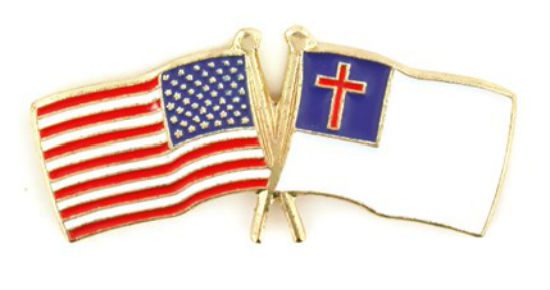
In between the first paragraphs I quote above and that concluding one, Laats discusses several examples to illustrate his point. We’ll get back to that in a bit, but first I want to redirect your attention to a piece I highlighted earlier this week as a “smart thing.” Jarvis Williams of the Reformed African American Network wrote about “5 Ways Christian Institutions of Higher Education Can Avoid White Supremacy.”
Williams offers a helpful parallel discussion that approaches similar concerns with a different framework — “white supremacy” rather than “Christian nationalism.” Or, perhaps, it’s the same framework with a different label. Here in America, after all, white supremacy and Christian nationalism have never been wholly distinct and cannot be wholly distinguished from one another. There’s maybe the thinnest old-moon crescent on either side of the Venn diagram of these two things, but for the most part they overlap as two different ways of describing the same ideology.**
It can be a fruitful exercise to go back and re-read the exchanges between Laats and Fea, substituting Williams’ term of “white supremacy” where they discuss “Christian nationalism.” Nothing else about their arguments would need to be changed and the dynamics of evangelical colleges they both describe would still be spot-on. Fea’s contention about the majority of faculty at [white] evangelical colleges would still stand. Laats’ argument that a total rejection of this ideology would jeopardize the perception of those schools as “safe [white] evangelical environments” is just as true.
This parallel is vital to understanding the most prominent example Laats cites of the gatekeeping role that “Christian nationalism” broadly retains at mainstream white evangelical colleges and universities: the DocHawk fiasco at Wheaton.
Laats’ summary of this is worth quoting at length (click through for Laats’ many links to articles providing more documentation and background):
Don’t buy it?
Ask Professor Larycia Hawkins.
If you didn’t follow the case, here it is in a nutshell: Professor Hawkins was the first tenured female African American professor at Wheaton. She was fired for wearing a hijab in solidarity with Muslim women and for declaring that Muslims, Jews, and Christians all worship the “same God.”
Professor Hawkins was defended by Wheaton students. She was defended by Wheaton faculty. Yet she was fired. She and the administration went back and forth several times, eventually agreeing that she would leave without being fired. Why? It wasn’t because faculty members actively demanded her ouster. It wasn’t because students gave her a Randy-Beckum-esque heave-ho. Rather, it was because her widely publicized thoughts made influential members of the evangelical public wonder if Wheaton had crossed a line.
Does this have anything to do with race? With a Trumpish anxiety about Islam? With a sense that the country used to be a better place but progressive changes have ruined it?
Let’s look at the fact of the case again: She was an African American woman, wearing a hijab, proclaiming the essential one-ness of Islam and Christianity. And she was fired for it. I have a difficult time imagining that Trumpish anxieties did not play a leading role.
The administration insisted that the issue was purely theological. And no doubt it was for many members of the wider Wheaton community. But we cannot escape the overwhelmingly obvious connection to questions of race, gender, and Trumpish nationalism. It is not that Wheaton professors were teaching that evangelicalism was the province of white males. It is not that Wheaton students were prejudiced against women professors or African American ones. Rather, the anxious leadership of the school, including trustees and influential alumni, could not risk the perception among the wider white evangelical public that Wheaton had somehow crossed a line, had somehow touched that institutional third rail. They had to act decisively to quash any rumors that Wheaton had turned its back once and for all on the sorts of make-America-great-again notions that have powered Wheaton since the 1920s.
We don’t need to speculate about a “Trumpish” connection in this case. Dr. Hawkins explicitly chose to demonstrate her support and solidarity with Muslim-American women in reaction to a specific threat against them — a threat made, repeated, and embodied by then-candidate Donald Trump. Hawkins wasn’t just raising supposed theological concerns — that was always disingenuous spin, as Wheaton’s provost admitted when he called her allegedly firing-worthy remarks “innocuous.” She was standing up for the specific victims of Donald Trump specifically.
And doing so, in the view of Wheaton’s president, donors, and perhaps parents, cast doubt on the school’s reputation as a “safe [white] evangelical environment.”
The issue here is not that Wheaton’s administrators made a bad decision. The issue was that they imagined there was any decision at all that needed to be made. Nothing Hawkins said or did could be construed as “controversial” or troubling unless one was viewing it from within a pre-existing ideological framework of Christian nationalism and/or white supremacy. Those are what shaped not just Wheaton’s actions, but the bizarre idea that Wheaton needed to act at all. (The school never took any such actions when white male professors said and did similar things.)
Wheaton College (Illinois) is considered a top-tier evangelical school — perhaps the flagship of the fleet. But it’s not just the place that forced out a black female professor for criticizing Donald Trump. It’s also the place that forced out a celibate lesbian chaplain. And it’s the place that sued the government arguing that a fake-science lie about how birth control works was an essential component of its religious doctrine. No, they’re not requiring history students to read David Barton’s horrific books, but that doesn’t change the fact that the school is shaped and governed by something an awful lot like Christian nationalism. (And, thus, by something an awful lot like white supremacy.)
– – – – – – – – – – – –
* That’s not primarily a function of these two guys being “nice” — although they are, in fact, nice. It’s a consequence of both of them arguing in good faith. Without that, disagreement itself isn’t possible, let alone honesty, mutual respect, or anything like what we misleadingly call “civility.”
Good faith is a prerequisite for civility. In its absence, GFY is not only an acceptable response, it is the only appropriate response and, really, the only possible response. Social media isn’t characterized by rampant incivility because people have bad manners. It looks like that because epidemic bad faith makes nicer manners impossible.
** Does this mean, for example, that David Barton is a white supremacist? I wouldn’t put it quite that way. I would say, rather, that David Barton promotes an ideology that is steeped in, wholly compatible and comfortable with, and dependent upon, white supremacy. His ideology requires him to accept white supremacy, to never challenge it, to deny its existence and effects. Barton himself may not be driven by personal animus (black audiences still have green money, after all), and he might even object to some of the things advocated by self-proclaimed white supremacists. But white supremacists will not find much of anything to object to in the ideology of David Barton.
Previous Post

December 7, 2016
Christian colleges and 'Christian' nationalism
Next Post
December 9, 2016 LBCF, No. 111: 'The Longest Day'
Browse Our Archives
Select a Category class warfare evangelicals Iraq Left Behind Mammon music Uncategorized
Select a Month October 2026 September 2026 August 2026 July 2026 June 2026 May 2026 April 2026 March 2026 January 2026 December 2025 November 2025 October 2025 September 2025 August 2025 July 2025 June 2025 May 2025 April 2025 March 2025 February 2025 January 2025 December 2024 November 2024 October 2024 September 2024 August 2024 July 2024 June 2024 May 2024 April 2024 March 2024 February 2024 January 2024 December 2023 November 2023 October 2023 September 2023 August 2023 July 2023 June 2023 May 2023 April 2023 March 2023 February 2023 January 2023 December 2022 November 2022 October 2022 September 2022 August 2022 July 2022 June 2022 May 2022 April 2022 March 2022 February 2022 January 2022 December 2021 November 2021 October 2021 September 2021 August 2021 July 2021 June 2021 May 2021 April 2021 March 2021 February 2021 January 2021 December 2020 November 2020 October 2020 September 2020 August 2020 July 2020 June 2020 May 2020 April 2020 March 2020 February 2020 January 2020 December 2019 November 2019 October 2019 September 2019 August 2019 July 2019 June 2019 May 2019 April 2019 March 2019 February 2019 January 2019 December 2018 November 2018 October 2018 September 2018 August 2018 July 2018 June 2018 May 2018 April 2018 March 2018 February 2018 January 2018 December 2017 November 2017 October 2017 September 2017 August 2017 July 2017 June 2017 May 2017 April 2017 March 2017 February 2017 January 2017 December 2016 November 2016 October 2016 September 2016 August 2016 July 2016 June 2016 May 2016 April 2016 March 2016 February 2016 January 2016 December 2015 November 2015 October 2015 September 2015 August 2015 July 2015 June 2015 May 2015 April 2015 March 2015 February 2015 January 2015 December 2014 November 2014 October 2014 September 2014 August 2014 July 2014 June 2014 May 2014 April 2014 March 2014 February 2014 January 2014 December 2013 November 2013 October 2013 September 2013 August 2013 July 2013 June 2013 May 2013 April 2013 March 2013 February 2013 January 2013 December 2012 November 2012 October 2012 September 2012 August 2012 July 2012 June 2012 May 2012 April 2012 March 2012 February 2012 January 2012 December 2011 November 2011 October 2011 September 2011 August 2011 July 2011 June 2011 May 2011 April 2011 March 2011 February 2011 January 2011 December 2010 November 2010 October 2010 September 2010 August 2010 July 2010 June 2010 May 2010 April 2010 March 2010 February 2010 January 2010 December 2009 November 2009 October 2009 September 2009 August 2009 July 2009 June 2009 May 2009 April 2009 March 2009 February 2009 January 2009 December 2008 November 2008 October 2008 September 2008 August 2008 July 2008 June 2008 May 2008 April 2008 March 2008 February 2008 January 2008 December 2007 November 2007 October 2007 September 2007 August 2007 July 2007 June 2007 May 2007 April 2007 March 2007 February 2007 January 2007 December 2006 November 2006 October 2006 September 2006 August 2006 July 2006 June 2006 May 2006 April 2006 March 2006 February 2006 January 2006 December 2005 November 2005 October 2005 September 2005 August 2005 July 2005 June 2005 May 2005 April 2005 March 2005 February 2005 January 2005 December 2004 November 2004 October 2004 September 2004 August 2004 July 2004 June 2004 May 2004 April 2004 March 2004 February 2004 January 2004 December 2003 November 2003 October 2003 September 2003
Follow Us!
TAKE THE
Religious Wisdom Quiz
What animal did David protect his sheep from as a young shepherd?
Select your answer to see how you score.
Horse and boar Eagle and serpent Wolf and fox Lion and bear
Related posts from slacktivist

Is this the right room for an argument?

The Amish are not 'Evangelicals.' They're Amish.

The lumpers, the splitters, and me

'Is it right on red or left on...
TRENDING AT PATHEOS Progressive Christian

How to Make a Decision When You Can't...
Main point: It’s much more valuable to stay close to God so...

Archdiocese Hosts Military Marriage Retreat in Germany
RASTATT, Germany — The transient military lifestyle, with its frequent deployments and...

Nearly every morning, I make the drive to Detroit with my high-school-age...

The Real AI Story Is Adoption Without Trust
Artificial intelligence has crossed a political threshold. It is no longer a...

A new article, written by Jeff Lindsay and Gale L. Pooley,...

Swimfan: Forgotten Aughts Pleasures
This is a recovery effort. In 2002, My Big Fat Greek Wedding...
view all Progressive Christian blogs
Ad-Free & Subscriber Log-In Subscription Support
- About Us
- 2026 Calendar
- Videos
- Podcasts
- Library of World Religions
- Faith In Media Tracker
- Advertise With Us
- Write for Us
- Privacy Policy
- Terms of Service
- Do Not Sell My Data
- Contact Us
- Radiant Digital
- Manage Newsletter Subscriptions
- Unsubscribe From Notifications
- Sitemap
Copyright 2008-2026, Patheos. All rights reserved.
Subscription Support Ad-Free & Subscriber Log-In
Follow Patheos