
BuddhistCatholicContemplativeEvangelicalGeneral ChristianHinduJewishLatter-day SaintMuslimNew VisionsProgressive Christian
Beliefs
- Buddhist
- Catholic
- Contemplative
- Evangelical
- General Christian
- Hindu
- Jewish
- Latter-day Saint
- More Voices
- Muslim
- New Visions
- Pagan
- Progressive Christian
Topics
- Religion News
- Food and Religion
- Sports and Religion
- Religious Art
- Religious Music and Entertainment
- Religious Events
- History and Religion
- Style and Religion
- Politics and Religion
- Women in Religion
- Recreation Outdoors and Religion
- Business Finance and Religion
- Careers Workplace and Religion
- Education and Religion
- Family Parenting and Religion
- Health Fitness and Religion
- Home and Religion
- Relationships and Religion
- Technology and Religion
- Travel and Religion
Columnists
- Buddhist Columnists
- Business Finance and Religion Columnists
- Careers Workplace and Religion Columnists
- Catholic Columnists
- Contemplative Columnists
- Education and Religion Columnists
- Evangelists Columnists
- Family Parenting and Religion Columnists
- General Christian Columnists
- Health Fitness and Religion Columnists
- Hindu Columnists
- History and Religion Columnists
- Home and Religion Columnists
- Jewish Columnists
- More Voices Columnists
- Latter Day Columnists
- Muslim Columnists
- New Visions Columnists
- Nonreligious Columnists
- Pagan Columnists
- Politics and Religion Columnists
- Progressive Columnists
- Recreation Outdoors and Religion Columnists
- Relationships and Religion Columnists
- Religion News Columnists
- Religious Art Columnists
- Religious Events Columnists
- Religious Music and Entertainment Columnists
- Sports and Religion Columnists
- Style and Religion Columnists
- Technology and Religion Columnists
- Travel and Religion Columnists
- Women in Religion Columnists
Resource Library
- 2026 Calendar
- Library of World Religions
- The 100 Most Holy Places on Earth
- Patheos Answers
- Podcasts
- Videos
- Faith Leaders Database
- Anglican Episcopalian
- Bahai
- Baptist
- Buddhism
- Christianity
- Confucianism
- Eastern Orthodoxy
- Hinduism
- Holiness and Pentecostal
- ISKCON
- Islam
- Judaism
- Lutheran
- Methodist
- The Church of Jesus Christ of Latter-day Saints
- New Age
- Paganism
- Presbytarian and Reformed
- Protestantism
- Religion Behind the Scenes
- Roman Catholic
- Scientology
- Shia Islam
- Sikhism
- Sufism
- Sunni Islam
- Taoism
- Zen
- See all religions
Research Tools
 Ad-Free & Subscriber Log-In Subscription Support
Ad-Free & Subscriber Log-In Subscription Support
Follow Patheos 

- Trending:
- Forgiveness
- |
- Marriage
- |
- Consciousness
- |
- Death Penalty
- |
- Election
- |
- Halloween

- Home
- Progressive Christian
- Subsidiarity is really important, whether or not you call it that
Subsidiarity is really important, whether or not you call it that
Last updated on: February 21, 2016 at 8:37 pm by Fred Clark
Subsidiarity is really important, whether or not you call it that 2016-02-21T20:37:45-05:00 Fred Clark
Patheos Explore the world's faith through different perspectives on religion and spirituality! Patheos has the views of the prevalent religions and spiritualities of the world.
Subsidiarity is enormously important because, without it, we wind up stuck down a lot of dead ends, polarized by false binaries that render us stupid, angry and impotent to do much of anything about anything.
I realize it’s a fancy word — six syllables! — and that the idea is somewhat subtle. It also doesn’t help that an initial search for a “definition” will likely yield some impenetrable scholastic formula still tinged with assumptions based on some medieval notion of the Great Chain of Being.
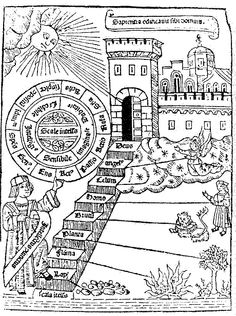
It took us a while to see mutuality as a network, rather than as a hierarchical ladder.
Those definitions will usually tell you that subsidiarity is a principle. That’s not wholly wrong, but it’s not particularly helpful either. To the extent that it’s a principle, it’s a principle derived from and applying a whole bunch of other principles — which is why, in practice, it’s more like a craft than like a rule. That’s why reading the definition is about as helpful as reading the definition of bricklaying or acting or knitting or gardening. To understand it requires practice, not definition.
My favorite description of subsidiarity — description, not definition — is the bit from Martin Luther King Jr.’s “Letter From a Birmingham Jail” that I included at the top of the previous post: “Injustice anywhere is a threat to justice everywhere. We are caught in an inescapable network of mutuality, tied in a single garment of destiny. Whatever affects one directly, affects all indirectly”
Everyone has a role to play in everything. All are responsible for all. Our roles and responsibilities differ — they may be direct or indirect, sometimes several steps removed. But everything is connected. If I abdicate my direct responsibilities, I will end up placing a heavier burden on those with indirect responsibilities — forcing them to play a more direct role. If I neglect my indirect responsibilities, I will end up placing a heavier burden on those who bear a more direct responsibility — possibly causing them to fall under the weight of it. This mutuality is, as King said, inescapable. Others affect me and I affect others, inescapably.
This mutuality and interconnectedness is the key to understanding the problems that arise when we see some failure anywhere within this vast network. Say, for example, there is a child going hungry. Where did the failure occur that allowed this injustice to happen? Well, first we should look at those closest to the problem — those most directly connected and directly responsible for feeding this child: the parents.
If a child is going hungry, that child’s parents have failed to meet their direct responsibility to feed the child. Absent any understanding of subsidiarity or mutuality, we may be tempted to stop there, place all the blame squarely on those parents and ask no further questions. Tsk, tsk, irresponsible parents, you should feed that child. The end.
That would almost always be stupid and cruel — not least because it doesn’t actually correct the problem and result in the child now being properly fed. And the insistence here is that the problem must be corrected, i.e., we are all responsible for ensuring that this child will be fed, now and going forward. The best way to do that would be to ensure that those most directly responsible — the parents — pick up the ball and do what they’re supposed to be doing here. We can imagine scenarios in which that might be accomplished by wagging our fingers and lecturing those irresponsible parents for failing to feed this child, and such imagined scenarios might even occasionally exist in the real world. But it is far likelier that these parents have failed in their direct responsibility because they are unable to feed their child. And if they are unable to do so, then the problem or problems that need to be corrected likely lie elsewhere — with the irresponsibility of those more indirectly responsible for this particular child.
It’s probable, in fact, that the failure of these particular parents to feed this particular child is the result of a whole host of irresponsible actions by dozens of different actors indirectly connected to this child’s wellbeing. It may be that these parents are doing everything humanly possible to feed their child, but that employers and job markets and housing markets and macro-economics and the king on his throne are making this almost impossible by denying and neglecting their indirect responsibilities. If they were playing their role properly, then the parents would be able to play their role as well. But when all those indirect actors fail to act responsibly, it becomes more difficult — or even impossible — for these parents to fulfill their more direct responsibility.
Those parents may then be forced to turn to other, more proximate but still indirect actors to assist them in carrying their now heavier burden. They may, in other words, turn to neighbors and relatives, churches and soup kitchens and food pantries and the whole nobly inadequate patchwork of private charities. Sometimes that may be enough to enable those directly responsible to bear a burden made heavier by dozens of other irresponsible indirect agents. So perhaps rather than just lecturing these parents to continue bearing their sole and exclusive direct responsibility, incalculably intensified by the refusal of the rest of the network to ease that burden, we could instead provide those parents with some assistance navigating the landscape of private charities that might assist them where the rest of society has refused to do so.
But it may be that when we go to find these parents to talk to them — whether to lecture them or to offer charitable support, or some combination of the two — we learn that they’re no longer around. This child is going hungry, it turns out, because the parents most directly responsible for feeding them have died.*
Orphans — the sad but undeniable fact of orphans — highlight the danger and cruel stupidity of ideologies that preach atomized, exclusive responsibility. Those who allow themselves to be trapped within such ideologies wind up confounded by the existence of orphans. Who is responsible for feeding a hungry child? The parents, they say — only and exclusively the parents. They don’t want to hear any of this “it takes a village” business. But all parents are mortal, and some die too soon, and an ideology which teaches that parents are exclusively and solely responsible for children is unable to know what to do when that happens.
This is particularly confounding for American ideologies of exclusive responsibility. These American ideologies are obsessed with crude, imaginary binaries — public vs. private, big vs. small, people vs. government — and those binaries are unable to provide anything other than ghastly “solutions” to the problem of orphans. Either/or they say. Either parents are solely and exclusively responsible for feeding their children or the State must be, in some crudely monolithic, centralized sense. Thus the alternative to responsible and capable living parents must be some federal orphanage run by faceless, heartless bureaucrats — some gigantic cinderblock structure, no doubt, with rows of identical bunks, bowls of USDA-surplus gruel, and children clothed in prison-surplus jumpsuits.
Happily, the false binaries and crude ideologies of our political rhetoric aren’t actually reflected in the way we deal with actual orphans here in America. Those ideologies and their binary thinking infect this system and make it run worse than it should, but to a surprising extent, America’s treatment of orphans is shaped by a high regard for subsidiarity.
This is enormously practical. Subsidiarity is practical because it helps us to look at the world the way it actually works, and thus to see what it is that isn’t working when some part of the whole isn’t working. It reminds us not to treat all the various interconnected parts of the world as isolated and disconnected. We’re thus able to see how the failure of one part of the whole may be the result of failures elsewhere, and that the solution may mean not just fixing one broken piece, but strengthening all the pieces around it whose weakness allowed it to break.
That frees us from false binaries and ideologies that suggest clumsy either/or solutions — either private or public, either individual or cooperative, either charity or government, etc. That’s especially important at this moment in American politics, where we’re dealing with a fiercely anti-government ideology — “small government!” and “the government is the problem” and “get governments hands out of my Medicare.” That ideology is based on a host of responsibility-denying binaries that lead, inexorably if ironically, to ever-larger, more monolithic, less efficient and less capable government involvement in everything.
There’s no surer path to Big Government than an ideology that rejects universal mutuality and refuses to allow the agent of last resort any responsibility or involvement until the last resort.
– – – – – – – – – – – –
* Here we see part of why subsidiarity has been such a big deal in Christian social teaching and Christian political thinking: because of orphans. Orphans are kind of important, biblically speaking. In the Bible, as in Dickens, the treatment and care of orphans is the bold line dividing the just from the unjust, the saved from the damned. It’s sadly not the case for the kinds of Christians who worship the Bible as a paper god, but for those Christians who actually read their book, orphans matter.
Previous Post

February 20, 2016
Ben Carson does not understand subsidiarity
Next Post
February 22, 2016 The dominionist is also a goldbug
Browse Our Archives
Select a Category class warfare evangelicals Iraq Left Behind Mammon music Uncategorized
Select a Month October 2026 September 2026 August 2026 July 2026 June 2026 May 2026 April 2026 March 2026 January 2026 December 2025 November 2025 October 2025 September 2025 August 2025 July 2025 June 2025 May 2025 April 2025 March 2025 February 2025 January 2025 December 2024 November 2024 October 2024 September 2024 August 2024 July 2024 June 2024 May 2024 April 2024 March 2024 February 2024 January 2024 December 2023 November 2023 October 2023 September 2023 August 2023 July 2023 June 2023 May 2023 April 2023 March 2023 February 2023 January 2023 December 2022 November 2022 October 2022 September 2022 August 2022 July 2022 June 2022 May 2022 April 2022 March 2022 February 2022 January 2022 December 2021 November 2021 October 2021 September 2021 August 2021 July 2021 June 2021 May 2021 April 2021 March 2021 February 2021 January 2021 December 2020 November 2020 October 2020 September 2020 August 2020 July 2020 June 2020 May 2020 April 2020 March 2020 February 2020 January 2020 December 2019 November 2019 October 2019 September 2019 August 2019 July 2019 June 2019 May 2019 April 2019 March 2019 February 2019 January 2019 December 2018 November 2018 October 2018 September 2018 August 2018 July 2018 June 2018 May 2018 April 2018 March 2018 February 2018 January 2018 December 2017 November 2017 October 2017 September 2017 August 2017 July 2017 June 2017 May 2017 April 2017 March 2017 February 2017 January 2017 December 2016 November 2016 October 2016 September 2016 August 2016 July 2016 June 2016 May 2016 April 2016 March 2016 February 2016 January 2016 December 2015 November 2015 October 2015 September 2015 August 2015 July 2015 June 2015 May 2015 April 2015 March 2015 February 2015 January 2015 December 2014 November 2014 October 2014 September 2014 August 2014 July 2014 June 2014 May 2014 April 2014 March 2014 February 2014 January 2014 December 2013 November 2013 October 2013 September 2013 August 2013 July 2013 June 2013 May 2013 April 2013 March 2013 February 2013 January 2013 December 2012 November 2012 October 2012 September 2012 August 2012 July 2012 June 2012 May 2012 April 2012 March 2012 February 2012 January 2012 December 2011 November 2011 October 2011 September 2011 August 2011 July 2011 June 2011 May 2011 April 2011 March 2011 February 2011 January 2011 December 2010 November 2010 October 2010 September 2010 August 2010 July 2010 June 2010 May 2010 April 2010 March 2010 February 2010 January 2010 December 2009 November 2009 October 2009 September 2009 August 2009 July 2009 June 2009 May 2009 April 2009 March 2009 February 2009 January 2009 December 2008 November 2008 October 2008 September 2008 August 2008 July 2008 June 2008 May 2008 April 2008 March 2008 February 2008 January 2008 December 2007 November 2007 October 2007 September 2007 August 2007 July 2007 June 2007 May 2007 April 2007 March 2007 February 2007 January 2007 December 2006 November 2006 October 2006 September 2006 August 2006 July 2006 June 2006 May 2006 April 2006 March 2006 February 2006 January 2006 December 2005 November 2005 October 2005 September 2005 August 2005 July 2005 June 2005 May 2005 April 2005 March 2005 February 2005 January 2005 December 2004 November 2004 October 2004 September 2004 August 2004 July 2004 June 2004 May 2004 April 2004 March 2004 February 2004 January 2004 December 2003 November 2003 October 2003 September 2003
Follow Us!
TAKE THE
Religious Wisdom Quiz
Where did Elisha multiply oil?
Select your answer to see how you score.
Zarephath Shunem Samaria Jericho
Related posts from slacktivist




Postcards from America (02.05.25)
TRENDING AT PATHEOS Progressive Christian

Methodist Central Hall and Westminster Abbey
Situated on the same square is Methodist Central Hall and Westminster Abbey. ...

57th Dove Awards Honor Dolly Parton, Crown New...
On gospel music’s biggest night, the 57th annual GMA Dove Awards honored...

The First Eucharistic Controversy: Christ’s Real Presence
For Catholics, the Eucharist is the source and summit of the Christian...

What a Stop Sign Can Teach Us About...
How to Make a Decision When You Can't Hear God Main point:...

Archdiocese Hosts Military Marriage Retreat in Germany
RASTATT, Germany — The transient military lifestyle, with its frequent deployments and...

Nearly every morning, I make the drive to Detroit with my high-school-age...
view all Progressive Christian blogs
Ad-Free & Subscriber Log-In Subscription Support
- About Us
- 2026 Calendar
- Videos
- Podcasts
- Library of World Religions
- Faith In Media Tracker
- Advertise With Us
- Write for Us
- Privacy Policy
- Terms of Service
- Do Not Sell My Data
- Contact Us
- Radiant Digital
- Manage Newsletter Subscriptions
- Unsubscribe From Notifications
- Sitemap
Copyright 2008-2026, Patheos. All rights reserved.
Subscription Support Ad-Free & Subscriber Log-In
Follow Patheos