
BuddhistCatholicContemplativeEvangelicalGeneral ChristianHinduJewishLatter-day SaintMuslimNew VisionsProgressive Christian
Beliefs
- Buddhist
- Catholic
- Contemplative
- Evangelical
- General Christian
- Hindu
- Jewish
- Latter-day Saint
- More Voices
- Muslim
- New Visions
- Pagan
- Progressive Christian
Topics
- Religion News
- Food and Religion
- Sports and Religion
- Religious Art
- Religious Music and Entertainment
- Religious Events
- History and Religion
- Style and Religion
- Politics and Religion
- Women in Religion
- Recreation Outdoors and Religion
- Business Finance and Religion
- Careers Workplace and Religion
- Education and Religion
- Family Parenting and Religion
- Health Fitness and Religion
- Home and Religion
- Relationships and Religion
- Technology and Religion
- Travel and Religion
Columnists
- Buddhist Columnists
- Business Finance and Religion Columnists
- Careers Workplace and Religion Columnists
- Catholic Columnists
- Contemplative Columnists
- Education and Religion Columnists
- Evangelists Columnists
- Family Parenting and Religion Columnists
- General Christian Columnists
- Health Fitness and Religion Columnists
- Hindu Columnists
- History and Religion Columnists
- Home and Religion Columnists
- Jewish Columnists
- More Voices Columnists
- Latter Day Columnists
- Muslim Columnists
- New Visions Columnists
- Nonreligious Columnists
- Pagan Columnists
- Politics and Religion Columnists
- Progressive Columnists
- Recreation Outdoors and Religion Columnists
- Relationships and Religion Columnists
- Religion News Columnists
- Religious Art Columnists
- Religious Events Columnists
- Religious Music and Entertainment Columnists
- Sports and Religion Columnists
- Style and Religion Columnists
- Technology and Religion Columnists
- Travel and Religion Columnists
- Women in Religion Columnists
Resource Library
- 2026 Calendar
- Library of World Religions
- The 100 Most Holy Places on Earth
- Patheos Answers
- Podcasts
- Videos
- Faith Leaders Database
- Anglican Episcopalian
- Bahai
- Baptist
- Buddhism
- Christianity
- Confucianism
- Eastern Orthodoxy
- Hinduism
- Holiness and Pentecostal
- ISKCON
- Islam
- Judaism
- Lutheran
- Methodist
- The Church of Jesus Christ of Latter-day Saints
- New Age
- Paganism
- Presbytarian and Reformed
- Protestantism
- Religion Behind the Scenes
- Roman Catholic
- Scientology
- Shia Islam
- Sikhism
- Sufism
- Sunni Islam
- Taoism
- Zen
- See all religions
Research Tools
 Ad-Free & Subscriber Log-In Subscription Support
Follow Patheos 

- Trending:
- Advent
- |
- Forgiveness
- |
- Thanksgiving
- |
- Election
- |
- Seasonal Holidays
- |
- Marriage

- Home
- Progressive Christian
- Why conversionist stories promote dishonesty
Why conversionist stories promote dishonesty
Last updated on: November 12, 2015 at 4:07 pm by Fred Clark
Why conversionist stories promote dishonesty 2015-11-12T16:07:25-05:00 Fred Clark
Patheos Explore the world's faith through different perspectives on religion and spirituality! Patheos has the views of the prevalent religions and spiritualities of the world.
“Evangelicals really, really want to hear a story about sin and redemption,” Kevin Drum wrote. That’s true, but it’s not unique to evangelicals. Everybody loves a good story of redemption. As Kurt Vonnegut noted, “People love that story. They never get sick of it.”
The basic shape of this conversion narrative is essentially the same as what we sometimes call “Man in a Hole.” But, as Vonnegut notes, “It needn’t be about a man and it needn’t be about somebody getting into a hole.” The gist is, “Somebody gets into trouble, gets out of it again.”
That quote is from one of my favorite things, a lecture/comedy routine in which Vonnegut helpfully graphed the shape of that story and of other stories on a chalkboard.
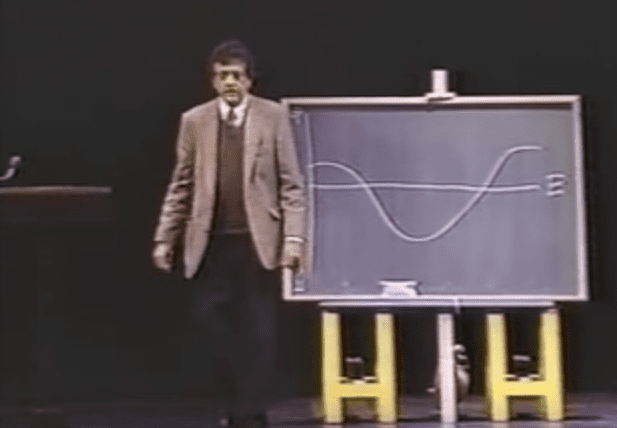
The vertical axis on Vonnegut’s graph is the “G-I axis,” with Good Fortune at the top and Ill Fortune at the bottom. The horizontal B-E axis starts at the Beginning and moves toward the End (although Vonnegut says the E stands for “electricity.”) As he reminds us, the shapes of stories are “An exercise in relativity. It’s the shape of the curve that matters and not their origins.”
And the shape of that curve encourages and rewards embellishment and exaggeration. Give that curve a more extreme downward slope and a steeper upward trajectory at the end and your story will have more of an impact. It will get a bigger response and audiences will want to hear it over and over.
Shakespeare knew this. He followed this formula in his three plays about Henry V, even going so far as to have the young Prince Hal spell it out, explicitly, for the audience (from 1 Henry IV, I, ii):
If all the year were playing holidays,
To sport would be as tedious as to work;
But when they seldom come, they wish’d for come,
And nothing pleaseth but rare accidents.
So, when this loose behavior I throw off
And pay the debt I never promised,
By how much better than my word I am,
By so much shall I falsify men’s hopes;
And like bright metal on a sullen ground,
My reformation, glittering o’er my fault,
Shall show more goodly and attract more eyes
Than that which hath no foil to set it off.
I’ll so offend, to make offence a skill;
Redeeming time when men think least I will.
People love that story. They never get sick of it.
That same formula applies to the “personal testimonies” we share in church. The ones we like best — that show more goodly and attract more eyes — are those with the starkest contrasts and the steepest curves.
If you have a relatively flat conversion narrative you’ll be politely thanked for sharing, but probably won’t be called on to share it again. The roller-coaster curves of the big-time sinners’ stories are more interesting and much more exciting. If you’ve got that kind of conversion narrative — with a much deeper hole and a much steeper climb out of it — then people will want to hear this story told and retold so often that you may be able to quit your day-job and become an itinerant evangelist with a ghost-written memoir published by Zondervan.
Daniel Burke discusses this in his CNN piece on “The dirty little secret about religious conversion stories.” Burke quotes from a Christianity Today* column by Ted Olson:
“Testimony envy may be part of any community,” Olsen wrote … “but we evangelicals seem to have a particular bent toward narrative one-upmanship.”
That’s all true. The white evangelical Christian culture rewards, and thus encourages, “testimony envy” and “narrative one-upmanship,” creating a not-so-subtle pressure to exaggerate the slope and the shape of our conversion narratives, making them more extreme and, thereby, less accurate and less true.
But it’s more than that.
And it’s more than just the temptation to give our stories, as Burke writes, “a little stretch” with an eye to make them more compelling calls for “winning souls for Christ.” That idea — that exaggerations are acceptable because they serve this higher purpose of spreading the gospel and saving souls — is a key to the rationalization that defends the tendency toward dishonest conversion stories, but I don’t think it’s the cause of that tendency.
Burke approaches that cause, almost parenthetically, but doesn’t explore it further:
Among the more notorious examples of salvation slipping into showmanship was Mike Warnke, a Christian comedian and evangelist who claimed to have converted after a violent and scandalous sojourn as a high priest in Satanism.
“Exaggeration did creep into some of my stories,” Warnke later admitted to an Oklahoma newspaper in 2000, “but my testimony is still my testimony.”
We’ve discussed Mike Warnke here before. Warnke’s testimony did not involve “exaggeration.” It was a bundle of lies — audacious, flamboyantly huge, deliberately crafted lies.
Vonnegut concludes the lecture in the video above by graphing the many curves and dips of the story of Cinderella — which he describes as the most popular story in western civilization. “We love to hear this story. Every time it’s retold, somebody makes another million dollars. You’re welcome to do it.” After the many dips and bumps in the shape of that story, Vonnegut ends by sweeping the chalk up and off the charts and drawing a little infinity symbol as Cinderella and the prince at last achieve “infinite happiness.”
Mike Warnke made his million dollars by inverting that curve. His lurid story of imaginary Satanism included a downward slope of off-the-charts, infinite depravity. That required an active imagination, but not as much originality as you might think, because ultimately what Warnke was doing was retelling another old story that has long been popular in western civilization — the story of blood libels and witch trials and inquisitions and black markets in baby parts.
Warnke did not need to break any new ground in order to describe infinite depravity and infinite evil. The description of that ultimate, superlative evil has been streamlined over the centuries into an efficient shorthand conveying all of that in a few broad strokes. Off-the-charts evil and depravity requires service to superlative, unsurpassable evil, so the first shorthand element to convey that is Satanism. And what do these Satanists do? Well, the worst thing we can imagine always gravitates toward murder, and the worst murder we can imagine involves killing the innocent, and the most innocent victims we can imagine are infants.
So that’s where this story always arrives. Always. Satanic baby-killers. A gifted storyteller will find ways to enliven that centuries-old trope by tossing in some depraved sex rituals, lots of gore, maybe some form of cannibalism. Warnke checked all of those boxes in his grisly, R-rated “testimony,” like a skilled comic riffing a particularly appalling variation of the old “The Aristocrats” joke.
And Warnke’s abominable testimony thus became a huge hit. It was, as Burke says, an act of “showmanship,” but the remarkable thing about that act wasn’t Warnke’s skill in presenting it — it was the audience’s eager hunger to hear his depraved tale told and retold. That vast audience was so enthused and delighted by Warnke’s version of the Satanic baby-killers story that I’m tempted to think Vonnegut was wrong about Cinderella, and that it’s only the second-most popular story in our civilization.
Tales of infinite depravity have a bigger fan-base than tales of infinite happiness, apparently — at least among white evangelical Christians.
That appeal and that popularity, I think, go back to the very thing that Shakespeare’s Prince Hal described — reformation glittering o’er fault. The stories we love best, that “show more goodly and attract more eyes,” are those that make the contrast between this reformation and fault most vivid. “Like bright metal on a sullen ground,” Hal says, but its far easier to make the ground seem more sullen — to “wish that black was a little blacker,” as C.S. Lewis put it — than to make the metal seem brighter. It’s easier to exaggerate our own brightness by exaggerating the surrounding sullenness into its most extreme form. And that leads us, inexorably, back to tales of Satan and of baby-killing.
When we contrast ourselves with those imagined Satanic baby-killers, even our blandest reformation doesn’t just seem to glitter, it dazzles. It’s a lie, an optical illusion, but it makes us seem to shine.
– – – – – – – – – – – –
* Christianity Today is a publication that believes gay and lesbian couples are “destructive to society.”
Previous Post

November 11, 2015
'The Anti-Christ Handbook, Volume 2'
Next Post
November 12, 2015 OK, Rainn Wilson, it's on
Browse Our Archives
Select a Category class warfare evangelicals Iraq Left Behind Mammon music Uncategorized
Select a Month November 2026 October 2026 September 2026 August 2026 July 2026 June 2026 May 2026 April 2026 March 2026 January 2026 December 2025 November 2025 October 2025 September 2025 August 2025 July 2025 June 2025 May 2025 April 2025 March 2025 February 2025 January 2025 December 2024 November 2024 October 2024 September 2024 August 2024 July 2024 June 2024 May 2024 April 2024 March 2024 February 2024 January 2024 December 2023 November 2023 October 2023 September 2023 August 2023 July 2023 June 2023 May 2023 April 2023 March 2023 February 2023 January 2023 December 2022 November 2022 October 2022 September 2022 August 2022 July 2022 June 2022 May 2022 April 2022 March 2022 February 2022 January 2022 December 2021 November 2021 October 2021 September 2021 August 2021 July 2021 June 2021 May 2021 April 2021 March 2021 February 2021 January 2021 December 2020 November 2020 October 2020 September 2020 August 2020 July 2020 June 2020 May 2020 April 2020 March 2020 February 2020 January 2020 December 2019 November 2019 October 2019 September 2019 August 2019 July 2019 June 2019 May 2019 April 2019 March 2019 February 2019 January 2019 December 2018 November 2018 October 2018 September 2018 August 2018 July 2018 June 2018 May 2018 April 2018 March 2018 February 2018 January 2018 December 2017 November 2017 October 2017 September 2017 August 2017 July 2017 June 2017 May 2017 April 2017 March 2017 February 2017 January 2017 December 2016 November 2016 October 2016 September 2016 August 2016 July 2016 June 2016 May 2016 April 2016 March 2016 February 2016 January 2016 December 2015 November 2015 October 2015 September 2015 August 2015 July 2015 June 2015 May 2015 April 2015 March 2015 February 2015 January 2015 December 2014 November 2014 October 2014 September 2014 August 2014 July 2014 June 2014 May 2014 April 2014 March 2014 February 2014 January 2014 December 2013 November 2013 October 2013 September 2013 August 2013 July 2013 June 2013 May 2013 April 2013 March 2013 February 2013 January 2013 December 2012 November 2012 October 2012 September 2012 August 2012 July 2012 June 2012 May 2012 April 2012 March 2012 February 2012 January 2012 December 2011 November 2011 October 2011 September 2011 August 2011 July 2011 June 2011 May 2011 April 2011 March 2011 February 2011 January 2011 December 2010 November 2010 October 2010 September 2010 August 2010 July 2010 June 2010 May 2010 April 2010 March 2010 February 2010 January 2010 December 2009 November 2009 October 2009 September 2009 August 2009 July 2009 June 2009 May 2009 April 2009 March 2009 February 2009 January 2009 December 2008 November 2008 October 2008 September 2008 August 2008 July 2008 June 2008 May 2008 April 2008 March 2008 February 2008 January 2008 December 2007 November 2007 October 2007 September 2007 August 2007 July 2007 June 2007 May 2007 April 2007 March 2007 February 2007 January 2007 December 2006 November 2006 October 2006 September 2006 August 2006 July 2006 June 2006 May 2006 April 2006 March 2006 February 2006 January 2006 December 2005 November 2005 October 2005 September 2005 August 2005 July 2005 June 2005 May 2005 April 2005 March 2005 February 2005 January 2005 December 2004 November 2004 October 2004 September 2004 August 2004 July 2004 June 2004 May 2004 April 2004 March 2004 February 2004 January 2004 December 2003 November 2003 October 2003 September 2003
Follow Us!
TAKE THE
Religious Wisdom Quiz
Which Gospel is written by a doctor?
Select your answer to see how you score.
Mark John Matthew Luke
Related posts from slacktivist

Is this the right room for an argument?

The Amish are not 'Evangelicals.' They're Amish.

The lumpers, the splitters, and me

'Is it right on red or left on...
TRENDING AT PATHEOS Progressive Christian

If I Stop Becoming, Will I Disappear?
(At our most recent half day Zen retreat, Dr Chris Hoff, a...

A Modest Proposal for President Trump
Trump should just quit the loser Republicans who failed him so badly...

Jesus is Coming with Glory and Power
https://www.youtube.com/watch?v=_lt60EDHOQ4&list=RD_lt60EDHOQ4&start_radio=1

The Late Francis Frangipane & the Failure Too...
I learned today that another one of my heroes has gone to...

Thomas Paine, the Smiths, the apostles in England,...
I'm pleased to announce that the Becoming Brigham Black Friday Sale,...

CatholicTV Series: Six Black Catholics on Path to...
WATERTOWN, Mass., November 9, 2026 – In recognition of Black Catholic History...
view all Progressive Christian blogs
Ad-Free & Subscriber Log-In Subscription Support
- About Us
- 2026 Calendar
- Videos
- Podcasts
- Library of World Religions
- Faith In Media Tracker
- Advertise With Us
- Write for Us
- Privacy Policy
- Terms of Service
- Do Not Sell My Data
- Contact Us
- Radiant Digital
- Manage Newsletter Subscriptions
- Unsubscribe From Notifications
- Sitemap
Copyright 2008-2026, Patheos, part of the Radiant Digital network of media brands. All rights reserved.
Subscription Support Ad-Free & Subscriber Log-In
Follow Patheos