
BuddhistCatholicContemplativeEvangelicalGeneral ChristianHinduJewishLatter-day SaintMuslimNew VisionsProgressive Christian
Beliefs
- Buddhist
- Catholic
- Contemplative
- Evangelical
- General Christian
- Hindu
- Jewish
- Latter-day Saint
- More Voices
- Muslim
- New Visions
- Pagan
- Progressive Christian
Topics
- Religion News
- Food and Religion
- Sports and Religion
- Religious Art
- Religious Music and Entertainment
- Religious Events
- History and Religion
- Style and Religion
- Politics and Religion
- Women in Religion
- Recreation Outdoors and Religion
- Business Finance and Religion
- Careers Workplace and Religion
- Education and Religion
- Family Parenting and Religion
- Health Fitness and Religion
- Home and Religion
- Relationships and Religion
- Technology and Religion
- Travel and Religion
Columnists
- Buddhist Columnists
- Business Finance and Religion Columnists
- Careers Workplace and Religion Columnists
- Catholic Columnists
- Contemplative Columnists
- Education and Religion Columnists
- Evangelists Columnists
- Family Parenting and Religion Columnists
- General Christian Columnists
- Health Fitness and Religion Columnists
- Hindu Columnists
- History and Religion Columnists
- Home and Religion Columnists
- Jewish Columnists
- More Voices Columnists
- Latter Day Columnists
- Muslim Columnists
- New Visions Columnists
- Nonreligious Columnists
- Pagan Columnists
- Politics and Religion Columnists
- Progressive Columnists
- Recreation Outdoors and Religion Columnists
- Relationships and Religion Columnists
- Religion News Columnists
- Religious Art Columnists
- Religious Events Columnists
- Religious Music and Entertainment Columnists
- Sports and Religion Columnists
- Style and Religion Columnists
- Technology and Religion Columnists
- Travel and Religion Columnists
- Women in Religion Columnists
Resource Library
- 2026 Calendar
- Library of World Religions
- The 100 Most Holy Places on Earth
- Patheos Answers
- Podcasts
- Videos
- Faith Leaders Database
- Anglican Episcopalian
- Bahai
- Baptist
- Buddhism
- Christianity
- Confucianism
- Eastern Orthodoxy
- Hinduism
- Holiness and Pentecostal
- ISKCON
- Islam
- Judaism
- Lutheran
- Methodist
- The Church of Jesus Christ of Latter-day Saints
- New Age
- Paganism
- Presbytarian and Reformed
- Protestantism
- Religion Behind the Scenes
- Roman Catholic
- Scientology
- Shia Islam
- Sikhism
- Sufism
- Sunni Islam
- Taoism
- Zen
- See all religions
Research Tools
 Ad-Free & Subscriber Log-In Subscription Support
Ad-Free & Subscriber Log-In Subscription Support
Follow Patheos 

- Trending:
- Forgiveness
- |
- Marriage
- |
- Consciousness
- |
- Death Penalty
- |
- Election
- |
- Halloween

- Home
- Progressive Christian
- L.B.: Fizzbinsationalism
L.B.: Fizzbinsationalism
Last updated on: November 1, 2015 at 12:14 am by Fred Clark
L.B.: Fizzbinsationalism 2015-11-01T00:14:46-04:00 Fred Clark
Patheos Explore the world's faith through different perspectives on religion and spirituality! Patheos has the views of the prevalent religions and spiritualities of the world.
(Originally posted March 24, 2006. This got lost in the migration from TypePad to WordPress, recovered and reposted for the archives here thanks to the Internet Archive Wayback Machine.)
Left Behind, pp. 208-210
Rayford Steele is disappointed that he couldn’t convince his daughter, Chloe, to watch the In-Case-of-Rapture video with him:
Rayford gave up. He would deal with his own soul and pray for his daughter, but clearly there would be no badgering her into the faith.
Note that he gives up on “badgering her into the faith” only for strategic, pragmatic reasons, not for ethical or theological reasons. For Rayford, as for LaHaye and Jenkins, badgering someone into the faith is a perfectly legitimate approach. In this case, however, it doesn’t seem to be working, so Rayford settles for a tactical retreat and decides to watch the tape by himself.
The tape begins and Rayford is greeted by New Hope’s departed pastor, Vernon Billings. In Billings’ introduction we learn for the first time where we are, or at least where New Hope Village Church is — Mount Prospect, Illinois. Here’s Billings:
As you watch this tape, I can only imagine the fear and despair you face, for this is being recorded for viewing only after the disappearance of God’s people from the earth.
That you are watching indicates you have been left behind. You are no doubt stunned, shocked, afraid and remorseful …
Let me show you from the Bible exactly what has happened. You won’t need this proof by now, because you will have experienced the most shocking event of history. But as this tape was made beforehand and I am confident that I will be gone, ask yourself, how did he know? Here’s how, from 1 Corinthians 15:51-57.
At this point Rayford hits the pause button and runs off to grab his wife’s Bible to look up the passage for himself. I reached for a Bible too, even though, like all good graduates of evangelical Sunday school, I had a pretty good idea of what that passage said. 1 Corinthians 15 is St. Paul’s famous sermon on resurrection.
The entire chapter is a single, sustained argument and it’s a bit odd to jump in, as Billings does, at the very end of that argument. Paul begins by repeating the message he says is “of first importance: that Christ died for our sins … that he was buried, that he was raised on the third day …” (3-4). Really dead, really buried, really raised again — that’s Paul’s argument.
This is vitally important, Paul argues, because:
… if Christ has not been raised, our preaching is useless and so is your faith. … For if the dead are not raised, then Christ has not been raised either. And if Christ has not been raised, your faith is futile; you are still in your sins. Then those also who have fallen asleep in Christ are lost. If only for this life we have hope in Christ, we are to be pitied more than all men. …
He goes on like this for quite a while, even saying:
If the dead are not raised, “Let us eat and drink, for tomorrow we die.”
Feel free to disagree with Paul’s argument here. (I personally find the kind of Nietzchean implications of his hyperbole here difficult to square with his own respectful engagement with Stoic ideas elsewhere, such as his Mars Hill address.) It’s perfectly fair to disagree with that argument, but it’s not fair to claim that his argument is something other than what it is.
“If the dead are not raised,” Paul says, “then those also who have fallen asleep in Christ are lost.” We’re all going to die. No exceptions. We will die and we will be buried, and if that’s all there is then our only destiny is a long dirt nap.
But, says Paul, that’s not all there is: “Christ has indeed been raised from the dead, the firstfruits of those who have fallen asleep.” His whole argument, the entire chapter, leads up to this — the ending passage that Vernon Billings recites:
Listen, I tell you a mystery: We will not all sleep, but we will all be changed — in a flash, in the twinkling of an eye, at the last trumpet. For the trumpet will sound, the dead will be raised imperishable, and we will be changed. … then the saying that is written will come true: “Death has been swallowed up in victory.”
“The dead will be raised,” Paul says. The dirt nap is not the final word. Your faith is not futile.
You don’t have to agree with Paul’s argument to appreciate why Christians have long referred to 1 Corinthians 15 as “The Resurrection Chapter.” Or to recognize the aptness of the New International Version’s subheadings for this chapter: “The Resurrection of Christ,” “The Resurrection of the Dead,” “The Resurrection Body.”
But for Vernon Billings — and for LaHaye and Jenkins — those subheadings are all wrong. They don’t think this chapter has anything to do with resurrection. For them, it’s all about the Rapture.
Pastor Billings continued, “Let me paraphrase some of that so you’ll understand it clearly. When Paul says we shall not all sleep, he means that we shall not all die.”
Billings doesn’t care about the resurrection of the dead. He’s hoping for something he thinks would be even better — not dying at all. Thus where the majority of Christians for 2,000 years read Paul as saying “We shall not all SLEEP, but we will all be CHANGED,” Billings and L&J read Paul as saying “We shall not ALL sleep, but WE will all be changed.”
That’s a doozy of a novel interpretation. You can see why Billings had to ignore the first 50 verses of this chapter — such context makes his novel interpretation extremely difficult to sustain. He has to pretend all that discussion doesn’t exist — all of that stuff about “if the dead be/be not raised” and “if Christ be/be not raised” and of Christ as “firstfruits” of those who have died and been raised again.
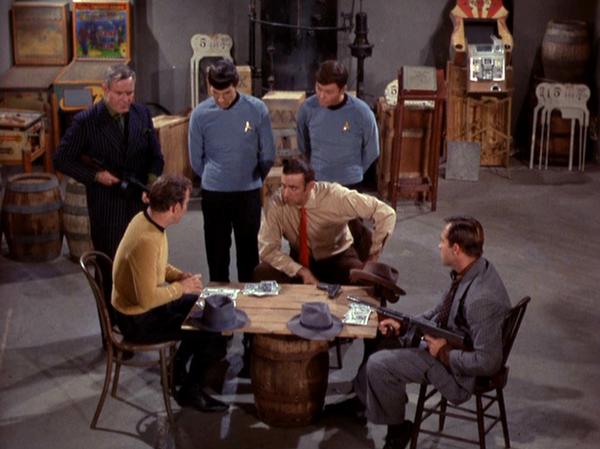
“Of course, the cards on Beta Antares Four are different …”
The context of the chapter simply doesn’t allow Billings’ interpretation to make any sense. But set that aside for a moment and consider what it would mean to accept Billings’ and L&J’s interpretation as true. This is a passage from Paul’s letter to the first-century church in Corinth, but if it means what Billings says it does, then it wasn’t true for Paul (he died) or for any of the Christians he was writing to (they’re all dead).
L&J’s interpretation would mean, in fact, that this passage was meaningless nonsense for all first-century Christians. And all second-century Christians. And third-, fourth-, fifth-, and 19th-century Christians. And for a growing number of 20th- and 21st-century Christians as well.
This would mean that all those times that Tim LaHaye’s mother — or my mother — read this passage as part of their devotions, they were unknowingly reading something that wasn’t really Scripture for them. This passage would have meaning, would be true only for those select few Christians who, like Vernon Billings and Irene Steele, had the good timing and good fortune to read it shortly before being themselves “Raptured.” Only those select, timely few could include themselves among the “we” that Billings says “shall not all die.”
This is hermeneutical Fizzbin. The text means one thing for one set of readers but not for others. It means one thing for the dealer but something entirely different for the reader to the dealer’s right, except on Tuesdays, or after dark.
This hermeneutic is irrational and arbitrary. And it has a name. It’s called “dispensationalism.”
Not only does this approach allow one to say, as Billings does, that the “Resurrection Chapter” isn’t about resurrection, but it also lets one avoid other passages that one would prefer not to have to deal with. The Sermon on the Mount? Don’t worry about it — that refers to the the Millennial dispensation, not to us. Ditto for the parables and, oh, pretty much everything else Jesus had to say in the Gospels.
That’s what Fizzbin is for, after all, to provide a distraction so you can make your escape.
Previous Post

October 31, 2015
L.B.: The Undead
Next Post
November 1, 2015 L.B.: Over at the Frankenstein place
Browse Our Archives
Select a Category class warfare evangelicals Iraq Left Behind Mammon music Uncategorized
Select a Month October 2026 September 2026 August 2026 July 2026 June 2026 May 2026 April 2026 March 2026 January 2026 December 2025 November 2025 October 2025 September 2025 August 2025 July 2025 June 2025 May 2025 April 2025 March 2025 February 2025 January 2025 December 2024 November 2024 October 2024 September 2024 August 2024 July 2024 June 2024 May 2024 April 2024 March 2024 February 2024 January 2024 December 2023 November 2023 October 2023 September 2023 August 2023 July 2023 June 2023 May 2023 April 2023 March 2023 February 2023 January 2023 December 2022 November 2022 October 2022 September 2022 August 2022 July 2022 June 2022 May 2022 April 2022 March 2022 February 2022 January 2022 December 2021 November 2021 October 2021 September 2021 August 2021 July 2021 June 2021 May 2021 April 2021 March 2021 February 2021 January 2021 December 2020 November 2020 October 2020 September 2020 August 2020 July 2020 June 2020 May 2020 April 2020 March 2020 February 2020 January 2020 December 2019 November 2019 October 2019 September 2019 August 2019 July 2019 June 2019 May 2019 April 2019 March 2019 February 2019 January 2019 December 2018 November 2018 October 2018 September 2018 August 2018 July 2018 June 2018 May 2018 April 2018 March 2018 February 2018 January 2018 December 2017 November 2017 October 2017 September 2017 August 2017 July 2017 June 2017 May 2017 April 2017 March 2017 February 2017 January 2017 December 2016 November 2016 October 2016 September 2016 August 2016 July 2016 June 2016 May 2016 April 2016 March 2016 February 2016 January 2016 December 2015 November 2015 October 2015 September 2015 August 2015 July 2015 June 2015 May 2015 April 2015 March 2015 February 2015 January 2015 December 2014 November 2014 October 2014 September 2014 August 2014 July 2014 June 2014 May 2014 April 2014 March 2014 February 2014 January 2014 December 2013 November 2013 October 2013 September 2013 August 2013 July 2013 June 2013 May 2013 April 2013 March 2013 February 2013 January 2013 December 2012 November 2012 October 2012 September 2012 August 2012 July 2012 June 2012 May 2012 April 2012 March 2012 February 2012 January 2012 December 2011 November 2011 October 2011 September 2011 August 2011 July 2011 June 2011 May 2011 April 2011 March 2011 February 2011 January 2011 December 2010 November 2010 October 2010 September 2010 August 2010 July 2010 June 2010 May 2010 April 2010 March 2010 February 2010 January 2010 December 2009 November 2009 October 2009 September 2009 August 2009 July 2009 June 2009 May 2009 April 2009 March 2009 February 2009 January 2009 December 2008 November 2008 October 2008 September 2008 August 2008 July 2008 June 2008 May 2008 April 2008 March 2008 February 2008 January 2008 December 2007 November 2007 October 2007 September 2007 August 2007 July 2007 June 2007 May 2007 April 2007 March 2007 February 2007 January 2007 December 2006 November 2006 October 2006 September 2006 August 2006 July 2006 June 2006 May 2006 April 2006 March 2006 February 2006 January 2006 December 2005 November 2005 October 2005 September 2005 August 2005 July 2005 June 2005 May 2005 April 2005 March 2005 February 2005 January 2005 December 2004 November 2004 October 2004 September 2004 August 2004 July 2004 June 2004 May 2004 April 2004 March 2004 February 2004 January 2004 December 2003 November 2003 October 2003 September 2003
Follow Us!
TAKE THE
Religious Wisdom Quiz
How many days did God take to create the world?
Select your answer to see how you score.
Seven Ten Six Five
Related posts from slacktivist

Hal Lindsey is gone (the Late, Great Planet...

Can't seem to get it through my head

For Buffy and Carl so loved the world

TRENDING AT PATHEOS Progressive Christian

'Super Scam Me' Exposes AI Jon Bon Jovi...
Leslie Pickett believed she was in a relationship with Jon Bon Jovi....

The Brazilian Remake of Kendricks' 'Flywheel' Opens in...
“Flywheel,” the story that launched the Kendrick Brothers’ filmmaking career is getting...

The Dangers of Gradual Accommodation (Winking at Sin)
Recently, the “law of gradualness” resurfaced during the opening of a weeklong,...

The Iron Gates and the Lion of the...
Yesterday, I didn't finish my report about, well, yesterday. So I'll...

The Image: On the Horror of Capitalism and...
The Image Then went the Pharisees, and took counsel how they might...

We are approaching the date of our new American national holiday: October...
view all Progressive Christian blogs
Ad-Free & Subscriber Log-In Subscription Support
- About Us
- 2026 Calendar
- Videos
- Podcasts
- Library of World Religions
- Faith In Media Tracker
- Advertise With Us
- Write for Us
- Privacy Policy
- Terms of Service
- Do Not Sell My Data
- Contact Us
- Radiant Digital
- Manage Newsletter Subscriptions
- Unsubscribe From Notifications
- Sitemap
Copyright 2008-2026, Patheos. All rights reserved.
Subscription Support Ad-Free & Subscriber Log-In
Follow Patheos