
BuddhistCatholicContemplativeEvangelicalGeneral ChristianHinduJewishLatter-day SaintMuslimNew VisionsProgressive Christian
Beliefs
- Buddhist
- Catholic
- Contemplative
- Evangelical
- General Christian
- Hindu
- Jewish
- Latter-day Saint
- More Voices
- Muslim
- New Visions
- Pagan
- Progressive Christian
Topics
- Religion News
- Food and Religion
- Sports and Religion
- Religious Art
- Religious Music and Entertainment
- Religious Events
- History and Religion
- Style and Religion
- Politics and Religion
- Women in Religion
- Recreation Outdoors and Religion
- Business Finance and Religion
- Careers Workplace and Religion
- Education and Religion
- Family Parenting and Religion
- Health Fitness and Religion
- Home and Religion
- Relationships and Religion
- Technology and Religion
- Travel and Religion
Columnists
- Buddhist Columnists
- Business Finance and Religion Columnists
- Careers Workplace and Religion Columnists
- Catholic Columnists
- Contemplative Columnists
- Education and Religion Columnists
- Evangelists Columnists
- Family Parenting and Religion Columnists
- General Christian Columnists
- Health Fitness and Religion Columnists
- Hindu Columnists
- History and Religion Columnists
- Home and Religion Columnists
- Jewish Columnists
- More Voices Columnists
- Latter Day Columnists
- Muslim Columnists
- New Visions Columnists
- Nonreligious Columnists
- Pagan Columnists
- Politics and Religion Columnists
- Progressive Columnists
- Recreation Outdoors and Religion Columnists
- Relationships and Religion Columnists
- Religion News Columnists
- Religious Art Columnists
- Religious Events Columnists
- Religious Music and Entertainment Columnists
- Sports and Religion Columnists
- Style and Religion Columnists
- Technology and Religion Columnists
- Travel and Religion Columnists
- Women in Religion Columnists
Resource Library
- 2026 Calendar
- Library of World Religions
- The 100 Most Holy Places on Earth
- Patheos Answers
- Podcasts
- Videos
- Faith Leaders Database
- Anglican Episcopalian
- Bahai
- Baptist
- Buddhism
- Christianity
- Confucianism
- Eastern Orthodoxy
- Hinduism
- Holiness and Pentecostal
- ISKCON
- Islam
- Judaism
- Lutheran
- Methodist
- The Church of Jesus Christ of Latter-day Saints
- New Age
- Paganism
- Presbytarian and Reformed
- Protestantism
- Religion Behind the Scenes
- Roman Catholic
- Scientology
- Shia Islam
- Sikhism
- Sufism
- Sunni Islam
- Taoism
- Zen
- See all religions
Research Tools
 Ad-Free & Subscriber Log-In Subscription Support
Ad-Free & Subscriber Log-In Subscription Support
Follow Patheos 

- Trending:
- Forgiveness
- |
- Marriage
- |
- Consciousness
- |
- Death Penalty
- |
- Election
- |
- Halloween

- Home
- Progressive Christian
- L.B.: CSI Atlanta
L.B.: CSI Atlanta
Last updated on: November 1, 2015 at 4:20 am by Fred Clark
L.B.: CSI Atlanta 2015-11-01T00:34:29-04:00 Fred Clark
Patheos Explore the world's faith through different perspectives on religion and spirituality! Patheos has the views of the prevalent religions and spiritualities of the world.
(Originally posted November 25, 2006. This got lost in the migration from TypePad to WordPress, recovered and reposted for the archives here thanks to the Internet Archive Wayback Machine.)
Left Behind, pp. 234-236
If this really happened, we would give it a name. The instantaneous disintegration of every child and of hundreds of millions of adults, everywhere, at once. The lethal aftermath.
And the psychological aftermath. The panic and fear and realization that everything had changed. Every parent on earth simultaneously experiencing every parent’s worst nightmare. “I only turned my back for a second and she was gone.” “He’s not in his bed, where is he?” In an instant, the world is transformed from the home of 6 billion people to the home of only 4 billion, most of whom would be suffering from some form of traumatic stress.
“Things don’t just disappear,” my mother used to say. But in this story, they do. People do. And in addition to the shock, grief, loss and horror, this is something else everyone would have to cope with. They could no longer take for granted something they didn’t even realize they had been taking for granted. The possibility now has to be considered that you might at any second vanish without trace or explanation. A third of us gone, the remaining two-thirds would all feel the carpet had been yanked from beneath our feet.
So if this really happened, we would need to give it a name.
The authors and their protagonists already have a name for it, of course, it was “The Rapture,” but most people wouldn’t be calling it that. And by this point — a week after the fact — the name would already be settled. Headlines have to be written, cable news graphics have to be prepared, and most people in the news business don’t have the leisurely long lead that Buck seems to enjoy in reporting on this for Global Quarterly.
 Short on time and space, headline writers rely on a shorthand of date and place. The explosion in a mine in Sago, West Virginia, becomes “the Sago Mine disaster,” or just “Sago.” The terrorist attacks in New York and Washington on Sept. 11, 2001, become simply “Sept. 11,” or shorter still, “9/11.” Left Behind begins with a global event, the scale and scope of which renders such place or date names inadequate. Something like “Black Monday” wouldn’t even work, since what was late Monday in New York was early Tuesday in London.
The cabdriver in Atlanta refers to it as “the vanishings.” The lower case is wrong, but that’s not a bad candidate for a name. But while the vanishings were the biggest thing to happen — the worst thing, the truly earth-shattering, unprecedented horror — referring only to The Vanishing(s) might seem to fail to include all of the horrors of the aftermath. Two jetliners crashing on a single day would be an event remembered, by name, for decades. A half-dozen crashes, at every airport — set aside, for the moment, the lethal pileups on every highway — would, at the very least, send the economy into recession and result in a cabinet-level shakeup if not an impeachment or resignation. We would need a name for such an event that would encompass all of that.
I’d recommend, simply, The Event. No one would have any confusion as to which event this referred. For anyone to be confused on that point, they’d have to be as inhuman as the characters in Left Behind. Buck Williams might think it referred to the London car-bombing he narrowly escaped. Rayford Steele might think it referred to the surprise elections in Romania. Steve Plank might think it meant the Parliament of World Religions. But the name would probably work for everyone else.
I mentioned the cabdriver in Atlanta. That’s where Rayford has just landed on an apparently routine commuter flight. After an enthralling, detailed account of the Pan-Continental staffing logistics that afforded a two-hour window for the pilot and his daughter to eat lunch in Atlanta, they take a cab into the city, where all the good restaurants, just like the airlines, are carrying on business-as-usual. (We’re not told where they went to eat, but Rayford was looking for someplace quiet where he and Chloe could talk, so I’m guessing Chuck E. Cheese — it should be nice and quiet, with plenty of available tables.)
Rayford wants to talk to his daughter about his recent conversion and he’s not sure how to raise the topic. He thinks that discussing The Event would be a way to lead into it, but he’s not sure how to bring that subject up either.
Again, this is bizarre. If anything like any of this had really happened to real people, The Event would still be all that anyone would be talking about. But the authors, like Rayford, have blithely moved on, clearing away all of the physical and emotional debris. So we get strangely contrived scenes in which Rayford stumbles across a piece of the otherwise now-invisible aftermath so that he is able to raise the subject with Chloe. This happened on the way to the airport in Chicago, as they passed burned-out houses that weren’t there as they drove around earlier in the week, and it happens again in Atlanta, courtesy of their cabdriver. The cabbie, with her not-quite-believable touches of local color and her too-on-the-nose statements of the authors’ thesis, seems to have wandered in from a Tom Friedman column:
Their cabdriver, a young woman with a beautiful lilt to her voice, asked if they wanted to see “a truly unbelievable sight.””If it’s not out of the way.”
“It’s just a couple of blocks from where y’all are going,” she said.
She maneuvered around several detours and construction horses, then through two streets manned by traffic cops. “Over yonder,” she said, pointing, and she pulled into a sandy parking lot rimmed by three-foot concrete-block walls. “Can you see that parking garage ‘cross the way? … This has been going on since the vanishings.”
… They peered at a six-story garage with cars seemingly jammed into each other at all angles in a gridlock so tight and convoluted that cranes worked to lift them out through the open sides of the structure.
The Vanishings occurred, she explains, during the middle of a late-night post-game traffic jam in the garage.
“And then, poof, they say more than a third of the cars ain’t got drivers, just like that. If they had room, they kept going until they hit other cars or the wall. If they didn’t have room, they just pushed up against the car in front of ’em. The ones that were left couldn’t go one way or the other. It was such a mess that people just left their cars and climbed over other cars and went looking for help. They started at dawn moving the cars on the ground levels with tow trucks, then they got them cranes in there by noon, and they been at it ever since.”
No. Just … no.
I doubt it’s possible to catalog everything that’s just wrong in that description.
Here you have a parking garage filled with people and then, “poof,” a parking garage only two-thirds filled with people. One result would, of course, be the sort of inextricable gridlock L&J describe via their cabbie amanuensis, but that should scarcely register for those who have just witnessed hundreds of people disappear. Yet no one seems to remark on or consider these disappearances apart from their affect on traffic patterns. (This could work as a satirical commentary on the Darwinian struggle of post-game parking lots, but that doesn’t seem to be the intent.)
I realize there aren’t a lot of kids at a late basketball game on a school night, but you’d expect at least a few frantic parents screaming in horror at their suddenly empty back seats. You’d expect some shock, terror, fear — something other than the blasé, purely logistical response described: “Hmm, darn’dest thing. ‘Bout a third of ’em, I’d say. Well, let’s get some tow trucks in here.” No one desperately calls their loved ones. No one turns on a radio to realize that my God this is happening everywhere.
True to form, L&J focus exclusively on logistics and mechanics, and yet still get those wrong. Ever call a tow truck in a snow storm? You can’t get one. They’re all busy. And Atlanta — the entire world — was just hit with something much, much bigger than a snow storm. Tow trucks would have had much bigger priorities than a bunch of cars stuck in a parking garage. They’d be on the expressways, or at the airport — if they could even get to the expressways or the airport. And there wouldn’t be “traffic cops” either — the National Guard and probably even the regular Army would be in the streets.
So no, it’s just not possible that “They started at dawn … with tow trucks, then … cranes by noon.” Those cars would’ve sat there for weeks.
And they should have sat there. Whatever else it may be, that parking garage is a crime scene. People don’t just disappear, so until foul play can be ruled out, it’s best not to destroy any potential evidence with tow trucks and cranes. It’s also the scene of multiple accidents and so, assuming they would be as miraculously immediately available as the tow trucks, the place should be crawling with insurance claims agents. Post-Event, insurers would be bankrupted by untold billions in property claims. And what about life insurance claims? (“I’m sorry, Mr. Steele, but if you can’t prove your wife is dead we can’t process your claim.”)
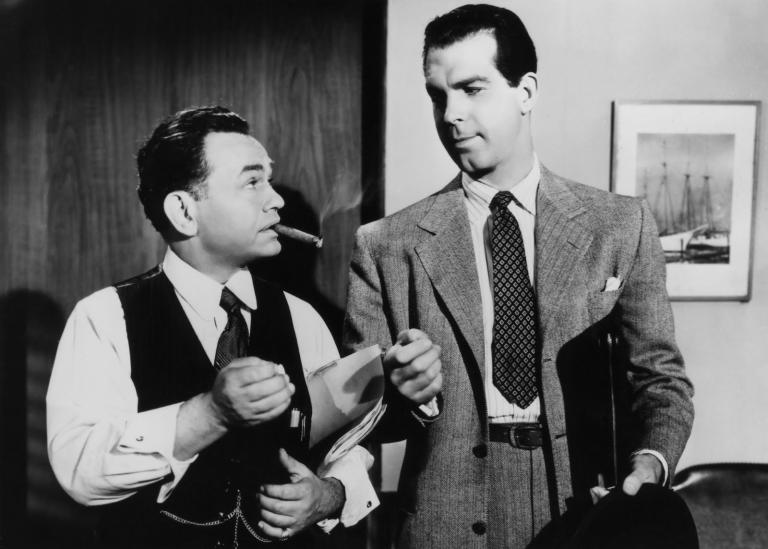
Come to think of it, an insurance investigator might have made a far more interesting protagonist — think Edward G. Robinson in Double Indemnity — than our unfocused, incurious reporter. Such a character would have to set about getting to the bottom of things, investigating what happened, what caused this, who or what is to blame. (The phrase “act of God” would be much discussed.)
Not only do we not get a protagonist interested in such questions, we get an entire world in which no one is interested in such questions. There’s no need to ask them — the answer is right there on the book jacket, which every character in LB seems to have read.
“Are you saved now?” the [cabdriver] asked.Rayford was shocked by her forthrightness, but he knew exactly what she meant. “I am,” he said.
“I am, too. You got to be blind or somethin’ to not see the light now.”
Blind. Or somethin’.
Previous Post

November 1, 2015
L.B.: Over at the Frankenstein place
Next Post
November 1, 2015 Sunday WTF?
Browse Our Archives
Select a Category class warfare evangelicals Iraq Left Behind Mammon music Uncategorized
Select a Month October 2026 September 2026 August 2026 July 2026 June 2026 May 2026 April 2026 March 2026 January 2026 December 2025 November 2025 October 2025 September 2025 August 2025 July 2025 June 2025 May 2025 April 2025 March 2025 February 2025 January 2025 December 2024 November 2024 October 2024 September 2024 August 2024 July 2024 June 2024 May 2024 April 2024 March 2024 February 2024 January 2024 December 2023 November 2023 October 2023 September 2023 August 2023 July 2023 June 2023 May 2023 April 2023 March 2023 February 2023 January 2023 December 2022 November 2022 October 2022 September 2022 August 2022 July 2022 June 2022 May 2022 April 2022 March 2022 February 2022 January 2022 December 2021 November 2021 October 2021 September 2021 August 2021 July 2021 June 2021 May 2021 April 2021 March 2021 February 2021 January 2021 December 2020 November 2020 October 2020 September 2020 August 2020 July 2020 June 2020 May 2020 April 2020 March 2020 February 2020 January 2020 December 2019 November 2019 October 2019 September 2019 August 2019 July 2019 June 2019 May 2019 April 2019 March 2019 February 2019 January 2019 December 2018 November 2018 October 2018 September 2018 August 2018 July 2018 June 2018 May 2018 April 2018 March 2018 February 2018 January 2018 December 2017 November 2017 October 2017 September 2017 August 2017 July 2017 June 2017 May 2017 April 2017 March 2017 February 2017 January 2017 December 2016 November 2016 October 2016 September 2016 August 2016 July 2016 June 2016 May 2016 April 2016 March 2016 February 2016 January 2016 December 2015 November 2015 October 2015 September 2015 August 2015 July 2015 June 2015 May 2015 April 2015 March 2015 February 2015 January 2015 December 2014 November 2014 October 2014 September 2014 August 2014 July 2014 June 2014 May 2014 April 2014 March 2014 February 2014 January 2014 December 2013 November 2013 October 2013 September 2013 August 2013 July 2013 June 2013 May 2013 April 2013 March 2013 February 2013 January 2013 December 2012 November 2012 October 2012 September 2012 August 2012 July 2012 June 2012 May 2012 April 2012 March 2012 February 2012 January 2012 December 2011 November 2011 October 2011 September 2011 August 2011 July 2011 June 2011 May 2011 April 2011 March 2011 February 2011 January 2011 December 2010 November 2010 October 2010 September 2010 August 2010 July 2010 June 2010 May 2010 April 2010 March 2010 February 2010 January 2010 December 2009 November 2009 October 2009 September 2009 August 2009 July 2009 June 2009 May 2009 April 2009 March 2009 February 2009 January 2009 December 2008 November 2008 October 2008 September 2008 August 2008 July 2008 June 2008 May 2008 April 2008 March 2008 February 2008 January 2008 December 2007 November 2007 October 2007 September 2007 August 2007 July 2007 June 2007 May 2007 April 2007 March 2007 February 2007 January 2007 December 2006 November 2006 October 2006 September 2006 August 2006 July 2006 June 2006 May 2006 April 2006 March 2006 February 2006 January 2006 December 2005 November 2005 October 2005 September 2005 August 2005 July 2005 June 2005 May 2005 April 2005 March 2005 February 2005 January 2005 December 2004 November 2004 October 2004 September 2004 August 2004 July 2004 June 2004 May 2004 April 2004 March 2004 February 2004 January 2004 December 2003 November 2003 October 2003 September 2003
Follow Us!
TAKE THE
Religious Wisdom Quiz
Who said, "I am not ashamed of the gospel"?
Select your answer to see how you score.
Peter Paul John James
Related posts from slacktivist

Hal Lindsey is gone (the Late, Great Planet...

Can't seem to get it through my head

For Buffy and Carl so loved the world

TRENDING AT PATHEOS Progressive Christian

Looking at the Largest Orthodox Cathedral on Earth
There is often a considerable amount of anger and, shall we...

The Problem with False Prophets
Miller’s Station UMC| 10/18/26| Anchor Verse: Jeremiah 23: 1, 9-23 I...

Emotion in Early Christianity by Andrew Crislip
Andrew Crislip’s Emotion in Early Christianity examines an often overlooked dimension of...

16 Spiritual Touchstones for a More Grounded Life
After decades of spiritual study, here are 16 principles I try...

Catholic Evangelization: Sharing Your Faith Every Day
Welcome back to the Graceful Awakening mini-series called, “From Faith to Mission.” ...

The Pillar of the Boatmen: the Ancient Monument...
The Pillar of the Boatmen is a Romano-Gaulish sculpture that dates from...
view all Progressive Christian blogs
Ad-Free & Subscriber Log-In Subscription Support
- About Us
- 2026 Calendar
- Videos
- Podcasts
- Library of World Religions
- Faith In Media Tracker
- Advertise With Us
- Write for Us
- Privacy Policy
- Terms of Service
- Do Not Sell My Data
- Contact Us
- Radiant Digital
- Manage Newsletter Subscriptions
- Unsubscribe From Notifications
- Sitemap
Copyright 2008-2026, Patheos. All rights reserved.
Subscription Support Ad-Free & Subscriber Log-In
Follow Patheos