
BuddhistCatholicContemplativeEvangelicalGeneral ChristianHinduJewishLatter-day SaintMuslimNew VisionsProgressive Christian
Beliefs
- Buddhist
- Catholic
- Contemplative
- Evangelical
- General Christian
- Hindu
- Jewish
- Latter-day Saint
- More Voices
- Muslim
- New Visions
- Pagan
- Progressive Christian
Topics
- Religion News
- Food and Religion
- Sports and Religion
- Religious Art
- Religious Music and Entertainment
- Religious Events
- History and Religion
- Style and Religion
- Politics and Religion
- Women in Religion
- Recreation Outdoors and Religion
- Business Finance and Religion
- Careers Workplace and Religion
- Education and Religion
- Family Parenting and Religion
- Health Fitness and Religion
- Home and Religion
- Relationships and Religion
- Technology and Religion
- Travel and Religion
Columnists
- Buddhist Columnists
- Business Finance and Religion Columnists
- Careers Workplace and Religion Columnists
- Catholic Columnists
- Contemplative Columnists
- Education and Religion Columnists
- Evangelists Columnists
- Family Parenting and Religion Columnists
- General Christian Columnists
- Health Fitness and Religion Columnists
- Hindu Columnists
- History and Religion Columnists
- Home and Religion Columnists
- Jewish Columnists
- More Voices Columnists
- Latter Day Columnists
- Muslim Columnists
- New Visions Columnists
- Nonreligious Columnists
- Pagan Columnists
- Politics and Religion Columnists
- Progressive Columnists
- Recreation Outdoors and Religion Columnists
- Relationships and Religion Columnists
- Religion News Columnists
- Religious Art Columnists
- Religious Events Columnists
- Religious Music and Entertainment Columnists
- Sports and Religion Columnists
- Style and Religion Columnists
- Technology and Religion Columnists
- Travel and Religion Columnists
- Women in Religion Columnists
Resource Library
- 2026 Calendar
- Library of World Religions
- The 100 Most Holy Places on Earth
- Patheos Answers
- Podcasts
- Videos
- Faith Leaders Database
- Anglican Episcopalian
- Bahai
- Baptist
- Buddhism
- Christianity
- Confucianism
- Eastern Orthodoxy
- Hinduism
- Holiness and Pentecostal
- ISKCON
- Islam
- Judaism
- Lutheran
- Methodist
- The Church of Jesus Christ of Latter-day Saints
- New Age
- Paganism
- Presbytarian and Reformed
- Protestantism
- Religion Behind the Scenes
- Roman Catholic
- Scientology
- Shia Islam
- Sikhism
- Sufism
- Sunni Islam
- Taoism
- Zen
- See all religions
Research Tools
 Ad-Free & Subscriber Log-In Subscription Support
Follow Patheos 

- Trending:
- Advent
- |
- Forgiveness
- |
- Thanksgiving
- |
- Election
- |
- Seasonal Holidays
- |
- Marriage

- Home
- Progressive Christian
- Our job is to unlearn the lies we learned from the theologians of slavery (part 1)
Our job is to unlearn the lies we learned from the theologians of slavery (part 1)
Last updated on: June 20, 2014 at 5:07 pm by Fred Clark
Our job is to unlearn the lies we learned from the theologians of slavery (part 1) 2014-06-20T17:07:07-04:00 Fred Clark
Patheos Explore the world's faith through different perspectives on religion and spirituality! Patheos has the views of the prevalent religions and spiritualities of the world.
Warren Throckmorton shares a bit more from historian Thomas Kidd on “George Whitfield and Slavery.” Kidd helpfully confronts the seriousness and enormity of this grim reality:
The most challenging issue for a biographer of George Whitefield (as with Patrick Henry) is his identity as a slave owner. I admire Whitefield and Henry, as well as similar figures of their time such as Jonathan Edwards or George Washington, but their owning people as slaves remains an unavoidable moral problem.
How does one admire a historical figure who kept slaves? How does an author fully convey his disapproval of American slavery, while not condemning an individual altogether?
That last question leads Kidd astray. In typical Southern Baptist fashion, it elevates the maintenance of a proper “stance” on a moral question above the importance of the moral question itself. That puts the focus on the author and “his disapproval” rather than on the evil being disapproved. And that, in turn, unhelpfully elevates the matter of guilt over the matter of responsibility.
That spins Kidd away from the substance of the question he began discussing and into an unfortunate appeal to Hegel’s Bluff:
I am not sure that I have gotten the balance exactly right, but we want to avoid two extremes.
One extreme might suggest that Whitefield was a great man of God, and that harping on his owning of slaves denigrates his memory as a Christian hero.
The other extreme might say that whatever Whitefield accomplished for God was fatally tainted by his owning slaves, so he is better forgotten or just used as a cautionary tale.
Yes, it would be foolishly extreme to think that the only possible approach here would be to either ignore Whitefield’s defense of slavery or to ignore Whitefield. We certainly should avoid the foolishness of self-serving NABA NABA-ism (“I don’t own slaves so therefore I am Not As Bad As Thomas Jefferson and so therefore I must be good”). And Kidd, to his credit, also seeks to avoid the dismissive, compartmentalizing approach that overlooks grave evil so as not to tarnish Whitefield’s “memory as a Christian hero.”
Kidd’s proposed “middle way” is, indeed, preferable to either such form of willful ignorance. But it’s also utterly beside the point:
I think the better approach is to humbly acknowledge that we all have moral blind spots. We can justify all manner of habits and practices that, in three centuries’ retrospect, may seem appalling. But this does not excuse Whitefield’s complicity in what was a fundamentally immoral system, from the terrible wars and slave catching trade in Africa, to the horrible passage of the forced Atlantic voyage, to the dreadful working conditions for slaves, to the physical and sexual abuse that many slaves endured in the Americas.
Jonathan Edwards seems an easier case to forgive, as he only kept a few household slaves and just occasionally spoke in public about the rectitude of slave owning. Whitefield, by contrast, was arguably the key figure in having slavery introduced in the colony of Georgia, where it was originally banned. I was dismayed to find archival evidence that Whitefield may have even allowed slaves to work at the property of his Bethesda before Georgia made slave owning legal.
And yet Whitefield was, in most other areas, a man of powerful passion and integrity, living a life of incredible significance and service to God. This is a good reminder that God uses deeply flawed people (one thinks of David, Peter, and Paul) in the work of His Kingdom.
The focus here is entirely on reputation. Kidd is concerned with how we ought to assess the reputation of theologians like Whitefield and Edwards, and thus also with how to maintain our own reputation in properly remembering them.
And thus Kidd winds up distracting himself from what began as a hard look at a crucially important question, ultimately settling on a flaccidly platitudinous moral to the story: “God uses deeply flawed people.”
Well, first of all, no duh. “Deeply flawed people” is redundant. (As Edwards himself taught. Thus, Calvinism.)
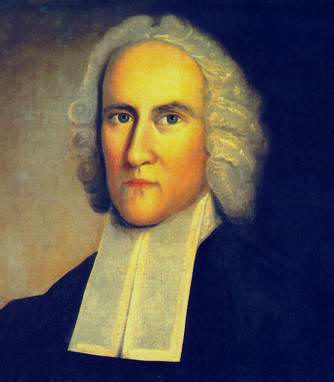
Jonathan Edwards believed some deadly lies. And he taught us to believe those lies too. That’s a big problem.
But more importantly, we see here how a focus on reputation — whether Whitefield’s or our own — leads inevitably to the very “extreme” that Kidd was hoping to avoid. It takes us back to merely shrugging off Whitefield’s defense of slavery as a mere “flaw” that ought not to distract us from admiring his “powerful passion and integrity” and his “incredible significance and service to God.”
Just look at the unintentional self-refuting absurdity of that sentence about how Whitefield had, “in most other areas … integrity.” That’s not what “integrity” means. So Whitefield was uniformly consistent in all areas except for in those in which he wasn’t? Thanks.
Whitefield’s slave-owning and his lobbying for the legalization of slavery in Georgia were, in fact, an integral part of his identity. They were an integral part of his theology — his piety, his revivalism, his hermeneutic, his doctrine.
And thus they have become an integral part of our theology, piety, revivalism, hermeneutic and doctrine. Whitefield’s theology shaped the American church. Whitefield’s theology was grossly and essentially misshapen by slavery.
American theology and the American church are grossly and essentially misshapen by slavery.
Still.
That’s hugely important. Who gives a withered fig about reputation? Whitefield’s reputation doesn’t matter. Our “stance” regarding Whitefield’s reputation doesn’t matter. Whether or not Whitefield and Edwards should be “forgiven” and whether or not we personally should “forgive” them is a sleight-of-hand distraction from what really matters here.
What matters is that the theology of Whitefield and Edwards is pervaded by toxic lies that rationalized injustice. We — that is, white evangelical Protestants here in America — are their theological heirs. Our theology is thus pervaded by toxic lies that rationalize injustice.
Our job is not to assess the reputations of our ancestors. Our job is to unlearn the lies we learned from them.
Our job is to test everything and to hold fast only to what is good.
Previous Post

June 20, 2014
Smart people saying smart things (6.20)
Next Post
June 21, 2014 Unlearning the lies we learned from the theologians of slavery (part 2)
Browse Our Archives
Select a Category class warfare evangelicals Iraq Left Behind Mammon music Uncategorized
Select a Month November 2026 October 2026 September 2026 August 2026 July 2026 June 2026 May 2026 April 2026 March 2026 January 2026 December 2025 November 2025 October 2025 September 2025 August 2025 July 2025 June 2025 May 2025 April 2025 March 2025 February 2025 January 2025 December 2024 November 2024 October 2024 September 2024 August 2024 July 2024 June 2024 May 2024 April 2024 March 2024 February 2024 January 2024 December 2023 November 2023 October 2023 September 2023 August 2023 July 2023 June 2023 May 2023 April 2023 March 2023 February 2023 January 2023 December 2022 November 2022 October 2022 September 2022 August 2022 July 2022 June 2022 May 2022 April 2022 March 2022 February 2022 January 2022 December 2021 November 2021 October 2021 September 2021 August 2021 July 2021 June 2021 May 2021 April 2021 March 2021 February 2021 January 2021 December 2020 November 2020 October 2020 September 2020 August 2020 July 2020 June 2020 May 2020 April 2020 March 2020 February 2020 January 2020 December 2019 November 2019 October 2019 September 2019 August 2019 July 2019 June 2019 May 2019 April 2019 March 2019 February 2019 January 2019 December 2018 November 2018 October 2018 September 2018 August 2018 July 2018 June 2018 May 2018 April 2018 March 2018 February 2018 January 2018 December 2017 November 2017 October 2017 September 2017 August 2017 July 2017 June 2017 May 2017 April 2017 March 2017 February 2017 January 2017 December 2016 November 2016 October 2016 September 2016 August 2016 July 2016 June 2016 May 2016 April 2016 March 2016 February 2016 January 2016 December 2015 November 2015 October 2015 September 2015 August 2015 July 2015 June 2015 May 2015 April 2015 March 2015 February 2015 January 2015 December 2014 November 2014 October 2014 September 2014 August 2014 July 2014 June 2014 May 2014 April 2014 March 2014 February 2014 January 2014 December 2013 November 2013 October 2013 September 2013 August 2013 July 2013 June 2013 May 2013 April 2013 March 2013 February 2013 January 2013 December 2012 November 2012 October 2012 September 2012 August 2012 July 2012 June 2012 May 2012 April 2012 March 2012 February 2012 January 2012 December 2011 November 2011 October 2011 September 2011 August 2011 July 2011 June 2011 May 2011 April 2011 March 2011 February 2011 January 2011 December 2010 November 2010 October 2010 September 2010 August 2010 July 2010 June 2010 May 2010 April 2010 March 2010 February 2010 January 2010 December 2009 November 2009 October 2009 September 2009 August 2009 July 2009 June 2009 May 2009 April 2009 March 2009 February 2009 January 2009 December 2008 November 2008 October 2008 September 2008 August 2008 July 2008 June 2008 May 2008 April 2008 March 2008 February 2008 January 2008 December 2007 November 2007 October 2007 September 2007 August 2007 July 2007 June 2007 May 2007 April 2007 March 2007 February 2007 January 2007 December 2006 November 2006 October 2006 September 2006 August 2006 July 2006 June 2006 May 2006 April 2006 March 2006 February 2006 January 2006 December 2005 November 2005 October 2005 September 2005 August 2005 July 2005 June 2005 May 2005 April 2005 March 2005 February 2005 January 2005 December 2004 November 2004 October 2004 September 2004 August 2004 July 2004 June 2004 May 2004 April 2004 March 2004 February 2004 January 2004 December 2003 November 2003 October 2003 September 2003
Follow Us!
TAKE THE
Religious Wisdom Quiz
What does "Selah," found often in Psalms, likely mean?
Select your answer to see how you score.
Pause or reflect Forever Sing loudly Give thanks
Related posts from slacktivist

Is this the right room for an argument?

The Amish are not 'Evangelicals.' They're Amish.

The lumpers, the splitters, and me

'Is it right on red or left on...
TRENDING AT PATHEOS Progressive Christian

The Darkening of the Sun, Moon, and Stars
The darkening of the sun and moon and the falling of stars...

Gratitude as the Parent of All Virtues
Giving thanks stems from gratitude. Cicero said that gratitude is the parent...

Make Thanksgiving Bring Family Closer
Written by Dr. David K. Ewen from Eternal Truth Bible College Start...

Ghosts, Spirits, and Wizards in Post-Puritan New England
As it is Thanksgiving, I have a seasonal post concerned with New...

Here are two Thanksgiving columns that I originally wrote for the...

Book III, Chapter 3: Christ "Classic" (Matt. 9:9-34)
Book III, Chapter 3: Christ "Classic" (Matt. 9:9-34) In honor of tomorrow's...
view all Progressive Christian blogs
Ad-Free & Subscriber Log-In Subscription Support
- About Us
- 2026 Calendar
- Videos
- Podcasts
- Library of World Religions
- Faith In Media Tracker
- Advertise With Us
- Write for Us
- Privacy Policy
- Terms of Service
- Do Not Sell My Data
- Contact Us
- Radiant Digital
- Manage Newsletter Subscriptions
- Unsubscribe From Notifications
- Sitemap
Copyright 2008-2026, Patheos, part of the Radiant Digital network of media brands. All rights reserved.
Subscription Support Ad-Free & Subscriber Log-In
Follow Patheos