
BuddhistCatholicContemplativeEvangelicalGeneral ChristianHinduJewishLatter-day SaintMuslimNew VisionsProgressive Christian
Beliefs
- Buddhist
- Catholic
- Contemplative
- Evangelical
- General Christian
- Hindu
- Jewish
- Latter-day Saint
- More Voices
- Muslim
- New Visions
- Pagan
- Progressive Christian
Topics
- Religion News
- Food and Religion
- Sports and Religion
- Religious Art
- Religious Music and Entertainment
- Religious Events
- History and Religion
- Style and Religion
- Politics and Religion
- Women in Religion
- Recreation Outdoors and Religion
- Business Finance and Religion
- Careers Workplace and Religion
- Education and Religion
- Family Parenting and Religion
- Health Fitness and Religion
- Home and Religion
- Relationships and Religion
- Technology and Religion
- Travel and Religion
Columnists
- Buddhist Columnists
- Business Finance and Religion Columnists
- Careers Workplace and Religion Columnists
- Catholic Columnists
- Contemplative Columnists
- Education and Religion Columnists
- Evangelists Columnists
- Family Parenting and Religion Columnists
- General Christian Columnists
- Health Fitness and Religion Columnists
- Hindu Columnists
- History and Religion Columnists
- Home and Religion Columnists
- Jewish Columnists
- More Voices Columnists
- Latter Day Columnists
- Muslim Columnists
- New Visions Columnists
- Nonreligious Columnists
- Pagan Columnists
- Politics and Religion Columnists
- Progressive Columnists
- Recreation Outdoors and Religion Columnists
- Relationships and Religion Columnists
- Religion News Columnists
- Religious Art Columnists
- Religious Events Columnists
- Religious Music and Entertainment Columnists
- Sports and Religion Columnists
- Style and Religion Columnists
- Technology and Religion Columnists
- Travel and Religion Columnists
- Women in Religion Columnists
Resource Library
- 2026 Calendar
- Library of World Religions
- The 100 Most Holy Places on Earth
- Patheos Answers
- Podcasts
- Videos
- Faith Leaders Database
- Anglican Episcopalian
- Bahai
- Baptist
- Buddhism
- Christianity
- Confucianism
- Eastern Orthodoxy
- Hinduism
- Holiness and Pentecostal
- ISKCON
- Islam
- Judaism
- Lutheran
- Methodist
- The Church of Jesus Christ of Latter-day Saints
- New Age
- Paganism
- Presbytarian and Reformed
- Protestantism
- Religion Behind the Scenes
- Roman Catholic
- Scientology
- Shia Islam
- Sikhism
- Sufism
- Sunni Islam
- Taoism
- Zen
- See all religions
Research Tools
 Ad-Free & Subscriber Log-In Subscription Support
Ad-Free & Subscriber Log-In Subscription Support
Follow Patheos 

- Trending:
- Forgiveness
- |
- Marriage
- |
- Consciousness
- |
- Death Penalty
- |
- Election
- |
- Halloween

- Home
- Progressive Christian
- NRA: Counting on a miracle (2)
NRA: Counting on a miracle (2)
Last updated on: January 24, 2014 at 7:18 pm by Fred Clark
NRA: Counting on a miracle (2) 2014-01-24T19:18:20-05:00 Fred Clark
Patheos Explore the world's faith through different perspectives on religion and spirituality! Patheos has the views of the prevalent religions and spiritualities of the world.
Nicolae: The Rise of Antichrist; Chapters 11-13
On the other hand, it’s not always a bad thing to have the protagonist take a wild leap of faith — rushing headlong into the unknown, without a map or a plan or a credible hope, miracle or bust.
There’s a recurring joke in Tom Stoppard’s screenplay for Shakespeare in Love that many theater people love because it captures something that seems true about the attempt to produce any play. Geoffrey Rush’s character, Philip Henslowe, is talking to his creditor, Fennyman:
HENSLOWE: Mr. Fennyman, allow me to explain about the theatre business. The natural condition is one of insurmountable obstacles on the road to imminent disaster.
FENNYMAN: So what do we do?
HENSLOWE: Nothing. Strangely enough, it all turns out well.
FENNYMAN: How?
HENSLOWE: I don’t know. It’s a mystery.
Henslowe hasn’t got a plan. He’s facing “insurmountable obstacles on the road to imminent disaster,” but he cheerfully carries on, hoping — expecting — that somehow it will all turn out well.
That’s often the basic outline of a Doctor Who episode. The Doctor is a resourceful, ingenius fellow, but the real fun often comes when he’s out of resources and out of ideas and he just starts running and talking as fast as he can, strangely confident that somehow some unforeseen something will arise that will allow things to turn out well. And that confidence is usually rewarded with a Moffat ex machina ending wherein that’s exactly what happens.
So the miracle-or-bust approach of reckless heroes with no plans doesn’t necessarily make for a bad story.
And thus the little Tsion’s Escape From Zion subplot in these chapters of Nicolae didn’t necessarily have to be so awful.
Here’s a broad description of what’s about to happen in the coming pages. Buck Williams and his friend Tsion Ben-Judah have been unable to come up with any plan for how to sneak the ex-rabbi across the border, out of Israel and into the safety (?) of the Antichrist’s totalitarian regime. So they have another multi-page prayer meeting. During this time of ecstatic worship, each of them comes to believe that God is telling them that if they rely on faith, God will somehow get them across the border. They decide this was a message from God, and so they give up on coming up with any plan beyond having Tsion crouch down behind the seats in the back of the bus while Buck drives to the border. It’s a leap of faith and, of course, faith gets rewarded in these books. Their bus is stopped at the border but then — “miraculously” — they’re allowed to pass.
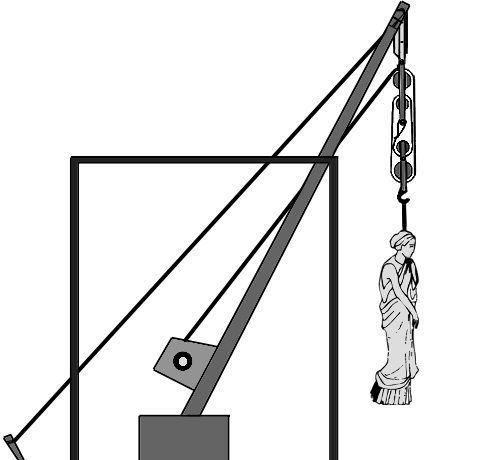
Deus ex machina
This blind trust-fall isn’t the best strategy, but again this doesn’t necessarily have to make for a bad plot or a bad story.
Think of the biblical story of Gideon in the book of Judges, for example. Or think of the story of Joan of Arc. In both of those stories, the heroes are, like Buck and Tsion, acting in response to what they believe is a direct message from God. God has instructed them to face “insurmountable obstacles on the road to imminent disaster” but also assured them that, strangely enough, it will all turn out well.
Those stories have endured because — like the adventures of the Doctor or of the Lord Chamberlain’s Men — they’re good stories. So before we get into the details of Buck and Tsion’s flight aboard the magic school bus, I want to think a bit about what it is that can make this leap-of-faith story — this basic plot outline — work.
One ingredient, I think, is a measure of doubt. The hero is about to do something that’s bound to fail unless some miracle occurs. “Imminent disaster” and “insurmountable obstacles” are not hyperbole. Sure, the heroes may have been told that unseen, inexplicable success is assured, but how do they know that this assurance is trustworthy? Hearing the voice of God speaking to you is reassuring on one level, but on another level it means you’re hearing voices. And now you’re pondering taking some irrational action on the basis of something those voices told you.
I like the way the story of Gideon handles this. An angel gives Gideon a message from God and his response, basically, is to say, “Yeah, so you’re an angel who speaks for God, huh? Let’s see some ID.” The angel has told him he’s supposed to march forth to what would be certain death, trusting that a miracle will save the day. But before he’s willing to gamble his life on the expectation of a miracle, Gideon asks to see some miracles first.
I’ve heard sermons criticizing Gideon for his lack of immediate faith, but the guy was just being prudent. (I sometimes wonder if this is the same angel from the story of Abraham and Isaac — the one who had to hold back Abraham’s hand to keep him from killing his son. If so, I’d guess the angel was pleased by Gideon’s skepticism because if I were that angel, I’d be relieved to finally meet a human who was willing to step back a bit instead of just being all “Well, OK then, angel says …” at the suggestion of human sacrifice.)
For these stories to work, the hero needs to have doubts. Yes, the hero will overcome those doubts, but you can’t overcome them if you never have them. And there are a lot of things that need to be doubted here: Am I really doing what God wants me to do? Will God come through?
If the hero doesn’t entertain such doubts, then the reader should. That’s kind of how the story of Joan of Arc works. She was eerily certain that she was obeying a divine command and that she was assured of divine aid to ensure her success. In many of the best re-tellings of her story, though, the reader or the audience is invited to question that certainty (particularly since, unlike Joan herself, we know how her story ultimately ends).
The one thing that can’t be in doubt, though, is that the doom really is imminent and the obstacles really are insurmountable. If they were surmountable, after all, then we couldn’t respect the heroes for not figuring out some smarter, more responsible approach than their blind leap of faith. So let’s call that our second necessary ingredient for stories like this: It must be clear that there wasn’t anything else the heroes could have tried. They have to be completely out of options. They’re making this leap of faith because there’s no other way.
A third thing I think such stories need is a satisfying resolution, meaning, in this case, that the deus ex machina “miracle” needs to be surprising, yet plausible. If it looks like the storyteller is cheating, then the reader/audience is going to feel cheated. And thus the “miracle” can’t be unambiguously miraculous. “O God, thy arm was here,” Henry V says after realizing the scope of his miraculous victory at Agincourt. And you can certainly see why he’d see things that way, but you don’t need to.
As Jules Winnfield said, whether or not the story involves an According to Hoyle miracle is insignificant. What matters is that it’s unexpected, yet convincingly effective. In the story of Gideon, we’re set up to expect some spectacular act of direct divine intervention, but instead, at the last second, Gideon comes up with a clever trick, sending his enemies into a fatal panic and causing them to flee and fight one another in their confusion. The writer(s) of that part of Judges certainly want us to see that as a miracle directly from the hand of God, but it could also be read as a lucky long-shot gamble by a guy who was otherwise out of options.
Such ambiguity is needed in these stories because such ambiguity is always present in real life. We aren’t afforded stark, definitive proof of the transcendent — it’s something we sometimes think we maybe might have almost half-glimpsed. Or maybe not. We can’t be certain.
It’s also necessary because of something that’s been true of deus ex machina endings ever since the idea was invented in ancient Greek theater (see the above diagram, from Citizendium). When you use such a device to introduce one of the gods into your story, it’s almost impossible to show the audience the god without also showing the audience the machine. And once they see the machine, well, the god suddenly looks less impressive. “Miraculous” endings that show the hand of God unambiguously at work tend to do that — to show the machine at work, and thereby to reduce or diminish God into a plot contrivance.
“It’s a mystery,” Philip Henslowe said. That’s a theological term. That’s also good storytelling.
Finally, if all of the above ingredients are present in our leap-of-faith story, they’ll add up to what we might call the fourth ingredient: Don’t try this at home. The heroes’ blind leap of faith can’t seem like a matter of business as usual. This has to be a story about an extreme situation in which extreme measures are called for because that’s all that is left.
Given that, the heroes’ reckless charging-ahead without a plan shouldn’t be offered as something the reader or the audience is encouraged to emulate. Taking on an army of Daleks with nothing but a screwdriver and a bit of awkward patter shouldn’t be presented as good advice. Long-shot gambles, by definition, don’t usually pay off. Miracles are, by definition, unusual. It’s always good to have your readers/audience thinking, “What would I do if I were in a situation like that?” but with stories like this you also want them to be thinking, “I never want to be in a situation like that.”
I’m grateful to Jerry Jenkins for demonstrating the importance of this last ingredient. It was only because he did the opposite that I ever realized how vital it is to one’s story not to do what he did.
As you’ve probably guessed, or as you already know if you’ve read Nicolae, the same is true for all the other ingredients I’ve listed above for a successful leap-of-faith story. That’s the point of this week’s little tangent. We’ve discussed how stories similar to this can work, and we’ve discussed a bit of what makes them work.
And now we can plow ahead into the coming chapters, better prepared, perhaps, to understand why such a potentially rewarding story fails so utterly.
Previous Post

January 24, 2014
7 @ 9: Why I'd be a bad time-traveler
Next Post
January 26, 2014 Sunday favorites
Browse Our Archives
Select a Category class warfare evangelicals Iraq Left Behind Mammon music Uncategorized
Select a Month October 2026 September 2026 August 2026 July 2026 June 2026 May 2026 April 2026 March 2026 January 2026 December 2025 November 2025 October 2025 September 2025 August 2025 July 2025 June 2025 May 2025 April 2025 March 2025 February 2025 January 2025 December 2024 November 2024 October 2024 September 2024 August 2024 July 2024 June 2024 May 2024 April 2024 March 2024 February 2024 January 2024 December 2023 November 2023 October 2023 September 2023 August 2023 July 2023 June 2023 May 2023 April 2023 March 2023 February 2023 January 2023 December 2022 November 2022 October 2022 September 2022 August 2022 July 2022 June 2022 May 2022 April 2022 March 2022 February 2022 January 2022 December 2021 November 2021 October 2021 September 2021 August 2021 July 2021 June 2021 May 2021 April 2021 March 2021 February 2021 January 2021 December 2020 November 2020 October 2020 September 2020 August 2020 July 2020 June 2020 May 2020 April 2020 March 2020 February 2020 January 2020 December 2019 November 2019 October 2019 September 2019 August 2019 July 2019 June 2019 May 2019 April 2019 March 2019 February 2019 January 2019 December 2018 November 2018 October 2018 September 2018 August 2018 July 2018 June 2018 May 2018 April 2018 March 2018 February 2018 January 2018 December 2017 November 2017 October 2017 September 2017 August 2017 July 2017 June 2017 May 2017 April 2017 March 2017 February 2017 January 2017 December 2016 November 2016 October 2016 September 2016 August 2016 July 2016 June 2016 May 2016 April 2016 March 2016 February 2016 January 2016 December 2015 November 2015 October 2015 September 2015 August 2015 July 2015 June 2015 May 2015 April 2015 March 2015 February 2015 January 2015 December 2014 November 2014 October 2014 September 2014 August 2014 July 2014 June 2014 May 2014 April 2014 March 2014 February 2014 January 2014 December 2013 November 2013 October 2013 September 2013 August 2013 July 2013 June 2013 May 2013 April 2013 March 2013 February 2013 January 2013 December 2012 November 2012 October 2012 September 2012 August 2012 July 2012 June 2012 May 2012 April 2012 March 2012 February 2012 January 2012 December 2011 November 2011 October 2011 September 2011 August 2011 July 2011 June 2011 May 2011 April 2011 March 2011 February 2011 January 2011 December 2010 November 2010 October 2010 September 2010 August 2010 July 2010 June 2010 May 2010 April 2010 March 2010 February 2010 January 2010 December 2009 November 2009 October 2009 September 2009 August 2009 July 2009 June 2009 May 2009 April 2009 March 2009 February 2009 January 2009 December 2008 November 2008 October 2008 September 2008 August 2008 July 2008 June 2008 May 2008 April 2008 March 2008 February 2008 January 2008 December 2007 November 2007 October 2007 September 2007 August 2007 July 2007 June 2007 May 2007 April 2007 March 2007 February 2007 January 2007 December 2006 November 2006 October 2006 September 2006 August 2006 July 2006 June 2006 May 2006 April 2006 March 2006 February 2006 January 2006 December 2005 November 2005 October 2005 September 2005 August 2005 July 2005 June 2005 May 2005 April 2005 March 2005 February 2005 January 2005 December 2004 November 2004 October 2004 September 2004 August 2004 July 2004 June 2004 May 2004 April 2004 March 2004 February 2004 January 2004 December 2003 November 2003 October 2003 September 2003
Follow Us!
TAKE THE
Religious Wisdom Quiz
How many days did God take to create the world?
Select your answer to see how you score.
Seven Ten Two Six
Related posts from slacktivist

Hal Lindsey is gone (the Late, Great Planet...

Can't seem to get it through my head

For Buffy and Carl so loved the world

TRENDING AT PATHEOS Progressive Christian

Methodist Central Hall and Westminster Abbey
Situated on the same square is Methodist Central Hall and Westminster Abbey. ...

57th Dove Awards Honor Dolly Parton, Crown New...
On gospel music’s biggest night, the 57th annual GMA Dove Awards honored...

The First Eucharistic Controversy: Christ’s Real Presence
For Catholics, the Eucharist is the source and summit of the Christian...

What a Stop Sign Can Teach Us About...
How to Make a Decision When You Can't Hear God Main point:...

Archdiocese Hosts Military Marriage Retreat in Germany
RASTATT, Germany — The transient military lifestyle, with its frequent deployments and...

Nearly every morning, I make the drive to Detroit with my high-school-age...
view all Progressive Christian blogs
Ad-Free & Subscriber Log-In Subscription Support
- About Us
- 2026 Calendar
- Videos
- Podcasts
- Library of World Religions
- Faith In Media Tracker
- Advertise With Us
- Write for Us
- Privacy Policy
- Terms of Service
- Do Not Sell My Data
- Contact Us
- Radiant Digital
- Manage Newsletter Subscriptions
- Unsubscribe From Notifications
- Sitemap
Copyright 2008-2026, Patheos. All rights reserved.
Subscription Support Ad-Free & Subscriber Log-In
Follow Patheos