
BuddhistCatholicContemplativeEvangelicalGeneral ChristianHinduJewishLatter-day SaintMuslimNew VisionsProgressive Christian
Beliefs
- Buddhist
- Catholic
- Contemplative
- Evangelical
- General Christian
- Hindu
- Jewish
- Latter-day Saint
- More Voices
- Muslim
- New Visions
- Pagan
- Progressive Christian
Topics
- Religion News
- Food and Religion
- Sports and Religion
- Religious Art
- Religious Music and Entertainment
- Religious Events
- History and Religion
- Style and Religion
- Politics and Religion
- Women in Religion
- Recreation Outdoors and Religion
- Business Finance and Religion
- Careers Workplace and Religion
- Education and Religion
- Family Parenting and Religion
- Health Fitness and Religion
- Home and Religion
- Relationships and Religion
- Technology and Religion
- Travel and Religion
Columnists
- Buddhist Columnists
- Business Finance and Religion Columnists
- Careers Workplace and Religion Columnists
- Catholic Columnists
- Contemplative Columnists
- Education and Religion Columnists
- Evangelists Columnists
- Family Parenting and Religion Columnists
- General Christian Columnists
- Health Fitness and Religion Columnists
- Hindu Columnists
- History and Religion Columnists
- Home and Religion Columnists
- Jewish Columnists
- More Voices Columnists
- Latter Day Columnists
- Muslim Columnists
- New Visions Columnists
- Nonreligious Columnists
- Pagan Columnists
- Politics and Religion Columnists
- Progressive Columnists
- Recreation Outdoors and Religion Columnists
- Relationships and Religion Columnists
- Religion News Columnists
- Religious Art Columnists
- Religious Events Columnists
- Religious Music and Entertainment Columnists
- Sports and Religion Columnists
- Style and Religion Columnists
- Technology and Religion Columnists
- Travel and Religion Columnists
- Women in Religion Columnists
Resource Library
- 2026 Calendar
- Library of World Religions
- The 100 Most Holy Places on Earth
- Patheos Answers
- Podcasts
- Videos
- Faith Leaders Database
- Anglican Episcopalian
- Bahai
- Baptist
- Buddhism
- Christianity
- Confucianism
- Eastern Orthodoxy
- Hinduism
- Holiness and Pentecostal
- ISKCON
- Islam
- Judaism
- Lutheran
- Methodist
- The Church of Jesus Christ of Latter-day Saints
- New Age
- Paganism
- Presbytarian and Reformed
- Protestantism
- Religion Behind the Scenes
- Roman Catholic
- Scientology
- Shia Islam
- Sikhism
- Sufism
- Sunni Islam
- Taoism
- Zen
- See all religions
Research Tools
 Ad-Free & Subscriber Log-In Subscription Support
Follow Patheos 

- Trending:
- Advent
- |
- Forgiveness
- |
- Thanksgiving
- |
- Election
- |
- Seasonal Holidays
- |
- Marriage

- Home
- Progressive Christian
- NRA: The imminent Rapture is not imminent
NRA: The imminent Rapture is not imminent
Last updated on: July 26, 2013 at 7:43 pm by Fred Clark
NRA: The imminent Rapture is not imminent 2013-07-26T19:43:29-04:00 Fred Clark
Patheos Explore the world's faith through different perspectives on religion and spirituality! Patheos has the views of the prevalent religions and spiritualities of the world.
Nicolae: The Rise of Antichrist; pp. 167-174
During a long, rambling conversation over dessert with Rayford Steele, Hattie Durham reminds her former non-boyfriend that he was always too old for her anyway. “[Buck] and I are closer in age,” she says.
She underscores the point on the following page, saying of Nicolae Carpathia: “He was only about as much older than Buck as Buck was older than I.” At that point I felt like I was reading a word problem from the PSATs (“Rayford is twice as old as Hattie. Nicolae is as much older than Buck as Buck is older than Hattie. If Hattie is 22 years old, what color is the Norwegian’s house?”).
This discussion of the characters’ relative ages got me to thinking about my own age relative to theirs — and that’s a disastrous line of thinking when it comes to the central claim of these books. Buck Williams was 29 years old in the first book of this series, which was published in 1995. In 1995, I was 27 years old, so Buck is two years older than me.
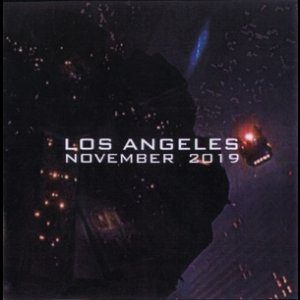
Bladerunner (1982).
That would mean that today, in 2013, Buck is 47 years old. But Buck Williams doesn’t get to live to see 47 because seven years after these books begin, Turbo Jesus comes back and destroys life, the universe and everything. So the world was supposed to end in 2002.
Spoiler alert: The world did not end in 2002.
Heck, in 2002, Tim LaHaye and Jerry Jenkins hadn’t even finished writing this series of books.
But wait, that’s not entirely fair. That first book wasn’t set in 1995. It was set in an undefined not-so-distant future. The problem is that the not-so-distance between 1995 and this future is asked to serve two contradictory functions.
On the one hand, this distance must be very, very short because the story begins with the Rapture. LaHaye, like everyone who believes in the idea of the Rapture, believes that it is imminent. Type “Imminent Rapture” into Google and you’ll find hundreds of thousands of results, even though the phrase is redundant. To believe in the Rapture is to believe that it could occur at any second — maybe this very day, maybe this very hour, maybe before you finish reading this post or even this sentence! (Phew — looks like we’re all still here.)
A Rapture-believer like Tim LaHaye cannot provide one of those sci-fi introductions when telling a Rapture story. It cannot be specific, like the first lines of John Carpenter’s 1981 film Escape from New York: “In 1988, the crime rate in the United States rises four hundred percent. …” No one knows the day or the hour of when the Rapture will come. But it is undoubtedly imminent. No one knows the day or the hour, but it must always be possible that it is this day and this hour.
The imminence of the Rapture means that this book, published in 1995, also had to, at least in a sense, be set in the world of 1995. The story couldn’t include any elements that would have seemed “futuristic” in 1995 — flying cars, rocket packs, domed cities, cell phones, wi-fi, a black president, etc. All of those would have signaled that the Rapture is not imminent, but some future event still years or even generations away. They would serve to increase the not-so-distance of the book’s future setting, contradicting the imminent-Rapture requirement that this not-so-distance be as short as possible.
The imminent Rapture requires that this story be set in a present that’s just about to happen. That presented Jerry Jenkins with a bit of a dilemma as it took the authors 12 years to finish publishing their narrative of how they believe the final seven years of history will unfold. Jenkins needed to preserve the Rapture’s imminence by avoiding futuristic technological details and only including the technology of the present day, but the present-day technology of 2007 was quite different from the present-day technology of 1995. Jenkins’ cleverly pragmatic response to this problem was simply to incorporate new technologies as they arose while pretending this doesn’t create any anachronistic conflicts between his earlier books and his later ones. So in the first book we have airport pay-phones (ask your parents) and by the third book we have cell phones. That can sometimes be jarring, but I give Jenkins a pass on this because telling a story set in the imminent future is a difficult business.
The one bit of futuristic technology the authors do include in their story is Dr. Chaim Rosenzweig’s Miracle Formula. The chemistry and biology of this seems so unlike anything possible today that the presence of such a formula in our story seems to push its setting decades further into the future, destroying the whole sense that the Rapture it describes might be “imminent.”
I suppose the authors might counter that Rosenzweig’s formula wasn’t so much a scientific breakthrough as it was an actual miracle. Like the Rapture itself, it was an act of divine intervention in the natural world and thus, like the Rapture itself, something that might be regarded as imminent. That’s a bit unsatisfying, though. To paraphrase Arthur C. Clarke, any act of miraculous intervention is indistinguishable from sufficiently advanced technology.
The larger problem for the authors and for their insistence on the imminence of this story is that their focus on avoiding futuristic technology didn’t extend to an avoidance of futuristic politics. The political world in which Left Behind (1995) is set has as much relation to present-day politics as the technological world of Star Trek has to present-day technology. Peace in the Middle East, for example, is presented as a fait accompli. Israel is said to be at peace with all of its immediate neighbors — a state of affairs the authors describe as somehow involving Israel absorbing all of its immediate neighbors, annexing much of Syria, Jordan, Lebanon, Iraq and Egypt without disrupting or disturbing the residents of those countries while also not altering in any way the distinctive identity of Israel as a Jewish nation.
Such a development doesn’t seem particularly imminent. It seems utterly unlikely, if not impossible. For the authors, though, this is something that will and must happen — a fulfillment of what they believe is divine prophecy. They also believe this to be a necessary precondition for the “imminent” Rapture. Let’s play along with that idea as best we can. Forget about 1995, start with today, July 26, 2013. How long do you imagine it would take to get us from where we are today to this prophesied future world of a Greater Israel beloved and unthreatened by those neighbors it hasn’t yet absorbed? Can you imagine this happening in a single decade? A single generation? A single century?
I can’t. And if this development is a prerequisite for the Rapture — if this must be accomplished before the Rapture can occur — then it seems to me that this Rapture cannot be in any way described as imminent. If this is a necessary precursor to the Rapture, then — based on Tim LaHaye’s own rules of “Bible prophecy” — the odds are that we’ll see a colony on Mars long before this “imminent” Rapture could ever occur.
And keep in mind that these books are about prophecy, not playful prediction. If the future they foretell does not come to pass as they foretell it, then these books utterly fail. That is their central claim.
That makes for a very different sort of problem than the fun-but-mistaken discussion of the supposedly failed predictions of science fiction stories. George Orwell wrote 1984 in 1949. I quoted from Escape From New York above, which described a future world of 1988 in which Manhattan had been transformed into a penal colony. The image above is from the 1982 movie Blade Runner, which portrayed the Los Angeles of 2019 (getting close!) as a cramped city wracked by climate disruption and police drones (getting close!). But Blade Runner also predicted “off-world colonies” and androids indistinguishable from their human creators — developments that seem more than six years distant from our present. Or consider one of my favorite books, Infinite Jest, which depicted the Year of the Depends Adult Undergarment as a 2009 that wasn’t even called “2009.” David Foster Wallace nearly predicted Netflix, but northern New England hasn’t been transformed into a concavity overrun with mutant feral hamsters, so he loses points for “accuracy” there.
But this game of spot-the-failed predictions misrepresents what those stories are about. They’re not about the future, but about the present. The point wasn’t an attempt to make an accurate prediction about where we are inevitably headed, but a way of using such predictions as a mirror to reflect and examine where we are now. The words on the screen in that still from Blade Runner really mean just the same thing as the words at the beginning of Terry Gilliam’s Brazil: “Somewhere in the 20th Century.” Those stories aren’t predictions about the future, but rather commentaries on the present (and on the perennial).
That’s also true for the alleged source material for the Left Behind series — the apocalyptic literature of the Bible. Apocalyptic literature is not making predictions about the future, but rather it attempts to unveil (“Revelation”) the true reality of the present or perennial human condition. It is prophetic in the sense that, like the prophets, it passes judgment on the world and renders a verdict. But it is not meant to be “prophetic” in the carnival-huckster sense of foretelling future events.
Unfortunately for LaHaye and Jenkins, their books are meant to be predictive “prophecies” in that latter sense. These books are fictional, but they’re meant to provide a fictionalized description of future events that will occur just as described — a kind of historical fiction about the future. That means the standard for accuracy that it would be unfair to apply to 1984 or to Blade Runner must be applied to these books. By fudging on the precise year in which their story is set they don’t allow us to state conclusively that their predictions have failed and that their prophecies have gone unfulfilled. But we can state conclusively that the imminent “Rapture” they continue to prophesy was not and is not and cannot be “imminent.”
This may seem like an overlong response to just a couple of sentences from Hattie in this section of Nicolae, but her whole conversation with Rayford is infused with her nostalgic musing about her past. That past, even as sketchily and carelessly described by Jenkins, is situated in time. Combined, then, with Hattie’s discussion of all the characters’ ages one gets a clearer sense of when the imminent present of this scene is set — and that actually seems to be earlier than 1995.
“Think about it, Rayford. All I ever wanted to be was a flight attendant. The entire cheerleading squad at Maine East High School wanted to be flight attendants. We all applied, but I was the only one who made it. I was so proud. …”
Hattie is supposed to be a member of Generation X, but Jenkins describes her childhood dreams and teenage fantasies using his own Baby Boomer imagination. This seems like something out of the world of Bye Bye Birdie or Mad Men. If Hattie grew up reading Vicki Barr Flight Stewardess books as a child and she’s in her early 20s, then this story can’t be set much later than the Reagan years — 1985 rather than 1995.
Back in 1985, of course, Tim LaHaye was preaching about the same “Bible prophecies” he later fictionalized in 1995 and that he’s still preaching today in 2013. He was preaching that the central focus of every Christians’ life ought to be the Rapture. And the Rapture, he said in 1985, is imminent.
Previous Post

July 26, 2013
7 things @ 11 o'clock (7.26)
Next Post
July 27, 2013 8 years ago: What's $12 million?
Browse Our Archives
Select a Category class warfare evangelicals Iraq Left Behind Mammon music Uncategorized
Select a Month November 2026 October 2026 September 2026 August 2026 July 2026 June 2026 May 2026 April 2026 March 2026 January 2026 December 2025 November 2025 October 2025 September 2025 August 2025 July 2025 June 2025 May 2025 April 2025 March 2025 February 2025 January 2025 December 2024 November 2024 October 2024 September 2024 August 2024 July 2024 June 2024 May 2024 April 2024 March 2024 February 2024 January 2024 December 2023 November 2023 October 2023 September 2023 August 2023 July 2023 June 2023 May 2023 April 2023 March 2023 February 2023 January 2023 December 2022 November 2022 October 2022 September 2022 August 2022 July 2022 June 2022 May 2022 April 2022 March 2022 February 2022 January 2022 December 2021 November 2021 October 2021 September 2021 August 2021 July 2021 June 2021 May 2021 April 2021 March 2021 February 2021 January 2021 December 2020 November 2020 October 2020 September 2020 August 2020 July 2020 June 2020 May 2020 April 2020 March 2020 February 2020 January 2020 December 2019 November 2019 October 2019 September 2019 August 2019 July 2019 June 2019 May 2019 April 2019 March 2019 February 2019 January 2019 December 2018 November 2018 October 2018 September 2018 August 2018 July 2018 June 2018 May 2018 April 2018 March 2018 February 2018 January 2018 December 2017 November 2017 October 2017 September 2017 August 2017 July 2017 June 2017 May 2017 April 2017 March 2017 February 2017 January 2017 December 2016 November 2016 October 2016 September 2016 August 2016 July 2016 June 2016 May 2016 April 2016 March 2016 February 2016 January 2016 December 2015 November 2015 October 2015 September 2015 August 2015 July 2015 June 2015 May 2015 April 2015 March 2015 February 2015 January 2015 December 2014 November 2014 October 2014 September 2014 August 2014 July 2014 June 2014 May 2014 April 2014 March 2014 February 2014 January 2014 December 2013 November 2013 October 2013 September 2013 August 2013 July 2013 June 2013 May 2013 April 2013 March 2013 February 2013 January 2013 December 2012 November 2012 October 2012 September 2012 August 2012 July 2012 June 2012 May 2012 April 2012 March 2012 February 2012 January 2012 December 2011 November 2011 October 2011 September 2011 August 2011 July 2011 June 2011 May 2011 April 2011 March 2011 February 2011 January 2011 December 2010 November 2010 October 2010 September 2010 August 2010 July 2010 June 2010 May 2010 April 2010 March 2010 February 2010 January 2010 December 2009 November 2009 October 2009 September 2009 August 2009 July 2009 June 2009 May 2009 April 2009 March 2009 February 2009 January 2009 December 2008 November 2008 October 2008 September 2008 August 2008 July 2008 June 2008 May 2008 April 2008 March 2008 February 2008 January 2008 December 2007 November 2007 October 2007 September 2007 August 2007 July 2007 June 2007 May 2007 April 2007 March 2007 February 2007 January 2007 December 2006 November 2006 October 2006 September 2006 August 2006 July 2006 June 2006 May 2006 April 2006 March 2006 February 2006 January 2006 December 2005 November 2005 October 2005 September 2005 August 2005 July 2005 June 2005 May 2005 April 2005 March 2005 February 2005 January 2005 December 2004 November 2004 October 2004 September 2004 August 2004 July 2004 June 2004 May 2004 April 2004 March 2004 February 2004 January 2004 December 2003 November 2003 October 2003 September 2003
Follow Us!
TAKE THE
Religious Wisdom Quiz
Which Old Testament book is composed mostly of love poems?
Select your answer to see how you score.
Ruth Proverbs Song of Solomon Ecclesiastes
Related posts from slacktivist

Hal Lindsey is gone (the Late, Great Planet...

Can't seem to get it through my head

For Buffy and Carl so loved the world

TRENDING AT PATHEOS Progressive Christian

The West's Christian Moral Inheritance: A Legacy Denied
Whether we like it or not, our environment matters, shaping us both...

How Does Tôḏâ Connect Florida & Thanksgiving?
The big news this weekend has been about the continued flooding on...

Were Early Christians Drinking Psychedelic Wine?
The Secret Sacrament the Church Took Away The early Christian church was...

As we in the United States approach the national Thanksgiving holiday...

‘Fjord’ Director Mungiu on Religious Family, Bias, Tolerance
Cristian Mungiu’s new film “Fjord” follows a Christian family trying to make...

Miller’s Station UMC| 21 November 2026| Anchor Verse Luke 1: 26-38; 46-56...
view all Progressive Christian blogs
Ad-Free & Subscriber Log-In Subscription Support
- About Us
- 2026 Calendar
- Videos
- Podcasts
- Library of World Religions
- Faith In Media Tracker
- Advertise With Us
- Write for Us
- Privacy Policy
- Terms of Service
- Do Not Sell My Data
- Contact Us
- Radiant Digital
- Manage Newsletter Subscriptions
- Unsubscribe From Notifications
- Sitemap
Copyright 2008-2026, Patheos. All rights reserved.
Subscription Support Ad-Free & Subscriber Log-In
Follow Patheos